Squamous Cell Carcinoma: Types, Stages & ICD Codes
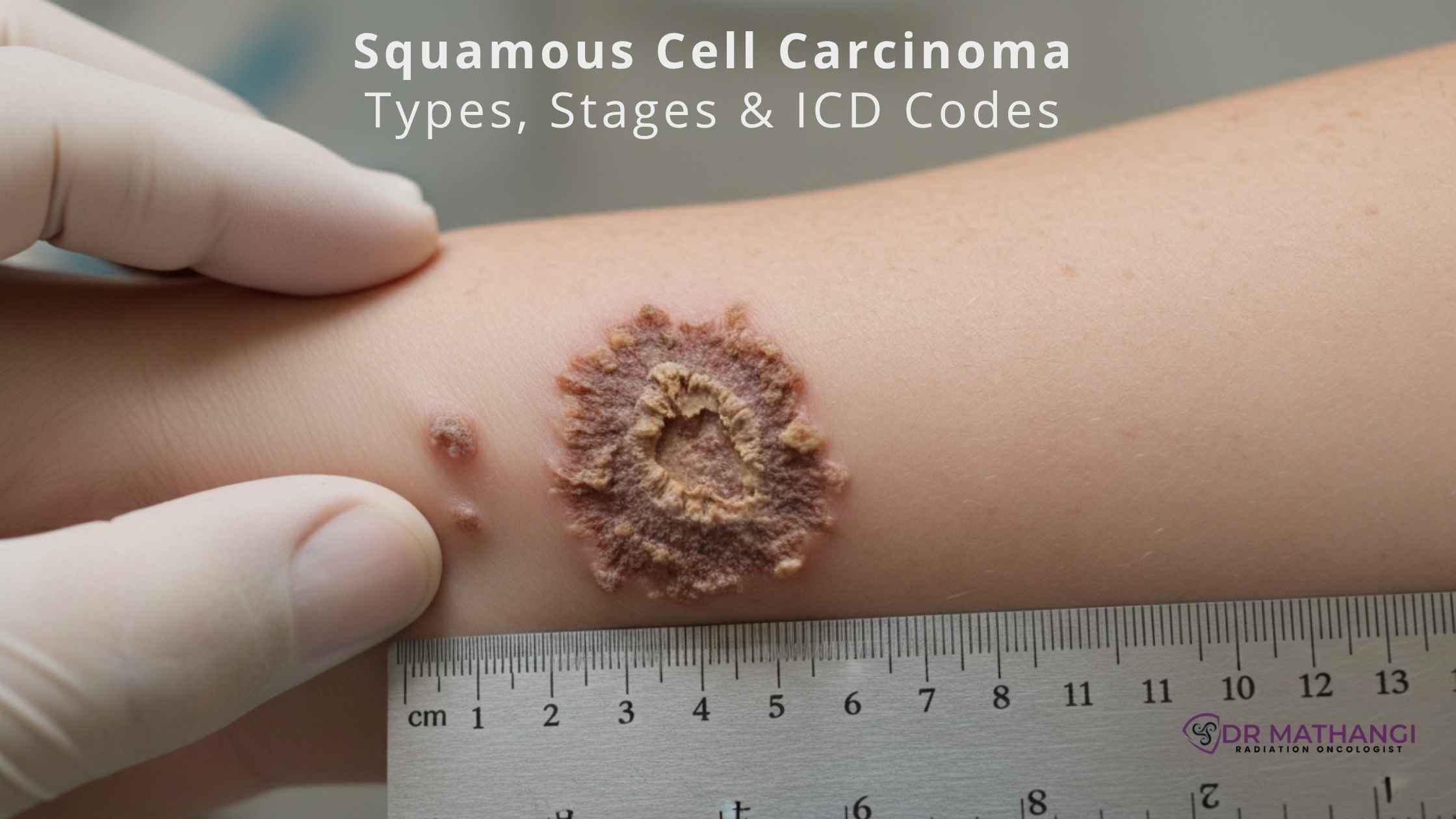
Squamous Cell Carcinoma: Types, Stages & ICD Codes
Squamous Cell Carcinoma (SCC) is one of the most common cancers globally, accounting for nearly 20% of all skin cancers and a significant portion of head and neck malignancies. Despite its prevalence, many patients delay seeking treatment, risking progression to advanced stages that require complex interventions. Understanding SCC early can dramatically improve outcomes—and this is where expert care from Dr Mathangi becomes life-changing.
What is squamous cell carcinoma and why is early detection critical?
Squamous cell carcinoma is a malignant tumor arising from squamous cells, which are flat cells found in the skin, respiratory tract, and various organs. Early detection is critical because SCC can invade deeper tissues and metastasize if untreated.
The challenge most patients face is recognizing symptoms early and understanding the seriousness of the condition. Many ignore persistent skin lesions, ulcers, or unusual growths, assuming they are harmless. This delay often leads to complicated treatments later.
At Gleneagles Cancer Institute, Dr Mathangi emphasizes early detection using advanced imaging and precise scc diagnosis protocols, ensuring patients receive timely and effective care.
What are the major skin carcinoma types and how does SCC differ?
There are three primary skin carcinoma types:
- Basal cell carcinoma (most common, slow growing)
- Squamous cell carcinoma (moderately aggressive)
- Melanoma (most aggressive and life-threatening)
Among these, SCC stands out due to its ability to grow deeper into tissues and spread to lymph nodes if not treated promptly. Unlike basal cell carcinoma, SCC requires more aggressive management in advanced stages.
What are the types of squamous cell carcinoma?
Well differentiated squamous cell carcinoma
Well differentiated squamous cell carcinoma refers to tumors that closely resemble normal squamous cells. These cancers tend to grow slower and are often associated with better prognosis when treated early.
Poorly differentiated squamous cell carcinoma
Poorly differentiated squamous cell carcinoma is more aggressive, with cells that appear abnormal and lack structural organization. These tumors have a higher potential for metastasis and require advanced treatment strategies such as precision radiotherapy.
Dr Mathangi’s expertise in advanced radiation techniques such as SBRT and IGRT ensures that even aggressive cancers are treated with high precision while minimizing damage to surrounding tissues.
What are the stages of squamous cell carcinoma?
SCC staging helps determine the extent of the disease and guides treatment decisions:
- Stage 0: Cancer is confined to the top layer (also known as carcinoma in situ)
- Stage I: Small tumor localized to the origin site
- Stage II: Larger tumor with deeper invasion
- Stage III: Spread to nearby lymph nodes
- Stage IV: Metastasis to distant organs
Early-stage cancers are highly treatable, but advanced stages require multidisciplinary care. This is where Dr Mathangi’s 20+ years of experience and access to cutting-edge radiotherapy technologies provide a critical advantage.
What are the ICD codes for squamous cell carcinoma?
ICD codes are essential for accurate diagnosis, treatment planning, and insurance processing.
- squamous cell carcinoma in situ icd 10: Typically coded under D04 series
- Invasive SCC codes vary depending on location (e.g., skin, lung, cervix)
Correct coding ensures streamlined treatment pathways and avoids administrative delays, something that experienced oncology teams like Dr Mathangi’s manage seamlessly.
How is scc diagnosis performed?
Accurate scc diagnosis involves a combination of clinical evaluation and advanced diagnostic tools:
- Physical examination and history
- Biopsy and histopathological analysis
- Imaging (CT, MRI, PET scans)
Medical professionals often refer to squamous cell carcinoma pathology outlines to understand tumor characteristics and confirm diagnosis. These outlines provide detailed insights into cellular differentiation, invasion patterns, and staging.
At her center, Dr Mathangi integrates pathology with advanced imaging and radiation planning systems to ensure precision-driven treatment.
What treatment options are available for squamous cell carcinoma?
Treatment depends on the stage, location, and type of SCC:
- Surgery (for localized tumors)
- Radiation therapy (primary or adjuvant)
- Chemotherapy (for advanced cases)
Radiation therapy plays a vital role in treating:
- Head and neck cancers
- Lung cancers
- Breast cancers
- Prostate cancers
- Cervical and uterine cancers
Dr Mathangi specializes in advanced radiation oncology techniques such as:
- Stereotactic Body Radiotherapy (SBRT)
- Image-Guided Radiotherapy (IGRT)
- RapidArc and DIBH gated radiotherapy
- Interstitial brachytherapy
These techniques allow for highly targeted treatment, improving outcomes while minimizing side effects.
Why choosing the right oncologist can change outcomes
Many patients underestimate the importance of specialized care. In reality, the difference between standard treatment and advanced precision oncology can be life-altering.
With over 12,000 successfully treated patients, Dr Mathangi combines global training with cutting-edge technology, including Asia Pacific’s first TrueBeam STx machine. Her leadership at Gleneagles Cancer Institute ensures that patients receive world-class care right here in India.
Delaying expert consultation can lead to disease progression, increased treatment complexity, and reduced survival rates. Acting early gives patients access to the most effective and least invasive options.
How to take the next step toward treatment
If you or your loved one is experiencing symptoms or has been diagnosed with SCC, taking immediate action is crucial. Early consultation with an experienced radiation oncologist can significantly improve outcomes.
To book an appointment, submit your contact information at:
https://drmathangi.com/contact/
Dr Mathangi’s team will schedule your consultation and guide you through every step of your treatment journey.
About Dr Mathangi
Dr Mathangi J is a Senior Radiation Oncologist and In-charge of Gleneagles Cancer Institute, Bangalore. With over 20 years of experience, she specializes in treating complex cancers using advanced radiotherapy techniques.
Her expertise includes head and neck cancers, lung cancers, breast cancers, prostate cancers, and gynecological cancers. She has received international training in Germany and Denmark and is recognized for pioneering advanced radiation technologies in India.
Her patient-centric approach, combined with technological excellence, ensures that every patient receives personalized and effective cancer care.
Frequently Asked Questions
What are the main skin carcinoma types and where does squamous cell carcinoma fit in?
Among the different skin carcinoma types, the most common are basal cell carcinoma, squamous cell carcinoma, and melanoma. Squamous cell carcinoma develops from the squamous cells in the outer layer of the skin and is considered the second most common type. Dr. Mathangi evaluates each case carefully to distinguish between these types and recommends personalized treatment plans depending on severity, location, and spread.
What is involved in an accurate scc diagnosis?
A proper scc diagnosis involves clinical examination, dermatoscopy, and confirmation through biopsy. The tissue is then analyzed histologically to determine the type and grade of cancer. Dr. Mathangi ensures early and precise scc diagnosis by combining advanced diagnostic tools with expert pathological review, which helps in initiating timely and effective treatment.
What does squamous cell carcinoma pathology outlines mean?
The term squamous cell carcinoma pathology outlines refers to the structured microscopic description used by pathologists to define tumor characteristics such as keratinization, cellular atypia, and invasion depth. These outlines help clinicians like Dr. Mathangi determine the aggressiveness of the tumor and choose the most appropriate treatment strategy.
What is the difference between well differentiated squamous cell carcinoma and poorly differentiated squamous cell carcinoma?
Well differentiated squamous cell carcinoma resembles normal squamous cells and tends to grow more slowly, often with a better prognosis. In contrast, poorly differentiated squamous cell carcinoma appears more abnormal under the microscope and is typically more aggressive with a higher risk of spreading. Dr. Mathangi uses this grading to guide treatment decisions, ensuring patients receive the most appropriate level of care.
What does squamous cell carcinoma in situ icd 10 refer to?
Squamous cell carcinoma in situ icd 10 is a medical coding classification used for billing and documentation. It refers to an early-stage cancer where abnormal cells are confined to the top layer of the skin and have not invaded deeper tissues. Dr. Mathangi emphasizes early detection at this stage, as treatment outcomes are highly favorable when addressed promptly.
How are the stages of squamous cell carcinoma determined?
The staging of squamous cell carcinoma is based on tumor size, depth of invasion, lymph node involvement, and spread to other organs. Early stages are localized, while advanced stages may involve metastasis. Dr. Mathangi uses imaging, biopsy findings, and clinical evaluation to accurately stage the disease and tailor treatment accordingly.
What treatment options does Dr. Mathangi offer for squamous cell carcinoma?
Dr. Mathangi offers a comprehensive range of treatments including surgical excision, Mohs micrographic surgery, topical therapies, radiation therapy, and systemic treatments for advanced cases. Each treatment plan is customized based on tumor type, stage, and patient health to ensure optimal outcomes and minimal recurrence.
Can squamous cell carcinoma be prevented or detected early?
While not all cases can be prevented, reducing sun exposure, using sunscreen, and avoiding tanning beds significantly lowers risk. Regular skin checks and early consultation with specialists like Dr. Mathangi can help detect lesions early, improving treatment success rates and reducing complications.