Papillary Thyroid Carcinoma: Symptoms, Staging & Treatment
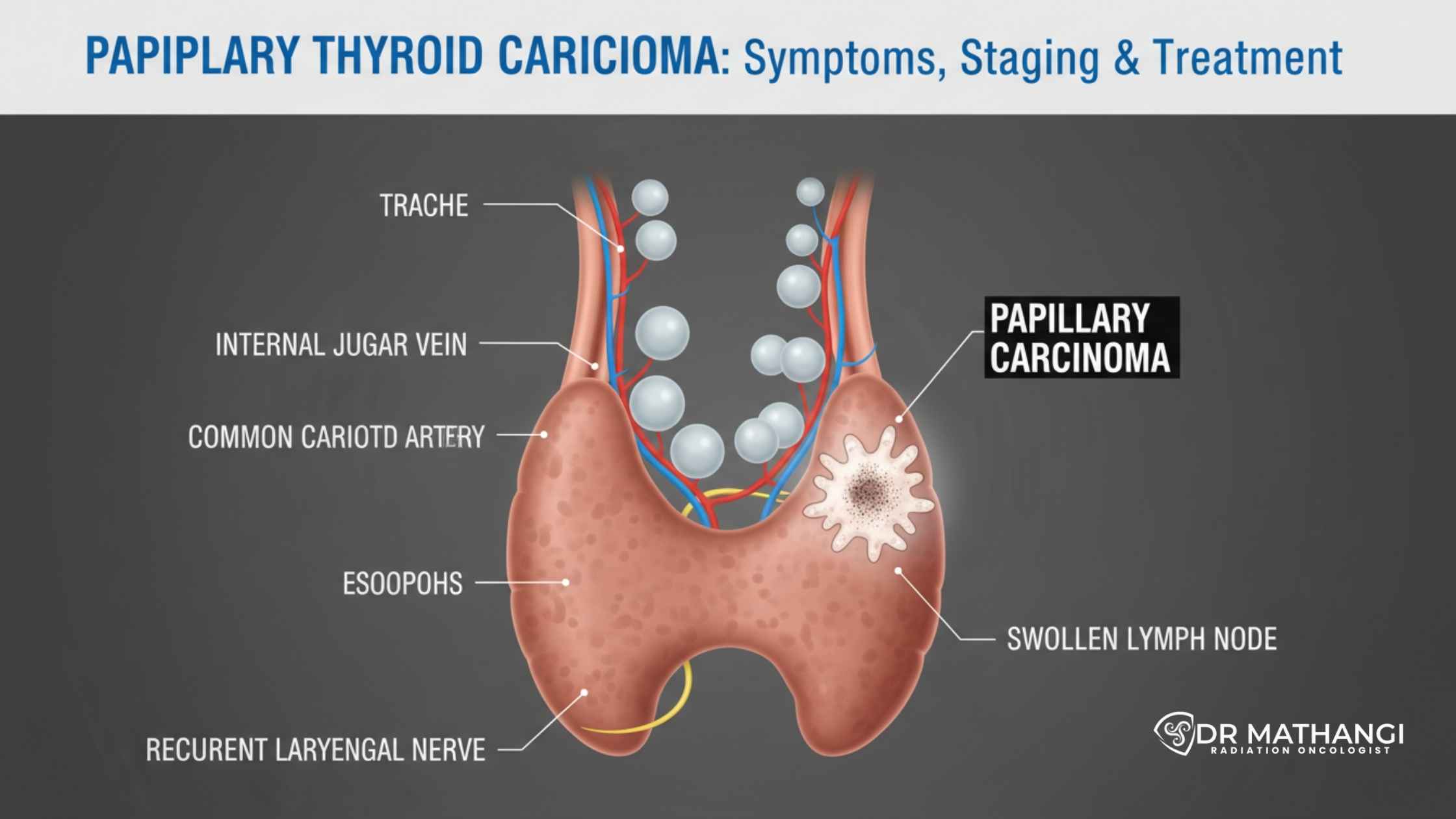
Papillary thyroid carcinoma is the most common type of thyroid cancer, accounting for nearly 80–85% of all thyroid cancer cases worldwide. Despite its relatively favorable prognosis, delayed diagnosis or inadequate treatment can significantly impact outcomes. Understanding papillary thyroid carcinoma early is essential for effective intervention and long-term survival.
If you or a loved one has been diagnosed with papillary carcinoma of thyroid, the choices you make today can define your recovery journey. Under the expert care of Dr Mathangi J, a Senior Radiation Oncologist with over 20 years of experience, patients gain access to advanced, evidence-based cancer treatments that improve outcomes and quality of life.
What is papillary thyroid carcinoma?
Papillary thyroid carcinoma is a differentiated thyroid cancer that originates in the follicular cells of the thyroid gland. It typically grows slowly and often spreads to nearby lymph nodes but remains highly treatable when detected early.
Among various thyroid cancer types, this form is known for its excellent prognosis when managed appropriately. However, misconceptions about its “slow-growing nature” can lead to delayed care, which may increase complications.
What are the symptoms of papillary carcinoma of thyroid?
Papillary carcinoma of thyroid often develops silently, making early detection challenging. Many patients remain asymptomatic until the tumor grows or spreads.
- A painless lump or swelling in the neck
- Difficulty swallowing or breathing
- Hoarseness or voice changes
- Swollen lymph nodes in the neck
- Persistent cough not related to infection
These symptoms can easily be overlooked or mistaken for minor conditions, which is why timely evaluation by a specialist like Dr Mathangi is critical.
Understanding papillary thyroid carcinoma pathology outlines
The term papillary thyroid carcinoma pathology outlines refers to the microscopic and histological features that define this cancer. These include:
- Characteristic papillary structures
- Enlarged nuclei with grooves and inclusions
- Psammoma bodies (calcified deposits)
Accurate pathology assessment plays a vital role in confirming diagnosis and determining the appropriate treatment plan. Advanced diagnostic interpretation ensures that subtle variations are not missed, which can influence prognosis.
What are the different thyroid cancer types?
Understanding thyroid cancer types helps patients appreciate why papillary thyroid carcinoma requires specific treatment approaches.
| Type | Characteristics | Prognosis |
|---|---|---|
| Papillary | Most common, slow-growing | Excellent |
| Follicular | Spreads via bloodstream | Good |
| Medullary | Arises from C cells | Moderate |
| Anaplastic | Aggressive and rare | Poor |
Among all thyroid cancer types, papillary carcinoma stands out due to its high survival rates, especially when treated by experienced oncologists.
How is thyroid carcinoma staging determined?
Thyroid carcinoma staging is essential to determine the extent of disease and guide treatment decisions. It is typically based on the TNM system:
- T (Tumor): Size and extent of the primary tumor
- N (Nodes): Spread to lymph nodes
- M (Metastasis): Spread to distant organs
Stages range from Stage I (localized disease) to Stage IV (advanced spread). Age also plays a unique role in staging thyroid cancers, making expert evaluation crucial.
What is papillary carcinoma icd 10 classification?
Papillary carcinoma icd 10 refers to the standardized coding used for medical documentation and insurance purposes. It typically falls under:
- C73: Malignant neoplasm of thyroid gland
Accurate classification ensures proper treatment planning, documentation, and healthcare coordination.
What are the treatment options for papillary thyroid carcinoma?
Treatment for papillary thyroid carcinoma is highly personalized and depends on staging, tumor size, and patient health. At Gleneagles Cancer Institute, Dr Mathangi provides comprehensive care using advanced technologies.
Surgical treatment
- Thyroidectomy (partial or total removal of thyroid)
- Lymph node dissection if cancer has spread
Radioactive iodine therapy
- Used after surgery to destroy remaining thyroid cells
- Reduces recurrence risk
Advanced radiation therapy
In select cases, especially advanced or recurrent cancers, radiation therapy becomes essential. Dr Mathangi specializes in cutting-edge techniques such as:
- Stereotactic Body Radiotherapy (SBRT)
- Image-Guided Radiotherapy (IGRT)
- RapidArc and DIBH gated radiotherapy
These technologies allow precise targeting of cancer cells while preserving healthy tissues, improving outcomes and reducing side effects.
Why choosing the right specialist matters
Choosing an experienced oncologist is not just a medical decision—it is a life-defining choice. With over 12,000 successfully treated patients, Dr Mathangi brings unmatched expertise in managing complex cancers, including papillary thyroid carcinoma.
Her international training from Germany and Denmark ensures that patients receive globally benchmarked care right here in India. Missing out on such specialized care can mean compromising on treatment precision and long-term outcomes.
Cancers treated with radiation therapy
Radiation therapy plays a vital role in treating various cancers. Under Dr Mathangi’s expertise, advanced radiotherapy is used for:
- Head and neck cancers
- Brain tumors
- Spine tumors
- Esophagus and rectal cancers
- Lung cancers
- Liver cancers
- Breast cancers
- Bladder cancers
- Prostate cancers
- Uterine cancers
- Cervical cancer
- Vulval cancers
- Anal canal cancers
- Penile cancers
How to take the next step
Delaying treatment can lead to disease progression and reduced effectiveness of therapies. Early intervention, guided by expertise, can significantly improve survival and quality of life.
To book an appointment with Dr Mathangi, visit:
https://drmathangi.com/contact/
Once you submit your details, her team will schedule your consultation and guide you through the next steps.
About Dr Mathangi
Dr Mathangi J is a Senior Consultant and In-charge of Radiation Oncology at Gleneagles Cancer Institute, Bangalore. With MBBS, DMRT, and DNB qualifications, she has over two decades of experience in advanced cancer care.
She is internationally trained in stereotactic radiotherapy, IGRT, and intraoperative radiotherapy. Known for installing Asia Pacific’s first TrueBeam STx Machine, Dr Mathangi is a pioneer in precision oncology and a trusted name in cancer treatment.
Frequently Asked Questions
What is papillary thyroid carcinoma and how common is it?
papillary thyroid carcinoma is the most common form among all thyroid cancer types, accounting for nearly 80% of thyroid cancer diagnoses worldwide. It typically grows slowly and often has an excellent prognosis when detected early. Patients may notice a painless lump in the neck or experience subtle symptoms that develop over time.
Under the expert care of Dr. Mathangi, early detection and accurate diagnosis are prioritized, ensuring that patients receive personalized care plans tailored to their specific condition and stage of disease.
What are the common symptoms of papillary carcinoma of thyroid?
papillary carcinoma of thyroid often presents with subtle symptoms, including a small lump in the neck, swelling, hoarseness of voice, difficulty swallowing, or enlarged lymph nodes. In many cases, the condition may remain asymptomatic and is discovered during routine health check-ups.
Dr. Mathangi emphasizes the importance of regular screenings and prompt evaluation of any neck swelling to ensure early diagnosis and effective treatment outcomes.
How is papillary thyroid carcinoma diagnosed?
Diagnosis involves a combination of clinical examination, ultrasound imaging, and fine needle aspiration biopsy. Detailed pathological evaluation plays a critical role, and references such as papillary thyroid carcinoma pathology outlines help in confirming the subtype and characteristics of the tumor.
Dr. Mathangi utilizes advanced diagnostic tools and a multidisciplinary approach to ensure precise and reliable diagnosis for every patient.
What does thyroid carcinoma staging mean?
thyroid carcinoma staging refers to determining the extent of cancer spread within the thyroid gland and beyond. It considers tumor size, lymph node involvement, and distant metastasis. Staging is essential in planning treatment and predicting outcomes.
At Dr. Mathangi’s clinic, staging is carefully evaluated using imaging and clinical findings to create a comprehensive treatment roadmap tailored to each patient.
What are the treatment options available?
Treatment for papillary thyroid carcinoma typically includes surgery (thyroidectomy), radioactive iodine therapy, thyroid hormone therapy, and regular follow-up monitoring. The approach depends on the stage and risk profile of the cancer.
Dr. Mathangi offers comprehensive care, from minimally invasive surgical techniques to long-term follow-up, ensuring optimal recovery and reduced recurrence risk.
What is papillary carcinoma icd 10 and why is it important?
papillary carcinoma icd 10 refers to the standardized medical coding used for documenting and classifying this condition in healthcare systems. It helps in maintaining accurate medical records, insurance claims, and global disease tracking.
Proper documentation under Dr. Mathangi’s care ensures seamless coordination between diagnosis, treatment, and follow-up processes.
Is papillary thyroid carcinoma curable?
Yes, papillary thyroid carcinoma is highly treatable and often curable, especially when diagnosed early. The survival rate is excellent, and many patients lead normal, healthy lives after treatment.
With Dr. Mathangi’s expertise, patients benefit from evidence-based treatments and compassionate care, significantly improving their chances of complete recovery.
How important is follow-up care after treatment?
Follow-up care is crucial to monitor for recurrence and manage thyroid hormone levels. Regular blood tests, imaging, and clinical evaluations are part of long-term care.
Dr. Mathangi ensures structured follow-up programs for every patient, providing continuous support and early intervention if needed.