Low Lymphocytes: Causes, Risks & Recovery
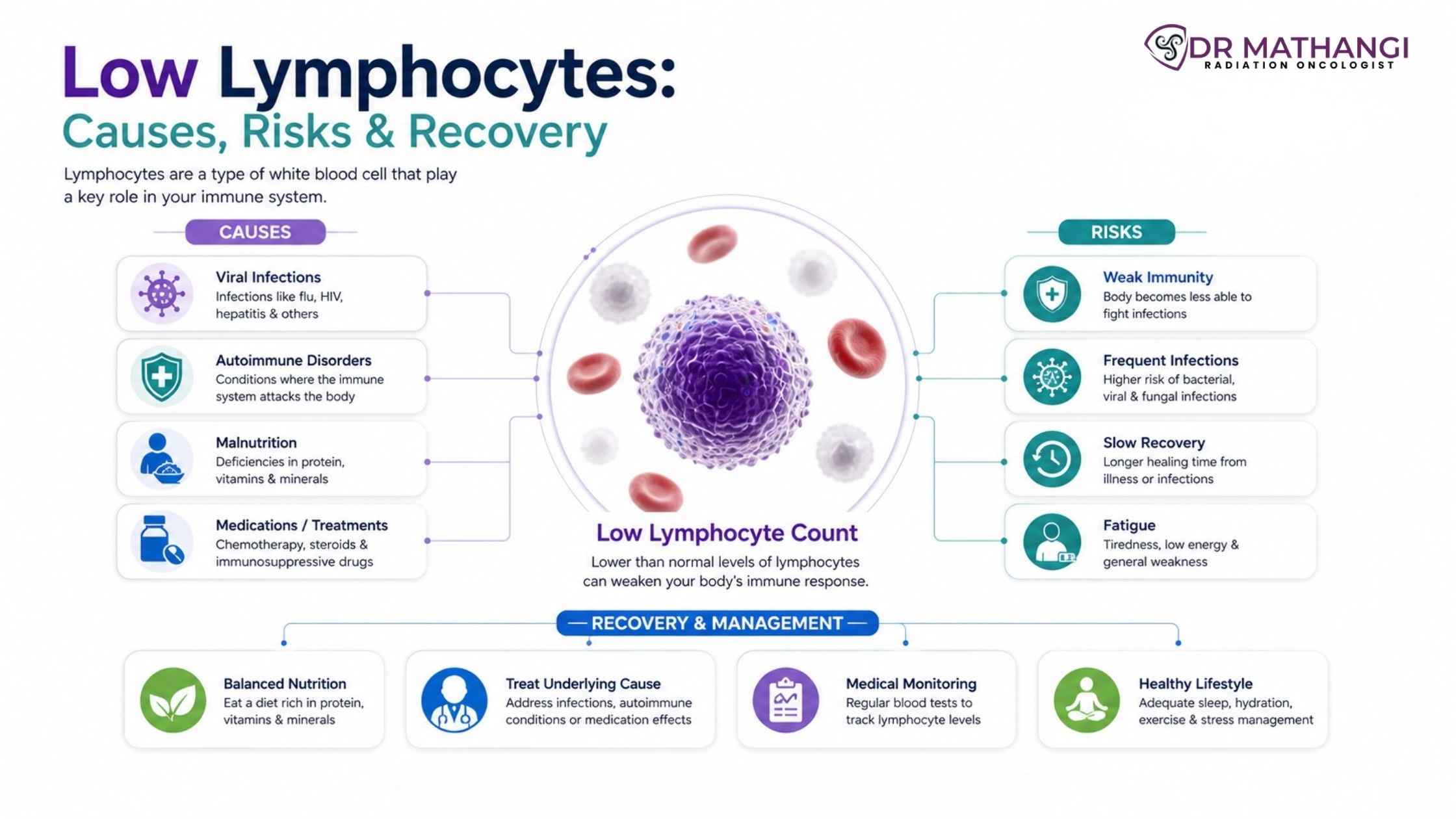
Low lymphocytes—also known as lymphopenia—affect a significant number of patients worldwide, especially those undergoing cancer treatment. Studies suggest that up to 40–70% of cancer patients may experience a measurable absolute lymphocyte count low during therapy. This is not just a lab number—it reflects how strong or vulnerable your immune system truly is.
If your blood report shows that your lymphocytes decrease, it is essential to understand why this happens, what risks it carries, and how you can safely move toward effective lymphocyte recovery. Under the expert care of Dr Mathangi, patients receive highly personalized guidance that not only treats cancer but also supports immune health—something many overlook until complications arise.
What does low lymphocytes mean?
Low lymphocytes refer to a reduced number of lymphocytes—a type of white blood cell responsible for protecting the body against infections, viruses, and abnormal cell growth. In simple terms, low immune cells mean your body’s defense system is weakened.
For those searching for clarity, lymphocytes low means in hindi is often explained as “रक्त में लिम्फोसाइट्स की कमी,” indicating a reduced immune capacity and increased vulnerability to infections.
Why do lymphocytes decrease?
Lymphocytes decrease due to a variety of medical and lifestyle-related factors. Understanding the root cause is crucial for proper treatment and recovery.
- Infections: Viral infections such as HIV, COVID-19, and hepatitis can significantly reduce lymphocyte levels.
- Autoimmune disorders: Conditions like lupus can destroy immune cells.
- Malnutrition: Deficiency in essential nutrients weakens immune production.
- Medications: Steroids and chemotherapy can suppress immune function.
- Cancer treatments: Especially radiation therapy, which can lead to radiation induced lymphopenia causes.
Among these, cancer-related causes require the most specialized care, as improper management can delay treatment outcomes.
What are lymphopenia causes in cancer patients?
Lymphopenia causes in oncology patients are often multifactorial. While the disease itself can suppress immunity, treatments play a significant role.
Key lymphopenia causes include:
- Tumor burden affecting bone marrow function
- Chemotherapy destroying rapidly dividing immune cells
- Radiation therapy impacting circulating lymphocytes
- Chronic inflammation and immune exhaustion
Dr Mathangi, with over 20 years of experience and more than 12,000 successfully treated patients, uses advanced radiation techniques that aim to minimize immune damage while maximizing cancer control.
How does radiation therapy affect lymphocytes?
Radiation therapy is one of the most effective cancer treatments, but it can also lead to a temporary or prolonged drop in lymphocyte levels.
The term radiation induced lymphopenia causes refers to the reduction in lymphocytes due to exposure to radiation fields, especially when large volumes of blood circulation pass through treated areas.
Why this happens:
- Lymphocytes are highly sensitive to radiation
- Blood circulates through irradiated regions
- Repeated exposure leads to cumulative damage
However, with modern techniques such as SBRT, IGRT, and RapidArc—expertly delivered by Dr Mathangi—the exposure to healthy tissues and immune cells is significantly reduced.
What are the risks of low immune cells?
When you have low immune cells, your body becomes vulnerable in multiple ways. Ignoring this condition can lead to serious complications.
Major risks include:
- Frequent infections (bacterial, viral, fungal)
- Delayed recovery from illness
- Poor response to cancer treatment
- Increased hospitalization risk
- Higher fatigue and reduced quality of life
This is where timely intervention becomes critical. Patients who proactively manage lymphocyte levels often experience better treatment outcomes and faster recovery.
How is absolute lymphocyte count low diagnosed?
The condition is diagnosed through a routine blood test called a Complete Blood Count (CBC).
| Parameter | Normal Range | Low Level Indication |
|---|---|---|
| Lymphocyte count | 1000–4800 cells/µL | Below 1000 cells/µL |
An absolute lymphocyte count low should never be ignored, especially in patients undergoing cancer therapy.
How to improve lymphocyte recovery?
Lymphocyte recovery depends on addressing the underlying cause and supporting the immune system through medical and lifestyle interventions.
Steps to support lymphocyte recovery:
- Optimized cancer treatment: Using advanced radiation techniques to preserve immune function
- Nutritional support: Protein-rich diet, vitamins (B12, D), and antioxidants
- Infection control: Preventive care and hygiene
- Medical monitoring: Regular blood tests and immune tracking
- Stress management: Reducing cortisol levels that suppress immunity
Under Dr Mathangi’s supervision, patients receive a comprehensive approach that integrates cutting-edge oncology with immune preservation strategies.
Why early action on lymphocytes decrease matters
Here’s the reality many patients overlook: when lymphocytes decrease, the body silently loses its ability to fight not just infections—but also cancer cells.
This creates a dangerous cycle:
- Weakened immunity
- Reduced treatment tolerance
- Delayed recovery
- Increased complications
Taking early action ensures that you stay ahead of these risks rather than reacting to them later.
Advanced cancer care with immune preservation
Dr Mathangi leads one of the most advanced radiation oncology programs, offering treatments for:
- Head and neck cancers
- Brain tumors
- Spine tumors
- Lung cancers
- Liver cancers
- Breast cancers
- Bladder cancers
- Prostate cancers
- Uterine and cervical cancers
- Anal canal and penile cancers
Her expertise in technologies such as TrueBeam STx, SBRT, and image-guided brachytherapy ensures that treatment is not only effective but also safer for your immune system.
About Dr Mathangi
Dr Mathangi J is a Senior Consultant and In-charge of Radiation Oncology with over two decades of experience. She has trained internationally in Germany and Denmark and is recognized for bringing advanced radiation technologies to India, including Asia Pacific’s first TrueBeam STx installation.
Her approach is rooted in precision, compassion, and innovation—ensuring that every patient receives individualized care that balances cancer control with overall well-being.
Take the next step toward recovery
If you or a loved one has been diagnosed with low lymphocytes or are undergoing cancer treatment, delaying action can compromise outcomes. The right guidance at the right time can make all the difference.
To begin your journey toward better health and stronger immunity, you can submit your details through the contact form:
https://drmathangi.com/contact/
Once submitted, Dr Mathangi’s team will schedule your consultation and guide you through the next steps.
Frequently Asked Questions
What does it mean if my absolute lymphocyte count low?
An absolute lymphocyte count low indicates that your body has fewer lymphocytes than normal, which may reduce your ability to fight infections. Dr. Mathangi evaluates this condition by correlating lab values with symptoms and underlying conditions to ensure accurate diagnosis and targeted care.
Why do lymphocytes decrease in the body?
Lymphocytes decrease due to infections, autoimmune disorders, medications, poor nutrition, or chronic stress. Understanding why lymphocytes decrease is crucial, and Dr. Mathangi focuses on identifying root causes through comprehensive testing and personalized treatment plans.
What are the common lymphopenia causes?
Some common lymphopenia causes include viral infections, chemotherapy, radiation exposure, autoimmune diseases, and severe malnutrition. Dr. Mathangi provides a structured approach to evaluate these causes and offers supportive therapies to restore immune balance.
How do low immune cells affect overall health?
Low immune cells can increase susceptibility to infections, delay healing, and weaken overall immunity. With expert guidance from Dr. Mathangi, patients receive immune-supportive strategies including nutrition, lifestyle changes, and medical interventions.
What are radiation induced lymphopenia causes?
Radiation induced lymphopenia causes include damage to bone marrow and immune tissues during radiation therapy. Dr. Mathangi helps manage such cases with careful monitoring and recovery-focused therapies to protect immune function.
How can lymphocyte recovery be achieved?
Lymphocyte recovery depends on treating the underlying cause, improving nutrition, reducing stress, and sometimes medical supplementation. Dr. Mathangi emphasizes a holistic plan combining medical care and lifestyle optimization to support effective lymphocyte recovery.
lymphocytes low means in hindi – what does it indicate?
The phrase lymphocytes low means in hindi refers to "कम लिम्फोसाइट्स", which indicates a reduced immune defense in the body. Dr. Mathangi ensures patients understand their reports clearly and provides guidance in simple, patient-friendly language.
When should I consult Dr. Mathangi for low lymphocytes?
You should consult Dr. Mathangi if you have persistent abnormal reports, frequent infections, fatigue, or unexplained immune issues. Early evaluation helps identify lymphopenia causes and supports faster recovery with a tailored treatment plan.