Liquid Biopsy vs Radiomics: Future of Early Cancer Detection
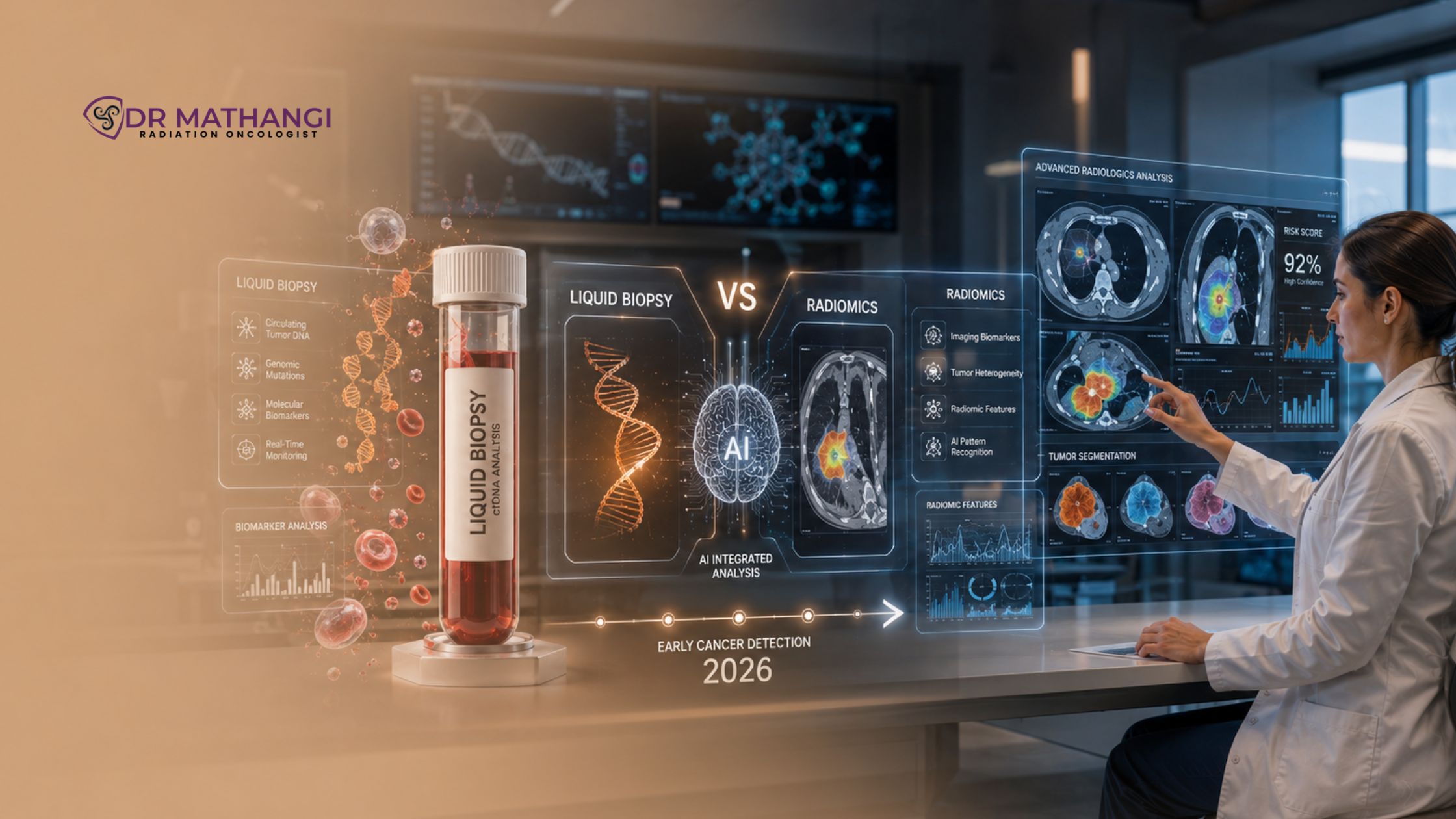
According to the World Health Organization, cancer accounts for nearly 10 million deaths globally every year, and one of the biggest reasons is delayed diagnosis. This is precisely why technologies like Liquid Biopsy vs Radiomics are becoming the center of modern oncology conversations. These advanced approaches are changing how clinicians identify tumors, predict treatment response, and improve survival rates through faster and more accurate diagnosis.
For patients and families, the greatest fear is often not cancer itself, but discovering it too late. Traditional diagnostic approaches sometimes detect tumors only after symptoms become severe. Today, however, breakthroughs in non-invasive cancer detection and imaging analytics are opening a new chapter in precision oncology. Under the guidance of highly experienced specialists like Dr Mathangi J at Gleneagles Cancer Institute, Bangalore, patients now have access to advanced technologies that combine medical expertise with modern innovation.
What is Liquid Biopsy vs Radiomics?
Liquid Biopsy vs Radiomics refers to two cutting-edge approaches used in oncology to identify, analyze, and monitor cancer earlier and more accurately. Liquid biopsy focuses on analyzing cancer-related material in blood samples, while radiomics extracts detailed imaging data from CT, MRI, or PET scans using advanced algorithms and AI systems.
Both technologies support earlier interventions, personalized treatment planning, and improved monitoring. Instead of relying only on invasive surgical biopsies, specialists can now combine imaging intelligence with molecular analysis to understand cancer behavior in remarkable detail.
| Technology | Primary Function | Key Benefit |
|---|---|---|
| Liquid Biopsy | Analyzes cancer cells or DNA in blood | Early molecular detection |
| Radiomics | Extracts data from medical imaging | AI-driven tumor analysis |
| Combined Precision Oncology | Merges imaging and molecular insights | Personalized treatment strategies |
Why are early cancer screening methods becoming essential?
early cancer screening methods are no longer optional in high-risk populations. They are becoming essential because cancers detected at Stage 1 or Stage 2 are significantly more treatable than cancers discovered later. Early diagnosis often means less aggressive treatment, reduced complications, and higher survival rates.
The challenge is that many cancers remain silent during their initial phases. Lung cancer, cervical cancer, prostate cancer, and several gastrointestinal cancers may not produce noticeable symptoms until progression occurs. This is where advanced imaging and molecular diagnostics create a major advantage.
Dr Mathangi has extensive expertise in managing:
- Head and neck cancers
- Brain tumors
- Spine tumors
- Esophagus cancers
- Rectal cancers
- Lung cancers
- Liver cancers
- Breast cancers
- Bladder cancers
- Prostate cancers
- Uterine cancers
- Cervical cancer
- Vulval cancers
- Anal canal cancers
- Penile cancers
Many of these cancers show dramatically improved outcomes when detected early and treated with precision-focused radiation oncology techniques.
How does a blood cancer detection test work?
A blood cancer detection test works by identifying circulating tumor DNA (ctDNA), cancer cells, proteins, or other biomarkers present in the bloodstream. These markers can provide critical clues about the existence and progression of cancer without requiring invasive tissue removal.
Liquid biopsy technology is particularly promising because it allows doctors to:
- Detect cancers earlier
- Monitor treatment effectiveness
- Track recurrence risks
- Understand tumor mutations
- Personalize therapies
For patients already undergoing radiation oncology treatments, this information can help specialists fine-tune therapy protocols with remarkable precision. The ability to monitor molecular changes in real time is one of the reasons oncology is rapidly evolving toward personalized care.
Why is AI cancer diagnosis transforming oncology?
AI cancer diagnosis is transforming oncology because artificial intelligence can analyze complex imaging and molecular data far faster than traditional manual interpretation alone. AI tools help detect subtle abnormalities that may otherwise be overlooked in conventional evaluations.
Radiomics uses sophisticated algorithms to convert imaging scans into quantitative data. This data helps specialists understand:
- Tumor aggressiveness
- Potential spread patterns
- Treatment responsiveness
- Risk of recurrence
- Radiation planning optimization
For example, AI-assisted imaging can help distinguish between healthy tissue and microscopic tumor involvement with greater precision. In radiation oncology, this becomes critically important because highly targeted treatment protects surrounding healthy organs while maximizing tumor control.
Dr Mathangi’s expertise in advanced technologies such as:
- Stereotactic ablative body radiotherapy (SBRT)
- Gated RapidArc
- DIBH gated Radiotherapy
- Image-guided Interstitial Brachytherapy
- SRS and SBRT techniques
ensures that patients benefit from globally aligned cancer treatment standards backed by years of clinical excellence.
What makes non-invasive cancer detection the future?
non-invasive cancer detection is considered the future because it reduces patient discomfort, lowers procedural risks, and enables repeated monitoring without surgery. Patients increasingly prefer safer diagnostic methods that deliver accurate insights with minimal disruption.
Traditional biopsies, while important, may sometimes:
- Cause discomfort
- Require hospitalization
- Carry bleeding risks
- Delay treatment planning
- Fail to capture tumor heterogeneity
In contrast, liquid biopsies and radiomics can provide ongoing insights during treatment journeys. This is especially important for cancers that evolve quickly or respond unpredictably to therapy.
Patients today are more informed than ever before. They actively search for advanced cancer solutions, precision medicine approaches, and modern radiation oncology expertise. Waiting for symptoms to worsen can result in lost opportunities for earlier interventions.
How are radiomics and liquid biopsy improving radiation oncology?
Radiomics and liquid biopsy are helping radiation oncologists personalize treatment plans with unprecedented accuracy. Instead of a one-size-fits-all approach, specialists can tailor therapies based on imaging patterns, tumor biology, and molecular behavior.
This level of precision is especially valuable in:
- Brain tumors
- Head and neck cancers
- Lung cancers
- Prostate cancers
- Breast cancers
- Cervical cancer
Dr Mathangi’s leadership at Gleneagles Cancer Institute reflects this evolution toward intelligent oncology care. Having successfully treated over 12,000 patients, she combines clinical experience with advanced treatment technologies that many centers are only beginning to adopt.
Her achievements include installing Asia Pacific’s first TrueBeam STx Machine, a milestone that highlights her commitment to innovation-driven cancer care.
What should patients know before choosing advanced cancer diagnostics?
Patients should understand that early detection technologies are most effective when guided by experienced oncology specialists. Technology alone cannot replace clinical judgment. The interpretation of imaging, molecular patterns, and treatment implications requires deep expertise.
When evaluating cancer care providers, patients should consider:
- Experience in advanced radiation oncology
- Access to precision technologies
- Multidisciplinary treatment planning
- Track record of successful outcomes
- Availability of personalized care
This is where Dr Mathangi’s profile becomes especially reassuring for patients across Bangalore, South India, and North India. Her international training in Germany and Denmark, combined with two decades of oncology experience, positions her among the highly experienced radiation oncologists in the region.
Why are patients increasingly choosing precision oncology?
Patients are increasingly choosing precision oncology because they want treatments that are targeted, effective, and evidence-based. Generic treatment approaches are rapidly being replaced by personalized strategies informed by imaging intelligence and molecular diagnostics.
The emotional burden of cancer is enormous. Families often wonder:
- Was the cancer detected too late?
- Could treatment have started earlier?
- Are there more advanced options available?
- Is the therapy being precisely targeted?
Modern technologies help answer these concerns with greater clarity. Early intervention frequently means:
- Higher cure probabilities
- Reduced treatment toxicity
- Shorter recovery timelines
- Better quality of life
- Improved long-term survival
Ignoring early warning signs or postponing specialist consultations may lead to disease progression that becomes significantly harder to manage later.
About Dr Mathangi
Dr Mathangi J is a Senior Consultant and In-charge of Radiation Oncology at Gleneagles Cancer Institute, Bangalore. She holds MBBS, DMRT, and DNB qualifications and has more than 20 years of experience in advanced oncology care.
She completed her DMRT at Madras Medical College, Chennai, followed by DNB residency at Apollo Cancer Specialty Hospital, Chennai. Her advanced international training includes:
- Stereotactic techniques from Klinikum Frankfurt (Oder), Germany
- IGRT/RapidArc training from Copenhagen University Hospital, Denmark
- Intraoperative radiotherapy training from 4EIEVSEN
Her commitment to advanced precision oncology has helped thousands of patients receive highly personalized and technologically advanced radiation therapy solutions.
Take the next step toward early cancer detection
The future of oncology is moving rapidly toward intelligent diagnostics, precision therapies, and patient-centered care. Technologies associated with Liquid Biopsy vs Radiomics are no longer futuristic concepts. They are actively shaping how cancers are identified and treated today.
For patients seeking advanced oncology guidance, timely intervention can make a life-changing difference. Whether it is understanding the role of a blood cancer detection test, exploring AI cancer diagnosis, or evaluating early cancer screening methods, consulting an experienced radiation oncologist is an important first step.
To book an appointment with Dr Mathangi, patients can submit their contact information through the official contact form at:
https://drmathangi.com/contact/
Her team will schedule the appointment and notify patients accordingly.
Frequently Asked Questions
What is the difference between Liquid Biopsy vs Radiomics in cancer diagnosis?
Liquid Biopsy vs Radiomics is an increasingly important discussion in modern oncology because both technologies support earlier and more accurate cancer detection in different ways. Liquid biopsy focuses on identifying cancer-related markers in blood samples, while radiomics uses advanced imaging analysis and data extraction from CT, MRI, or PET scans.
Dr. Mathangi evaluates how these technologies can complement each other for better clinical decision-making. In many cases, combining imaging insights with molecular findings helps create a more personalized treatment pathway while improving patient comfort and reducing unnecessary invasive procedures.
How does a blood cancer detection test help in identifying cancer early?
A blood cancer detection test can identify circulating tumor DNA, cancer-associated proteins, or abnormal cellular activity before symptoms become severe. These tests are becoming valuable tools for monitoring high-risk patients and detecting disease recurrence at an earlier stage.
Dr. Mathangi emphasizes evidence-based screening strategies and helps patients understand when blood-based diagnostics may be useful alongside imaging studies and clinical evaluations. Early interpretation of results can significantly improve treatment planning and patient outcomes.
What role does AI cancer diagnosis play in modern oncology?
AI cancer diagnosis technologies are transforming how physicians interpret imaging scans, pathology reports, and molecular data. Artificial intelligence systems can identify patterns that may not always be immediately visible during manual review, helping improve speed and diagnostic precision.
Dr. Mathangi incorporates advanced diagnostic approaches with careful clinical expertise to ensure that technology supports, rather than replaces, individualized patient care. AI-assisted analysis is especially valuable in radiomics, where large imaging datasets can reveal subtle indicators of early disease progression.
Are non-invasive cancer detection methods reliable for routine screening?
Non-invasive cancer detection methods have improved significantly over the past decade and are now widely studied for their ability to identify cancers earlier while minimizing discomfort for patients. These methods may include blood-based biomarkers, imaging technologies, radiomics analysis, and genetic profiling.
While no single test is universally suitable for every patient, Dr. Mathangi carefully assesses family history, symptoms, age, and risk factors before recommending a diagnostic pathway. The goal is to improve early identification while reducing unnecessary invasive procedures whenever possible.
Which early cancer screening methods are considered most effective today?
The most effective early cancer screening methods often depend on the type of cancer being evaluated and the patient’s individual risk profile. Mammography, low-dose CT scans, MRI imaging, colonoscopy, genetic testing, and liquid biopsy technologies are all contributing to improved detection rates.
Dr. Mathangi believes that combining clinical expertise with advanced diagnostics offers the best opportunity for earlier intervention. Personalized screening strategies can help detect abnormalities before they progress into advanced disease stages.
Can radiomics improve treatment planning after cancer is detected?
Yes, radiomics can provide detailed information about tumor behavior, tissue characteristics, and treatment response using advanced imaging analytics. By extracting quantitative data from scans, physicians can better understand tumor aggressiveness and monitor therapy effectiveness over time.
Dr. Mathangi uses a patient-centered approach that integrates radiological findings with pathology and clinical evaluations. This helps create more accurate treatment strategies and supports ongoing monitoring throughout the patient journey.
Who should consider advanced cancer screening technologies?
Individuals with a family history of cancer, genetic predisposition, long-term smoking history, chronic inflammatory conditions, or persistent unexplained symptoms may benefit from advanced screening approaches. Early consultation is especially important for people at elevated risk.
Dr. Mathangi guides patients through available diagnostic options and recommends appropriate evaluations based on medical history and clinical indicators. The focus is always on timely detection, informed decisions, and personalized care planning.
Why is early cancer detection becoming more technology-driven?
Early cancer detection is becoming more technology-driven because advanced imaging, molecular diagnostics, and artificial intelligence can identify abnormalities long before traditional symptoms appear. These innovations help physicians detect smaller lesions, monitor biological changes, and improve overall accuracy.
Dr. Mathangi stays updated with evolving diagnostic advancements to provide patients with modern, evidence-based oncology care. Integrating innovative screening technologies with compassionate medical guidance can significantly improve long-term outcomes and treatment success.