ctDNA Testing for Cancer Monitoring: Faster Results & Personalized Treatment in 2026
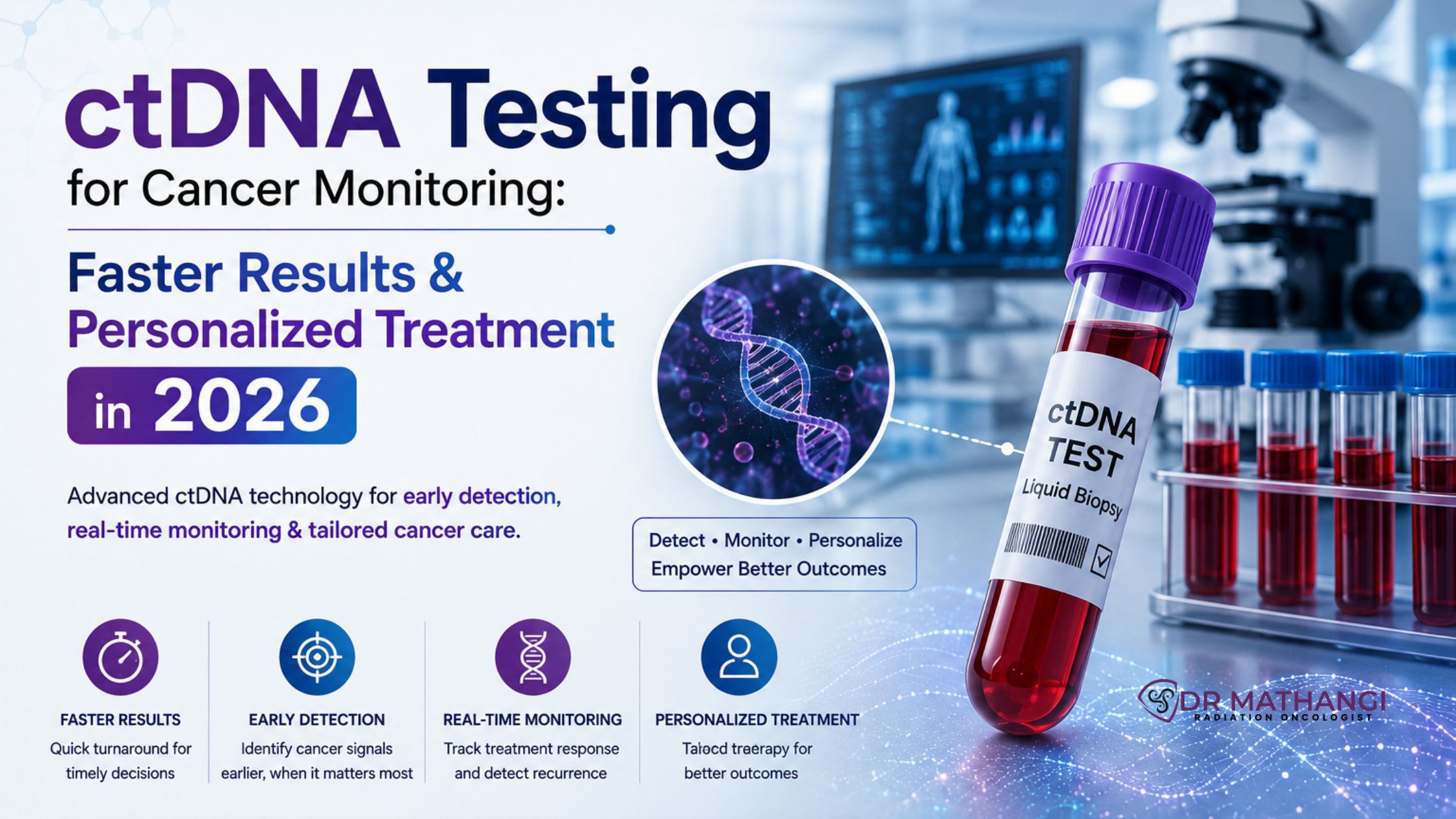
According to recent global oncology research, liquid biopsy technologies such as ctDNA testing for cancer monitoring are expected to become one of the fastest-growing innovations in cancer care by 2026 because they can detect cancer-related genetic changes weeks or even months earlier than traditional imaging in some cases. For patients battling cancer, this means earlier intervention, more accurate monitoring, and treatment plans that are tailored to the biology of the tumor itself rather than generalized protocols.
At a time when cancer cases are rising across India, patients and families are no longer satisfied with “wait and watch” approaches. They want faster answers, fewer delays, less invasive diagnostics, and therapies that adapt in real time. This is precisely where Dr Mathangi, Senior Consultant & In-charge – Radiation Oncology at Gleneagles Cancer Institute, Bangalore, is helping transform patient outcomes through advanced oncology care integrated with modern molecular technologies.
With more than 20 years of experience and over 12,000 successfully treated patients, Dr Mathangi combines advanced radiotherapy expertise with evidence-based oncology strategies that support modern cancer monitoring pathways. Her approach focuses on precision, early intervention, and individualized decision-making for cancers including head and neck cancers, lung cancers, prostate cancers, brain tumors, cervical cancer, breast cancers, uterine cancers, bladder cancers, liver cancers, anal canal cancers, penile cancers, spine tumors, esophagus cancers, rectal cancers, and vulval cancers.
What is ctDNA testing and why is it important in 2026?
ctDNA testing for cancer monitoring is an advanced diagnostic approach that analyzes fragments of tumor-derived genetic material present in the bloodstream. These fragments are known as circulating tumor DNA, and they provide critical insights into how cancer behaves, responds to treatment, or returns after therapy.
Traditional scans and biopsies remain important in oncology, but they can sometimes miss microscopic disease activity or detect recurrence only after visible tumor growth. Modern liquid biopsy approaches are changing that reality.
In 2026, cancer care is increasingly moving toward:
- Earlier relapse detection
- Faster therapy adjustments
- Reduced dependence on invasive biopsies
- Real-time monitoring of treatment response
- Data-driven personalized decisions
This evolution is not just technological progress. It represents hope for patients who fear recurrence, treatment resistance, or delayed diagnosis.
How does circulating tumor DNA help doctors monitor cancer?
Circulating tumor DNA acts like a biological fingerprint released by cancer cells into the bloodstream. By analyzing these fragments, oncologists can detect specific mutations, monitor disease burden, and identify whether treatment is working effectively.
For many patients, this creates a major advantage because cancer behavior can be tracked dynamically rather than waiting months for radiological confirmation.
Key benefits include:
| Clinical Benefit | Impact on Patients |
|---|---|
| Early recurrence detection | Allows timely intervention before visible tumor growth |
| Therapy response tracking | Helps doctors assess effectiveness faster |
| Mutation identification | Supports targeted and personalized therapies |
| Reduced invasive procedures | Minimizes repeated surgical biopsies |
| Real-time monitoring | Enables ongoing treatment optimization |
Patients undergoing treatment for lung cancers, breast cancers, prostate cancers, and colorectal malignancies are among those increasingly benefiting from these advancements.
Why is personalized cancer treatment becoming the future of oncology?
Personalized cancer treatment is rapidly replacing one-size-fits-all oncology models because every tumor behaves differently at the molecular level. Two patients with the same cancer stage may respond completely differently to the same treatment.
Modern oncology aims to identify:
- Genetic mutations
- Treatment resistance patterns
- Tumor evolution over time
- Residual microscopic disease
- Immunotherapy suitability
Dr Mathangi’s expertise in advanced radiation oncology complements this evolving landscape perfectly. Her experience with technologies such as SBRT, IGRT, RapidArc, DIBH gated radiotherapy, and image-guided interstitial brachytherapy allows treatment precision to align with modern molecular intelligence.
Patients today increasingly understand that delayed treatment adjustments can impact outcomes. This is why integrated oncology care involving advanced diagnostics and precision-guided therapies is becoming essential rather than optional.
What is molecular residual disease and why does it matter?
Molecular residual disease refers to tiny traces of cancer that may remain in the body after surgery, chemotherapy, radiation therapy, or targeted treatment, even when imaging appears clear.
This is one of the biggest fears cancer survivors face: “What if the cancer comes back without warning?”
Traditional imaging may not always detect microscopic disease early enough. However, ctDNA analysis can sometimes identify these residual cancer signals earlier, allowing oncologists to intervene before a major recurrence develops.
This proactive approach can influence:
- Post-treatment monitoring schedules
- Decisions regarding additional therapy
- Radiation planning strategies
- Targeted therapy selection
- Long-term surveillance protocols
For patients and families, earlier detection often translates into greater treatment flexibility and potentially better outcomes.
How is precision oncology transforming cancer care?
Precision oncology focuses on matching the right treatment to the right patient at the right time using genetic, molecular, and clinical insights.
Instead of relying solely on cancer type and stage, modern oncology increasingly evaluates:
- Tumor genetics
- Mutation profiles
- Biomarker behavior
- Immune response patterns
- Therapy sensitivity
Dr Mathangi’s leadership at Gleneagles Cancer Institute places patients within an advanced ecosystem of oncology care where treatment planning is driven by clinical precision and multidisciplinary collaboration.
Her extensive international training from Germany and Denmark in sophisticated radiotherapy technologies reflects a commitment to staying ahead of evolving global cancer care standards.
In today’s competitive healthcare landscape, patients increasingly seek oncologists who combine:
- Deep clinical expertise
- Advanced technology access
- Evidence-based treatment planning
- Compassionate patient communication
- Long-term cancer monitoring strategies
This combination is exactly why many patients across South India and North India trust Dr Mathangi for comprehensive cancer care.
Why are patients choosing a cancer blood test over repeated invasive procedures?
A modern cancer blood test offers several practical and emotional advantages compared to repeated invasive tissue biopsies.
Cancer journeys are already physically and emotionally exhausting. Many patients experience anxiety before scans, procedures, or biopsy appointments. Blood-based monitoring approaches can help reduce some of that burden while still delivering valuable clinical insights.
Advantages include:
- Faster sample collection
- Reduced procedural discomfort
- Shorter recovery time
- Potential for frequent monitoring
- Improved patient convenience
For patients with metastatic cancers or tumors located in difficult anatomical regions, liquid biopsy approaches may provide critical molecular information when traditional biopsies are challenging.
Which cancers benefit most from advanced cancer monitoring approaches?
Several cancer types are increasingly benefiting from molecular monitoring and advanced radiation oncology integration.
These include:
- Head and neck cancers
- Brain tumors
- Spine tumors
- Lung cancers
- Liver cancers
- Breast cancers
- Bladder cancers
- Prostate cancers
- Uterine cancers
- Cervical cancer
- Vulval cancers
- Anal canal cancers
- Penile cancers
- Esophagus cancers
- Rectal cancers
Patients facing these conditions often require not only aggressive treatment but also intelligent long-term monitoring strategies to reduce the chances of delayed recurrence detection.
Why experience matters in modern cancer treatment
Technology alone does not improve outcomes. Clinical interpretation, treatment timing, multidisciplinary coordination, and patient-specific judgment remain essential.
Dr Mathangi’s extensive oncology experience matters because modern cancer care involves far more than simply administering radiation therapy. It requires:
- Accurate treatment planning
- Balancing efficacy with safety
- Reducing damage to healthy tissue
- Monitoring disease progression intelligently
- Coordinating integrated oncology care
Her distinction of helping install Asia Pacific’s first TrueBeam STx Machine demonstrates her commitment to bringing cutting-edge cancer technologies to patients in India.
Patients today are more informed than ever before. They actively compare oncologists, treatment centers, technologies, and outcomes. When patients delay advanced monitoring or precision-guided treatment pathways, they may unknowingly lose valuable time that could influence prognosis and future treatment options.
How can patients take the next step toward advanced cancer care?
The biggest mistake many patients make is waiting until symptoms worsen or recurrence becomes clinically obvious. Early monitoring and proactive oncology planning often create significantly better opportunities for intervention.
Patients seeking advanced cancer care under Dr Mathangi can begin by submitting their contact details through the official appointment page:
https://drmathangi.com/contact/
Once the form is submitted, Dr Mathangi’s team will coordinate the appointment process and provide scheduling details.
About Dr Mathangi
Dr Mathangi J is a Senior Consultant & In-charge – Radiation Oncology at Gleneagles Cancer Institute, Bangalore. With over two decades of experience and more than 12,000 successfully treated patients, she is recognized for her expertise in advanced radiation oncology techniques including SBRT, IGRT, Gated RapidArc, DIBH gated radiotherapy, and image-guided interstitial brachytherapy.
She completed her DMRT at Madras Medical College, Chennai, and pursued DNB residency training at Apollo Cancer Specialty Hospital, Chennai. Her international advanced training includes stereotactic radiotherapy techniques from Germany and IGRT/RapidArc training from Denmark.
Dr Mathangi specializes in:
- Head and neck cancers
- Brain tumors
- Lung cancers
- Prostate cancers
- Breast cancers
- Cervical cancer
- Endometrial cancers
Her patient-centric approach, combined with advanced oncology technologies and precision-guided treatment strategies, has made her one of the trusted names in modern cancer care in India.
Frequently Asked Questions
What is ctDNA testing and why is it important for cancer monitoring in 2026?
ctDNA testing for cancer monitoring is an advanced diagnostic approach that analyzes small fragments of tumor-derived genetic material circulating in the bloodstream. These fragments, known as circulating tumor DNA, can provide valuable insights into how a patient’s cancer is responding to treatment, whether residual disease remains after therapy, and if the cancer is showing signs of recurrence.
In 2026, this technology is becoming increasingly important because it offers faster turnaround times, minimally invasive sample collection, and highly targeted information that supports better clinical decisions. Dr. Mathangi uses modern molecular testing strategies to help patients receive timely assessments that can complement imaging studies and traditional pathology reports.
How does a cancer blood test differ from a traditional biopsy?
A traditional tissue biopsy requires the removal of a sample directly from the tumor, which may involve surgery or an invasive procedure. In contrast, a cancer blood test works by detecting tumor-related genetic material in a simple blood sample.
This approach can be especially useful when repeated monitoring is needed over time. Since blood draws are less invasive, patients may experience greater comfort and convenience during follow-up care. Dr. Mathangi may recommend liquid biopsy-based monitoring to track treatment response, identify genetic mutations, and evaluate changes in tumor behavior during ongoing therapy.
What role does circulating tumor DNA play in personalized treatment planning?
circulating tumor DNA can reveal specific mutations, resistance markers, and molecular characteristics associated with an individual’s cancer. This information allows oncologists to tailor therapies more precisely rather than relying on a one-size-fits-all approach.
Dr. Mathangi integrates molecular insights into personalized cancer treatment strategies whenever appropriate. By understanding how a tumor evolves over time, treatment plans can be adjusted to improve effectiveness, reduce unnecessary therapies, and support better long-term disease management.
Can ctDNA testing help detect cancer recurrence earlier?
Yes. One of the major advantages of ctDNA-based monitoring is its ability to detect molecular changes that may appear before visible signs are found on imaging scans. This can help clinicians identify recurrence at an earlier stage and intervene more quickly.
Dr. Mathangi may use serial monitoring approaches in selected patients to evaluate disease trends after surgery, chemotherapy, radiation therapy, or targeted treatment. Early detection of recurrence can potentially create more opportunities for timely therapeutic decisions and closer follow-up.
What is molecular residual disease and why does it matter?
molecular residual disease refers to tiny amounts of cancer cells or tumor-derived DNA that may remain in the body after treatment, even when scans show no obvious signs of cancer. Detecting these microscopic traces can help doctors understand whether the disease has truly been eliminated or if there is still a risk of recurrence.
Advanced liquid biopsy technologies can assist in identifying these residual molecular signals with high sensitivity. Dr. Mathangi focuses on evidence-based monitoring methods that support more informed post-treatment care and individualized surveillance plans for patients.
How does precision oncology improve cancer care outcomes?
precision oncology uses genetic and molecular information to guide cancer diagnosis, monitoring, and treatment selection. Instead of treating cancers solely based on where they originate in the body, this approach also evaluates the unique biological profile of the tumor.
By incorporating molecular testing, targeted therapies, and longitudinal monitoring, Dr. Mathangi aims to provide more individualized care pathways for patients. Precision-driven approaches may improve treatment matching, support earlier intervention, and reduce exposure to therapies that are less likely to be effective.
Who may benefit most from ctDNA-based cancer monitoring?
Patients undergoing targeted therapy, immunotherapy, chemotherapy, or post-surgical surveillance may benefit from ctDNA-based monitoring, depending on their cancer type and clinical condition. It can also be valuable for individuals who require regular follow-up assessments without repeated invasive procedures.
Dr. Mathangi carefully evaluates each patient’s medical history, tumor characteristics, and treatment goals before recommending molecular monitoring strategies. The suitability of testing depends on several clinical factors, including cancer stage, prior treatments, and the availability of validated biomarkers.
Why are faster diagnostic results becoming increasingly important in oncology?
Faster diagnostic insights can significantly influence treatment timing and clinical decision-making in oncology. Delays in identifying treatment response or disease progression may impact outcomes and increase uncertainty for patients and families.
Modern liquid biopsy platforms can often provide rapid molecular insights compared to traditional testing pathways. Dr. Mathangi emphasizes timely, patient-focused care by integrating advanced diagnostic technologies that support efficient communication, personalized follow-up planning, and data-driven treatment adjustments when appropriate.