How Liquid Biopsy Helps Detect Cancer Recurrence Before Scans
By Dr Mathangi J, Senior Consultant & In-charge - Radiation Oncology, Gleneagles Cancer Institute, Bangalore
What Is Early Cancer Recurrence Detection And How Does Liquid Biopsy Help?
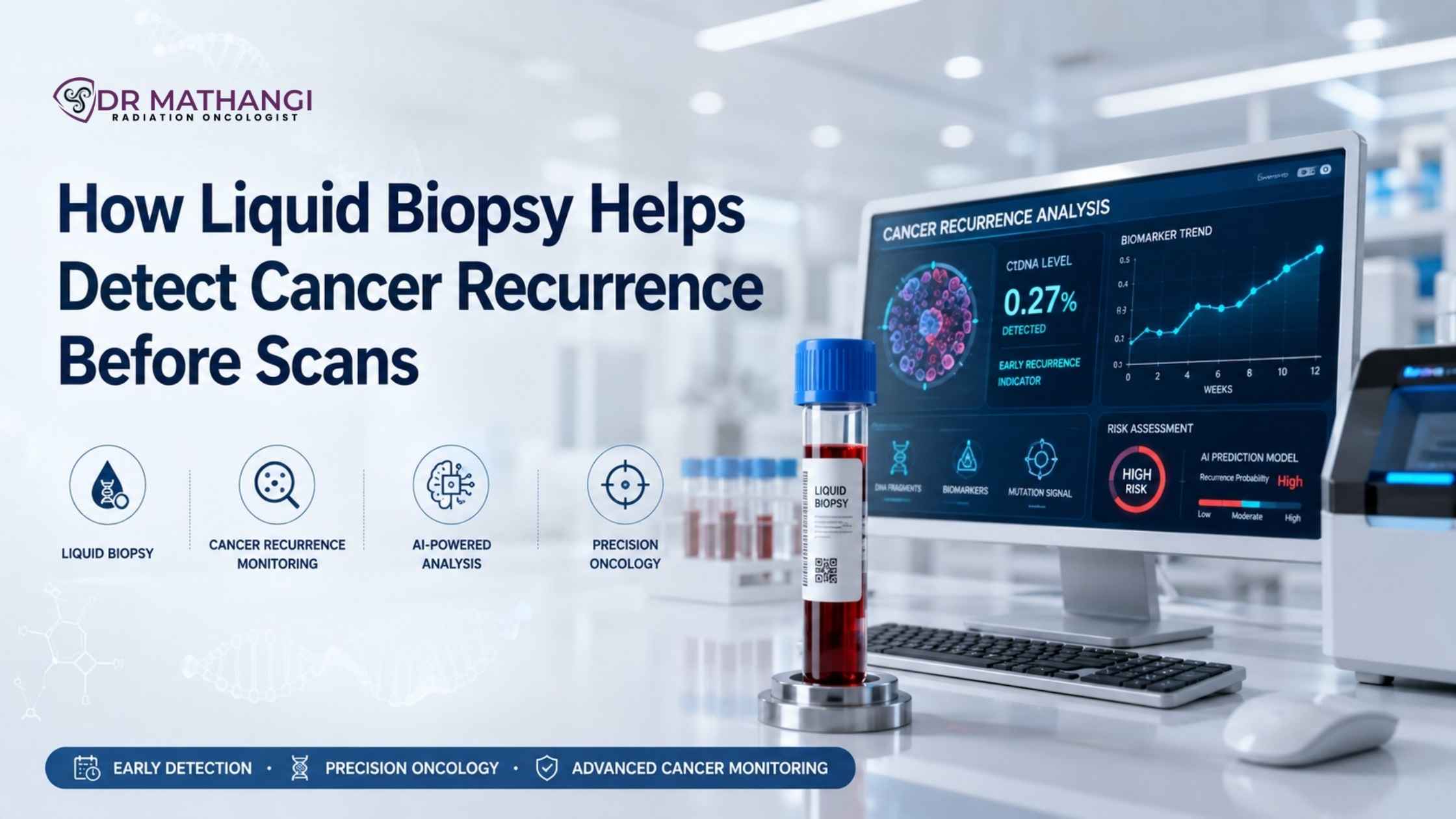
Early cancer recurrence detection refers to identifying the return of cancer cells in the body before they become visible on traditional imaging scans. According to recent studies, up to 30% of patients experience cancer recurrence within five years of successful primary treatment, and most recurrences are detected at advanced stages when treatment options are limited.1 Liquid biopsy is revolutionizing how oncologists like Dr Mathangi can detect these recurrences much earlier than scans, offering patients a vital head start in their fight against cancer.
- Liquid biopsy analyzes blood samples to detect traces of cancer DNA, called circulating tumor DNA (ctDNA).
- This technique enables real-time, non-invasive early cancer recurrence detection and offers actionable insights before tumors reappear on CT or MRI scans.
- Dr Mathangi J at Gleneagles Cancer Institute uses this cutting-edge approach as part of her advanced cancer management protocol in Bangalore.
Why Is Early Detection Of Cancer Recurrence So Critical?
Early detection is key to improving cancer survival rates. Most relapses are caught late—often after symptoms develop or visible changes are seen on scans. By then, the cancer may have spread or become more aggressive, reducing the chances of successful treatment.
Liquid biopsy bridges this gap. By detecting minute genetic changes in blood, it enables oncologists to intervene up to 6–12 months before standard imaging detects a recurrence. This time advantage can mean less aggressive treatments, improved quality of life, and better long-term outcomes.
How Does CtDNA Recurrence Test Work?
The ctDNA recurrence test is a form of liquid biopsy that identifies fragments of DNA shed by cancer cells into the bloodstream. This test is highly sensitive, capable of detecting even tiny amounts of tumor DNA that indicate the earliest stages of relapse.
- Blood draw: A simple blood sample is collected from the patient.
- DNA analysis: The sample is analyzed in a specialized laboratory for specific genetic mutations or alterations associated with the patient’s cancer.
- Result interpretation: If ctDNA is detected, it signals the potential return of cancer, even before imaging can reveal a tumor.
Dr Mathangi incorporates the ctDNA recurrence test into her cancer relapse monitoring protocol, ensuring her patients receive the most advanced and timely care possible.
What Makes Liquid Biopsy An Advanced Cancer Diagnostics Tool?
Liquid biopsy represents a leap forward in advanced cancer diagnostics. Unlike traditional biopsies, which require removing tissue directly from the tumor (often through invasive procedures), liquid biopsy is non-invasive, repeatable, and offers a window into the real-time behavior of cancer cells throughout the body.
Advantages Over Traditional Scans
- Earlier detection: Finds recurrence months before imaging scans.
- Less invasive: No surgical procedures are needed.
- Dynamic monitoring: Tracks cancer evolution and treatment response over time.
- Broader coverage: Detects changes in hard-to-scan areas (e.g., bone, brain, lymph nodes).
- Personalized care: Identifies specific genetic mutations for targeted therapies.
At Gleneagles Cancer Institute, Dr Mathangi’s expertise in advanced cancer diagnostics ensures that patients have access to these groundbreaking technologies, leading to earlier interventions and tailored treatment strategies.
How Does Cancer Relapse Monitoring Benefit From Liquid Biopsy?
Cancer relapse monitoring is a continuous process that tracks patients after their initial treatment to catch any signs of returning disease. Traditionally, this has relied on scheduled scans and clinical symptoms, which may miss very early microscopic recurrences.
Liquid biopsy transforms this process by enabling:
- Proactive intervention: Oncologists can adjust treatment plans before symptoms or scan abnormalities appear.
- Reduced unnecessary treatment: Avoids overtreatment in patients with no molecular evidence of disease.
- Peace of mind: Patients benefit from the reassurance that their care team, led by Dr Mathangi, is monitoring for hidden threats with the latest technology.
This approach is especially beneficial for cancers that need RT (radiation therapy), including head and neck cancers, brain tumors, spine tumors, esophagus and rectal cancers, lung cancers, liver cancers, breast cancers, bladder cancers, prostate cancers, uterine cancers, cervical cancer, vulval cancers, anal canal cancers, and penile cancers.
What Is MRD Testing And Why Is It Important?
MRD testing stands for Minimal Residual Disease testing. It detects tiny amounts of cancer cells that remain in the body after treatment, which are too small to be seen on scans but can eventually lead to relapse.
- Early warning: MRD testing, using liquid biopsy, can reveal molecular signs of cancer well before other methods.
- Risk stratification: Helps identify patients at higher risk of recurrence, enabling more aggressive monitoring or therapy.
- Better outcomes: Studies show MRD-guided care leads to improved survival and decreased relapse rates.
As part of her commitment to advanced cancer diagnostics, Dr Mathangi integrates MRD testing for select patients, ensuring even the smallest traces of disease are not overlooked.
Who Should Consider Liquid Biopsy For Early Cancer Recurrence Detection?
Patients who have completed primary cancer treatment are at risk for recurrence, particularly those with cancers prone to relapse or with a history of aggressive disease. Liquid biopsy is especially recommended for:
- Individuals treated for cancers that need RT, including breast, lung, prostate, cervical, head and neck, brain, and colorectal cancers.
- Patients with difficult-to-monitor tumors or those with a high risk of recurrence.
- Anyone seeking proactive, personalized follow-up care tailored to their unique genetic and clinical profile.
Under Dr Mathangi’s expert supervision, patients benefit from a comprehensive, evidence-based approach to recurrence surveillance.
Why Choose Dr Mathangi For Advanced Cancer Diagnostics In Bangalore?
Dr Mathangi J is a leading authority in radiation oncology, with over 20 years of clinical experience and more than 12,000 patients successfully treated. As the Senior Consultant and In-charge at Gleneagles Cancer Institute, Bangalore, she specializes in integrating the latest diagnostic and therapeutic advances for optimal cancer care.
- Extensively trained in advanced radiation techniques from renowned global institutions.
- Pioneered the installation of Asia Pacific’s first TrueBeam STx Machine.
- Director of Fellowship in Advanced Radiotherapy techniques affiliated with RGUHS.
Her unique expertise, combined with a compassionate, patient-centric approach, ensures every individual receives state-of-the-art care—including liquid biopsy, ctDNA recurrence test, and MRD testing for early cancer recurrence detection.
How To Book A Liquid Biopsy Assessment With Dr Mathangi
Don’t wait for cancer to return before taking action. If you or a loved one has completed cancer treatment, now is the time for proactive surveillance.
- Visit https://drmathangi.com/contact/
- Fill in your contact information.
- Dr Mathangi’s team will schedule your appointment and notify you promptly.
Secure your future health with the most advanced tools for early cancer recurrence detection in Bangalore, guided by one of India’s foremost cancer specialists.
About Dr Mathangi J
Dr Mathangi J is a highly respected Senior Radiation Oncologist and In-Charge of the Gleneagles Cancer Institute, Bangalore—a leading center for comprehensive cancer care in India. With international training and a proven record in advanced oncology techniques, she is dedicated to delivering personalized, evidence-based care for patients with head and neck cancers, brain tumors, spine tumors, esophagus and rectal cancers, lung cancers, liver cancers, breast cancers, bladder cancers, prostate cancers, uterine cancers, cervical cancer, vulval cancers, anal canal cancers, and penile cancers.
To experience the benefits of liquid biopsy and ensure the best possible outcomes for yourself or your loved ones, book a consultation with Dr Mathangi today.
Frequently Asked Questions
What is a liquid biopsy and how does it help with early cancer recurrence detection?
A liquid biopsy is a minimally invasive blood test that detects tiny fragments of cancer DNA, known as circulating tumor DNA (ctDNA), in the bloodstream. This advanced cancer diagnostics tool can identify the return of cancer, or recurrence, much earlier than traditional imaging scans. By catching signs of recurrence early, patients and their doctors, like Dr. Mathangi, can make timely decisions about treatment adjustments and follow-up care.
How does a ctDNA recurrence test work for cancer relapse monitoring?
A ctDNA recurrence test analyzes a blood sample to look for genetic material released by cancer cells. These tests are highly sensitive and can detect molecular signs of cancer relapse even before symptoms or changes appear on scans. For patients under Dr. Mathangi’s care, ctDNA testing becomes a valuable part of ongoing cancer relapse monitoring, enabling proactive management.
Why is liquid biopsy more effective than scans alone for monitoring cancer recurrence?
Scans can only detect tumors once they reach a certain size, but a liquid biopsy can reveal molecular evidence of recurrence much earlier. This means that with tools like MRD testing (Minimal Residual Disease testing), patients get a crucial head start, often detecting recurrence months before a scan would show any abnormality. Dr. Mathangi uses this approach to ensure that any signs of relapse are addressed immediately.
What is MRD testing and how does it relate to liquid biopsy?
MRD testing stands for Minimal Residual Disease testing. It’s a highly sensitive technique, often performed using liquid biopsy, to detect trace amounts of cancer cells that remain in the body after treatment. MRD testing can help determine how effective treatment has been and whether there are signs of recurrence at a stage too early for imaging to detect. Dr. Mathangi incorporates MRD testing into her follow-up protocols for personalized and precise care.
How often should cancer survivors have liquid biopsy or ctDNA testing?
The frequency of liquid biopsy or ctDNA recurrence test depends on the type of cancer, risk of recurrence, and individual patient factors. Dr. Mathangi customizes a surveillance plan for each patient, which may include periodic liquid biopsies at regular intervals for optimal early cancer recurrence detection and cancer relapse monitoring.
Can liquid biopsy replace traditional scans for all cancer patients?
While liquid biopsy is a powerful tool for advanced cancer diagnostics, it is usually used in combination with imaging scans rather than as a complete replacement. Dr. Mathangi recommends integrating liquid biopsy with other monitoring methods to achieve the most accurate and comprehensive picture of a patient’s health.
How does Dr. Mathangi utilize liquid biopsy in her practice?
Dr. Mathangi offers advanced cancer diagnostics, including liquid biopsy, to patients at risk of recurrence. She tailors testing schedules and interprets ctDNA and MRD results alongside clinical findings, ensuring early intervention and the best possible outcomes for patients. Her expertise ensures that each patient receives individualized follow-up using cutting-edge technology.
What are the benefits of early cancer recurrence detection for survivors?
Early cancer recurrence detection allows for prompt intervention, which can improve treatment effectiveness and outcomes. By identifying relapse at the molecular level before physical symptoms arise, patients have more options and a better chance at long-term remission. Liquid biopsy, ctDNA testing, and MRD testing are all vital components of Dr. Mathangi’s approach to proactive survivorship care.