Radiation Pneumonitis Prevention During Esophageal Cancer Radiotherapy
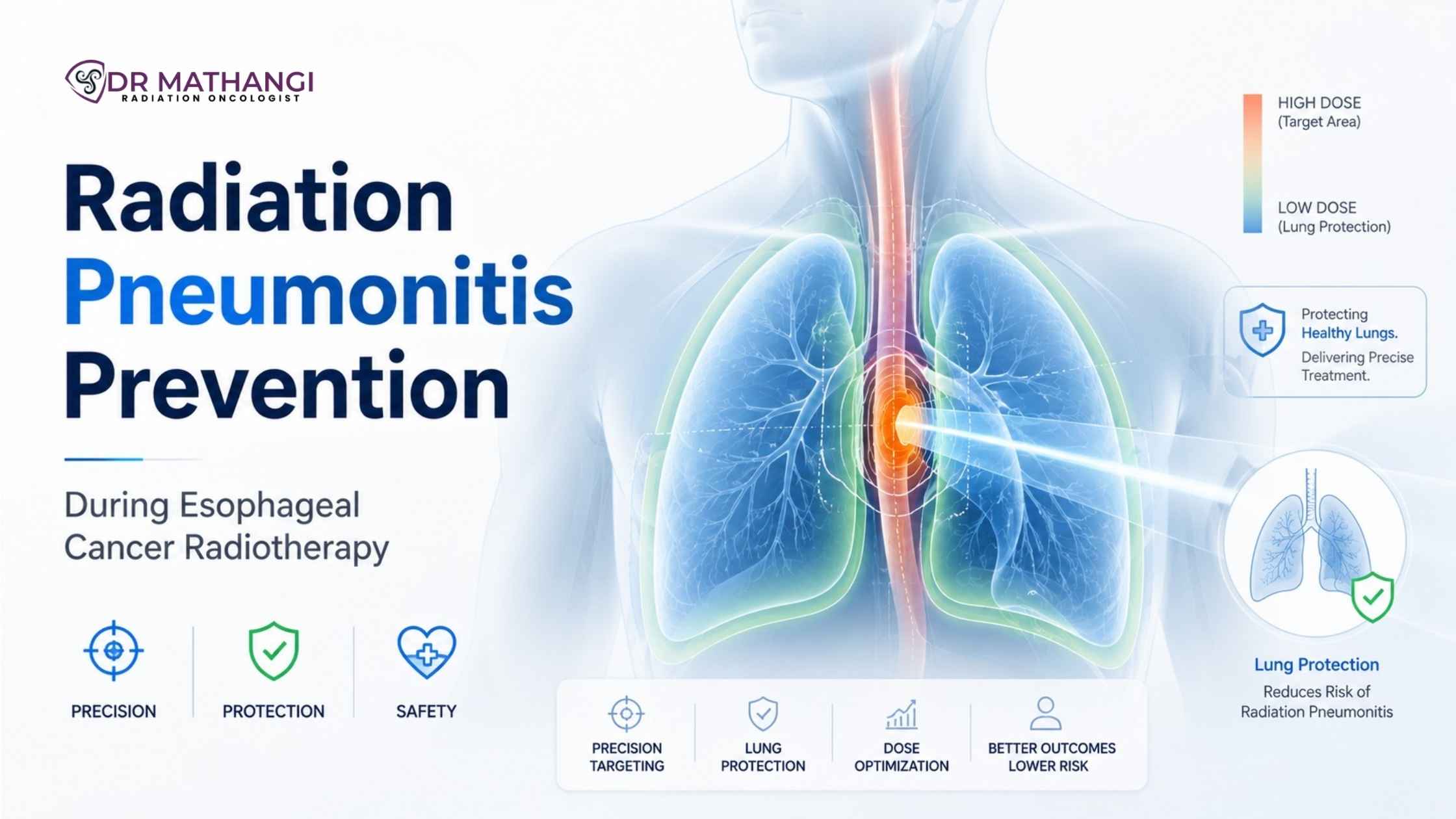
How can patients undergoing radiotherapy for esophageal cancer minimize the risk of radiation pneumonitis? Radiation pneumonitis is a significant and potentially life-threatening complication of radiotherapy in esophageal cancer patients, affecting up to 15-25% of those undergoing concurrent chemoradiation. Preventing this condition requires advanced planning, precise delivery, and expert management—areas in which Dr Mathangi J, Senior Radiation Oncologist at Gleneagles Cancer Institute, Bangalore, excels. Read on to discover how the latest techniques, risk mitigation strategies, and Dr Mathangi’s unparalleled expertise can safeguard your lung health during esophageal cancer radiotherapy.
What Is Radiation Pneumonitis Esophageal Cancer And Why Is Prevention Critical?
Radiation pneumonitis esophageal cancer refers to the inflammatory lung reaction that develops after radiation therapy for esophageal cancer, particularly when the lung tissue receives excess radiation exposure. This complication can cause persistent cough, fever, breathing difficulty, and, in severe cases, respiratory failure. Preventing radiation pneumonitis is critical not only for patient safety but also for enabling the successful completion of potentially curative cancer treatment.
- Incidence: 15-25% of esophageal cancer patients receiving radiotherapy develop some degree of pneumonitis.
- Consequences: Can delay or halt cancer therapy, reduce quality of life, and increase mortality.
- Prevention: Centers on advanced planning, precise radiation delivery, and individualized care.
With over two decades of experience and more than 12,000 patients treated, Dr Mathangi J offers a unique blend of technical mastery and compassionate care, ensuring the best possible outcomes for her patients.
How Does V20 Lung Dose Limit Reduce The Risk Of Radiation Pneumonitis?
The V20 lung dose limit is a critical parameter used in radiotherapy planning. It represents the percentage of lung volume receiving 20 Gy or more of radiation. Clinical studies show that maintaining V20 below 30% significantly lowers the risk of radiation pneumonitis, making it a gold-standard metric for lung protection.
- V20 < 30%: Standard recommendation for most patients
- V20 < 25%: For those with pre-existing lung conditions or prior lung irradiation
- Continuous monitoring of V20 during planning and treatment ensures optimal safety
Dr Mathangi meticulously adheres to the V20 lung dose limit, leveraging advanced planning software and real-time dose tracking. By doing so, she minimizes unnecessary lung exposure and keeps pneumonitis rates to a minimum.
What Role Does Esophageal Chemoradiotherapy Play In Pneumonitis Risk?
Esophageal chemoradiotherapy is the backbone of curative treatment for locally advanced esophageal cancer. However, the addition of chemotherapy to radiation amplifies both tumor control and the risk of lung toxicity.
- Chemotherapy agents act as radiosensitizers, increasing the risk of lung inflammation
- Patients with concurrent chemoradiotherapy face higher pneumonitis risk than radiation alone
- Careful patient selection, hydration, and dose modification are essential for safety
Dr Mathangi’s multidisciplinary approach ensures that each patient receives a personalized chemoradiotherapy plan, balancing aggressive cancer control with careful pneumonitis prevention.
Why Is Mean Lung Dose Important In Esophageal Cancer Radiotherapy?
The mean lung dose (MLD) quantifies the average radiation dose delivered to the entire lung. Studies confirm that keeping the MLD below 13-15 Gy is strongly associated with a lower incidence of radiation pneumonitis, especially in esophageal cancer where large target volumes are common.
- MLD < 13 Gy: Associated with the lowest pneumonitis risk
- MLD > 15 Gy: Risk rises sharply, particularly in the elderly or those with lung disease
- MLD optimization is a standard goal in Dr Mathangi’s treatment protocols
Dr Mathangi employs advanced planning tools to keep mean lung dose as low as possible while still achieving effective tumor control.
How Does IMRT Beam Optimization Safeguard Lungs During Treatment?
IMRT beam optimization (Intensity-Modulated Radiation Therapy) is a cutting-edge technique that allows the radiation oncologist to modulate the intensity and direction of each radiation beam. This ensures maximum dose to the tumor and minimal exposure to healthy lung tissue.
- Allows for precise “dose painting” around critical structures
- Reduces hot spots and spillage into normal lung
- Enables complex plans for tumors close to the lungs or heart
Dr Mathangi was among the early adopters of IMRT beam optimization in South India and has pioneered its use for esophageal and upper gastrointestinal cancers, reducing pneumonitis risk for hundreds of patients.
What Is Upper Gastrointestinal Radiation And Why Does It Matter?
Upper gastrointestinal radiation refers to the delivery of high-precision radiation to tumors in the esophagus, stomach, and adjoining regions. These areas lie close to the lungs, so meticulous planning is vital.
- Upper GI cancers often require large treatment fields, raising the risk of lung exposure
- Advanced techniques like 4D-CT planning and IMRT are essential for safety
- Dr Mathangi customizes each plan, reducing normal tissue toxicity
Her expertise in upper gastrointestinal radiation ensures that patients receive the full benefit of radiotherapy with minimized side effects.
How Does Breathing Motion Management Lower Pulmonary Risk?
Breathing motion management is a set of techniques used to account for the natural movement of the lungs and esophagus during breathing. Without motion management, radiation can inadvertently hit healthy lung tissue, raising pneumonitis risk.
- Techniques include respiratory gating, DIBH (Deep Inspiration Breath Hold), and 4D-CT imaging
- Allows precise targeting, even for tumors that move with respiration
- Reduces unnecessary dose to normal lung, heart, and liver
Dr Mathangi is renowned for integrating advanced breathing motion management into every relevant esophageal cancer case, ensuring world-class safety standards.
What Makes Dr Mathangi The Preferred Choice For Radiation Pneumonitis Prevention?
Why is it crucial to choose an expert for esophageal cancer radiotherapy? The answer lies in experience, technology, and patient-centric care. Dr Mathangi brings:
- Over 20 years of focused experience in radiation oncology
- Advanced international training in SRS/SBRT, IGRT/RapidArc, and IORT
- Leadership in installing Asia Pacific’s first TrueBeam STx Machine
- Expertise in treating a wide range of cancers needing RT, including head and neck, brain, spine, esophagus, lung, liver, breast, bladder, prostate, uterine, cervical, vulval, anal canal, and penile cancers
- Director of Fellowship in Advanced Radiotherapy Techniques, shaping the next generation of oncologists
- Personalized, evidence-based care plans for every patient
Don’t risk your recovery or quality of life by choosing less experienced providers. Dr Mathangi’s patients benefit from some of the lowest rates of radiation pneumonitis, highest treatment precision, and most compassionate care in India.
To book a consultation with Dr Mathangi, simply submit your contact information here. Her expert team will schedule and notify you about your appointment.
How To Minimize Radiation Pneumonitis Risk: Step-By-Step Guide
- Comprehensive Pre-Treatment Evaluation: Assess lung function, comorbidities, and prior treatments.
- Advanced Imaging: Use 4D-CT and PET-CT for precise tumor and lung mapping.
- Personalized Treatment Planning: Set strict V20 lung dose limit and mean lung dose goals.
- IMRT Beam Optimization: Employ advanced software for optimal dose distribution.
- Breathing Motion Management: Use gating or DIBH for moving tumors.
- Continuous Monitoring: Regular imaging and symptom checks during and after therapy.
- Multidisciplinary Coordination: Integrate input from medical oncologists, pulmonologists, and nutritionists.
- Prompt Management Of Early Symptoms: Early intervention for cough, fever, or breathlessness ensures better outcomes.
Why Acting Early Makes All The Difference
Radiation pneumonitis can be silent at first but escalate rapidly, sometimes even after therapy is complete. By choosing a center of excellence like Gleneagles Cancer Institute and a leader like Dr Mathangi, you ensure:
- Early detection and proactive management of lung complications
- Access to the latest radiotherapy equipment and protocols
- Personalized follow-up care tailored to your unique risk profile
Don’t let preventable complications derail your cancer journey. Trust the expertise, technology, and patient-first approach that has made Dr Mathangi the provider of choice for discerning patients and families across India.
Frequently Asked Questions
What is radiation pneumonitis, and why is it important to prevent during esophageal cancer radiotherapy?
Radiation pneumonitis is a type of lung inflammation caused by radiation therapy, especially when treating cancers near the lungs, such as esophageal cancer. Preventing radiation pneumonitis during radiotherapy is crucial because it can significantly impact lung function and the patient’s quality of life. Dr. Mathangi focuses on minimizing this risk through advanced planning and monitoring techniques during esophageal cancer treatment.
How does Dr. Mathangi approach the prevention of radiation pneumonitis in esophageal cancer patients?
Dr. Mathangi utilizes a comprehensive strategy to prevent radiation pneumonitis esophageal cancer cases. This includes careful patient selection, advanced imaging, and the use of precise radiotherapy techniques. Individualized treatment planning and real-time monitoring further ensure that lung exposure to radiation is minimized.
What is the V20 lung dose limit, and how does it reduce the risk of lung toxicity?
The V20 lung dose limit refers to the percentage of lung volume receiving 20 Gy or more of radiation. Keeping this value as low as possible is associated with a lower risk of radiation pneumonitis. Dr. Mathangi rigorously adheres to recommended V20 dose constraints in treatment planning to ensure patient safety during radiotherapy.
Why is mean lung dose important in esophageal chemoradiotherapy?
The mean lung dose is the average radiation dose received by the lungs during treatment. In esophageal chemoradiotherapy , keeping the mean lung dose low is essential to reduce the risk of both acute and chronic lung toxicity. Dr. Mathangi carefully calculates and optimizes the mean lung dose for each patient to achieve the best balance between tumor control and safety.
How does IMRT beam optimization contribute to safer esophageal cancer radiotherapy?
IMRT beam optimization (Intensity-Modulated Radiation Therapy) allows for precise shaping and modulation of radiation beams. With IMRT, Dr. Mathangi can target the tumor while sparing healthy lung tissue and other critical organs. This technique is key in minimizing the risk of radiation pneumonitis and enhancing patient outcomes.
How is breathing motion management used to protect the lungs during upper gastrointestinal radiation?
Breathing motion management techniques, such as respiratory gating or breath-hold methods, are employed by Dr. Mathangi to reduce the movement of the lungs and esophagus during radiation delivery. This ensures that the radiation is delivered more accurately during upper gastrointestinal radiation , reducing unintended lung exposure and lowering the risk of radiation pneumonitis.
What role does patient selection and assessment play in preventing radiation pneumonitis?
Careful patient selection and thorough pre-treatment assessment are fundamental. Dr. Mathangi evaluates lung function, comorbidities, and prior treatments to customize the radiation plan. By identifying patients at higher risk, she implements additional preventive strategies to further minimize the chance of lung complications.
Are there any special techniques Dr. Mathangi uses for dose reduction in upper gastrointestinal radiation?
Yes, Dr. Mathangi employs advanced imaging, adaptive planning, and the latest technology to precisely target tumors while reducing lung exposure during upper gastrointestinal radiation . Techniques such as IMRT, breathing motion management, and strict adherence to V20 and mean lung dose thresholds are all part of her approach.
What ongoing support does Dr. Mathangi provide to monitor for radiation pneumonitis after treatment?
Dr. Mathangi offers continued follow-up and monitoring post-radiotherapy. This includes regular clinical assessments, lung function tests, and imaging to detect early signs of radiation pneumonitis, ensuring prompt intervention and optimal recovery for her patients.