Radiation Therapy for Pancreatic Cancer: Neoadjuvant Strategies for Borderline Resectable Disease
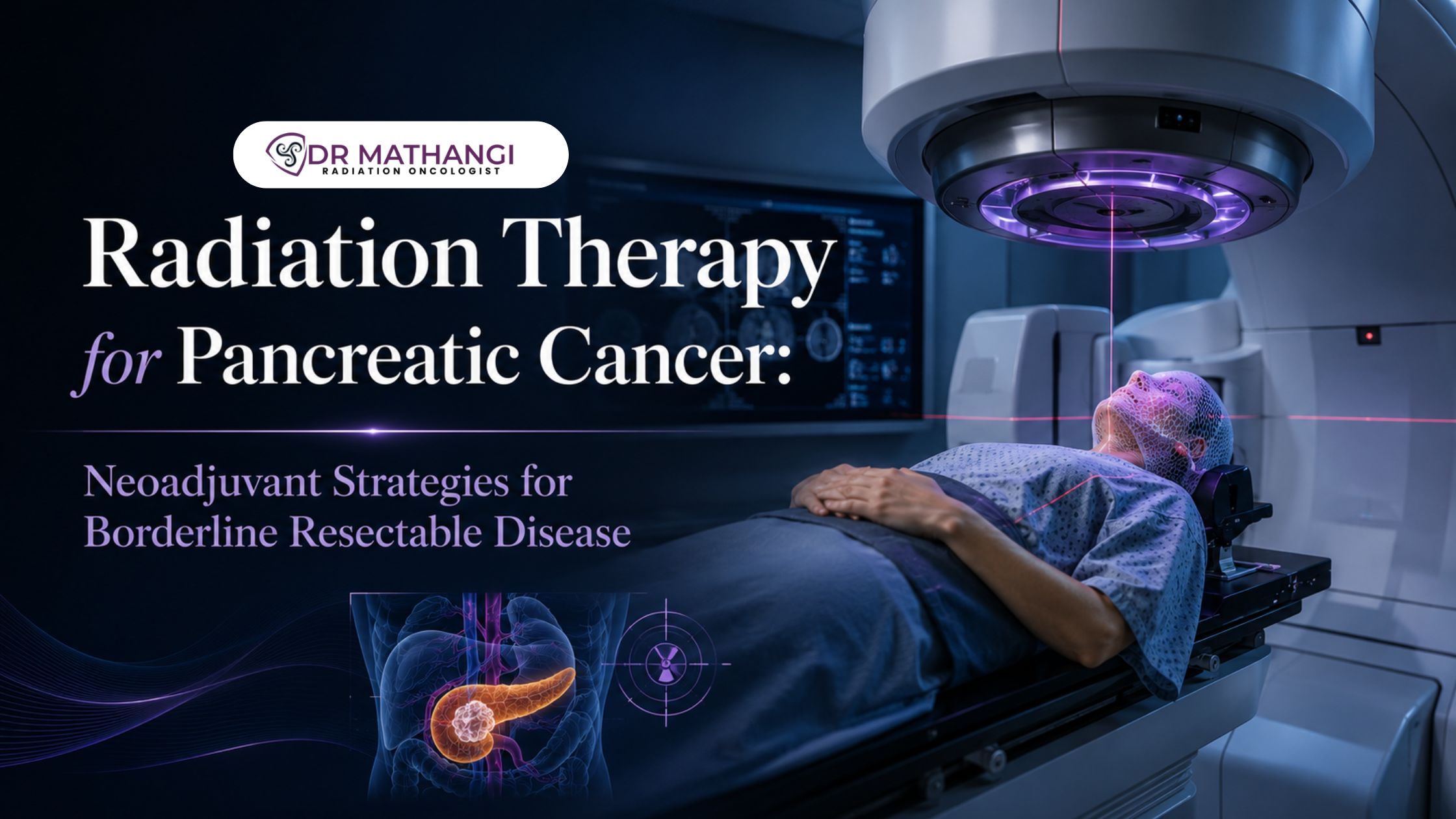
Radiation therapy for pancreatic cancer has emerged as a cornerstone in the multidisciplinary management of this challenging disease, especially for patients with borderline resectable pancreatic cancer. According to recent statistics, pancreatic cancer is the seventh leading cause of cancer-related deaths worldwide, with a 5-year survival rate of less than 10%—making every treatment decision critical. For patients in South India and North India seeking the most advanced and effective care, Dr. Mathangi J, Senior Consultant & In-charge of Radiation Oncology at Gleneagles Cancer Institute, Bangalore, offers an unparalleled combination of experience, expertise, and state-of-the-art technology.
What Is Radiation Therapy For Pancreatic Cancer?
Radiation therapy for pancreatic cancer is a targeted treatment that uses high-energy rays to destroy cancer cells or shrink tumors. It can be delivered as part of a curative approach for localized disease, or as a palliative measure when cure is not possible. The integration of radiation therapy into the treatment paradigm is especially vital for tumors that are close to major blood vessels, where achieving a safe surgical margin is challenging.
- Improves local control by reducing tumor size
- Enhances the chance of complete surgical resection
- Can be combined with chemotherapy for synergistic effects
At Gleneagles Cancer Institute, Dr. Mathangi utilizes advanced techniques—such as stereotactic radiation for pancreatic cancer—to increase precision and minimize side effects.
How Is Borderline Resectable Pancreatic Cancer Managed?
Borderline resectable pancreatic cancer refers to tumors that are technically operable, but have limited involvement of adjacent vessels (like the superior mesenteric artery or vein), making complete surgical removal difficult. The risk of leaving microscopic disease behind (positive margins) is high, which historically led to poor outcomes.
The modern strategy, led by experts like Dr. Mathangi, is to use neoadjuvant chemoradiation—a combination of chemotherapy and radiation therapy given before surgery—to downstage the tumor, improve vessel clearance, and increase the likelihood of a curative resection.
| Tumor Category | Definition | Common Approach |
|---|---|---|
| Resectable | No artery/vein involvement | Upfront surgery |
| Borderline Resectable | Limited vessel involvement (SMA, PV, SMV) | Neoadjuvant chemoradiation |
| Unresectable | Extensive vessel invasion/metastatic | Systemic therapy +/- palliative RT |
What Is Neoadjuvant Chemoradiation And Why Is It Important?
Neoadjuvant chemoradiation is the administration of chemotherapy and radiation therapy before surgery. This approach offers multiple benefits for borderline resectable pancreatic cancer:
- Shrinks the tumor, making surgery more feasible
- Increases the chance of SMA margin clearance, which is crucial for a complete resection
- Allows early treatment of micrometastatic disease
- Provides an in vivo test of tumor biology; only the best responders are taken for surgery
Dr. Mathangi’s team closely monitors CA19-9 response (a blood biomarker) and radiological changes to assess tumor response and customize further therapy.
What Is The Role Of Stereotactic Radiation For Pancreatic Cancer?
Stereotactic radiation for pancreatic cancer—also known as Stereotactic Ablative Body Radiotherapy (SBRT)—is a highly focused form of radiation delivered in a few high-dose sessions. This technique, mastered by Dr. Mathangi, enables:
- Precise targeting of the tumor while sparing healthy tissues
- Shorter treatment duration (typically 5 sessions)
- Potential for better local control with fewer side effects
SBRT is particularly valuable for patients who may not tolerate prolonged chemoradiation, or for those with tumors in challenging locations relative to critical structures.
Why Is Ca19-9 Response Vital In Treatment Planning?
CA19-9 response is a change in levels of the CA19-9 tumor marker in the blood during and after neoadjuvant treatment. A significant drop in CA19-9 is associated with tumor regression and improved outcomes.
- Helps assess early therapy effectiveness
- Guides the timing and suitability for surgery
- Correlates with overall survival and recurrence risk
At Gleneagles Cancer Institute, CA19-9 levels are integrated with imaging and clinical assessment to provide a holistic view of patient progress.
How Is Sma Margin Clearance Achieved And Why Is It Critical?
SMA margin clearance refers to ensuring that the tumor is removed with no cancer cells left at the margin near the superior mesenteric artery (SMA). This is vital because:
- Positive margins are linked to higher recurrence rates
- Neoadjuvant chemoradiation can shrink the tumor away from the artery
- Successful clearance dramatically improves long-term survival
Dr. Mathangi’s expertise in advanced radiation planning and image-guidance ensures optimal chances for a margin-negative resection, even in complex cases.
How Does Dr. Mathangi Offer A Unique Advantage?
Dr. Mathangi J is a celebrated radiation oncologist with over 20 years of experience and a record of treating more than 12,000 cancer patients. As head of Radiation Oncology at Gleneagles Cancer Institute, she brings:
- Pioneering use of TrueBeam STx and RapidArc for precision therapy
- Expertise in SBRT, Gated RapidArc, DIBH, and interstitial brachytherapy
- Personalized treatment plans based on tumor biology and patient needs
- Commitment to multi-disciplinary care with surgical and medical oncology teams
Her advanced training from leading centers in Germany and Denmark, along with her role as Director of Fellowship in Advanced Radiotherapy, positions her as a regional and national leader in pancreatic and other complex cancers.
Which Cancers Need Radiation Therapy?
According to Dr. Mathangi, cancers that need radiation therapy include:
- Head and neck cancers
- Brain tumors
- Spine tumors
- Esophagus and rectal cancers
- Lung cancers
- Liver cancers
- Breast cancers
- Bladder cancers
- Prostate cancers
- Uterine cancers
- Cervical cancer
- Vulval cancers
- Anal canal cancers
- Penile cancers
Her expertise covers the full spectrum, ensuring the highest standards of care for each cancer type.
Book your appointment today and take the first step towards better outcomes.
Why Choose Dr. Mathangi For Your Pancreatic Cancer Care?
Pancreatic cancer demands precise, coordinated care—especially for borderline resectable disease. With Dr. Mathangi’s leadership, you benefit from:
- Individualized protocols tailored to your tumor and personal health goals
- Access to the latest technology and treatment methods
- Compassionate, holistic care that addresses both physical and emotional needs
- Robust follow-up and support through every stage of your journey
If you or your loved one is facing pancreatic cancer, don’t settle for less than the best. The right expertise and technology can make all the difference—so act now.

About Dr. Mathangi J
Dr. Mathangi J is a Senior Consultant & In-charge of Radiation Oncology at Gleneagles Cancer Institute, Bangalore. With MBBS, DMRT, and DNB degrees, she brings over two decades of expertise and advanced international training to the forefront of cancer care. She specializes in a wide range of cancers, including pancreatic, head and neck, brain, lung, breast, prostate, and more. Dr. Mathangi’s commitment to excellence, innovation, and patient-centered care has transformed the lives of thousands across India.
Frequently Asked Questions
What is radiation therapy for pancreatic cancer and how does it work for borderline resectable disease?
Radiation therapy for pancreatic cancer uses targeted high-energy rays to destroy cancer cells and shrink tumors. In borderline resectable pancreatic cancer, where the tumor is close to major blood vessels but may be removable, radiation can help shrink the tumor or limit its spread, improving the chances of a successful surgery. Dr. Mathangi uses advanced imaging and planning techniques to precisely target tumors, minimizing side effects and enhancing surgical outcomes.
What is neoadjuvant chemoradiation and why is it recommended for borderline resectable pancreatic cancer?
Neoadjuvant chemoradiation refers to chemotherapy combined with radiation therapy before surgery. For borderline resectable pancreatic cancer, this approach helps shrink the tumor, making it easier for surgeons to remove it completely and increasing the chances of achieving negative margins (no cancer cells at the edge of the removed tissue). Dr. Mathangi tailors neoadjuvant chemoradiation protocols based on the tumor’s location, stage, and patient’s overall health.
How does Dr. Mathangi assess suitability for neoadjuvant strategies?
Dr. Mathangi evaluates several factors, including tumor location, involvement of vital blood vessels, overall patient health, and molecular markers. For borderline resectable pancreatic cancer, she uses advanced imaging and tumor board discussions to determine if patients will benefit from neoadjuvant chemoradiation, optimizing treatment plans for better surgical outcomes.
What role does CA19-9 response play in evaluating treatment effectiveness?
CA19-9 is a tumor marker often elevated in pancreatic cancer. During neoadjuvant therapy, Dr. Mathangi monitors CA19-9 response to gauge how well the tumor is responding to treatment. A significant drop in CA19-9 levels after chemoradiation suggests that the cancer is responding, and this information helps guide further treatment and surgical planning.
What is SMA margin clearance, and why is it important in surgery for borderline resectable disease?
SMA margin clearance refers to removing the tumor with a healthy tissue margin around the superior mesenteric artery (SMA), a major blood vessel often involved in borderline resectable pancreatic cancer. Achieving SMA margin clearance reduces the risk of leaving behind cancer cells and improves long-term outcomes. Dr. Mathangi's neoadjuvant strategies are designed to maximize the chances of clear margins during surgery.
How does stereotactic radiation for pancreatic cancer differ from conventional radiation?
Stereotactic radiation for pancreatic cancer, also known as SBRT (Stereotactic Body Radiation Therapy), delivers highly focused radiation in fewer sessions with great precision. Compared to conventional radiation, SBRT offers higher doses per treatment and spares more healthy tissue. Dr. Mathangi utilizes this approach for select patients, especially when tumors are close to critical structures or when a shorter treatment course is preferred.
What are the potential side effects of neoadjuvant chemoradiation in pancreatic cancer?
Side effects can include fatigue, nausea, diarrhea, abdominal pain, and lowered blood counts. Dr. Mathangi uses advanced radiation planning and supportive care measures to minimize and manage these side effects. The benefits of neoadjuvant chemoradiation often outweigh the risks, as it may increase the likelihood of a successful surgery.
How does Dr. Mathangi ensure the best outcomes for patients undergoing neoadjuvant therapy?
Dr. Mathangi adopts a multidisciplinary team approach, collaborating with surgeons, medical oncologists, radiologists, and pathologists. She uses cutting-edge technologies for tumor targeting, closely monitors patient progress (including CA19-9 response), and individualizes treatment plans. Her expertise in both conventional and stereotactic radiation for pancreatic cancer ensures optimal strategies for each patient.
What follow-up and support does Dr. Mathangi provide after neoadjuvant therapy and surgery?
After neoadjuvant therapy and surgery, Dr. Mathangi offers comprehensive follow-up care, including regular imaging, CA19-9 monitoring, and symptom management. She works closely with the care team to support recovery, manage any late side effects, and provide guidance on nutrition, rehabilitation, and survivorship.