Stage 3 Lung Cancer: Treatment Options
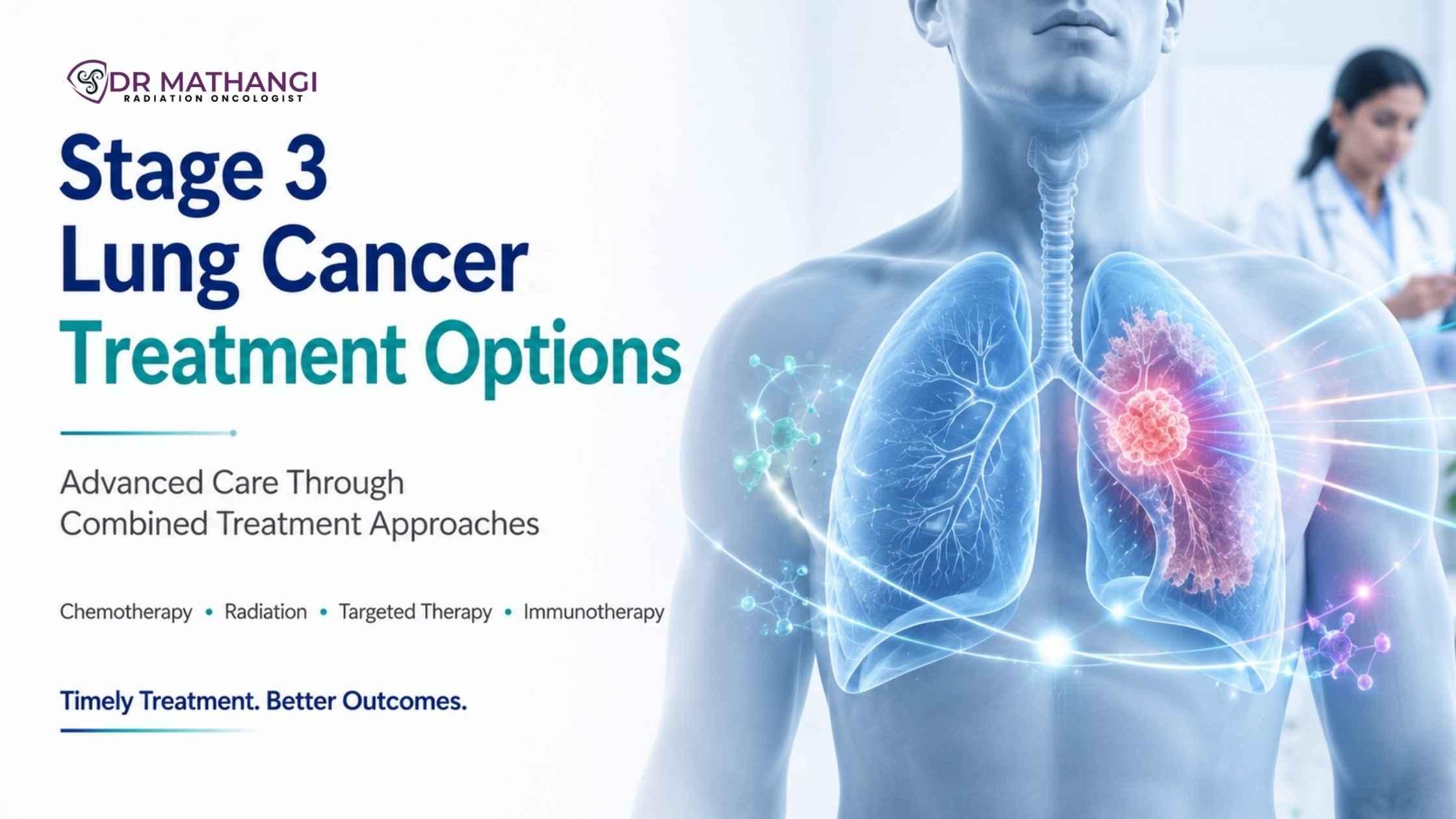
What Are the Best Treatment Options for Stage 3 Lung Cancer?
The best treatment options for stage 3 lung cancer are usually a combination of therapies, including chemoradiation, radiation therapy, and chemotherapy, tailored to each patient’s condition and overall health. Expert guidance from a specialist like Dr. Mathangi J at Gleneagles Cancer Institute, Bangalore, ensures optimal care and improved survival outcomes.
Did you know? Over 234,000 new cases of lung cancer are diagnosed every year in India, and approximately one-third of these present as stage 3 lung cancer at diagnosis. This stage is often a pivotal point where advanced, multidisciplinary treatment can make all the difference in survival and quality of life.
What Is Stage 3 Lung Cancer?
Stage 3 lung cancer refers to tumors that have spread to nearby lymph nodes or structures but have not yet metastasized to distant organs. It is a critical phase where aggressive treatment can still offer the possibility of long-term control or even cure. Stage 3 is further classified into 3A, 3B, and sometimes 3C, depending on the extent and location of spread.
- Stage 3A: Cancer has spread to lymph nodes on the same side of the chest as the primary tumor.
- Stage 3B: Cancer has spread to lymph nodes on the opposite side or above the collarbone, or has invaded nearby structures.
- Stage 3C: More extensive lymph node involvement or invasion into nearby organs.
How Does Stage 3 NSCLC Differ from Other Lung Cancers?
Stage 3 NSCLC (Non-Small Cell Lung Cancer) is the most common type of lung cancer seen at this stage. Treatment approaches for stage 3 NSCLC are often different from those for small cell lung cancer, focusing heavily on combining local and systemic therapies.
- Non-small cell lung cancer (NSCLC): Accounts for about 85% of lung cancer cases. More likely to be treated with surgery, radiation, and/or chemotherapy in combination.
- Small cell lung cancer (SCLC): Less common, tends to spread faster, and is usually treated with chemotherapy and radiation rather than surgery.
What Are the Main Treatment Modalities for Stage 3 Lung Cancer?
The mainstays of stage 3 lung cancer treatment include:
- Chemoradiation: A combination of chemotherapy and radiation therapy, often delivered at the same time (concurrent chemoradiation).
- Surgery: In selected patients with resectable tumors.
- Immunotherapy: Especially for advanced lung cancer cases post-chemoradiation.
- Targeted therapy: For those with specific genetic mutations.
What Is Chemoradiation and Why Is It Preferred for Stage 3 Lung Cancer?
Chemoradiation is a treatment approach where chemotherapy and radiation are administered together. This approach is the gold standard for most unresectable cases of stage 3 lung cancer, as it enhances the effectiveness of both modalities.
- Concurrent chemoradiation yields better tumor control and improves survival compared to sequential approaches.
- This method attacks cancer cells in multiple ways, maximizing the chance of eradicating the disease at its source and in nearby lymph nodes.
What Is Radiation Therapy Stage 3 and How Is It Delivered?
Radiation therapy stage 3 is a cornerstone of treatment for locally advanced lung cancer. Radiation uses high-energy beams to destroy cancer cells while sparing healthy tissue. In stage 3, it is often used with chemotherapy for a synergistic effect.
Dr. Mathangi specializes in advanced radiation techniques such as Stereotactic Ablative Body Radiotherapy (SBRT), Gated RapidArc, and DIBH gated Radiotherapy, which allow for precise targeting and reduced side effects.
- External beam radiation therapy (EBRT) is the most common method.
- Advanced modalities like SBRT and image-guided radiotherapy (IGRT) ensure higher accuracy and better outcomes.
How Is Chemotherapy Stage 3 Used in Treatment?
Chemotherapy stage 3 involves using powerful drugs to kill cancer cells or stop their growth. It is essential both as part of chemoradiation and as systemic therapy to target cancer cells that may have spread beyond the primary site.
- Commonly used drugs include platinum-based agents (cisplatin or carboplatin) and other agents like paclitaxel, docetaxel, or pemetrexed.
- Can be given before (neoadjuvant) or after (adjuvant) radiation or surgery, depending on the individual case.
What Is Concurrent Chemoradiation and When Is It Recommended?
Concurrent chemoradiation means administering chemotherapy and radiation therapy together, rather than one after the other. This approach is considered superior for many patients with unresectable stage 3 NSCLC, as it improves local control and overall survival.
- Requires close monitoring due to higher risk of side effects, but offers improved outcomes.
- Not suitable for everyone; patient’s overall health and lung function are critical factors.
What Is the Role of Immunotherapy in Advanced Lung Cancer?
For patients with advanced lung cancer or those who cannot tolerate chemoradiation, immunotherapy has emerged as a powerful tool. Immune checkpoint inhibitors like durvalumab are now standard of care after successful concurrent chemoradiation in stage 3 NSCLC, significantly improving disease-free survival.
- Immunotherapy helps the body's own immune system recognize and destroy cancer cells.
- Especially useful for patients with specific molecular markers (PD-L1 expression).
How Do These Treatments Impact Survival?
Survival rates for stage 3 lung cancer have improved significantly with modern, multidisciplinary treatment. The 5-year survival rate for stage 3 NSCLC varies from 15% to 35%, depending on factors like tumor biology, patient health, and treatment approach.
| Stage | 5-Year Survival Rate | Common Treatment Approaches |
|---|---|---|
| 3A | 25-35% | Concurrent chemoradiation, possible surgery |
| 3B/3C | 15-25% | Concurrent chemoradiation, immunotherapy |
Outcomes are best when care is delivered by a multidisciplinary team led by a highly experienced specialist. Dr Mathangi’s expertise in advanced radiation techniques and personalized cancer care has contributed to improved survival and quality of life for thousands of patients.
Why Choose Dr Mathangi and Gleneagles Cancer Institute for Stage 3 Lung Cancer?
Dr Mathangi J is one of India’s foremost experts in radiation oncology, with over 20 years of experience and more than 12,000 successfully treated patients. As the Senior Consultant and In-charge of Radiation Oncology at Gleneagles Cancer Institute, Bangalore, she leads a dedicated team that specializes in complex lung cancer cases, including stage 3 lung cancer.
- Access to the latest technology, including Asia Pacific’s first TrueBeam STx Machine
- Personalized, patient-centric care plans
- Expertise in advanced modalities: SBRT, RapidArc, IGRT, and Interstitial Brachytherapy
- Multidisciplinary team approach for optimal outcomes
Don’t let a lack of expert care reduce your chances for a cure or improved survival. Book an appointment with Dr Mathangi, Senior Consultant at Gleneagles Cancer Institute, Bangalore, today.
Submit your contact information here and let her team schedule your consultation.
What Cancers Need Radiation Therapy?
According to Dr Mathangi, radiation therapy is vital not just for lung cancers, but also for:
- Head and neck cancers
- Brain tumors
- Spine tumors
- Esophagus and rectal cancers
- Liver cancers
- Breast cancers
- Bladder cancers
- Prostate cancers
- Uterine cancers
- Cervical cancer
- Vulval cancers
- Anal canal cancers
- Penile cancers
Having a specialist who understands the nuances of radiation planning and delivery can make a substantial difference in outcomes.
How to Get Started with Treatment at Gleneagles Cancer Institute?
Ready to take control of your treatment journey? The first step is a comprehensive evaluation by Dr Mathangi and her team to determine the best approach—be it concurrent chemoradiation, advanced radiation therapy, or systemic therapies.
- Book your appointment online at https://drmathangi.com/contact/.
- Provide your contact details and medical history summary.
- Her team will schedule your consultation and guide you through the next steps.
Don’t risk missing out on the best possible care—choose an expert with a proven track record in stage 3 lung cancer treatment.
Frequently Asked Questions
What is stage 3 lung cancer and how is it typically diagnosed?
Stage 3 lung cancer refers to cancer that has spread to lymph nodes or nearby structures but not to distant organs. It is usually diagnosed through a combination of imaging tests (such as CT scans and PET scans), biopsies, and sometimes surgical evaluation. Dr. Mathangi uses the latest diagnostic technology to accurately stage and assess your lung cancer, ensuring your treatment plan is tailored to your specific condition.
What are the main treatment options for stage 3 NSCLC?
For stage 3 NSCLC (non-small cell lung cancer), the primary treatments include a combination of chemotherapy, radiation therapy, and sometimes surgery. The most common approach is concurrent chemoradiation, where chemotherapy and radiation are given together to maximize effectiveness. Dr. Mathangi customizes these treatments based on each patient’s health, preferences, and tumor characteristics.
How does chemoradiation work in treating stage 3 lung cancer?
Chemoradiation is the use of chemotherapy and radiation therapy at the same time. This approach works by weakening tumor cells with chemotherapy, making them more sensitive to radiation. In stage 3 lung cancer, concurrent chemoradiation has shown improved survival for many patients. Dr. Mathangi’s team carefully monitors and adjusts the treatment to minimize side effects and maximize results.
What is the role of radiation therapy in stage 3 lung cancer?
Radiation therapy stage 3 is a key part of the treatment plan, especially for patients who are not surgical candidates. It targets cancer cells in the chest, aiming to shrink tumors and control local disease. Dr. Mathangi utilizes advanced techniques like IMRT and IGRT to deliver precise radiation while protecting healthy tissue.
What are the chemotherapy options for stage 3 lung cancer?
Chemotherapy stage 3 usually involves a combination of drugs that are effective against lung cancer cells. These may include platinum-based agents such as cisplatin or carboplatin, along with other drugs. The regimen is tailored to each patient, and Dr. Mathangi closely monitors for side effects and adjusts treatment as needed.
Can surgery be an option in advanced lung cancer at stage 3?
While surgery is less common in advanced lung cancer at stage 3, selected patients with limited lymph node involvement and good health may benefit from surgery after chemoradiation. Dr. Mathangi works with a multidisciplinary team to determine if surgery is appropriate as part of your comprehensive care plan.
What factors influence survival rates for stage 3 lung cancer?
Survival in stage 3 lung cancer depends on several factors, including the specific subtype (such as stage 3 NSCLC), the patient’s overall health, how well the tumor responds to chemoradiation, and whether targeted or immunotherapy options are available. Dr. Mathangi provides individualized survival estimates and ongoing support throughout the treatment journey.
How does Dr. Mathangi personalize treatment for stage 3 lung cancer?
Dr. Mathangi personalizes treatment by conducting thorough assessments, using advanced imaging, and considering genetic and molecular testing. She creates a treatment plan that may include chemoradiation, targeted therapies, or immunotherapy, and supports patients with symptom management, nutrition, and psychological care to optimize outcomes in stage 3 lung cancer.
What supportive care is available during and after treatment?
Supportive care is a vital part of treatment for advanced lung cancer. Dr. Mathangi and her team offer pain management, nutritional support, counseling, and rehabilitation services to help patients manage side effects and maintain quality of life during and after chemoradiation and other therapies.