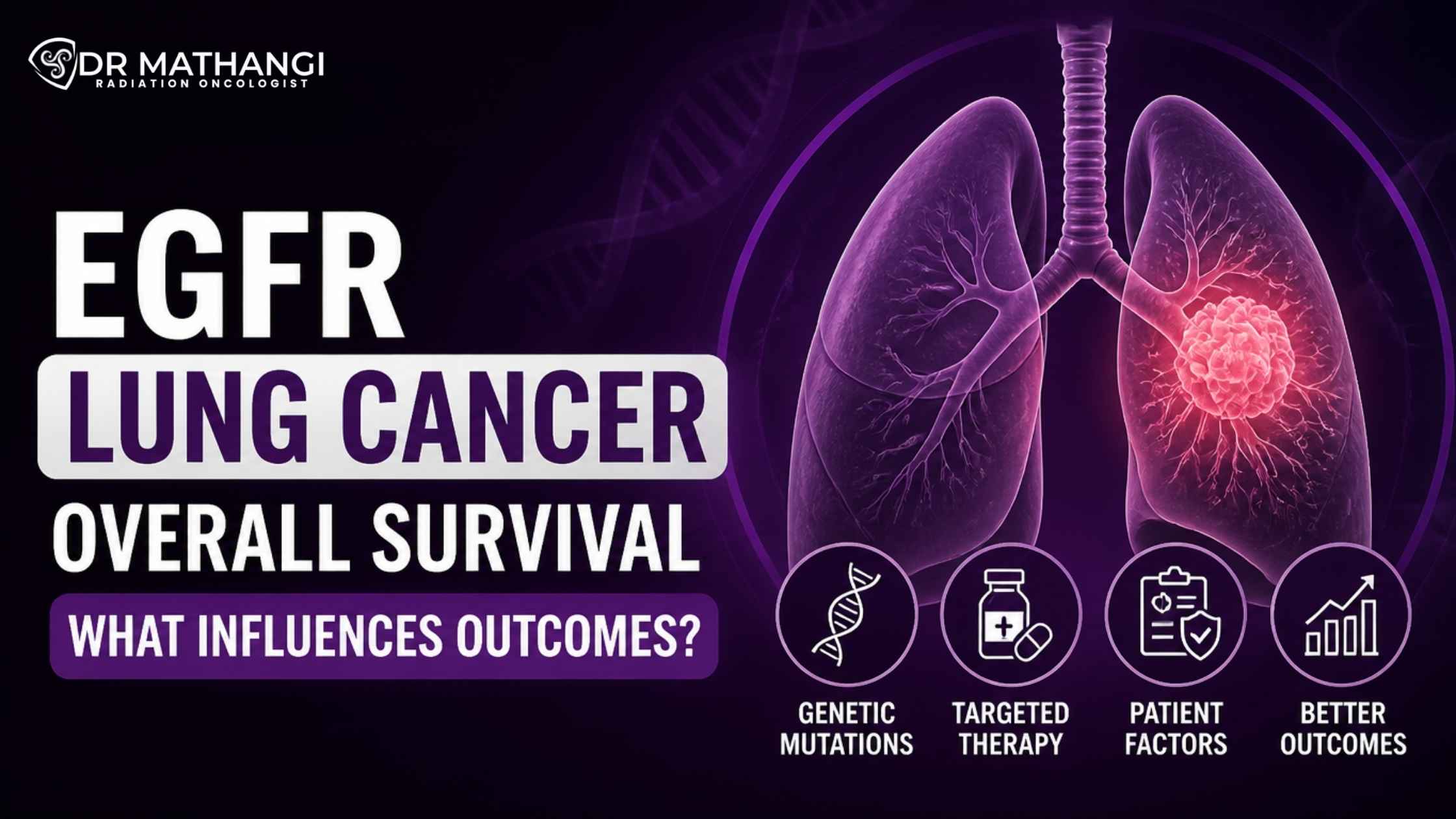
EGFR Lung Cancer Overall Survival: What Influences Outcomes?
What is EGFR lung cancer overall survival?
EGFR lung cancer overall survival refers to the length of time patients with EGFR-mutated lung cancer live after diagnosis or treatment. This metric is vital for understanding patient prognosis, comparing treatment options, and setting realistic expectations. Overall survival (OS) is typically measured from the start of treatment until death from any cause.
- Median OS: The time at which half the patients are still alive and half have passed away.
- 1-year, 2-year, and 5-year OS rates: Common benchmarks used to compare patient groups and therapies.
Dr Mathangi’s approach at Gleneagles Cancer Institute emphasizes the most current, evidence-based strategies to maximize EGFR survival for every patient.
Why is EGFR status critical for NSCLC prognosis?
NSCLC prognosis (Non-Small Cell Lung Cancer prognosis) is profoundly affected by the presence of an EGFR mutation. EGFR mutations occur in approximately 10-15% of NSCLC cases in Western populations, but can be as high as 35% in Asian patients, including those in India.
- EGFR-positive lung cancer tends to respond exceptionally well to targeted therapy, improving both progression-free and overall survival.
- Patients without actionable mutations may rely on chemotherapy or immunotherapy, which generally offer lower response rates and shorter OS.
Identifying the EGFR mutation type at diagnosis is now a standard of care—a practice diligently followed by Dr Mathangi and her team in Bangalore.
How does mutation type influence EGFR survival?
The specific mutation type within the EGFR gene plays a decisive role in EGFR survival. The two most common activating mutations are:
- Exon 19 deletion
- L858R point mutation in exon 21
These mutations are highly sensitive to first- and second-generation EGFR tyrosine kinase inhibitors (TKIs), such as erlotinib, gefitinib, and afatinib. More recently, third-generation TKIs like osimertinib have shown even greater efficacy, especially in patients with T790M resistance mutations that develop after initial therapy.
Other, less common mutations may confer resistance to standard TKIs or require alternative strategies. Therefore, comprehensive genetic profiling at diagnosis and during disease progression is essential—a process meticulously conducted under Dr Mathangi’s care.
What role does targeted therapy play in EGFR-positive lung cancer?
Targeted therapy has revolutionized the management of EGFR-positive lung cancer. Unlike chemotherapy, these drugs specifically block the abnormal EGFR proteins driving cancer growth, resulting in higher response rates and fewer side effects.
Key benefits of targeted therapy include:
- Improved progression-free survival
- Longer overall survival
- Better quality of life
- Oral administration, reducing need for hospital visits
Dr Mathangi stays at the forefront of these advances, offering access to the latest and most effective therapies, including options for patients with rare or resistant mutations.
How does stage 4 lung cancer affect overall survival in EGFR-positive cases?
Stage 4 lung cancer indicates that the cancer has spread (metastasized) beyond the lungs to other organs. In general, stage 4 disease has a poorer prognosis compared to earlier stages, with traditional therapies offering a median survival of around 8-12 months.
However, in EGFR-positive lung cancer, the outlook is significantly better. Studies demonstrate:
- Median EGFR lung cancer overall survival exceeds 30 months with modern targeted therapies and multidisciplinary care.
- Patients who develop resistance to initial TKIs may benefit from newer agents or a combination of systemic and local therapies, including radiation therapy.
This underscores the importance of expert, personalized treatment planning, such as that offered by Dr Mathangi in Bangalore.
What is the impact of radiation therapy on EGFR survival?
Radiation therapy is a cornerstone in the multidisciplinary treatment of EGFR-positive lung cancer, especially for patients with limited metastases (oligometastatic disease) or brain involvement.
- Advanced techniques like Stereotactic Ablative Body Radiotherapy (SABR/SBRT) can eradicate isolated metastases, prolonging overall survival and delaying the need for additional systemic therapy.
- For brain metastases, Stereotactic Radiosurgery (SRS) and whole-brain radiation remain effective options.
Dr Mathangi’s expertise in state-of-the-art radiation techniques—such as TrueBeam STx, Gated RapidArc, and image-guided brachytherapy—ensures that patients receive the safest and most effective treatments, minimizing side effects and maximizing survival benefit.
What other factors influence EGFR lung cancer overall survival?
While mutation type and targeted therapy are paramount, several additional factors affect EGFR lung cancer overall survival:
- Performance status: Patients in better overall health tend to tolerate treatment better and have improved outcomes.
- Age and comorbidities: Younger patients and those without significant other illnesses have a longer median survival.
- Smoking history: Never-smokers generally respond more favorably to EGFR-targeted treatments.
- Access to multidisciplinary care: Comprehensive care—including medical oncology, radiation therapy, and supportive services—improves both survival and quality of life.
How does expert care at Gleneagles Cancer Institute improve outcomes?
Dr Mathangi and her team at Gleneagles Cancer Institute in Bangalore offer a world-class, patient-centered approach to lung cancer care, bringing together decades of expertise, cutting-edge technology, and a compassionate touch. Here’s what sets the center apart:
- Personalized treatment plans based on the latest research and guidelines
- Access to the newest targeted therapies and clinical trials
- Advanced radiation therapy techniques for local and metastatic disease
- Multidisciplinary collaboration to optimize every aspect of patient care
- Continuous monitoring and rapid intervention for emerging resistance or complications
With over 12,000 cancer patients successfully treated, Dr Mathangi exemplifies excellence, empathy, and leadership in radiation oncology. Her reputation as a pioneer—installing the Asia Pacific’s first TrueBeam STx Machine and training the next generation of oncologists—means patients can trust they are receiving the best care available.
Why choose Dr Mathangi for EGFR lung cancer overall survival optimization?
Choosing the right oncologist is the most important decision you can make for yourself or your loved one. Dr Mathangi’s blend of experience, innovation, and patient-centric philosophy ensures that no stone is left unturned in the quest for better outcomes. Her expertise extends across head and neck cancers, brain tumors, prostate, breast, gynecological, and especially lung cancers—including the complex landscape of EGFR-positive disease.
Don’t let uncertainty about your cancer journey stand in the way of hope. Book an appointment with Dr Mathangi today to discuss your personalized treatment plan and maximize your chances for a longer, healthier life. Simply submit your contact information on the contact form and her expert team will schedule your visit promptly.
About Dr Mathangi

Dr Mathangi J is a leading radiation oncologist based in Bangalore, India, heading the radiation oncology department at Gleneagles Cancer Institute. With over 20 years of experience, she specializes in advanced radiotherapy for lung, head and neck, brain, prostate, and women’s cancers. Her training at top institutions in India and Europe, as well as her pioneering work with the TrueBeam STx platform, have established her as a key authority in the field. Patients across South and North India trust her for her expertise, compassion, and commitment to delivering the best possible outcomes.
Frequently Asked Questions
What factors influence EGFR lung cancer overall survival?
EGFR lung cancer overall survival is influenced by several factors such as the specific mutation type present in the EGFR gene, the stage of the cancer at diagnosis, the patient’s overall health, response to targeted therapy, and the presence or absence of metastases. Dr. Mathangi emphasizes a personalized approach, taking all these variables into account to design optimal treatment plans that can improve survival outcomes.
How does the EGFR mutation type affect NSCLC prognosis?
The EGFR mutation type significantly impacts NSCLC prognosis. Common mutations like exon 19 deletions and L858R respond well to first- and second-generation EGFR inhibitors, improving EGFR survival rates. Less common or complex mutations may require alternative therapies. Dr. Mathangi uses advanced molecular testing to identify mutation subtypes, ensuring each patient receives the most effective, evidence-based treatment tailored to their genetic profile.
What are the benefits of targeted therapy for EGFR-positive lung cancer?
Targeted therapy has revolutionized the treatment of EGFR-positive lung cancer. These therapies specifically block the signals that drive cancer cell growth, leading to better disease control and fewer side effects than traditional chemotherapy. Dr. Mathangi integrates the latest targeted agents into her treatment protocols, which has been shown to significantly prolong overall survival and enhance quality of life for patients.
Can radiation therapy improve outcomes in EGFR lung cancer?
Yes, radiation therapy can play a vital role in managing EGFR lung cancer, especially in patients with limited metastatic disease or brain metastases. Dr. Mathangi often combines targeted therapy with advanced radiation techniques to control local tumor growth, alleviate symptoms, and potentially extend overall survival. Each case is assessed individually to determine the best combination and timing of treatments.
What is the outlook for patients diagnosed with stage 4 lung cancer and an EGFR mutation?
For patients with stage 4 lung cancer harboring EGFR mutations, the outlook has improved dramatically with the advent of targeted therapies. While stage 4 remains a challenging diagnosis, EGFR-positive patients often experience longer progression-free and overall survival compared to those without actionable mutations. Dr. Mathangi’s comprehensive care approach includes ongoing monitoring and timely adjustments to therapy to maximize each patient’s prognosis.
How does Dr. Mathangi personalize treatment for EGFR-positive lung cancer?
Dr. Mathangi personalizes treatment by integrating detailed genetic analysis, such as identifying the specific EGFR mutation type, comprehensive staging, and assessment of patient preferences and comorbidities. She collaborates with a multidisciplinary team to offer the latest targeted therapy options, advanced radiation therapy, and supportive care, ensuring the most effective and individualized treatment plan for each patient.
How important is ongoing monitoring in improving EGFR survival rates?
Ongoing monitoring is crucial for improving EGFR survival rates. Regular follow-ups allow for early detection of resistance mutations and disease progression. Dr. Mathangi uses advanced imaging and molecular testing to track the disease, enabling timely changes in therapy that can help maintain or even improve overall survival for her patients.
Are there new solutions or clinical trials available for EGFR lung cancer patients?
Yes, ongoing research is continuously yielding new targeted therapy options and combination treatments for EGFR lung cancer. Dr. Mathangi keeps patients informed about suitable clinical trials and cutting-edge therapies, helping them access the most advanced care and potentially further improve their NSCLC prognosis.