Tomotherapy vs Conventional Radiation Therapy: Key Differences, Benefits & Limitations
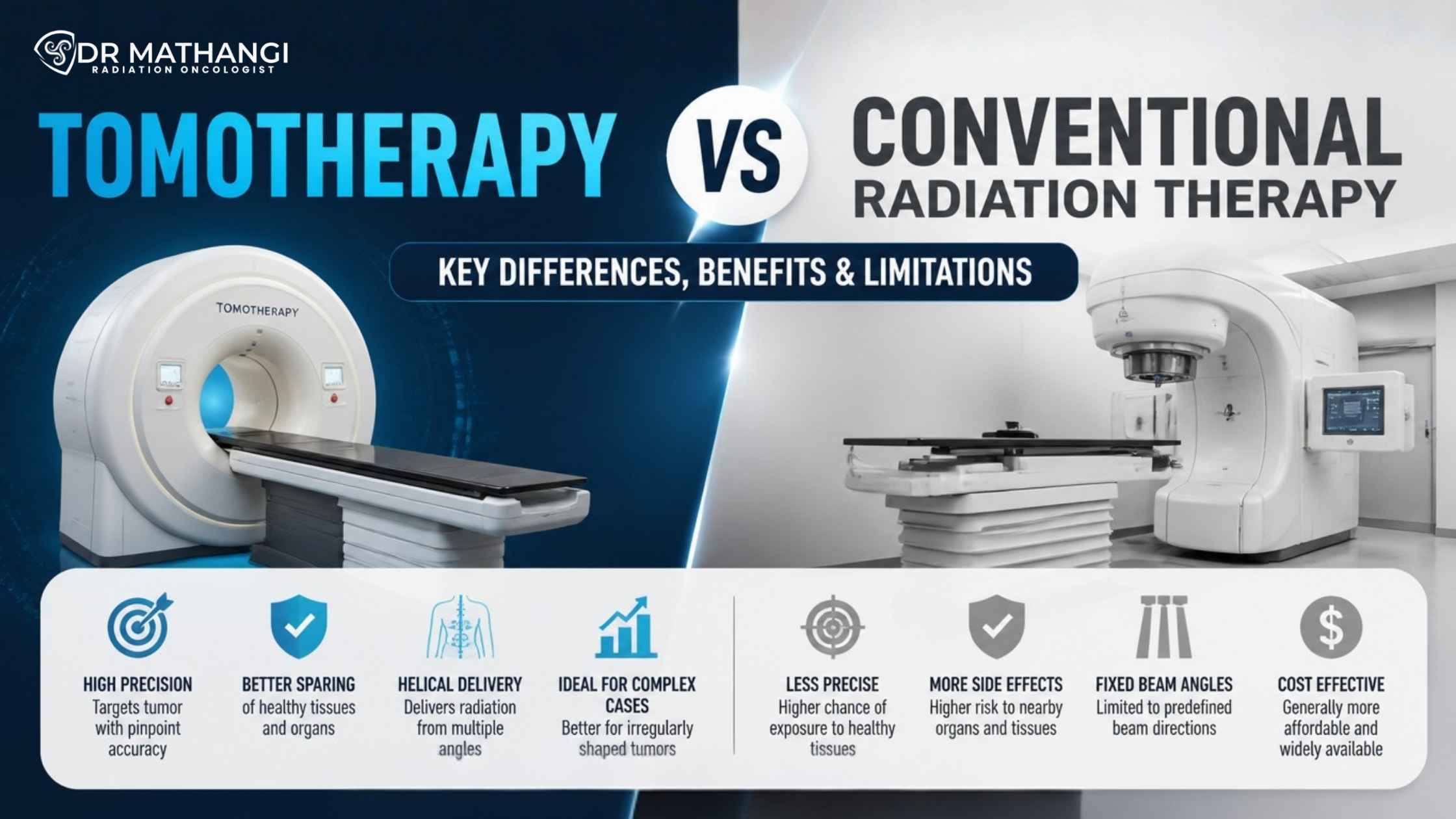
What is the difference between Tomotherapy and Conventional Radiation Therapy? Tomotherapy is an advanced, image-guided form of radiation therapy that delivers highly precise treatment with less damage to healthy tissues, while conventional radiation therapy uses older, less targeted approaches. This article, authored by Dr. Mathangi J, Senior Radiation Oncologist at Gleneagles Cancer Institute, Bangalore, explores the essential differences, benefits, and limitations to help you make informed decisions about cancer treatment.
Did you know? According to the World Health Organization, nearly 50% of all cancer patients will require some form of radiation therapy during their treatment journey. With cancer cases rising in India and across the globe, choosing the most effective and least harmful radiation therapy technique can significantly impact not just survival, but also quality of life.
Understanding Tomotherapy Vs Conventional Radiation Therapy
The comparison between tomotherapy vs conventional radiation therapy is at the forefront of modern cancer treatment discussions. Both methods are used to destroy cancer cells, but the way they deliver radiation differs dramatically, influencing effectiveness, side effects, and patient outcomes.
What is tomotherapy treatment?
Tomotherapy treatment is a state-of-the-art, image-guided intensity-modulated radiation therapy (IMRT). It uses a rotating helical (spiral) beam, integrating CT imaging and radiation delivery in one device. This allows for real-time imaging and highly conformal treatment, targeting tumors with millimeter precision while minimizing exposure to healthy tissues.
- Highly precise targeting enabled by daily imaging
- Flexible dosing for complex tumor shapes and locations
- Reduces radiation exposure to surrounding organs
What is conventional radiation therapy?
Conventional radiation therapy refers to older techniques such as 2D and 3D conformal radiation therapy. These methods use fixed beams delivered from specific angles, often without integrated imaging each day. As a result, there is a higher chance that healthy tissues near the tumor will receive unnecessary radiation, potentially leading to more side effects.
- Less precise targeting compared to modern techniques
- Higher likelihood of affecting healthy tissue
- Limited flexibility for irregularly shaped tumors
Key differences: Tomotherapy vs conventional radiation therapy
| Feature | Tomotherapy | Conventional Radiation Therapy |
|---|---|---|
| Technology | Helical IMRT with daily CT imaging | 2D/3D Conformal, Static IMRT, basic imaging |
| Precision | Sub-millimeter, highly conformal | Less precise, wider margins required |
| Healthy Tissue Sparing | Excellent | Moderate to low |
| Suitability for Complex Tumors | Very high, especially head & neck, brain, spine | Moderate |
| Imaging Integration | Built-in daily CT scans | Periodic imaging, not always daily |
| Side Effects | Generally lower, individualized | Potentially higher, less tailored |
Tomotherapy vs traditional radiation therapy: Which is better for complex cancers?
For tumors in challenging locations such as the brain, head and neck, spine, or pelvis, tomotherapy vs traditional radiation therapy shows clear advantages. Tomotherapy’s image-guided, helical delivery allows radiation to 'wrap around' the tumor, avoiding critical structures. This is especially vital in cancers such as:
- Head and neck cancers
- Brain tumors
- Spine tumors
- Lung cancers
- Prostate and pelvic cancers
- Breast, cervix, and endometrial cancers
In contrast, traditional methods might require compromising on either tumor coverage or safety to vital organs, especially when tumors are close to sensitive tissues.
Tomotherapy vs external beam radiation therapy: How do they compare?
Both tomotherapy and external beam radiation therapy (EBRT) are non-invasive, but tomotherapy is a specialized form of EBRT, offering:
- Continuous 360-degree treatment (helical delivery) for even dose distribution
- Daily imaging for adaptive planning
- Superior results in reducing side effects and improving tumor control
Standard EBRT may lack the flexibility and daily imaging, making tomotherapy preferable for cases where precision is paramount.
Tomotherapy benefits: What makes it stand out?
Tomotherapy benefits are best realized in its ability to:
- Reduce radiation dose to healthy tissues, lowering risk of complications
- Enable treatment of complex or previously irradiated areas
- Allow for highly personalized, adaptive radiotherapy plans
- Support higher cure rates with fewer side effects
For patients, this translates to better quality of life during and after treatment. For clinicians like Dr. Mathangi, it’s an essential tool for treating even the most challenging cases with confidence and precision.
Tomotherapy vs standard radiation therapy: A modern leap in cancer care
Comparing tomotherapy vs standard radiation therapy highlights how far technology has come. Standard approaches, while effective, can’t match the personalization and sparing of normal tissues that tomotherapy provides. Especially for tumors with irregular shapes or those close to important organs, tomotherapy’s advanced capabilities make it the treatment of choice at top centers like Gleneagles Cancer Institute.
Tomotherapy side effects: Are they fewer?
One of the most important questions patients have is about tomotherapy side effects. Because tomotherapy delivers radiation with such high precision, side effects tend to be fewer and milder compared to conventional techniques. Common side effects such as skin irritation, fatigue, or tissue inflammation are often less severe, and risks of long-term complications are notably reduced.
However, as with any cancer therapy, individual responses vary. Dr. Mathangi’s extensive experience ensures that every patient receives a tailored approach to minimize risks and maximize outcomes.
Why choose Dr Mathangi for tomotherapy treatment in Bangalore?
When considering tomotherapy treatment or comparing tomotherapy vs conventional radiotherapy, the expertise of your oncologist makes all the difference. Dr. Mathangi J leads the Radiation Oncology department at Gleneagles Cancer Institute, Bangalore—one of India’s most advanced cancer centers. With over 12,000 patients successfully treated, she is renowned for:
- Installing Asia Pacific’s first TrueBeam STx Machine
- Mastery of image-guided, stereotactic, and advanced radiotherapy
- Specialization in head and neck, brain, spine, lung, prostate, and women’s cancers
- International training in Germany, Denmark, and leading Indian institutions
- Mentoring the next generation of oncologists via advanced fellowship programs
Choosing Dr. Mathangi’s center means direct access to the latest technology and a compassionate, research-driven approach to care. Patients not only receive world-class treatment but also the assurance of being in expert hands throughout their cancer journey.
Submit your contact details at https://drmathangi.com/contact/ and Dr. Mathangi’s expert team will schedule your appointment.
Who can benefit most from tomotherapy?
Tomotherapy is especially advantageous for patients with:
- Head and neck cancers
- Brain tumors
- Spine tumors
- Esophagus and rectal cancers
- Lung and liver cancers
- Breast, bladder, prostate, uterine, cervical, vulval, anal canal, and penile cancers
For these cancers, the precise targeting of tomotherapy can mean higher cure rates and fewer side effects, especially when tumors are close to vital organs or have complex shapes.
Limitations of tomotherapy and conventional radiation therapy
While tomotherapy offers significant advantages, it is not always necessary for every patient. Some limitations include:
- Higher cost compared to conventional methods
- Longer setup and planning time due to advanced imaging
- Availability limited to specialized centers
Conventional radiation therapy, on the other hand, while more widely available and less expensive, may not offer the same level of precision or safety for complex cancers, potentially leading to higher side effect rates.
Conclusion: Making the right choice for your cancer treatment
In summary, the debate of tomotherapy vs conventional radiation therapy is more than technical—it’s deeply personal. For many, the advanced technology and expertise offered by tomotherapy, especially under the guidance of Dr. Mathangi J at Gleneagles Cancer Institute, can make a life-changing difference in cancer care.
- Tomotherapy: Best for precision, complex cases, and reducing side effects
- Conventional Radiation Therapy: Suitable for straightforward cases, wider availability
Ultimately, your treatment plan should be personalized. To explore whether tomotherapy is right for you, book a consultation with Dr. Mathangi—and take the first step towards optimal cancer care.
Frequently Asked Questions
What are the main differences between tomotherapy and conventional radiation therapy?
The key difference in tomotherapy vs conventional radiation therapy is in the delivery method and precision. Tomotherapy combines advanced imaging with highly targeted radiation delivered in a spiral (helical) fashion, allowing for greater precision and sparing of healthy tissue. Conventional radiation therapy, also known as standard or external beam radiation therapy, uses fixed beams and may not offer the same level of accuracy or adaptive planning. Dr. Mathangi uses tomotherapy when the goal is to maximize tumor targeting and minimize side effects.
How does tomotherapy compare to traditional radiation therapy in terms of patient experience?
In the comparison of tomotherapy vs traditional radiation therapy, patients often find tomotherapy sessions to be more comfortable due to its integrated imaging and precise delivery, which can reduce the number of sessions or the risk of side effects. Traditional methods may require additional imaging appointments and can sometimes lead to more exposure of normal tissues, increasing the risk of unwanted effects. Dr. Mathangi’s approach focuses on patient comfort and safety, making tomotherapy an excellent option for many.
What are the benefits of tomotherapy over conventional radiotherapy?
Tomotherapy benefits include superior precision, the ability to treat complex and irregularly shaped tumors, and integrated daily imaging for adaptive treatments. When comparing tomotherapy vs conventional radiotherapy, tomotherapy generally results in lower exposure of healthy tissues and potentially fewer side effects. Dr. Mathangi’s expertise ensures patients receive tailored treatment plans that maximize these benefits.
Are there any limitations to tomotherapy compared to standard radiation therapy?
Tomotherapy may not be suitable for all cancer types or treatment sites. It can also be more time-consuming per session and may not be available in all treatment centers. In tomotherapy vs standard radiation therapy, the choice depends on individual case factors, tumor location, and patient needs. Dr. Mathangi carefully evaluates each patient to recommend the most effective and accessible option.
How does tomotherapy differ from external beam radiation therapy?
The comparison of tomotherapy vs external beam radiation therapy highlights that tomotherapy is a type of external beam therapy, but it delivers radiation in a helical (spiral) pattern, allowing for more versatile and conformal dose distribution. Standard external beam therapy uses fixed beams from set angles, which may be less adaptable for complex tumors. With Dr. Mathangi’s guidance, patients receive the most appropriate modality based on the tumor’s shape and location.
What side effects can I expect from tomotherapy treatment?
Tomotherapy side effects are generally similar to those of other forms of radiation therapy, but may be milder due to the technique’s precision. Common effects include fatigue, mild skin changes, or localized discomfort, depending on the area treated. Dr. Mathangi takes extra precautions to minimize side effects and provides supportive care throughout the tomotherapy treatment process.
Is tomotherapy suitable for all types of cancer?
While tomotherapy is highly effective for many solid tumors, especially those in complex locations or near critical organs, it may not be the preferred choice for all cancers. The decision between tomotherapy and conventional radiation therapy depends on specific clinical factors. Dr. Mathangi conducts a thorough evaluation to determine the most suitable and effective treatment for each patient.
How does Dr. Mathangi personalize treatment plans involving tomotherapy?
Dr. Mathangi leverages advanced imaging and planning techniques to customize each tomotherapy treatment plan. She considers tumor size, shape, location, and patient-specific factors to optimize outcomes, always aiming to maximize tumor control while minimizing risks and side effects. This personalized approach enhances the effectiveness and safety of tomotherapy for her patients.
How can I decide between tomotherapy and conventional radiation therapy?
The decision between tomotherapy vs conventional radiation therapy is best made in consultation with an experienced oncologist like Dr. Mathangi. She will assess your diagnosis, tumor characteristics, and personal treatment goals, then recommend the most effective and safe option. Patients are encouraged to discuss their concerns and preferences during the planning process.