What Is Tomotherapy and How Does It Work?
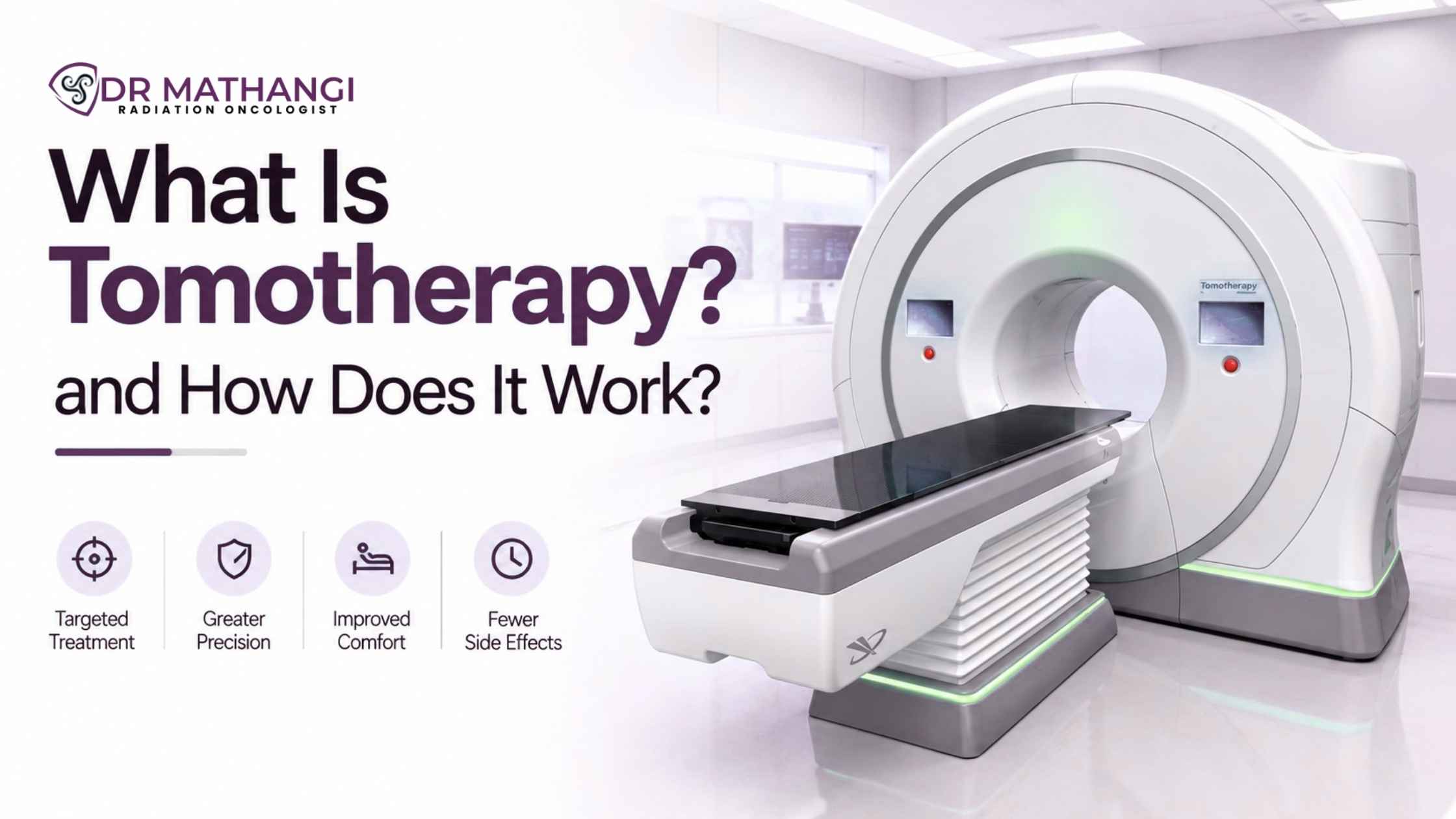
What is tomotherapy? A precise answer for cancer patients
Tomotherapy is an advanced form of radiation therapy that combines intensity-modulated radiation delivery with real-time imaging, allowing for precise targeting of tumors while minimizing damage to healthy tissues. According to recent oncology statistics, over 60% of cancer patients will require radiation therapy during their treatment journey, making innovations like tomotherapy a game-changer in modern cancer care.
At Gleneagles Cancer Institute in Bangalore, Dr. Mathangi J, a renowned Senior Consultant and In-charge of Radiation Oncology, offers this state-of-the-art technology to patients seeking the highest standards of care. With more than 20 years of expertise and over 12,000 patients successfully treated, Dr. Mathangi is at the forefront of advanced cancer therapies, including tomotherapy treatment.
How does tomotherapy work? The science behind precision
Tomotherapy works by delivering highly focused radiation beams to a tumor from multiple angles, guided by integrated CT imaging performed before each treatment session. This unique integration ensures the radiation conforms precisely to the tumor’s shape, sparing surrounding normal tissues and critical organs.
- Planning: A detailed CT scan of the patient is taken to map the tumor’s size, location, and proximity to vital structures.
- Simulation: The tomotherapy machine’s software creates a 3D model, allowing Dr. Mathangi and her team to develop a personalized treatment plan.
- Image Guidance: Before each session, image guided tomotherapy uses real-time CT images to adjust for any patient movement or changes in anatomy.
- Helical Delivery: Helical tomotherapy delivers radiation in a spiral (helical) manner as the patient moves through the machine, ensuring even complex-shaped tumors are treated thoroughly and accurately.
- Adaptive Therapy: Plans can be adjusted as the tumor shrinks or changes, maximizing effectiveness while minimizing side effects.
This approach sets tomotherapy technology apart from conventional radiation therapy, offering unmatched precision and adaptability for complex cases.
What cancers can tomotherapy treat?
Tomotherapy for cancer is especially effective for tumors that require high precision due to their location near sensitive organs or irregular shapes. Dr. Mathangi utilizes tomotherapy radiation therapy for a wide range of cancers, including:
- Head and neck cancers
- Brain tumors
- Spine tumors
- Esophagus and rectal cancers
- Lung cancers
- Liver cancers
- Breast cancers
- Bladder cancers
- Prostate cancers
- Uterine cancers
- Cervical cancer
- Vulval cancers
- Anal canal cancers
- Penile cancers
These cancers often pose challenges due to their proximity to vital structures or the need for high-dose, targeted therapy. Tomotherapy treatment offers an edge in such scenarios by reducing the risk of side effects and improving clinical outcomes.
What makes tomotherapy technology unique?
The tomotherapy machine stands out due to its integrated design, combining a linear accelerator with a CT scanner in a single device. This enables continuous imaging and adaptive planning, ensuring that every session is tailored to the patient’s current anatomy.
- Helical Delivery: Unlike traditional machines that deliver radiation from fixed angles, helical tomotherapy administers radiation as the patient moves through the ring-shaped device, wrapping the dose around the tumor with pin-point accuracy.
- Image Guidance: Image guided tomotherapy means every session starts with a fresh CT scan, allowing for sub-millimeter accuracy and immediate correction for any shifts or changes.
- Personalized Adaptation: The system can modify treatment based on tumor response, body weight changes, or surgical interventions during the course of therapy.
For patients and clinicians, this means less uncertainty and more confidence in the effectiveness and safety of each session.
Advantages of tomotherapy radiation therapy for patients
Choosing tomotherapy for cancer under the guidance of Dr. Mathangi offers several unique benefits:
- Superior Precision: Continuous imaging ensures the radiation dose conforms exactly to the tumor, reducing the risk to healthy tissues.
- Fewer Side Effects: By minimizing exposure to critical organs, patients experience fewer acute and long-term toxicities.
- Improved Outcomes: Higher doses can be delivered safely to tumors, improving local control and survival rates.
- Faster Recovery: With less collateral damage, patients typically recover faster and experience a better quality of life during and after treatment.
- Adaptability: Treatment can be adjusted in real time, ensuring the best possible response as the tumor changes.
These advantages are particularly important for patients with recurrent, previously irradiated, or anatomically complex tumors.
How is tomotherapy performed? Step-by-step guide
Understanding how tomotherapy works can reassure patients who are new to this innovative approach. Here’s a stepwise outline:
- Consultation: Dr. Mathangi conducts a comprehensive evaluation and discusses the best radiation approach based on the individual’s diagnosis.
- Simulation: Detailed imaging is performed, and custom immobilization devices may be used to ensure the patient maintains the same position during every session.
- Treatment Planning: Advanced software designs a plan that maximizes tumor coverage and spares healthy tissue.
- Daily Imaging: Each session begins with a CT scan for precise alignment and real-time adaptation.
- Helical Delivery: The tomotherapy machine administers radiation as the patient moves through the bore, delivering a precise, modulated dose.
- Monitoring: Dr. Mathangi and her expert team monitor progress and adjust the plan as needed for maximum effectiveness and safety.
This workflow ensures that every fraction of radiation is administered with meticulous care and scientific rigor.
Why choose Dr Mathangi for tomotherapy in Bangalore?
Dr. Mathangi J is a distinguished leader in radiation oncology, known for her expertise in advanced therapies like tomotherapy treatment. As one of India’s foremost radiation oncologists, Dr. Mathangi offers:
- Over 20 years of specialized experience in cancer care
- Advanced training in Stereotactic, IGRT/RapidArc, and intraoperative radiotherapy from leading centers in Europe
- Proven track record with 12,000+ patients treated
- Asia Pacific’s first installation of the TrueBeam STx Machine
- Expertise in treating head and neck, prostate, lung, brain, and women’s cancers
- Commitment to cutting-edge, compassionate care in a world-class facility
Choosing Dr. Mathangi means you benefit from the highest level of precision, safety, and outcomes available in India today. Patients who miss the opportunity to receive tomotherapy under her care may not experience the same level of personalized precision and clinical excellence.
To book a consultation with Dr. Mathangi and explore the benefits of tomotherapy, submit your details at this contact form. Her dedicated team will follow up promptly to schedule your appointment.
About Dr Mathangi
Dr. Mathangi J is the Senior Consultant and In-charge of Radiation Oncology at Gleneagles Cancer Institute, Bangalore, part of the prestigious Gleneagles Hospitals network. Her credentials include MBBS, DMRT (Madras Medical College), and DNB (Apollo Cancer Specialty Hospital). She has received advanced training in Europe and pioneered the adoption of several cutting-edge radiotherapy techniques in India.
As Director of Fellowship in Advanced Radiotherapy techniques affiliated with RGUHS, Dr. Mathangi is not only a clinical expert but also an educator and mentor. Her specializations cover head and neck, brain, lung, prostate, and women’s cancers, making her a sought-after authority in the region.
Key takeaways: Why tomotherapy is revolutionizing cancer treatment
- Tomotherapy offers unmatched precision by combining imaging and radiation delivery in a single system.
- It is ideal for complex, hard-to-treat tumors, and can be adapted as the tumor changes.
- Patients under Dr. Mathangi’s care benefit from personalized, evidence-based protocols and leading-edge technology.
- Choosing tomotherapy at Gleneagles Cancer Institute, Bangalore, maximizes your chances for successful, safe cancer therapy.
Don’t miss out on the most advanced, patient-centric treatment available. Contact Dr. Mathangi’s team to start your journey toward recovery with tomotherapy.
Frequently Asked Questions
What is tomotherapy and how does it differ from conventional radiation therapy?
Tomotherapy is a cutting-edge form of radiation therapy that combines the precision of computed tomography (CT) imaging with targeted intensity-modulated radiation delivery. Unlike conventional linear accelerators, tomotherapy treatment uses a unique helical (spiral) approach, allowing radiation to be delivered from multiple angles as the patient moves through a ring-shaped tomotherapy machine. This method offers enhanced accuracy, reducing radiation exposure to healthy tissues and improving cancer control.
How tomotherapy works to treat cancer?
Tomotherapy works by integrating advanced imaging and radiation delivery in a single system. Before each session, a CT scan is performed to guide treatment, ensuring precise targeting of the tumor. The helical tomotherapy system delivers radiation in a spiral pattern, adjusting intensity and angle dynamically for optimal coverage. This minimizes side effects and maximizes the dose to cancer cells. Dr. Mathangi employs this technology to tailor treatments to each patient’s unique anatomy and tumor characteristics.
What types of cancer can be treated with tomotherapy?
Tomotherapy for cancer is effective in treating a wide variety of cancers, including head and neck, brain, breast, prostate, lung, and gastrointestinal tumors. Its precision makes it especially valuable for tumors located near critical organs or those requiring re-treatment. Dr. Mathangi assesses each patient individually to determine if tomotherapy radiation therapy is the most suitable option for their specific cancer type and stage.
What is helical tomotherapy and why is it significant?
Helical tomotherapy refers to the unique delivery of radiation in a continuous spiral motion, similar to a CT scanner. This technique allows for highly conformal radiation delivery, adapting to the tumor’s shape and minimizing impact on surrounding healthy tissue. The helical approach improves accuracy and outcomes, especially for complex or irregularly shaped tumors. Dr. Mathangi leverages helical tomotherapy to provide patients with innovative and less invasive cancer treatment options.
What is the role of imaging in image guided tomotherapy?
Image guided tomotherapy uses integrated CT imaging before every session to verify the tumor’s position and adjust treatment as needed. This level of precision ensures that the radiation is delivered exactly where it’s needed, accommodating for any changes in the patient’s anatomy or tumor size. Dr. Mathangi utilizes this technology to enhance accuracy and personalize each treatment plan, improving safety and effectiveness.
What is a tomotherapy machine and how does it work during treatment?
A tomotherapy machine is a specialized device that combines CT imaging and radiation delivery in a single unit. During tomotherapy treatment, the patient lies on a table that moves slowly through a ring-shaped gantry. The system rotates around the patient, delivering radiation from multiple directions in a helical pattern. The built-in imaging ensures that the radiation beams are precisely targeted, maximizing treatment effectiveness and minimizing side effects.
What are the main benefits of tomotherapy technology for patients?
Tomotherapy technology offers several key benefits: improved precision, reduced radiation exposure to healthy tissues, and the ability to treat complex or previously irradiated areas. Patients often experience fewer side effects compared to conventional radiation therapy. Under Dr. Mathangi’s care, each tomotherapy plan is customized for optimal tumor control and patient comfort.
What should patients expect during a tomotherapy radiation therapy session?
During tomotherapy radiation therapy, patients will undergo a quick CT scan to verify positioning, followed by the actual treatment which typically lasts 15-30 minutes. The process is painless and non-invasive. Dr. Mathangi and her team provide support and guidance throughout, ensuring each session is comfortable and that the patient understands every step of the procedure.
How does Dr. Mathangi tailor tomotherapy for each patient?
Dr. Mathangi uses advanced imaging and treatment planning software to individualize every tomotherapy session. Factors such as tumor size, location, patient anatomy, and previous treatments are carefully considered. Ongoing imaging and monitoring allow for adjustments, ensuring that each patient receives the safest and most effective tomotherapy for cancer treatment possible.