Which Cancers Can Be Treated With Tomotherapy?
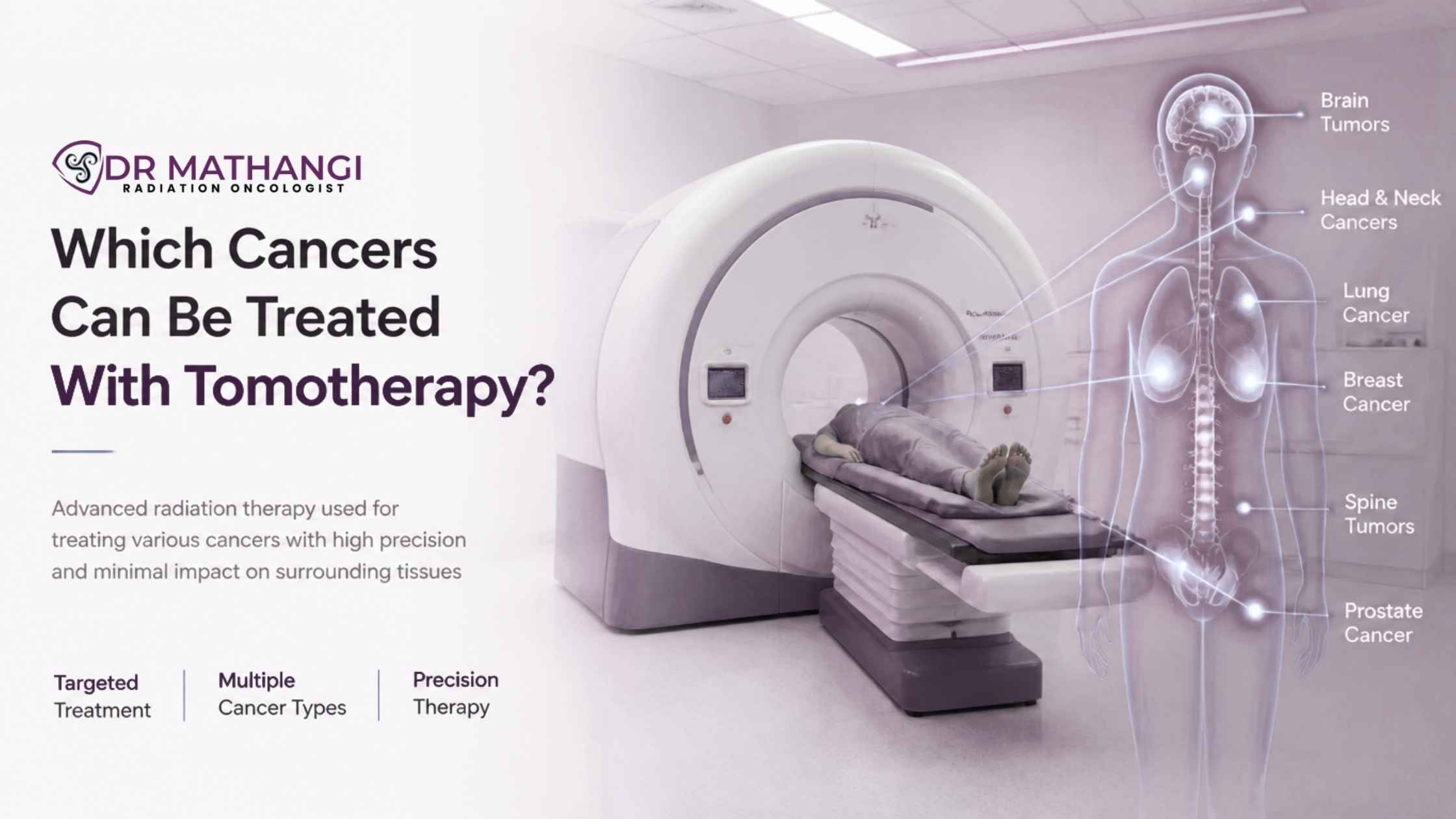
Tomotherapy is a cutting-edge form of advanced radiation therapy that has revolutionized cancer radiotherapy with its precision and effectiveness. According to global cancer statistics, nearly 50% of all cancer patients will require radiation therapy during their treatment journey, making innovations like tomotherapy critical for improving survival and quality of life. With over two decades of expertise, Dr Mathangi J at Gleneagles Cancer Institute, Bangalore, stands at the forefront of delivering tomotherapy cancer treatment for a wide range of cancers, helping patients achieve optimal outcomes.
Ready for a personalized cancer treatment plan?
Book a consultation with Dr Mathangi J, a leader in tomotherapy and advanced radiation therapy, and take the first step toward hope and healing.
What Is Tomotherapy And How Does It Work?
Tomotherapy represents a breakthrough in cancer radiotherapy, combining the strengths of intensity-modulated radiation therapy (IMRT) with the real-time imaging capability of a CT scanner. This unique technology allows for highly conformal and precise delivery of radiation, targeting tumors while sparing healthy tissues and organs.
- Integrates daily imaging for precise tumor localization
- Delivers radiation in a helical (spiral) pattern for uniform dose distribution
- Adapts treatment to changing anatomy during the course of therapy
By using such advanced technology, tomotherapy for cancer treatment provides enhanced tumor control, fewer side effects, and improved patient comfort during treatment sessions.
Which Cancers Can Be Treated With Tomotherapy?
Cancers treated with tomotherapy span a broad spectrum, from common malignancies to complex and rare tumors. Tomotherapy indications include:
| Cancer Type | Why Tomotherapy Is Beneficial |
|---|---|
| Head and Neck Cancers | Complex anatomy; tomotherapy delivers targeted radiation while preserving critical structures like salivary glands, vocal cords, and spinal cord. |
| Brain Tumors | Requires sub-millimeter accuracy to avoid cognitive deficits; tomotherapy’s imaging and modulation minimize risks. |
| Spine Tumors | Close proximity to spinal cord demands precision; tomotherapy enables high dose delivery with spinal cord protection. |
| Esophagus and Rectal Cancers | Surrounding organs at risk (heart, lungs, bowel) are preserved due to tomotherapy’s sharp dose gradients. |
| Lung Cancers | Accounts for respiratory motion; daily image guidance ensures accurate targeting and spares healthy lung tissue. |
| Liver Cancers | Liver’s sensitivity to radiation is mitigated by tomotherapy’s ability to sculpt doses around tumors. |
| Breast Cancers | Minimizes radiation to the heart and lungs; ideal for left-sided breast cancers and complex post-mastectomy cases. |
| Bladder Cancers | Reduces exposure to bowel and reproductive organs, lowering risk of side effects. |
| Prostate Cancers | Targets prostate while sparing bladder and rectum; lowers risk of urinary and bowel complications. |
| Uterine, Cervical, Vulval, Anal Canal, Penile Cancers | Complex pelvic anatomy; tomotherapy’s precision is invaluable in treating these sensitive regions. |
Why Are These Cancers Treated With Tomotherapy?
These cancers are selected for tomotherapy radiation treatment because the technology’s ability to modulate dose and adapt to patient anatomy is especially advantageous when tumors are:
- Located near critical organs or sensitive tissues
- Irregularly shaped or multi-focal
- Requiring re-irradiation where previous treatments have occurred
- In patients who need the lowest possible side effect profile for better quality of life
How Does Tomotherapy Compare To Other Advanced Radiation Therapy Techniques?
Tomotherapy stands out from other advanced radiation therapy modalities due to its unique integration of helical IMRT and onboard imaging. While other techniques like RapidArc or CyberKnife have their strengths, tomotherapy excels in:
- Daily adaptive planning with imaging before every session
- Superior dose sculpting for complex tumor shapes
- Reduced risk of ‘hot spots’ and radiation-induced side effects
- Ability to treat large or multiple tumor sites in a single session
For patients and families, this often translates into shorter treatment courses, less discomfort, and a faster return to normal life.
What Are The Key Tomotherapy Indications?
Tomotherapy indications are especially strong for:
- Head and neck cancer: Where speech, swallowing, and appearance matter greatly, tomotherapy minimizes side effects that can impact quality of life.
- Brain and spine tumors: Where adjacent critical structures demand millimeter-level accuracy.
- Lung, esophageal, and rectal cancers: Where tumor motion and proximity to vital organs pose challenges for conventional radiation.
- Breast and prostate cancer: Especially when anatomy or previous surgeries complicate treatment.
- Pelvic and genitourinary cancers: Including cervical, uterine, vulval, anal canal, and penile cancers, where tissue preservation is crucial.
These indications are based on international guidelines and tailored by Dr Mathangi to each patient’s unique needs.
What Makes Tomotherapy Cancer Treatment Unique At Gleneagles Cancer Institute?
At Gleneagles Cancer Institute, Bangalore, under the leadership of Dr Mathangi J, tomotherapy cancer treatment is delivered with unparalleled expertise. Dr Mathangi’s department is known for:
- Asia Pacific’s first TrueBeam STx installation
- Extensive experience with over 12,000 cancer patients
- Advanced training in stereotactic, IGRT, and intraoperative radiotherapy from international centers
- Leading-edge protocols for every stage and type of cancer
Patients benefit from a multidisciplinary approach, with every tomotherapy plan personalized by Dr Mathangi’s team. This ensures optimal tumor control, minimal side effects, and compassionate support throughout the journey.
How To Get The Best Outcomes From Tomotherapy Radiation Treatment?
For patients seeking the best results from tomotherapy radiation treatment, partnering with an experienced radiation oncology expert is essential. Dr Mathangi’s meticulous planning, precision, and patient-centered care maximize the benefits of tomotherapy for cancer treatment:
- Comprehensive Evaluation: Every patient undergoes a thorough assessment, including advanced imaging and multidisciplinary tumor board review.
- Personalized Planning: Dr Mathangi leverages her expertise to craft a unique radiation plan for each patient’s anatomy and tumor profile.
- Ongoing Monitoring: Daily imaging allows real-time adaptation, ensuring the highest accuracy throughout the treatment course.
- Follow-Up Care: Patients are closely monitored post-treatment for recovery, side effect management, and long-term health.
This holistic approach is why so many patients in Bangalore and across India trust Dr Mathangi for their cancer radiotherapy needs.
Don’t Miss Out On The Advantages Of Tomotherapy
Only a handful of centers in India offer such precise and advanced radiation therapy. Secure your treatment under the expert care of Dr Mathangi—where technology meets compassion.
Why Choose Dr Mathangi J For Tomotherapy Radiation Treatment?
Dr Mathangi J is among South India’s most respected senior radiation oncologists, with extensive credentials:
- MBBS, DMRT from Madras Medical College, Chennai
- DNB Residency at Apollo Cancer Specialty Hospital, Chennai
- Internationally trained in SRS/SBRT, IGRT/RapidArc, and IORT
- Director of Fellowship in Advanced Radiotherapy Techniques (affiliated with RGUHS)
- Over 20 years of clinical experience
- Recognized for pioneering roles in introducing state-of-the-art technology
Her patient-centric philosophy, evidence-based protocols, and unwavering commitment to excellence make her a trusted partner in your fight against cancer.
About Dr Mathangi J
Dr Mathangi J is a Senior Consultant and In-charge of Radiation Oncology at Gleneagles Cancer Institute, Bangalore. She specializes in cancers treated with tomotherapy, including head and neck, brain, spine, lung, breast, prostate, and gynecologic cancers. With over 20 years of experience and advanced training from leading international centers, she is renowned for her expertise in tomotherapy, advanced radiation therapy, and patient-centered care. Dr Mathangi is also the Director of Fellowship in Advanced Radiotherapy Techniques (RGUHS-affiliated) and is celebrated for her pioneering achievements in the region.

How To Book Your Consultation With Dr Mathangi J
If you or a loved one need expert advice on tomotherapy for cancer treatment, do not delay. Submit your contact information through the secure form at https://drmathangi.com/contact/. Dr Mathangi’s team will promptly schedule your appointment and guide you through every step of your care journey.
Conclusion: Tomotherapy Is Changing Lives In India
In summary, cancers treated with tomotherapy include a wide range of complex and challenging tumors, offering hope where conventional treatments may fall short. Under the expert leadership of Dr Mathangi J, patients at Gleneagles Cancer Institute in Bangalore receive world-class care, personalized attention, and access to the latest advancements in cancer radiotherapy. Take the first step toward a better tomorrow—choose tomotherapy with Dr Mathangi.
Take Control Of Your Cancer Journey
Don’t settle for less when it comes to your health. Book your expert consultation with Dr Mathangi J today and experience the future of cancer care.
Frequently Asked Questions
What types of cancer can be treated with tomotherapy?
Tomotherapy is an advanced radiation therapy that can be used to treat a wide variety of cancers. Common cancers treated with tomotherapy include head and neck cancers, brain tumors, lung cancer, prostate cancer, breast cancer, gastrointestinal cancers, and certain pediatric cancers. Dr. Mathangi will evaluate each case individually to determine if tomotherapy cancer treatment is appropriate based on the tumor location, size, and overall treatment goals.
How does tomotherapy differ from other radiation oncology treatments?
Tomotherapy combines intensity-modulated radiation therapy (IMRT) with precise CT imaging for every treatment session. Unlike traditional cancer radiotherapy, tomotherapy delivers highly targeted doses, minimizing exposure to healthy tissues and reducing side effects. Its helical delivery allows for unmatched accuracy, making it a preferred technique for complex cases under the care of experts like Dr. Mathangi.
What are the indications for choosing tomotherapy?
Tomotherapy indications include tumors that are irregularly shaped, located near vital organs, or require simultaneous treatment of multiple areas. It is also chosen when prior radiation limits conventional approaches or when re-irradiation is required. Dr. Mathangi assesses each patient's medical history and tumor characteristics to determine if tomotherapy radiation treatment is the best strategy.
Is tomotherapy suitable for re-treatment or recurrent cancers?
Yes, tomotherapy is often used for re-treatment of cancers that have recurred in previously irradiated areas. Its precision and ability to spare surrounding healthy tissues make it safer for delivering additional doses. Dr. Mathangi offers personalized plans for patients in need of such advanced radiation therapy solutions.
How does Dr. Mathangi customize tomotherapy cancer treatment for each patient?
Dr. Mathangi uses detailed imaging, multidisciplinary consultation, and advanced planning software to design individualized tomotherapy cancer treatment regimens. Factors such as tumor size, location, patient health, and previous treatments are all considered to maximize effectiveness and minimize side effects.
What are the benefits of tomotherapy for cancer treatment compared to conventional techniques?
Tomotherapy offers superior targeting, reduced radiation to healthy tissues, and the ability to adapt treatment with daily imaging. Patients treated with tomotherapy often experience fewer side effects, shorter recovery times, and better quality of life. Dr. Mathangi leverages these benefits to provide the latest in cancer radiotherapy.
Are there any cancers for which tomotherapy is not recommended?
While tomotherapy is effective for many cancers, it may not be suitable for very large tumors not amenable to precise targeting or for certain hematological malignancies. Dr. Mathangi will discuss alternative options if another modality offers better outcomes for your specific diagnosis.
What should patients expect during a tomotherapy radiation treatment session?
Each tomotherapy session involves precise positioning, a quick CT scan for verification, and delivery of targeted radiation as the machine rotates around the patient. Sessions are typically painless and last 15–30 minutes. Dr. Mathangi and her team ensure comfort and safety at every step of the process.