Symptoms of Prostate Cancer That Has Spread to Bones
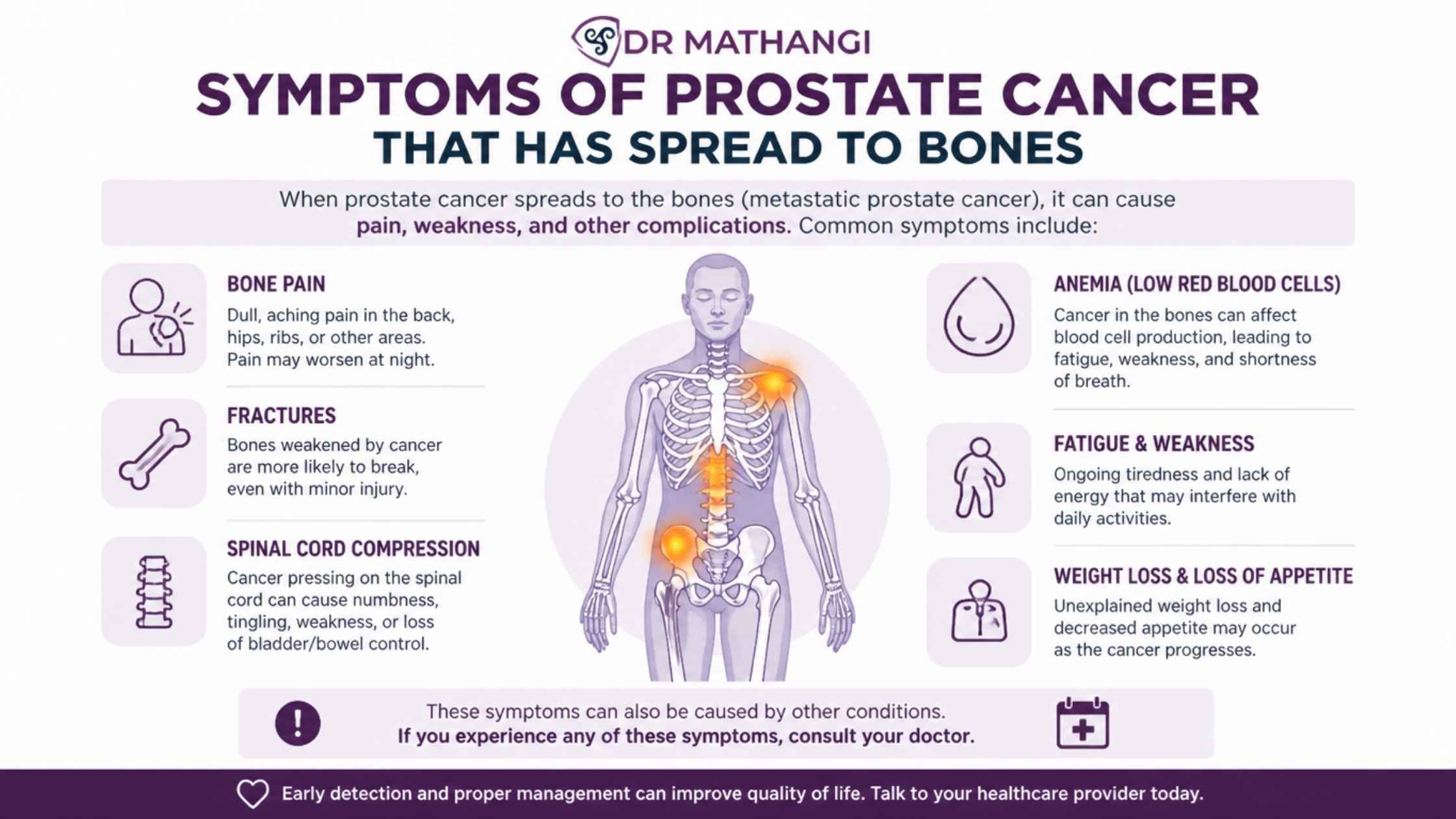
Quick Answer: When prostate cancer spreads to the bones, symptoms can include persistent bone pain, fractures, and weakness. Early detection of these warning signs is crucial, as bone metastases signal advanced disease and require urgent, specialized care. Dr. Mathangi, senior radiation oncologist in Bangalore, offers expert, evidence-based guidance for managing these complex cases.
What Are The Most Common Symptoms Of Prostate Cancer Spread To Bones?
Prostate cancer is one of the leading cancers among men worldwide. Alarmingly, according to the American Cancer Society, about 1 in 8 men will be diagnosed with prostate cancer during their lifetime, and for many, bone metastases become the first sign that the disease has advanced. Understanding the symptoms of prostate cancer spread to bones is essential for timely action and improved quality of life.
- Persistent bone pain—especially in the hips, back, or ribs
- Sudden or unexplained bone fractures
- Weakness or numbness in legs (if the spine is involved)
- Swelling or tenderness in affected areas
- Fatigue and weight loss
Early identification and intervention can drastically alter the course of the disease. Dr. Mathangi and her team at Gleneagles Cancer Institute specialize in recognizing subtle and overt signs of bone metastases, ensuring the best possible outcomes for patients.
How Does Bone Metastasis Occur In Prostate Cancer?
Bone metastasis happens when prostate cancer cells break away from the primary tumor and travel through the bloodstream or lymphatic system to the bones. This process, known as prostate cancer bone metastasis, is most commonly seen in the spine, hips, pelvis, and ribs.
- Prostate cancer cells prefer bone tissue because the bone marrow environment supports their growth.
- Once cancer cells settle in the bone, they disrupt normal bone remodeling, leading to pain and structural weakness.
The complexity of bone metastases demands a multidisciplinary approach—one that Dr. Mathangi is uniquely qualified to deliver, thanks to her decades of experience and leadership in advanced radiation oncology.
What Is Prostate Cancer Bone Pain And How Is It Different From Regular Pain?
Prostate cancer bone pain typically presents as a deep, aching discomfort that does not subside with rest or over-the-counter painkillers. Unlike muscular soreness or injury, this pain is persistent and may worsen at night or with movement.
- Pain is often localized to the lower back, hips, or pelvis.
- It may be associated with swelling or tenderness over the affected bone.
- Sometimes, the pain is the first indication that prostate cancer has spread, even before other symptoms appear.
Timely recognition of this specific pain pattern can prompt earlier diagnostic imaging and intervention, potentially preventing complications like fractures or spinal cord compression.
What Are The Warning Signs Of Bone Metastases Symptoms?
Bone metastases symptoms can vary based on the location and extent of the spread. Recognizing these signs enables patients and caregivers to seek specialized help without delay.
| Symptom | Possible Underlying Cause |
|---|---|
| Localized bone pain | Cancer cell infiltration and bone remodeling disruption |
| Frequent fractures | Weakened bone structure due to tumor invasion |
| Numbness or weakness in the legs | Spinal metastases compressing nerves |
| High calcium levels (hypercalcemia) | Bone breakdown releasing calcium into bloodstream |
| Difficulty walking or standing | Severe pain, fractures, or nerve compression |
If you or your loved one are experiencing any of these symptoms, it is essential to consult a cancer specialist like Dr. Mathangi at the earliest.
Who Is At Risk For Prostate Cancer Bone Metastasis Symptoms?
Patients with a history of advanced or recurrent prostate cancer are at the highest risk. Other risk factors include:
- High PSA (prostate-specific antigen) levels
- Gleason score above 7
- Previous biochemical recurrence after treatment
- Delayed or missed follow-up appointments
For these patients, regular monitoring and advanced imaging (such as PET/CT or MRI) are crucial to catch bone metastases at their earliest, most treatable stage. Dr. Mathangi’s protocol-driven surveillance can help reduce missed diagnoses and improve patient outcomes.
Why Is Early Detection Of Symptoms Of Prostate Cancer Spread To Bones Critical?
Early detection of symptoms of prostate cancer spread to bones can mean the difference between manageable disease and significant, life-altering complications. Unchecked bone metastases can lead to:
- Pathological fractures
- Spinal cord compression (risk of paralysis)
- Uncontrolled pain requiring high-dose opioids
- Hypercalcemia (dangerously high blood calcium)
By choosing an expert like Dr. Mathangi, patients gain access to the latest diagnostic tools and immediate intervention strategies—crucial for preserving independence, mobility, and dignity.
How Are Prostate Cancer Bone Metastases Diagnosed?
Diagnosing bone metastases involves a combination of clinical evaluation and advanced imaging. At Gleneagles Cancer Institute, Dr. Mathangi utilizes:
- Physical examination to assess pain, swelling, and neurological function
- Blood tests for PSA, calcium levels, and tumor markers
- Imaging:
- Bone scans (to detect areas of active bone turnover)
- PET/CT scans (for detailed mapping of metastatic spread)
- MRI (especially for spinal involvement)
- Biopsy (if the diagnosis remains uncertain)
Dr. Mathangi’s comprehensive approach ensures that no stone is left unturned, and that treatment can be tailored to the precise pattern of metastasis.
What Treatment Options Exist For Prostate Cancer Bone Metastasis?
Management of bone metastases in prostate cancer is multifaceted and must be individualized. Dr. Mathangi, with her expertise in advanced radiation oncology, offers a combination of:
- Targeted radiation therapy: Including Stereotactic Body Radiotherapy (SBRT) and Gated RapidArc for precise pain relief and tumor control.
- Systemic therapies: Such as hormone therapy, chemotherapy, or newer agents like bone-targeted drugs (bisphosphonates, denosumab).
- Pain management: Multimodal approach to minimize opioid dependence and maximize quality of life.
- Supportive care: Physiotherapy, nutrition, and psychological support for holistic healing.
Dr. Mathangi’s center is equipped with the latest technology, including Asia Pacific’s first TrueBeam STx Machine, enabling world-class, patient-centered cancer care in Bangalore.
How Can You Book An Appointment With Dr Mathangi?
If you or someone you love is experiencing symptoms of prostate cancer spread to bones, do not wait. Early, expert consultation can prevent complications and dramatically improve outcomes.
Submit your contact details here and Dr. Mathangi’s team will schedule your appointment and notify you promptly.
About Dr Mathangi: Your Trusted Partner In Cancer Care
Dr. Mathangi J is a Senior Consultant & In-charge of Radiation Oncology at Gleneagles Cancer Institute, Bangalore, with over 20 years of experience and more than 12,000 successfully treated patients. She is renowned for her expertise in cutting-edge radiation techniques and her compassionate, patient-first approach.
- Specialties: Prostate cancer, head and neck cancers, brain tumors, spine tumors, lung, breast, bladder, uterine, cervical, vulval, anal canal, and penile cancers
- Training: Advanced certifications from Germany, Denmark, and leading Indian centers
- Achievements: Asia Pacific’s first TrueBeam STx installation; Director of Fellowship in Advanced Radiotherapy
For the most advanced and compassionate cancer care in South India and North India, trust Dr. Mathangi—where expertise meets empathy, and every patient is treated like family.
What Cancers Need Radiation Therapy?
According to Dr. Mathangi, cancers that benefit most from radiation therapy include:
- Head and neck cancers
- Brain and spine tumors
- Esophagus and rectal cancers
- Lung and liver cancers
- Breast and bladder cancers
- Prostate, uterine, cervical, vulval, anal canal, and penile cancers
If you or your loved one is facing any of these diagnoses, schedule a consultation today to explore your best options.
Frequently Asked Questions
What are the common symptoms when prostate cancer spreads to the bones?
When prostate cancer spreads to the bones, patients may experience persistent bone pain, especially in the hips, spine, or ribs. Other symptoms of prostate cancer spread to bones include fractures with minor injuries, swelling, and sometimes numbness or weakness if the spine is affected. It’s important to recognize these prostate cancer bone metastasis symptoms early and seek medical advice.
How does prostate cancer bone pain typically feel?
Prostate cancer bone pain is often described as a deep, aching sensation that may be constant or worsen at night. It can impact daily activities and may not respond well to typical painkillers. If you notice this kind of pain, especially in the lower back, hips, or legs, consult your doctor for further evaluation.
Are there any other bone metastases symptoms besides pain?
Yes, in addition to pain, bone metastases symptoms can include swelling or tenderness at the affected site, increased risk of fractures, and in severe cases, symptoms related to spinal cord compression like numbness, tingling, or weakness in the legs. Some patients may also have high calcium levels in the blood, leading to fatigue or confusion.
How can Dr. Mathangi help manage symptoms of prostate cancer spread to bones?
Dr. Mathangi offers a comprehensive approach that includes advanced imaging, targeted therapies, and pain management strategies. She tailors treatment plans to manage prostate cancer bone metastasis symptoms effectively, improve mobility, and enhance quality of life. Supportive care and regular follow-ups are also provided to monitor and adjust treatment as needed.
What treatments are available for bone metastases from prostate cancer?
Treatment options may include hormone therapy, chemotherapy, bone-strengthening medications, radiotherapy, and newer targeted agents. Dr. Mathangi customizes treatment based on the extent of bone involvement, overall health, and patient preferences to control symptoms and slow disease progression.
When should I see a doctor if I suspect bone metastases?
If you have a history of prostate cancer and develop unexplained bone pain, swelling, or neurological symptoms like weakness or numbness, it’s important to seek prompt medical attention. Early diagnosis and intervention can significantly improve outcomes and symptom control.
Can lifestyle changes help with prostate cancer bone pain?
Yes, lifestyle modifications such as gentle exercise, maintaining a healthy diet, and avoiding activities that stress the bones can help manage pain. Dr. Mathangi can recommend specific strategies and connect you with physiotherapists or support services as part of a holistic care plan.
What support is available for families of patients with bone metastases?
Dr. Mathangi’s team provides education, counseling, and emotional support for families and caregivers. Support groups and resources are available to help families cope with the challenges of managing bone metastases symptoms and to ensure comprehensive care for the patient.