Prostate Cancer Bone Metastases: Lytic and Blastic Lesions
What Is Prostate Cancer Bone Metastasis Lytic Or Blastic?
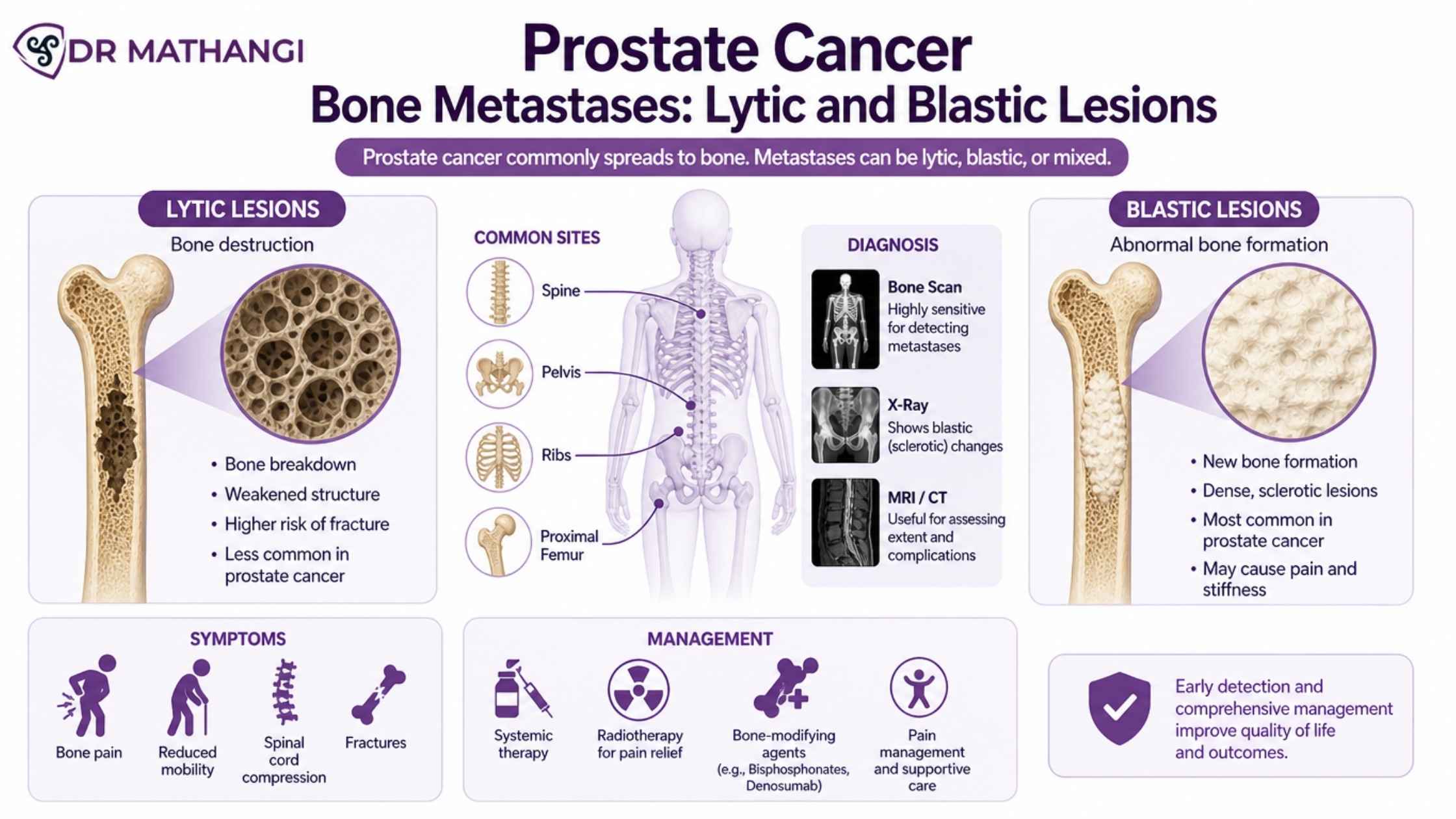
Prostate cancer bone metastasis lytic or blastic refers to the spread of prostate cancer cells to the bones, resulting in distinct types of bone lesions: lytic (bone-destroying), blastic (bone-forming), or a combination of both. These lesions significantly impact quality of life, prognosis, and treatment strategies for patients with advanced prostate cancer.
Statistics reveal that up to 90% of men with advanced prostate cancer will develop bone metastases during their disease course[1]. Early detection and expert management of these bone changes can dramatically influence outcomes, making timely and specialized care critical.
How Do Lytic And Blastic Lesions Develop In Prostate Cancer?
Lytic and blastic lesions arise when cancer cells disrupt the normal balance between bone formation and bone resorption:
- Lytic lesions are caused by increased destruction of bone tissue. Cancer cells stimulate osteoclasts, leading to bone breakdown and weakened structure.
- Blastic lesions involve abnormal bone formation. Prostate cancer cells often stimulate osteoblasts, creating dense but disorganized new bone that is structurally weaker than healthy bone.
- Many patients experience mixed lesions, where both destructive and sclerotic processes occur simultaneously.
This dual process leads to complex symptoms and requires tailored treatment, especially from leading specialists like Dr Mathangi at Gleneagles Cancer Institute, Bangalore.
Why Is Distinguishing Between Lytic And Blastic Lesions Important?
Identifying whether bone metastases are lytic, blastic, or mixed shapes both diagnostic and therapeutic approaches. For instance:
- Lytic lesions increase fracture risk and may lead to severe bone pain or spinal cord compression.
- Blastic lesions are associated with increased bone density but remain brittle, with a risk of pain and rare pathological fractures.
- Mixed lesions present unique challenges for imaging, pain management, and radiation planning.
Choosing the right treatment strategies—such as advanced radiation therapy techniques pioneered by Dr Mathangi—can prevent complications, improve survival, and maintain the patient’s quality of life.
What Are The Symptoms Of Prostate Cancer Bone Lesions?
Prostate cancer bone lesions can manifest in various ways, often before primary cancer symptoms become apparent. Common symptoms include:
- Persistent bone pain (especially in the back, hips, or ribs)
- Swelling or tenderness over affected bones
- Unexplained fractures or reduced mobility
- Neurological symptoms (if metastases compress the spinal cord)
- Elevated calcium levels in the blood (hypercalcemia), particularly with lytic lesions
Early recognition of these symptoms and prompt specialist evaluation by experts like Dr Mathangi can make a substantial difference in prognosis.
How Are Prostate Cancer Bone Lesions Diagnosed?
Accurate diagnosis of bone metastases requires a combination of clinical assessment and modern imaging technologies. At Gleneagles Cancer Institute, Dr Mathangi employs a multimodal approach:
- Bone scans (Technetium-99m scintigraphy) to detect areas of increased bone activity
- MRI and CT scans for detailed anatomical assessment and differentiation between lytic and blastic processes
- PET-CT scans (with PSMA or FDG tracers) for high-sensitivity detection of metastatic spread
- Blood tests (including PSA, alkaline phosphatase, and calcium) to monitor tumor activity and bone turnover
Dr Mathangi’s expertise ensures rapid, accurate diagnosis, facilitating personalized treatment plans that address the unique needs of each patient.
What Are The Treatment Options For Prostate Cancer Bone Metastasis?
The management of prostate cancer bone metastasis lytic or blastic requires a multidisciplinary, patient-centric approach. Dr Mathangi and her team specialize in:
- Advanced Radiation Therapy
- Stereotactic Ablative Body Radiotherapy (SBRT): Delivers precise, high-dose radiation to metastatic lesions with minimal damage to healthy tissue.
- Gated RapidArc and DIBH Gated Radiotherapy: Cutting-edge techniques that improve targeting and reduce side effects.
- Image-Guided Interstitial Brachytherapy: Directly delivers radiation to bone lesions, maximizing control while preserving function.
- Systemic Therapies
- Androgen deprivation therapy (ADT)
- Novel hormonal agents (enzalutamide, abiraterone)
- Bone-targeted agents (bisphosphonates, denosumab) to prevent skeletal complications
- Chemotherapy for advanced or resistant cases
- Supportive And Palliative Care
- Pain management strategies (medications, nerve blocks)
- Orthopedic interventions for fracture risk or spinal cord compression
- Physiotherapy and rehabilitation
Blastic bone lesions prostate cancer often respond exceptionally well to targeted radiation, a field where Dr Mathangi is recognized as a pioneer in South India and beyond.
What Makes Dr Mathangi The Go-To Expert For Prostate Cancer Bone Metastasis?
With over two decades of experience and more than 12,000 patients successfully treated, Dr Mathangi J stands at the forefront of advanced cancer care in India. Her leadership at Gleneagles Cancer Institute, Bangalore, ensures access to:
- Asia Pacific’s first TrueBeam STx Machine for ultra-precise radiotherapy
- Internationally trained expertise from Germany and Denmark in SRS, SBRT, IGRT, and IORT
- Comprehensive, personalized care for prostate, head and neck, brain, lung, breast, bladder, uterine, cervical, vulval, anal, and penile cancers
- Collaborative, patient-first approach and state-of-the-art facilities
For patients facing the uncertainty of prostate cancer bone lesions, Dr Mathangi’s approach is not just about treating cancer—but about restoring hope, dignity, and quality of life.
Why Choose Early Specialist Intervention For Lytic And Blastic Lesions?
Early specialist intervention for lytic and blastic lesions can:
- Prevent irreversible bone damage and complications
- Reduce pain and improve mobility
- Optimize treatment outcomes with the latest protocols
- Enhance survival and maintain independence
Delaying specialist care could result in missed opportunities for advanced therapies and better outcomes. That’s why hundreds of families across India choose Dr Mathangi for her unparalleled expertise, cutting-edge technology, and compassionate approach.
How To Book An Appointment With Dr Mathangi?
Don’t wait until symptoms worsen or complications develop. Take the proactive step towards advanced, evidence-based bone metastasis care by booking a consultation with Dr Mathangi today. Simply submit your contact information on the secure form at https://drmathangi.com/contact/. Her dedicated team will reach out to schedule your appointment and guide you through the next steps.
About Dr Mathangi J
Dr Mathangi J is a Senior Radiation Oncologist and In-charge of Gleneagles Cancer Institute, Bangalore. With MBBS, DMRT, and DNB credentials, she is recognized for her expertise in stereotactic radiotherapy, image-guided techniques, and personalized cancer care. Her contributions include installing the Asia Pacific’s first TrueBeam STx Machine and training the next generation of oncologists as the Director of Fellowship in Advanced Radiotherapy Techniques.
Dr Mathangi’s special interests include head and neck cancers, prostate cancers, brain tumors, lung cancers, and women’s cancers (breast, cervix, endometrium). She is celebrated for her patient-centered, technology-driven approach and her unwavering commitment to the highest standards of oncology care.
Choose Dr Mathangi for prostate cancer bone metastasis lytic or blastic care—and secure your pathway to advanced treatment and renewed hope.
Frequently Asked Questions
What are bone metastases in prostate cancer?
Bones are a common site for metastasis in advanced prostate cancer. When prostate cancer spreads, or metastasizes, to the bones, it can cause pain, fractures, and other complications. Bone metastases can present as different types of lesions, most notably lytic and blastic lesions, which affect the bones in distinct ways.
What is the difference between lytic and blastic lesions?
Lytic lesions are areas where cancer has caused bone tissue to be destroyed, leading to weak, fragile bones. Blastic lesions, on the other hand, are sites where cancer stimulates the formation of new, abnormal bone, making the bone denser but often structurally unsound. Prostate cancer bone metastasis lytic or blastic patterns can be seen, but blastic bone lesions prostate cancer are more common.
Why does prostate cancer usually cause blastic bone lesions?
Prostate cancer cells often release factors that stimulate bone-forming cells called osteoblasts. This leads to the development of blastic bone lesions, which appear as dense spots on imaging tests. While these areas are denser, they may still be weak and prone to complications like pain or fractures.
Can prostate cancer bone lesions be both lytic and blastic?
Yes, although blastic bone lesions are more common in prostate cancer, some patients may have mixed lesions that show both lytic and blastic characteristics. These mixed lesions reflect the complex interactions between cancer cells and bone, and may require tailored treatment approaches.
What are the symptoms of bone metastases from prostate cancer?
Symptoms may include persistent bone pain, fractures from minor injuries, decreased mobility, and, less commonly, nerve problems if the spine is involved. Some patients may not have symptoms initially, and prostate cancer bone lesions are discovered during routine imaging.
How are bone metastases diagnosed in prostate cancer patients?
Diagnosis often involves imaging tests such as bone scans, X-rays, CT, or MRI. These tests can reveal whether the lesions are lytic, blastic, or mixed. Blood tests for markers like alkaline phosphatase can also support the diagnosis.
What treatment options does Dr. Mathangi offer for bone metastases?
Dr. Mathangi offers a multidisciplinary approach, including advanced imaging for precise detection, medications to strengthen bone, targeted therapies, and external beam radiation for pain relief. Supportive care for managing symptoms and maintaining quality of life is also provided as part of her comprehensive care plan.
How does radiation therapy help in managing prostate cancer bone metastases?
Radiation therapy can effectively relieve pain, reduce the risk of fractures, and control local tumor growth in affected bones. Dr. Mathangi utilizes tailored radiation techniques to target bone metastases while minimizing side effects.
What supportive measures are recommended for patients with bone involvement?
Supportive measures may include pain management, physical therapy, nutritional support, and medications that inhibit bone breakdown. Dr. Mathangi’s team works closely with each patient to address symptoms, prevent complications, and preserve mobility and independence.