AI Medical Scribe in Oncology: Future of Consultations
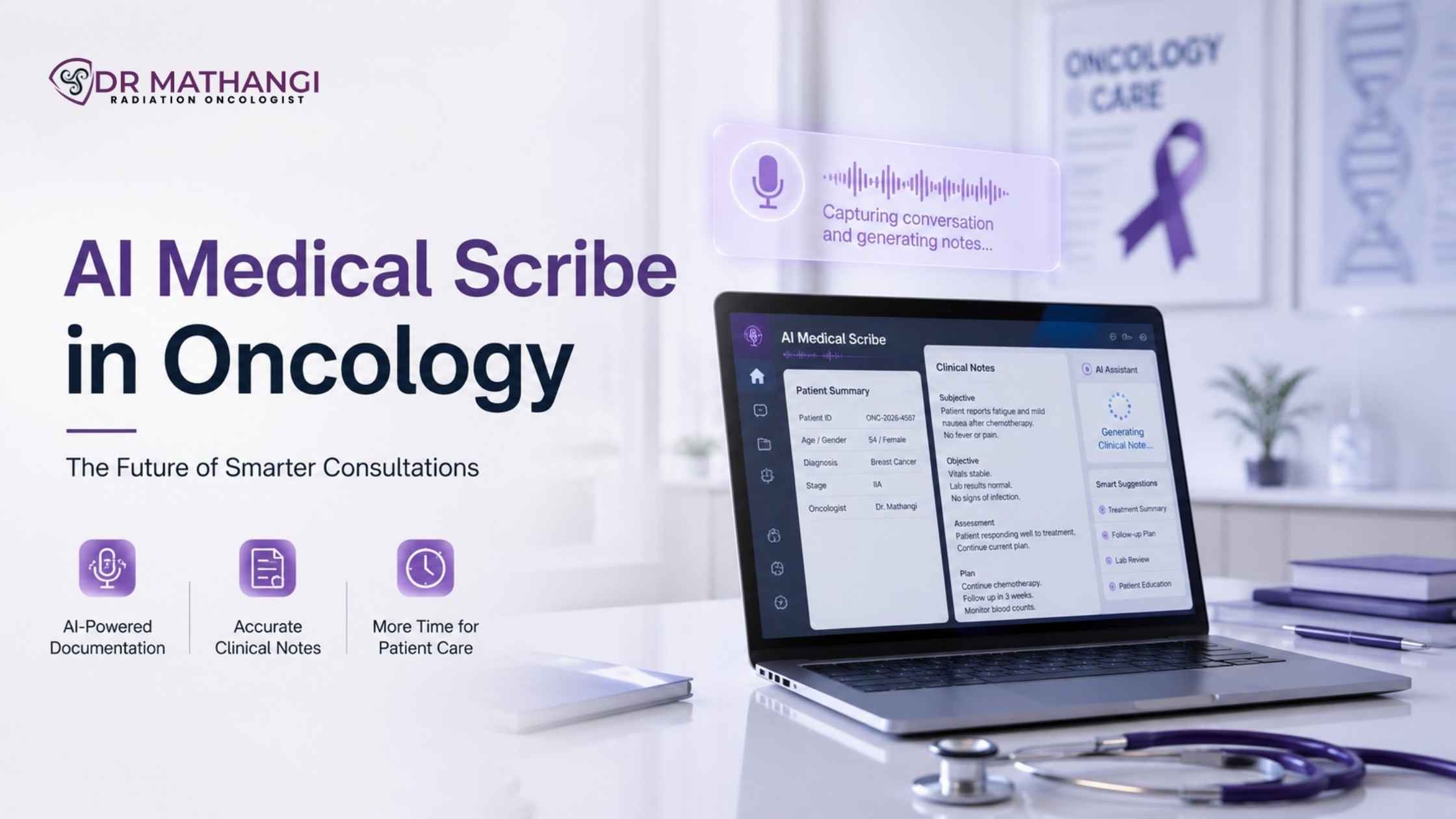
Studies published in leading healthcare journals indicate that physicians can spend nearly 35% to 50% of their workday on clinical documentation and electronic health records instead of direct patient interaction. In oncology, where every minute of communication matters emotionally and medically, this administrative burden can affect the overall patient experience. This is precisely why AI Medical Scribe Oncology systems are rapidly becoming one of the most important advancements in modern cancer care.
For cancer patients and families, consultations are often filled with anxiety, complex medical terminology, treatment planning, and emotionally significant decisions. Under the expertise of Dr Mathangi J, Senior Consultant and In-charge of Radiation Oncology at Gleneagles Cancer Institute Bangalore, technology is being embraced not to replace the human touch, but to strengthen it. Through advanced oncology automation, modern consultation systems are helping specialists focus more deeply on patients while ensuring highly accurate medical documentation.
As cancer care evolves, patients who continue relying only on traditional consultation systems may unknowingly miss out on a smoother, more informed, and more personalized oncology experience. The future of cancer consultations is no longer distant—it is already transforming how leading oncology experts like Dr Mathangi deliver precision care.
What is AI Medical Scribe Oncology and why is it important?
AI Medical Scribe Oncology refers to advanced artificial intelligence systems designed specifically to assist oncologists with real-time medical documentation during consultations. These systems capture clinical discussions, organize treatment notes, summarize findings, and streamline workflows without disrupting doctor-patient communication.
In oncology, consultations are significantly more detailed compared to many other medical specialties. Discussions frequently involve:
- Radiation therapy planning
- Tumor staging
- Side effect management
- Imaging review
- Multidisciplinary treatment coordination
- Long-term follow-up planning
- Survivorship care
Without intelligent support systems, specialists can become overwhelmed by repetitive administrative tasks. This is where AI documentation healthcare solutions create a major shift. Instead of spending excessive time typing notes or navigating digital records, oncologists can prioritize direct communication, empathy, and treatment precision.
How does oncology automation improve cancer consultations?
oncology automation improves consultations by reducing documentation burden, increasing workflow efficiency, and enhancing communication accuracy during cancer care.
Cancer consultations are uniquely complex because they involve multiple treatment modalities such as radiation therapy, chemotherapy, imaging, pathology reports, and surgical coordination. Administrative inefficiencies can delay workflows and increase physician fatigue.
With intelligent systems integrated into digital health oncology, consultations become more streamlined in several ways:
| Traditional Workflow Challenges | Benefits of AI-Assisted Oncology Consultations |
|---|---|
| Time-consuming note-taking | Automated clinical documentation |
| Reduced eye contact with patients | Improved patient engagement |
| Risk of incomplete records | Structured and consistent documentation |
| Physician burnout | Reduced administrative fatigue |
| Fragmented treatment records | Integrated cancer care workflows |
For patients undergoing emotionally demanding treatments such as radiation therapy, these improvements can dramatically change their consultation experience. They feel heard, understood, and reassured when their oncologist remains fully attentive instead of continuously focusing on documentation screens.
Why is human expertise still essential in AI-driven oncology care?
Artificial intelligence supports oncology consultations, but expert clinical judgment remains irreplaceable. Technology can assist with workflow efficiency, yet it cannot replicate decades of oncology expertise, emotional intelligence, and nuanced clinical decision-making.
This is where Dr Mathangi’s experience becomes exceptionally important. With more than 20 years of oncology expertise and over 12,000 successfully treated patients, she combines advanced technological integration with highly personalized cancer care.
Dr Mathangi specializes in:
- Head and neck cancers
- Brain tumors
- Spine tumors
- Esophagus cancers
- Rectal cancers
- Lung cancers
- Liver cancers
- Breast cancers
- Bladder cancers
- Prostate cancers
- Uterine cancers
- Cervical cancer
- Vulval cancers
- Anal canal cancers
- Penile cancers
Her advanced international training in technologies such as SRS, SBRT, IGRT, RapidArc, DIBH gated Radiotherapy, and image-guided Interstitial Brachytherapy allows her to integrate innovation responsibly while maintaining patient-centered care.
How does digital health oncology improve patient confidence?
digital health oncology improves patient confidence by making consultations more organized, transparent, and interactive while reducing communication gaps.
Many cancer patients struggle to remember every detail discussed during appointments. Treatment plans often involve:
- Multiple radiation sessions
- Imaging timelines
- Medication adjustments
- Follow-up scheduling
- Lifestyle recommendations
- Side effect monitoring
Advanced consultation systems supported by AI documentation healthcare can help maintain accurate records, improve treatment continuity, and reduce misunderstandings. Patients gain greater clarity regarding:
- Their diagnosis
- Treatment expectations
- Potential side effects
- Radiation schedules
- Recovery milestones
- Follow-up requirements
When patients feel informed, their emotional stress often decreases significantly. In cancer care, emotional reassurance is not merely comforting—it directly impacts treatment adherence and overall well-being.
What makes oncology consultations different from other medical specialties?
Oncology consultations involve highly personalized, emotionally sensitive, and technically advanced discussions that require exceptional communication and documentation precision.
Unlike routine medical appointments, oncology visits frequently involve life-changing decisions. Discussions may include:
- Treatment sequencing
- Radiation dosage planning
- Tumor response monitoring
- Survival outcomes
- Quality-of-life considerations
- Advanced imaging interpretation
- Clinical trial evaluations
Because of this complexity, oncology specialists benefit immensely from intelligent support technologies. However, patients also need confidence that their doctor is fully present emotionally and clinically.
At leading institutions like Gleneagles Cancer Institute Bangalore, advanced systems are increasingly becoming part of the broader strategy to deliver compassionate and precision-focused cancer care.
Why are patients increasingly seeking technology-enabled oncology care?
Patients today are more informed than ever before. Many actively research treatment technologies, hospital infrastructure, radiation precision systems, and physician expertise before choosing their oncology specialist.
Modern patients expect:
- Efficient consultations
- Clear communication
- Minimal delays
- Comprehensive treatment records
- Advanced radiation technology
- Personalized treatment planning
This growing expectation is one reason why AI Medical Scribe Oncology systems are gaining momentum globally. Patients recognize that when doctors spend less time on repetitive documentation, they can dedicate more energy to clinical excellence and patient reassurance.
For individuals facing serious diagnoses such as brain tumors, breast cancers, prostate cancers, or lung cancers, access to advanced consultation ecosystems can become a major differentiator in their treatment journey.
How does Dr Mathangi combine technology with compassionate oncology care?
Dr Mathangi’s approach to cancer treatment balances advanced technology with deeply personalized care. Her leadership in radiation oncology reflects not only technical excellence but also a strong commitment to patient trust and communication.
She is recognized for achievements including:
- Over 12,000 successfully treated patients
- Leadership at Gleneagles Cancer Institute
- Installation of Asia Pacific’s first TrueBeam STx Machine
- Advanced training from Germany and Denmark
- Expertise in precision radiation techniques
- Academic leadership in advanced radiotherapy fellowships
While technology enhances efficiency, it is her experience and clinical judgment that guide every treatment recommendation. Patients benefit from both innovation and human-centered oncology expertise.
What is the future of AI documentation healthcare in oncology?
The future of AI documentation healthcare in oncology will likely include smarter treatment coordination, predictive analytics, enhanced consultation summaries, and deeper integration with precision medicine.
Emerging developments may include:
- Real-time treatment recommendations
- Improved multidisciplinary coordination
- Automated follow-up reminders
- Integrated imaging analysis
- Personalized survivorship planning
- Enhanced patient education systems
As cancer incidence continues rising globally, oncology departments must manage increasing patient volumes while maintaining quality care standards. Intelligent systems will become essential in supporting efficiency without compromising compassion.
However, patients should remember that technology alone does not define successful cancer treatment. Choosing an experienced specialist remains the most important factor in achieving optimal outcomes.
About Dr Mathangi
Dr Mathangi J is a Senior Consultant and In-charge of Radiation Oncology at Gleneagles Cancer Institute Bangalore. She holds qualifications including MBBS, DMRT, and DNB, with more than two decades of experience in advanced cancer care.
She completed her DMRT at Madras Medical College, Chennai, and pursued DNB residency training at Apollo Cancer Specialty Hospital, Chennai. Her advanced international training includes stereotactic radiation techniques from Germany, IGRT and RapidArc training from Denmark, and expertise in intraoperative radiotherapy.
Dr Mathangi is widely respected for her specialization in:
- Head and neck cancers
- Breast cancers
- Brain tumors
- Lung cancers
- Prostate cancers
- Gynecologic cancers
Patients seeking advanced radiation oncology care combined with modern consultation excellence can connect with Dr Mathangi through her official website.
How to book an appointment with Dr Mathangi?
To book an appointment with Dr Mathangi, patients or caregivers can submit their contact details through the official consultation form available at:
https://drmathangi.com/contact/
Once the details are submitted, Dr Mathangi’s team will schedule the appointment and notify the patient accordingly.
In an era where cancer care is rapidly evolving, choosing a specialist who combines clinical expertise, precision radiation technology, compassionate communication, and forward-looking consultation systems can make a meaningful difference in the treatment journey. Patients who delay access to advanced oncology care may unknowingly miss opportunities for more personalized, efficient, and reassuring cancer consultations.
Frequently Asked Questions
What is an AI Medical Scribe in oncology consultations?
An AI Medical Scribe Oncology solution is a technology-driven documentation system designed to support oncologists during patient consultations. It listens to conversations securely, organizes clinical details, and creates structured notes that physicians can review and finalize quickly.
In Dr. Mathangi’s practice, this approach helps reduce the administrative burden associated with cancer care documentation while allowing more attention to remain focused on patient interaction, treatment planning, and compassionate communication during appointments.
How does AI help improve oncology consultations?
Oncology consultations often involve complex discussions about diagnosis, imaging findings, treatment cycles, side effects, and long-term care planning. With oncology automation, much of the repetitive note-taking and record organization can be streamlined in real time.
Dr. Mathangi’s workflow uses technology to support more efficient consultations without replacing physician judgment. Patients benefit from improved continuity of records, fewer documentation delays, and more meaningful face-to-face communication during appointments.
Is AI documentation safe and secure for cancer patients?
Security and confidentiality remain essential in every cancer consultation. Modern AI documentation healthcare systems are designed with strict privacy protocols, encrypted data handling, and controlled access to patient records.
Dr. Mathangi emphasizes responsible technology adoption by ensuring that all clinical documentation processes align with healthcare privacy expectations while still improving efficiency and reducing manual administrative work.
Will AI replace oncologists in the future?
No. AI tools are intended to support oncologists, not replace them. Cancer care requires clinical expertise, emotional intelligence, ethical decision-making, and personalized treatment discussions that technology alone cannot provide.
In Dr. Mathangi’s approach, AI functions as a supportive assistant that improves workflow efficiency, documentation accuracy, and clinical organization so physicians can devote more time to patient-centered care and treatment guidance.
What are the benefits of digital health tools in oncology care?
The growth of digital health oncology solutions has transformed how cancer clinics manage records, follow-up schedules, treatment tracking, and communication between healthcare teams.
Patients consulting with Dr. Mathangi may experience smoother documentation workflows, faster access to organized consultation notes, improved coordination across care teams, and better continuity throughout chemotherapy, radiation therapy, immunotherapy, or survivorship planning.
Can AI help reduce physician burnout in oncology practice?
Oncology specialists often spend significant time completing clinical notes, updating electronic medical records, and reviewing treatment histories. These administrative responsibilities can contribute to physician fatigue and reduced consultation efficiency.
By incorporating intelligent documentation support into daily practice, Dr. Mathangi aims to reduce repetitive tasks and create a more balanced workflow that allows greater focus on patient care, treatment decision-making, and long-term cancer management.
How does Dr. Mathangi integrate technology into patient care?
Dr. Mathangi combines modern oncology expertise with carefully selected healthcare technologies to improve efficiency and patient experience. Technology is used to support consultation documentation, care coordination, and clinical organization while preserving a compassionate and personalized approach to treatment.
The focus remains on delivering accurate, efficient, and patient-friendly oncology consultations supported by advanced digital systems that enhance communication and continuity of care.
What does the future of AI-assisted oncology consultations look like?
The future of oncology consultations is expected to include smarter clinical documentation, predictive analytics, improved treatment coordination, and more integrated patient communication systems.
As healthcare technology continues to evolve, Dr. Mathangi’s commitment is to adopt innovations that genuinely improve patient outcomes, consultation quality, and clinical efficiency while maintaining trust, transparency, and compassionate cancer care.