APBI vs Whole Breast Radiation After Lumpectomy: Who Is Eligible?
What Is The Difference Between APBI And Whole Breast Radiation?
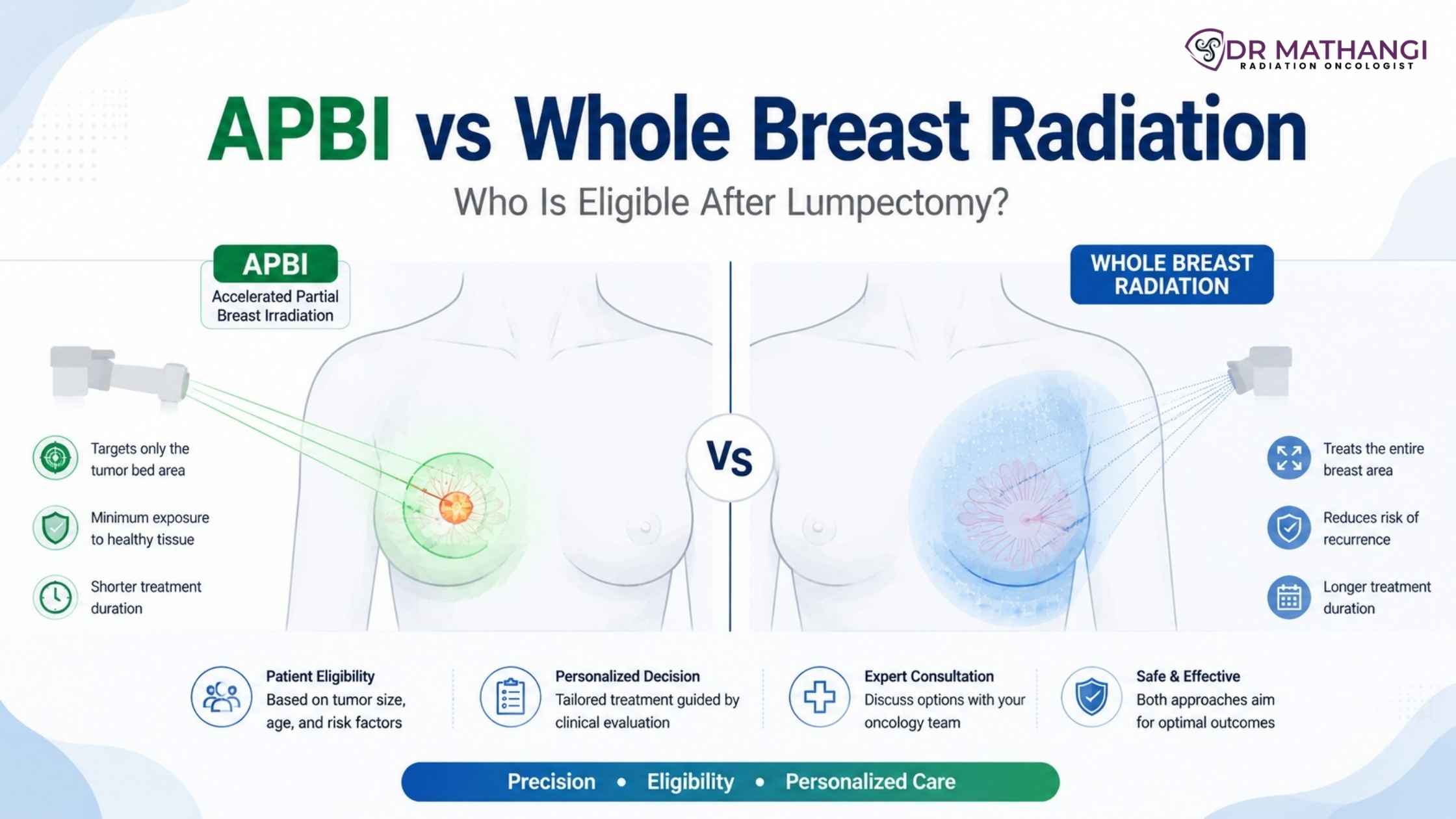
APBI vs whole breast radiation is a crucial consideration for patients who have undergone a lumpectomy for breast cancer. According to recent studies, nearly 70% of early-stage breast cancer patients are eligible for breast-conserving surgery, making post-lumpectomy radiation therapy decisions highly relevant. In this comprehensive guide, Dr. Mathangi J, Senior Consultant & In-charge - Radiation Oncology at Gleneagles Cancer Institute, Bangalore, unravels the nuances of these two approaches, ensuring you are empowered to make the best choice for your health and future.
Why Is Post-Lumpectomy Radiation Important?
After a successful lumpectomy, radiation therapy is essential to eliminate any microscopic cancer cells that may remain in the breast tissue, thereby reducing the risk of recurrence. Standard options include whole breast radiation (WBRT) and accelerated partial breast irradiation (APBI). The choice between these two can significantly influence your treatment experience, recovery time, and long-term outcomes.
How Does APBI Work Compared To Whole Breast Radiation?
APBI targets only the area surrounding the original tumor site—the most common area for recurrence—while WBRT treats the entire breast. APBI delivers a higher dose of radiation over a shorter period (typically 5-10 days), whereas WBRT can take 3-6 weeks. For patients who meet specific eligibility criteria, APBI may offer cosmetic outcomes that are as good as or better than WBRT, with fewer side effects and greater convenience.
What Is Accelerated Partial Breast Irradiation (APBI)?
Accelerated partial breast irradiation is a form of lumpectomy radiation in which only a portion of the breast (where the tumor was removed) is treated. This approach is tailored for women with early-stage, low-risk breast cancer. APBI can be delivered using techniques such as:
- Interstitial brachytherapy (placing radioactive sources in the tissue)
- Intracavitary brachytherapy (using a balloon catheter in the lumpectomy cavity)
- External beam radiation therapy (EBRT)
Dr. Mathangi is a leader in image-guided interstitial brachytherapy, offering her patients precise and highly effective APBI solutions.
What Is Whole Breast Radiation?
Whole breast radiation (WBRT) involves treating the entire breast, typically over 3-6 weeks. This method is suitable for a broader range of patients, including those with higher-risk features or larger tumors. In recent years, hypofractionated breast radiotherapy—which delivers higher doses per session over a shorter time (usually 3 weeks)—has become the standard of care in many settings due to similar efficacy and improved convenience.
Who Is Eligible For APBI Vs Whole Breast Radiation?
The ASTRO guidelines provide a framework for determining eligibility for APBI vs whole breast radiation. The ideal candidates for APBI are:
- Age 50 years or older
- Invasive ductal carcinoma or ductal carcinoma in situ (DCIS) ≤ 3 cm
- Node-negative disease (no cancer in lymph nodes)
- Clear surgical margins (no cancer cells at the edge of the tissue removed)
- No extensive lymphovascular invasion
- Unifocal disease (single tumor, not multiple sites in the breast)
Patients who do not meet these criteria are generally advised to undergo WBRT, which remains the gold standard for many, especially those with higher-risk features. Dr. Mathangi meticulously evaluates each patient’s pathology, imaging, and clinical profile to ensure the safest and most effective treatment pathway.
What Are The Cosmetic Outcomes And Side Effects?
Cosmetic outcomes are a top priority, especially for women seeking breast conservation therapy. APBI is associated with:
- Less skin darkening and thickening
- Lower risk of breast shrinkage and fibrosis
- Similar or improved breast appearance compared to WBRT
WBRT, especially with modern techniques like deep inspiration breath-hold and prone positioning, also achieves excellent cosmetic results. Dr. Mathangi utilizes advanced technologies such as TrueBeam STx and gated RapidArc to minimize exposure of healthy tissues, further optimizing outcomes.
How Do ASTRO Guidelines Influence Treatment Choices?
The ASTRO guidelines (American Society for Radiation Oncology) are widely accepted by oncology professionals and form the basis of evidence-based decision-making in lumpectomy radiation. They stratify patients into "suitable," "cautionary," and "unsuitable" groups for APBI, considering factors such as age, tumor type, and margin status. Dr. Mathangi strictly adheres to these guidelines while adding her two decades of clinical experience to personalize recommendations for each patient.
Why Choose Dr Mathangi For Breast Cancer Radiation Therapy?
Dr. Mathangi J is renowned for her expertise in radiation oncology, having treated over 12,000 patients with cutting-edge techniques. Her credentials include advanced fellowships in stereotactic and image-guided radiotherapy from leading centers in Europe. At Gleneagles Cancer Institute, she offers the entire spectrum of radiation therapy for breast cancer, including:
- APBI and WBRT
- Hypofractionated breast radiotherapy
- Image-guided interstitial brachytherapy
- Intraoperative radiotherapy (IORT)
Her approach is patient-centric, focusing on minimizing side effects, enhancing cosmetic outcomes, and ensuring the highest standards of safety and effectiveness. Dr. Mathangi’s patients benefit from personalized counseling, state-of-the-art technology, and a compassionate team dedicated to supporting you through every step of your breast conservation therapy journey.
How To Book An Appointment With Dr Mathangi?
Don’t let uncertainty or delay impact your health and quality of life. If you or a loved one is considering APBI vs whole breast radiation after lumpectomy, schedule a consultation with Dr. Mathangi today. Simply submit your contact information using the appointment form on her website, and her team will promptly schedule your session and notify you.
About Dr Mathangi
Dr. Mathangi J is a Senior Consultant and In-charge of Radiation Oncology at Gleneagles Cancer Institute, Bangalore. With over 20 years of experience and 12,000+ patients treated, she is a leader in advanced radiotherapy for a wide range of cancers, including breast, head and neck, brain, lung, prostate, and gynecologic cancers. She is a pioneer in bringing Asia Pacific’s first TrueBeam STx machine to India and heads the fellowship in advanced radiotherapy techniques at her center. Her commitment to clinical excellence, patient safety, and compassionate care makes her the preferred choice for cancer patients in South and North India.
What Are The Cancers That Need Radiation Therapy?
According to Dr. Mathangi, the following cancers often require radiation therapy as part of their treatment protocol:
- Head and neck cancers
- Brain tumors
- Spine tumors
- Esophagus and rectal cancers
- Lung cancers
- Liver cancers
- Breast cancers
- Bladder cancers
- Prostate cancers
- Uterine cancers
- Cervical cancer
- Vulval cancers
- Anal canal cancers
- Penile cancers
For each of these cancers, Dr. Mathangi develops personalized, evidence-based treatment plans, ensuring the highest standards of care using the latest radiotherapy technologies.
Frequently Asked Questions
What is the difference between APBI and whole breast radiation after lumpectomy?
The main difference is the area of the breast treated with radiation. In APBI vs whole breast radiation, APBI (Accelerated Partial Breast Irradiation) targets only the area around where the tumor was removed, while whole breast radiation treats the entire breast. APBI is delivered over a shorter time, and may be suitable for select patients after lumpectomy.
Who is eligible for accelerated partial breast irradiation (APBI) after lumpectomy?
Eligibility for accelerated partial breast irradiation is determined by factors such as age, tumor size, margins, and lymph node status. According to ASTRO guidelines, APBI is generally recommended for women aged 50 or older with early-stage, low-risk breast cancer, negative margins, and no lymph node involvement. Dr. Mathangi evaluates each patient individually to ensure the best approach for breast conservation therapy.
What are the benefits of hypofractionated breast radiotherapy?
Hypofractionated breast radiotherapy delivers a higher dose of radiation per session over a shorter period compared to conventional schedules. Benefits include convenience, reduced treatment time, and similar efficacy and safety profiles. Dr. Mathangi uses evidence-based protocols to offer hypofractionated breast radiotherapy for eligible patients after lumpectomy radiation.
How do ASTRO guidelines impact the choice between APBI and whole breast radiation?
ASTRO guidelines provide evidence-based recommendations on which patients are suitable for APBI vs whole breast radiation. These guidelines consider tumor characteristics, age, and surgical factors to ensure optimal outcomes. Dr. Mathangi follows these standards to personalize lumpectomy radiation plans and maximize safety and effectiveness for her patients.
Are cosmetic outcomes better with APBI compared to whole breast radiation?
Cosmetic outcomes can be excellent with both approaches, but many studies show that APBI may lead to slightly better cosmetic outcomes due to the smaller treated area and lower overall dose to healthy tissue. Dr. Mathangi discusses potential cosmetic outcomes with each patient as part of her breast conservation therapy consultations.
What is the typical duration of APBI and whole breast radiation treatments?
APBI is usually completed in 5 to 10 days, while hypofractionated whole breast radiation typically takes 3 to 4 weeks. Traditional whole breast radiation may take up to 6 weeks. Dr. Mathangi offers tailored schedules to minimize disruption to your daily life while ensuring effective cancer control.
Can lumpectomy radiation be omitted if APBI is used?
No, APBI is a form of lumpectomy radiation. It is not an omission of radiation, but a targeted way to deliver it. Radiation after lumpectomy—whether APBI or whole breast—is an important part of breast conservation therapy to reduce recurrence risk. Dr. Mathangi helps patients understand the role of each modality in their treatment plan.
How does Dr. Mathangi help patients choose between APBI and whole breast radiation?
Dr. Mathangi carefully reviews your pathology, imaging, and personal preferences. She discusses the pros and cons of APBI vs whole breast radiation, referencing ASTRO guidelines and the latest research. Her patient-centered approach ensures you receive safe, effective, and individualized breast conservation therapy.