Concurrent Chemoradiation for Stage III NSCLC: Treatment Timeline and Expectations
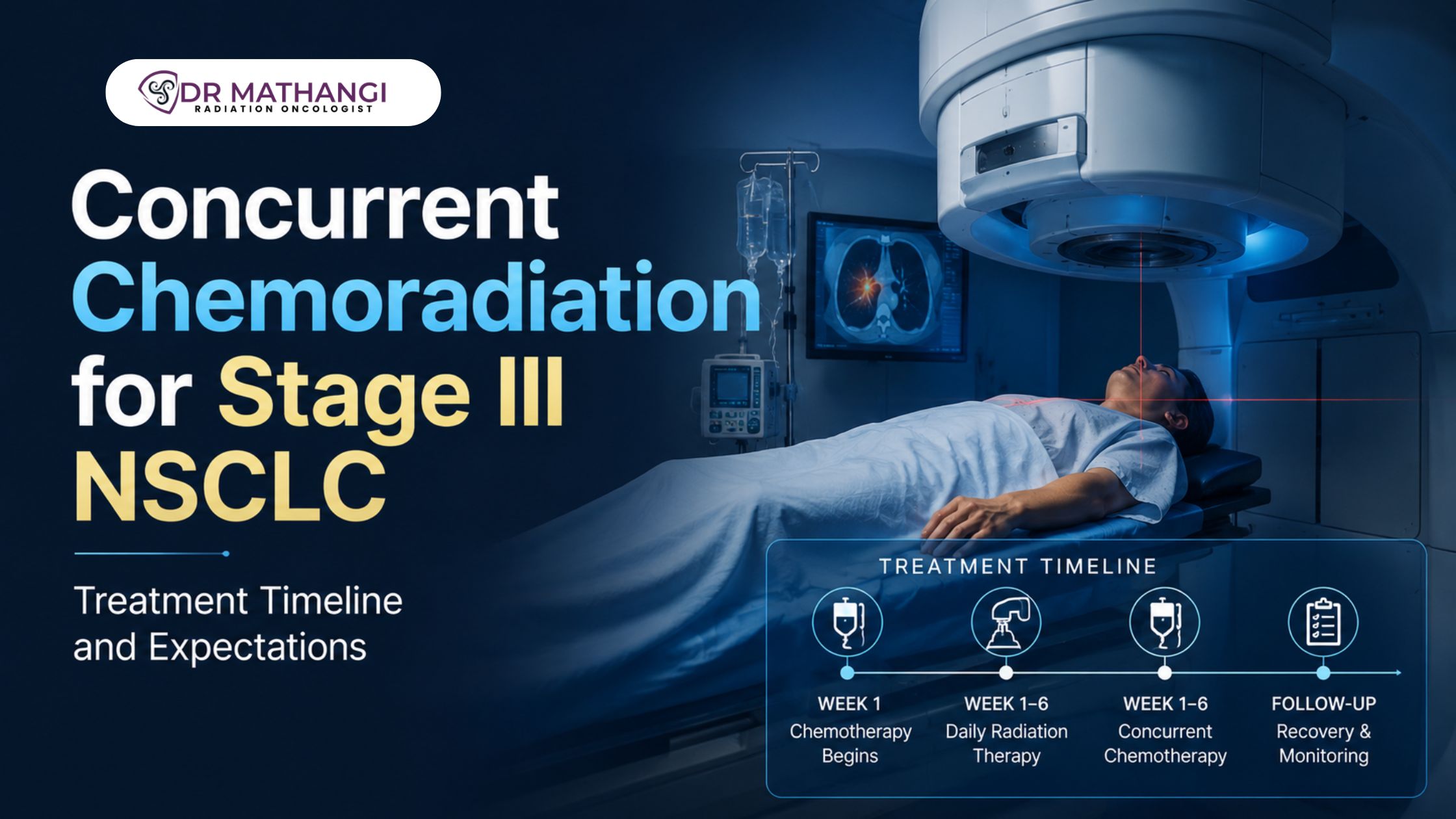

Quick Answer: Concurrent chemoradiation for lung cancer, especially in stage III NSCLC, is a carefully coordinated treatment combining chemotherapy and radiotherapy, typically delivered over six to seven weeks. This approach offers the best chance at long-term control and survival, but requires expert management for optimal outcomes. Under the care of Dr Mathangi, a leading radiation oncologist in Bangalore, patients receive personalized treatment plans, state-of-the-art technology, and dedicated support—maximizing both safety and effectiveness.
Did you know that lung cancer remains the leading cause of cancer-related deaths worldwide, with non-small cell lung cancer (NSCLC) accounting for approximately 85% of cases? Stage III NSCLC treatment is particularly challenging, often requiring a multi-modal approach for the best outcomes. In this context, concurrent chemoradiation for lung cancer stands out as the standard of care for patients who are not immediate candidates for surgery. Yet, the complexity of combining chemotherapy and radiotherapy means that only the most experienced and skilled teams—like that led by Dr Mathangi at Gleneagles Cancer Institute, Bangalore—can deliver optimal results with the highest safety.
To book a consultation with Dr Mathangi, visit this appointment form and our team will promptly schedule your visit.
What Is Concurrent Chemoradiation For Lung Cancer?
Concurrent chemoradiation for lung cancer refers to the simultaneous administration of chemotherapy and radiotherapy. This approach is especially pivotal in stage III NSCLC treatment, where the cancer is locally advanced but not suitable for immediate surgical resection. By delivering both treatments together, the cancer cells are attacked on multiple fronts:
- Chemotherapy (such as the cisplatin etoposide radiation regimen) sensitizes tumor cells to radiation, increasing the likelihood of cell death.
- Radiotherapy targets the tumor and involved lymph nodes, aiming for local control.
- The combination has been shown to improve both progression-free and overall survival compared to sequential therapy.
Dr Mathangi emphasizes that concurrent chemoradiotherapy requires meticulous planning, advanced imaging, and precise delivery techniques to maximize benefits while minimizing side effects.
How Is Stage III NSCLC Treatment Planned?
Stage III NSCLC treatment is highly individualized. The planning process involves several critical steps:
- Comprehensive Staging: PET-CT and MRI scans to define the exact extent of disease.
- Multidisciplinary Team Review: Input from medical oncologists, radiation oncologists, pulmonologists, and radiologists.
- Personalized Protocol Selection: Factors such as patient health, tumor size, and location influence whether definitive radiotherapy for lung cancer with concurrent chemotherapy is chosen.
- Technology Integration: Advanced radiotherapy techniques like IGRT, RapidArc, and gated treatments are selected by Dr Mathangi for their precision.
Early and accurate planning is crucial for maximizing the chances of long-term control and minimizing risks.
What Is The Typical Treatment Timeline For Concurrent Chemoradiotherapy?
The standard timeline for concurrent chemoradiotherapy in stage III NSCLC is as follows:
- Initial Evaluation & Simulation: 1-2 weeks (includes staging, baseline tests, mask/mold creation for radiotherapy).
- Chemoradiation Phase: 6-7 weeks (daily radiotherapy, with chemotherapy administered on specific days).
- Rest Period: 2-4 weeks post-chemoradiation (for patient recovery and reassessment).
- Durvalumab Consolidation: Up to 12 months, as per eligibility and response (see below for details).
- Follow-Up & Monitoring: Every 2-3 months in the first year, then at increasing intervals.
Sample Timeline Table
| Phase | Duration | Activities |
|---|---|---|
| Evaluation | 1-2 weeks | Imaging, staging, planning, consent |
| Chemoradiation | 6-7 weeks | Daily radiotherapy, scheduled chemotherapy (e.g., cisplatin etoposide radiation) |
| Rest/Recovery | 2-4 weeks | Symptom management, labs, reassessment |
| Consolidation | Up to 12 months | Durvalumab immunotherapy (if indicated) |
| Follow-up | Ongoing | Imaging, clinical review, supportive care |
What To Expect During Chemoradiation For Lung Cancer
Undergoing chemoradiation for lung cancer is a physically and emotionally demanding journey. Here is what you can expect:
- Daily Radiotherapy Sessions: Typically 28-35 fractions over 6-7 weeks. Each session lasts about 15-20 minutes.
- Chemotherapy Cycles: Administered concurrently, most often using cisplatin etoposide radiation regimen. Chemotherapy is delivered on specific days (usually weeks 1 and 5).
- Regular Monitoring: Weekly blood tests, consultations, and toxicity assessments.
- Side Effects Management: Fatigue, difficulty swallowing, cough, skin reactions, and lowered immunity are common but can be effectively managed by an experienced team.
Why Is Expertise Critical For Definitive Radiotherapy For Lung Cancer?
Definitive radiotherapy for lung cancer aims for cure, not just palliation. Achieving this goal depends on:
- Technology: Dr Mathangi employs the latest tools—such as Stereotactic Ablative Body Radiotherapy (SBRT), Gated RapidArc, and DIBH gating—for precise dose delivery, sparing healthy tissue.
- Experience: With over 20 years in the field and more than 12,000 patients treated, Dr Mathangi’s protocols are benchmarked to international standards.
- Personalized Care: Each plan is tailored, factoring in patient comorbidities, tumor characteristics, and tolerance to treatment.
- Continuous Monitoring: Early detection and management of complications, such as esophagitis or pneumonitis, are essential for safety and success.
Choosing the right oncologist can mean the difference between long-term remission and avoidable complications.
How Does The PACIFIC Trial Influence Modern Lung Cancer Care?
The PACIFIC trial revolutionized stage III NSCLC treatment by demonstrating that adding durvalumab consolidation immunotherapy after concurrent chemoradiotherapy significantly improves both disease-free and overall survival. The key findings were:
- Durvalumab, a PD-L1 inhibitor, is given for up to one year following completion of chemoradiation.
- Eligible patients see a notable reduction in the risk of recurrence and death.
- This has become the new standard of care for patients without disease progression after chemoradiotherapy.
Dr Mathangi’s team ensures each patient is evaluated for durvalumab consolidation based on clinical and molecular criteria, offering access to the most advanced treatments in line with global best practices.
What Is The Role Of Cisplatin Etoposide Radiation In Concurrent Chemoradiotherapy?
The cisplatin etoposide radiation regimen remains a cornerstone in the concurrent treatment of stage III NSCLC. Here's why:
- Cisplatin: A platinum-based chemotherapy that enhances the effectiveness of radiation on tumor cells.
- Etoposide: Disrupts cancer cell DNA replication, working synergistically with cisplatin and radiotherapy.
- Concurrent Use: This combination, given with radiotherapy, maximizes tumor kill but requires expert management due to potential side effects (nausea, low blood counts, etc.).
Dr Mathangi’s protocols incorporate pre-emptive supportive care, advanced antiemetics, and close monitoring, ensuring patients complete therapy with minimal interruptions.
Durvalumab Consolidation: The New Frontier In Stage III NSCLC
For patients who complete concurrent chemoradiotherapy without progression, durvalumab consolidation immunotherapy is now the gold standard. Key points:
- Eligibility: Stable disease or better after chemoradiation, adequate organ function, and no autoimmune contraindications.
- Administration: Intravenous infusion every 2 weeks, up to 12 months.
- Benefits: Improved survival, reduced recurrence, minimal additional toxicity for most patients.
The integration of PACIFIC trial findings into routine practice at Gleneagles Cancer Institute under Dr Mathangi’s care places patients at the forefront of global oncology advances.
Why Choose Dr Mathangi For Concurrent Chemoradiation For Lung Cancer?
Dr Mathangi J is one of South India’s most accomplished radiation oncologists, offering unparalleled expertise in chemoradiation for lung cancer. Her credentials include:
- Senior Consultant & In-charge of Radiation Oncology, Gleneagles Cancer Institute, Bangalore
- Over 20 years of experience and 12,000+ successful cancer treatments
- Advanced international training in Stereotactic techniques, IGRT, RapidArc, and IORT
- Pioneering installation of Asia Pacific’s first TrueBeam STx Machine
- Specialist in Head & Neck, Brain, Prostate, Lung, and Women’s Cancers
- Director of Fellowship in Advanced Radiotherapy Techniques, RGUHS
- Personalized care, evidence-based protocols, and a compassionate approach
Choosing Dr Mathangi means entrusting your care to one of India’s foremost experts, whose commitment to safety, innovation, and patient support is second to none.
Secure your expert consultation with Dr Mathangi by submitting your contact details here.
What Cancers Benefit Most From Advanced Radiotherapy?
According to Dr Mathangi, cancers that need RT (radiation therapy) include:
- Head and neck cancers
- Brain tumors
- Spine tumors
- Esophagus and rectal cancers
- Lung cancers
- Liver cancers
- Breast cancers
- Bladder cancers
- Prostate cancers
- Uterine cancers
- Cervical cancer
- Vulval cancers
- Anal canal cancers
- Penile cancers
About Dr Mathangi
Dr Mathangi J is a renowned Senior Radiation Oncologist and In-charge at Gleneagles Cancer Institute, Bangalore. With MBBS, DMRT, and DNB qualifications, and advanced training from leading institutes worldwide, her expertise in cutting-edge radiotherapy places her among India’s top cancer specialists. Her leadership, compassion, and patient-centric approach ensure that every patient receives world-class care tailored to individual needs.
For those seeking the best in concurrent chemoradiation for lung cancer, Dr Mathangi’s services are unmatched in both South and North India, with patients traveling from across the country for her expert care.
Frequently Asked Questions
What is concurrent chemoradiation for lung cancer and why is it preferred for stage III NSCLC?
Concurrent chemoradiation for lung cancer refers to the simultaneous administration of chemotherapy and radiotherapy. For patients with stage III NSCLC treatment, this approach maximizes the effectiveness of both therapies, as chemotherapy can sensitize tumor cells to radiation. Dr. Mathangi recommends this for eligible patients because studies show it improves local control and overall survival compared to sequential treatment, especially when definitive radiotherapy for lung cancer is indicated.
What is the typical treatment timeline for concurrent chemoradiotherapy in stage III NSCLC?
The standard timeline for concurrent chemoradiotherapy usually spans about 6-7 weeks. Chemotherapy cycles, such as cisplatin etoposide radiation, are coordinated with daily radiation sessions (Monday to Friday). After completing chemoradiation, many patients are evaluated for further therapies like durvalumab consolidation, depending on their response and tolerability.
What can I expect during the chemoradiation phase in terms of side effects and support?
Common side effects during concurrent chemoradiotherapy include fatigue, skin changes, difficulty swallowing, cough, mild fever, or changes in blood counts. Dr. Mathangi and her multidisciplinary team offer extensive support with symptom management, nutritional counseling, and regular monitoring to ensure safety and comfort throughout the stage III NSCLC treatment process.
How do cisplatin etoposide and radiation therapy work together in this setting?
Cisplatin and etoposide are chemotherapy agents that not only attack cancer cells, but also make them more sensitive to radiation damage. Radiation therapy targets the tumor and regional lymph nodes with precise doses. Administering these together, as Dr. Mathangi does, increases the effectiveness of definitive radiotherapy for lung cancer while aiming to control the cancer locally and prevent spread.
What is durvalumab consolidation and when is it recommended after chemoradiation?
Durvalumab consolidation is an immunotherapy given after successful completion of concurrent chemoradiation for lung cancer, provided there is no progression or significant residual toxicity. Based on results from the PACIFIC trial, Dr. Mathangi often recommends durvalumab for up to 12 months to further reduce the risk of recurrence and improve long-term outcomes in eligible patients.
What role did the PACIFIC trial play in changing the standard of care for stage III NSCLC?
The PACIFIC trial was a landmark study that showed adding durvalumab consolidation after concurrent chemoradiotherapy significantly improved survival for patients with stage III NSCLC. As a result, this approach is now the standard of care, and Dr. Mathangi incorporates it into her treatment protocols for suitable patients.
How is treatment response monitored during and after concurrent chemoradiation for lung cancer?
Dr. Mathangi utilizes periodic physical exams, blood tests, and imaging studies (like CT or PET scans) to monitor treatment response and side effects. After chemoradiation for lung cancer, follow-up visits are scheduled to assess recovery, detect any early signs of recurrence, and determine eligibility for durvalumab consolidation.
What are the main goals of definitive radiotherapy for lung cancer in stage III NSCLC?
The primary goal of definitive radiotherapy for lung cancer is to achieve maximum tumor control in the chest, reduce cancer spread, and improve survival. For stage III NSCLC treatment, combining this with chemotherapy and, if eligible, durvalumab consolidation, offers the best chance for long-term remission according to current evidence and Dr. Mathangi’s clinical practice.