ctDNA Clearance After Radiation Therapy: What Cancer Patients Should Know
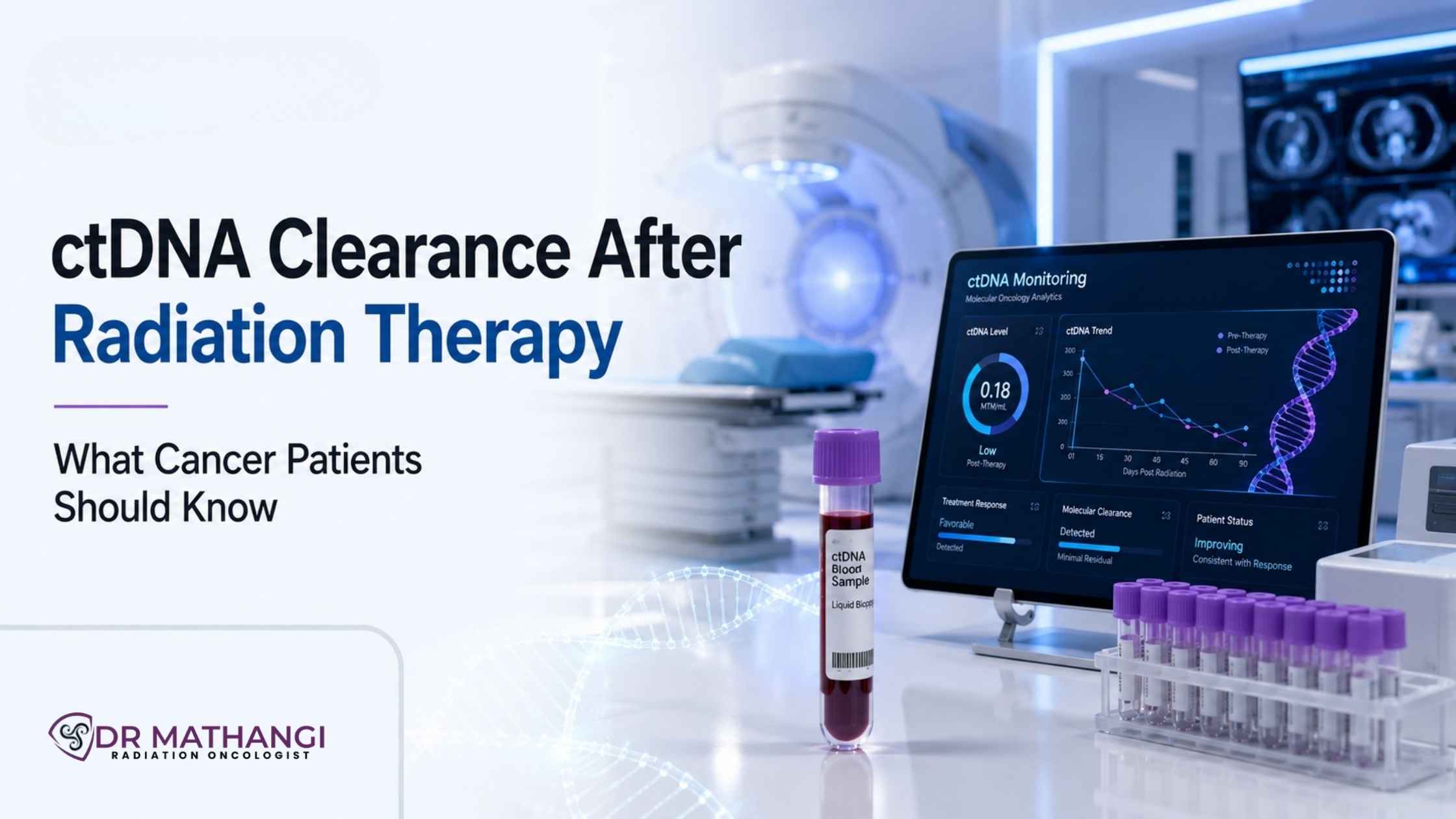
Recent studies have shown that circulating tumor DNA (ctDNA) can often be detected months before conventional imaging identifies recurrence in certain cancers, making it one of the most promising developments in modern oncology. Understanding ctDNA clearance after radiation therapy is becoming increasingly important because it may provide valuable insights into whether treatment is working, how effectively tumors are responding, and whether additional intervention may be required. For cancer patients and families navigating a complex treatment journey, this emerging technology offers a new layer of information that can complement traditional scans and clinical evaluations.
When facing cancer, one of the most pressing concerns is whether the treatment is truly eliminating cancer cells. Radiation therapy remains one of the most effective treatment modalities for a wide range of cancers, including head and neck cancers, brain tumors, spine tumors, esophageal cancers, rectal cancers, lung cancers, liver cancers, breast cancers, bladder cancers, prostate cancers, uterine cancers, cervical cancer, vulval cancers, anal canal cancers, and penile cancers. However, patients often find themselves waiting anxiously for imaging results. Advances in molecular diagnostics are changing that reality by offering additional tools that help physicians understand treatment effectiveness more precisely.
What is ctDNA and why is it important after radiation therapy?
ctDNA refers to small fragments of genetic material shed by cancer cells into the bloodstream. These fragments can be detected through specialized blood tests and may provide real-time information about tumor activity.
Unlike traditional biopsies that require tissue sampling, ctDNA testing is minimally invasive. Cancer cells continuously release fragments of DNA into circulation. By analyzing these fragments, oncologists can gain insight into tumor burden, treatment effectiveness, and potential recurrence risks.
The growing importance of ctDNA lies in its ability to function as one of the emerging oncology biomarkers that help physicians personalize treatment decisions. Instead of relying solely on scans that may take weeks or months to show changes, ctDNA testing can sometimes reveal molecular responses earlier.
What does ctDNA clearance after radiation therapy mean?
In simple terms, ctDNA clearance after radiation therapy refers to the disappearance or significant reduction of detectable tumor DNA from the bloodstream following treatment.
When radiation therapy successfully destroys cancer cells, fewer malignant cells remain available to shed DNA into circulation. As a result, ctDNA levels may decrease substantially or become undetectable. This reduction can potentially serve as one of the important radiation success indicators being studied by researchers worldwide.
However, it is essential to understand that ctDNA testing is not a standalone diagnostic tool. Results must always be interpreted alongside imaging studies, pathology reports, clinical examinations, and the patient's overall medical condition.
How does ctDNA help evaluate cancer treatment response?
A decrease in ctDNA levels after treatment may indicate that cancer cells are responding to therapy. Persistently elevated levels may suggest residual disease that requires closer observation.
Assessing cancer treatment response has traditionally depended on imaging modalities such as CT scans, MRI scans, and PET scans. While these technologies remain essential, molecular monitoring introduces a complementary layer of precision.
- Provides earlier indications of treatment effectiveness.
- May help identify residual disease.
- Can support personalized follow-up strategies.
- May assist in predicting recurrence risk.
- Offers a minimally invasive monitoring option.
For many patients, this additional information can help reduce uncertainty and facilitate more informed discussions with their oncology team.
Why is liquid biopsy monitoring gaining attention in oncology?
Liquid biopsies allow physicians to evaluate tumor-related genetic material through blood samples rather than invasive tissue procedures.
liquid biopsy monitoring is transforming cancer care because it can be repeated multiple times throughout treatment and follow-up. Traditional tissue biopsies often provide information from a single point in time, whereas liquid biopsies can help track disease evolution continuously.
This approach is especially valuable in situations where obtaining tissue samples may be difficult or risky. Ongoing monitoring can reveal changes in tumor biology and help clinicians understand how cancer responds over time.
What factors influence ctDNA clearance after radiation therapy?
Several variables affect whether ctDNA becomes undetectable after radiation treatment.
| Factor | Potential Impact |
|---|---|
| Tumor Type | Different cancers release varying amounts of ctDNA. |
| Tumor Burden | Larger tumors may generate higher ctDNA levels. |
| Radiation Dose | Treatment intensity may influence response. |
| Combined Therapies | Chemotherapy or immunotherapy may affect clearance. |
| Patient Biology | Individual metabolic and immune factors play a role. |
Because every patient is unique, ctDNA trends should always be interpreted by experienced oncology specialists who understand the broader clinical context.
Which cancers may benefit most from ctDNA-based monitoring?
Research continues to expand, but promising applications have been identified across multiple cancer types.
Dr. Mathangi frequently manages cancers where advanced treatment assessment and follow-up strategies are critically important, including:
- Head and neck cancers
- Brain tumors
- Spine tumors
- Lung cancers
- Breast cancers
- Prostate cancers
- Cervical cancer
- Uterine cancers
- Liver cancers
- Bladder cancers
- Anal canal cancers
- Esophageal cancers
- Rectal cancers
As research progresses, ctDNA assessment may become increasingly integrated into individualized cancer management plans for many of these conditions.
How does advanced radiation therapy contribute to molecular response?
Modern radiation techniques are designed to maximize tumor control while minimizing damage to surrounding healthy tissues.
Dr. Mathangi brings more than two decades of expertise in advanced radiation oncology and has successfully treated over 12,000 patients. Her specialized training includes stereotactic radiosurgery (SRS), stereotactic body radiotherapy (SBRT), IGRT, RapidArc, DIBH-gated radiotherapy, and image-guided brachytherapy.
These sophisticated technologies enable highly accurate radiation delivery. Improved targeting may contribute to better local tumor control, which can ultimately influence biological outcomes observed through ctDNA testing and other molecular assessments.
Can ctDNA replace scans after radiation therapy?
No. ctDNA testing complements imaging rather than replacing it.
While ctDNA provides valuable molecular information, imaging remains essential for visualizing anatomical changes, evaluating treatment-related effects, and identifying structural abnormalities. The most effective cancer management strategies often integrate:
- Clinical examination
- Imaging studies
- Pathology findings
- Molecular testing
- Patient symptoms and quality-of-life assessments
Combining these data points creates a comprehensive picture of treatment effectiveness and future care requirements.
Why should patients discuss ctDNA monitoring with an experienced radiation oncologist?
Interpreting ctDNA results requires specialized expertise because molecular findings must be correlated with treatment plans, imaging studies, and disease-specific characteristics.
A result showing persistent ctDNA does not automatically mean treatment failure. Similarly, ctDNA clearance alone does not guarantee permanent remission. Expert interpretation is crucial to avoid unnecessary anxiety or false reassurance.
This is where the experience of a seasoned radiation oncologist becomes particularly valuable. Patients who work with specialists deeply involved in modern radiation techniques and evidence-based cancer care gain access to comprehensive treatment planning and informed guidance regarding emerging technologies.
What should patients do if they are considering advanced radiation therapy?
Patients should seek consultation with an experienced radiation oncologist who can evaluate their diagnosis, stage, treatment goals, and available technologies.
The field of radiation oncology continues to evolve rapidly. New insights into oncology biomarkers, molecular diagnostics, and treatment personalization are reshaping how cancer care is delivered. Missing opportunities to benefit from these advancements may mean missing valuable information that could influence treatment decisions and long-term outcomes.
For individuals diagnosed with cancers requiring radiation therapy, consulting an expert who remains actively engaged with modern treatment innovations can make a meaningful difference in care quality and confidence throughout the treatment journey.
About Dr. Mathangi
Dr. Mathangi J is a Senior Consultant and In-charge of Radiation Oncology with more than 20 years of experience in cancer care. Based in Bengaluru, she leads advanced radiation oncology services and is recognized for expertise in stereotactic radiotherapy, IGRT, RapidArc, DIBH-gated radiotherapy, and image-guided brachytherapy.
She has successfully treated over 12,000 patients and serves as Director of Fellowship in Advanced Radiotherapy Techniques affiliated with RGUHS. Her extensive international training and leadership in implementing advanced radiation technologies have positioned her among the respected specialists in the field of radiation oncology.
Patients seeking expert guidance regarding radiation therapy, treatment planning, follow-up strategies, and emerging advances such as ctDNA assessment can request an appointment through the contact form at https://drmathangi.com/contact/. Once the information is submitted, Dr. Mathangi's team will schedule the appointment and provide further details.
Key takeaways
- ctDNA clearance after radiation therapy may indicate a favorable molecular response.
- ctDNA testing is an emerging tool for assessing cancer treatment response.
- Researchers continue evaluating ctDNA as one of the promising radiation success indicators.
- liquid biopsy monitoring provides a minimally invasive method for tracking disease activity.
- Modern oncology biomarkers are helping personalize cancer treatment and follow-up strategies.
- Expert interpretation by an experienced radiation oncologist remains essential.
Frequently Asked Questions
What does ctDNA clearance after radiation therapy mean?
ctDNA clearance after radiation therapy refers to the reduction or disappearance of circulating tumor DNA (ctDNA) from a patient's bloodstream following radiation treatment. Tumor cells release tiny fragments of genetic material into the blood, and advanced testing can detect these fragments through a blood sample.
When ctDNA levels decline significantly or become undetectable, it may suggest that radiation therapy has successfully destroyed a substantial number of cancer cells. However, ctDNA results should always be interpreted alongside imaging studies, clinical examinations, pathology findings, and the overall treatment plan.
Dr. Mathangi carefully evaluates ctDNA trends together with other diagnostic information to develop a comprehensive understanding of each patient's progress and ongoing care needs.
Why is ctDNA testing becoming important in modern cancer care?
ctDNA testing offers a minimally invasive way to monitor cancer activity through a simple blood draw. Unlike some traditional methods that may require tissue sampling, ctDNA analysis can often be repeated over time to track changes during and after treatment.
This approach has become valuable because it may provide earlier insights into disease response, residual cancer cells, or potential recurrence. Many specialists now consider ctDNA among the most promising oncology biomarkers being studied for personalized cancer management.
Dr. Mathangi integrates evidence-based molecular assessment strategies when appropriate, helping patients understand how emerging technologies may complement established cancer treatments.
Can ctDNA levels help measure cancer treatment response?
Yes. Changes in ctDNA levels may provide useful information about cancer treatment response. Falling ctDNA levels often indicate that treatment is reducing tumor burden, while stable or rising levels may prompt further evaluation.
It is important to remember that no single test should be used in isolation. Factors such as cancer type, stage, treatment timing, and individual biological differences can influence results. Physicians typically combine ctDNA findings with scans, laboratory investigations, and clinical assessments before making treatment decisions.
Dr. Mathangi emphasizes a personalized interpretation of all available data to ensure that treatment recommendations are accurate and tailored to each patient's situation.
Are ctDNA results considered reliable radiation success indicators?
ctDNA trends are increasingly being investigated as radiation success indicators, particularly when monitored over time. A substantial decline or complete clearance of ctDNA after radiation may suggest that treatment has been effective against the targeted cancer cells.
Nevertheless, radiation outcomes are still assessed through multiple methods, including imaging scans, symptom evaluation, physical examination, and laboratory findings. ctDNA should be viewed as one valuable piece of the overall clinical picture rather than a standalone answer.
Dr. Mathangi helps patients understand the strengths and limitations of ctDNA testing so that expectations remain realistic and medically appropriate.
What is the role of liquid biopsy monitoring after radiation therapy?
liquid biopsy monitoring allows physicians to evaluate cancer-related genetic material in blood samples without requiring invasive procedures. Following radiation therapy, periodic testing may help track molecular changes that occur as the body responds to treatment.
In some situations, liquid biopsy monitoring may identify molecular evidence of response or recurrence before changes become visible on imaging studies. This can support more informed discussions regarding follow-up schedules and future treatment strategies.
Dr. Mathangi stays informed about evolving advances in molecular oncology and advises patients on whether such monitoring approaches may be relevant to their specific diagnosis.
Does undetectable ctDNA mean the cancer is completely cured?
Not necessarily. While undetectable ctDNA is generally an encouraging sign, it does not automatically guarantee that every cancer cell has been eliminated. Current testing technologies have detection limits, and some microscopic disease may remain below measurable thresholds.
For this reason, patients should continue recommended follow-up visits, imaging studies, and surveillance testing even when ctDNA results appear favorable. Long-term monitoring remains an essential component of cancer care.
Dr. Mathangi provides ongoing surveillance plans designed to balance reassurance with appropriate medical vigilance.
Who may benefit most from ctDNA testing after radiation treatment?
The usefulness of ctDNA testing depends on the type of cancer, stage of disease, treatment goals, and availability of validated testing methods. Certain cancers have stronger evidence supporting ctDNA assessment than others.
Patients undergoing radiation therapy for cancers where molecular monitoring has demonstrated clinical value may benefit from discussions about incorporating ctDNA into their follow-up strategy. The decision should always be individualized.
Dr. Mathangi evaluates each patient's diagnosis, treatment history, and clinical objectives before recommending advanced molecular testing approaches.
How does Dr. Mathangi support patients in understanding ctDNA results?
Cancer patients often receive complex reports containing genetic and molecular information that can be difficult to interpret. Dr. Mathangi takes a patient-centered approach by explaining what ctDNA findings mean, how they relate to treatment outcomes, and whether any additional testing or monitoring is warranted.
By combining clinical expertise, evidence-based oncology practices, imaging review, and molecular insights, Dr. Mathangi helps patients make informed decisions regarding follow-up care, surveillance, and future treatment planning.
This comprehensive approach ensures that advanced oncology biomarkers are used thoughtfully and in context with the patient's complete medical picture.