5 Simple Breathing Exercises to Practice at Home Before DIBH Radiation Therapy
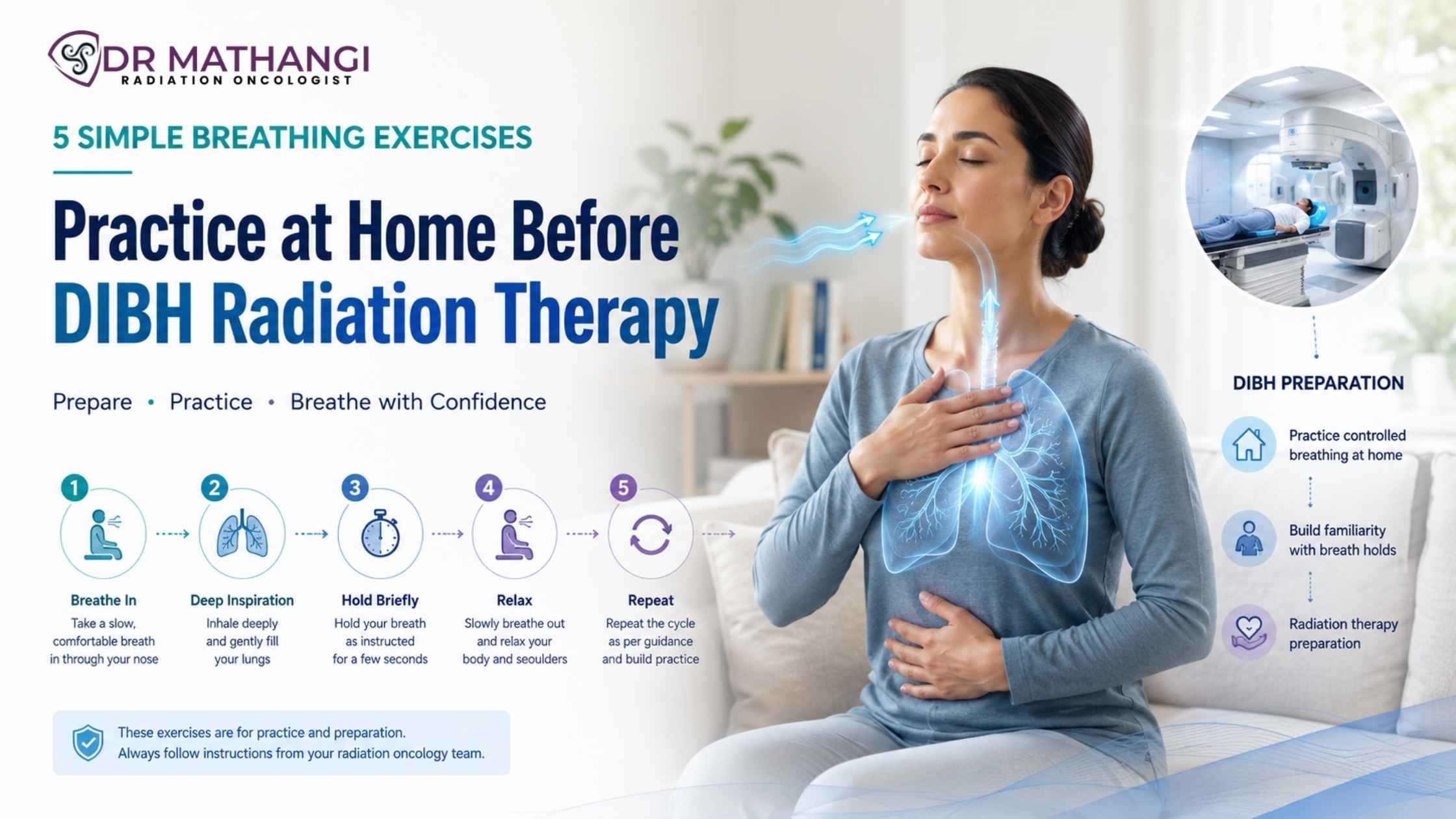
What Are The Best DIBH Breathing Exercises To Practice Before Radiation Therapy?
Practicing DIBH breathing exercises before radiation therapy is proven to enhance treatment outcomes—studies show that patients using breath hold techniques reduce heart and lung exposure by up to 50%. This not only improves safety but also boosts confidence and comfort during sessions. Dr Mathangi J, a renowned Senior Radiation Oncologist at Gleneagles Cancer Institute, Bangalore, leverages over 20 years of expertise to guide patients through these essential preparatory steps.
Why Is Radiation Therapy Preparation With Breathing Exercises So Important?
Radiation therapy preparation is critical for patients diagnosed with cancers like breast, lung, head and neck, prostate, and more. Preparing your body, especially your respiratory system, can make a significant difference during Deep Inspiration Breath Hold (DIBH) treatments. Without proper practice, patients may experience anxiety, inconsistent breath holds, and suboptimal targeting, potentially impacting treatment success.
- Reduces side effects: Minimizes radiation exposure to healthy tissue.
- Improves precision: Ensures consistent breath holds for accurate targeting.
- Boosts confidence: Familiarizes you with the process, lowering anxiety.
Under Dr Mathangi’s guidance, patients receive personalized instruction, ensuring each DIBH breathing exercise is mastered before therapy begins.
How To Practice Breath Hold Training Radiation Techniques At Home?
Breath hold training radiation techniques are foundational for successful DIBH. Here’s a step-by-step guide you can follow at home, as recommended by Dr Mathangi:
- Relax and sit comfortably: Find a quiet space, sit upright, and relax your shoulders.
- Breathe in deeply: Inhale slowly through your nose, expanding your lungs fully.
- Hold your breath: Once your lungs are full, hold your breath for 15–20 seconds (or as long as comfortable).
- Exhale slowly: Release your breath gently through your mouth.
- Repeat: Practice this cycle 5–10 times, twice daily.
Practicing these steps helps condition your body for the actual DIBH session, enhancing both your endurance and technique.
What Are The Top 5 Simple Lung Expansion Exercises Before DIBH?
Lung expansion exercises are essential for increasing lung capacity and flexibility, optimizing your ability to perform DIBH. Dr Mathangi recommends the following five exercises:
- Diaphragmatic breathing:
- Lie on your back or sit comfortably.
- Place one hand on your chest and the other on your abdomen.
- Inhale deeply through your nose, focusing on inflating your abdomen rather than your chest.
- Exhale slowly, feeling your abdomen fall.
Practicing diaphragmatic breathing improves oxygen intake and strengthens the diaphragm, crucial for effective breath holds.
- Pursed lip breathing:
- Inhale slowly through your nose.
- Purse your lips as if blowing out a candle, then exhale slowly and steadily.
This technique slows your breathing rate and keeps airways open longer, making breath holds easier.
- Segmental breathing:
- Place your hands on the sides of your ribcage.
- Inhale deeply, trying to expand your ribs outward.
- Exhale, feeling your ribs contract.
Segmental breathing helps train different lung regions for more uniform expansion during DIBH.
- Breath stacking:
- Take a small breath in, hold it.
- Take another small breath, stacking it on top of the first.
- Repeat 3–4 times, then exhale fully.
Breath stacking increases lung volume and prepares you for longer breath holds.
- Inspiratory muscle training:
- Use a simple incentive spirometer or practice deep, forceful inhalations.
- Hold each breath for several seconds before exhaling.
This strengthens the muscles used during DIBH, supporting better outcomes during radiation therapy.
How To Incorporate Diaphragmatic Breathing Into Your Routine?
Diaphragmatic breathing is one of the most effective ways to prepare for DIBH. Here’s how to make it part of your daily routine:
- Set aside 10 minutes each morning and evening for focused breathing.
- Integrate breathing exercises into other activities, like meditation or gentle stretching.
- Use reminders—sticky notes or phone alarms—to prompt practice.
- Track your progress in a journal, noting how long you can comfortably hold your breath each day.
By consistently practicing diaphragmatic breathing, you’ll build the muscle memory and stamina needed for successful DIBH sessions under Dr Mathangi’s expert supervision.
What Types Of Cancer Benefit Most From DIBH Breathing Exercises?
DIBH breathing exercises are particularly beneficial for patients with:
- Breast cancers
- Lung cancers
- Head and neck cancers
- Brain tumors
- Spine tumors
- Esophagus and rectal cancers
- Liver cancers
- Bladder cancers
- Prostate cancers
- Uterine cancers
- Cervical cancer
- Vulval cancers
- Anal canal cancers
- Penile cancers
These cancers often require precise radiation targeting, making DIBH breathing exercises and other preparatory steps vital for minimizing exposure to healthy organs and maximizing efficacy.
How Does Dr Mathangi Guide You Through Radiation Therapy Preparation?
Dr Mathangi J is a leading radiation oncologist with a reputation for compassionate, evidence-based care. At Gleneagles Cancer Institute, she leads a team that prioritizes patient safety, comfort, and outcomes. Her approach includes:
- Personalized assessment of your respiratory function and capacity
- Step-by-step instruction in all recommended DIBH breathing exercises
- Continuous support, feedback, and encouragement
- Advanced technology—such as TrueBeam STx and Gated RapidArc—to ensure the highest precision
With over 12,000 patients successfully treated, Dr Mathangi’s expertise in breath hold training radiation and advanced radiotherapy techniques is unmatched in South India. Her patient-centric focus means you are never alone on your cancer journey.
Can Practicing At Home Improve Outcomes During DIBH Radiation Therapy?
Absolutely. Consistent home practice of DIBH breathing exercises and lung expansion exercises builds confidence, reduces anxiety, and prepares your body and mind for the demands of radiation therapy. Studies confirm that patients who diligently prepare at home:
- Experience fewer side effects
- Have shorter, more effective treatment sessions
- Report higher satisfaction and lower stress levels
Dr Mathangi’s patients often achieve superior outcomes thanks to her focus on holistic preparation, empowering you to take charge of your treatment.
How To Book An Appointment With Dr Mathangi For DIBH Radiation Therapy?
If you or a loved one is preparing for radiation therapy, don’t miss the opportunity to benefit from the region’s most trusted expert. Booking an appointment with Dr Mathangi is simple:
- Visit the official contact form.
- Submit your contact information.
- Dr Mathangi’s team will promptly schedule your consultation and notify you of the details.
Take proactive steps today for a safer, smoother radiation therapy experience—your health and peace of mind deserve it.
About Dr Mathangi J
Dr Mathangi J is the Senior Consultant & In-charge of Radiation Oncology at Gleneagles Cancer Institute, Bangalore. With more than 20 years of clinical experience and advanced training from premier global centers, she is an authority in cutting-edge radiotherapy for a wide spectrum of cancers. She specializes in Stereotactic ablative body radiotherapy (SBRT), DIBH gated radiotherapy, and advanced image-guided treatments. Dr Mathangi is celebrated for her leadership, expertise, and patient-first approach, making her the preferred choice for cancer care in India.
Frequently Asked Questions
What are DIBH breathing exercises and why are they important before radiation therapy?
DIBH breathing exercises (Deep Inspiration Breath Hold) are specific techniques designed to help you take a deep breath and hold it steadily during radiation therapy. This method helps move the heart away from the chest wall and lungs, reducing radiation exposure to healthy tissues. Practicing these exercises before your treatment, as recommended by Dr. Mathangi, ensures you can perform the breath hold safely and effectively, improving the overall safety and precision of your radiation therapy.
How do lung expansion exercises help with radiation therapy preparation?
Lung expansion exercises are simple practices that help increase your lung capacity and control your breathing. By regularly doing these exercises before your radiation sessions, you prepare your lungs to expand more fully and hold air longer, making it easier to comply with breath hold instructions. Dr. Mathangi guides patients through these techniques to ensure they are ready for the demands of DIBH radiation therapy.
What role does diaphragmatic breathing play in breath hold training radiation?
Diaphragmatic breathing, or "belly breathing," involves using your diaphragm to take deeper, more efficient breaths. This technique is essential for breath hold training radiation, as it allows you to maximize your inhalation and sustain a breath hold comfortably. Dr. Mathangi emphasizes practicing diaphragmatic breathing so patients can develop better breath control and relaxation during therapy.
How often should I practice the 5 simple breathing exercises before my DIBH session?
It's best to practice the recommended breathing exercises at least once or twice daily in the week leading up to your DIBH session. Regular practice helps you build muscle memory and confidence, ensuring you can perform the breath hold correctly during your actual treatment. Dr. Mathangi provides personalized schedules and tips based on your comfort and lung health.
Can these breathing exercises help reduce anxiety before radiation therapy?
Yes, the breathing exercises recommended by Dr. Mathangi not only prepare your lungs physically but also help calm your mind. Controlled breathing activates the parasympathetic nervous system, which can lower stress and anxiety levels. This makes you feel more relaxed and confident during your radiation therapy preparation.
What if I struggle to hold my breath during DIBH radiation therapy?
If you find it difficult to hold your breath, don't worry—this is common at first. Dr. Mathangi works closely with you to assess your breath hold ability and to tailor the DIBH breathing exercises to your needs. With consistent practice and support, most patients are able to improve their breath hold duration and comfort over time.
Are these exercises safe for everyone to do at home?
The 5 simple breathing exercises provided by Dr. Mathangi are generally safe for most people and can be performed at home without supervision. However, if you have any pre-existing lung or heart conditions, it's important to consult with your healthcare provider before starting. Dr. Mathangi customizes exercise plans to suit each patient’s health status and comfort.
How do I know if I'm performing the breathing exercises correctly?
Dr. Mathangi provides detailed instructions and, if needed, demonstration videos to ensure you are practicing each exercise with proper form. You should feel your abdomen rise with diaphragmatic breathing and be able to sustain a comfortable breath hold without strain. If you are unsure, you can discuss your technique during your consultation for further guidance.
Can these breathing exercises improve my overall lung health beyond radiation therapy?
Absolutely. Consistent practice of lung expansion exercises and diaphragmatic breathing can enhance your overall lung capacity, respiratory efficiency, and relaxation even outside of radiation therapy. Many patients find these techniques beneficial for general wellbeing and stress relief long after their treatment.