DIBH vs Free Breathing Radiation: Which is Best for Breast Cancer Care?
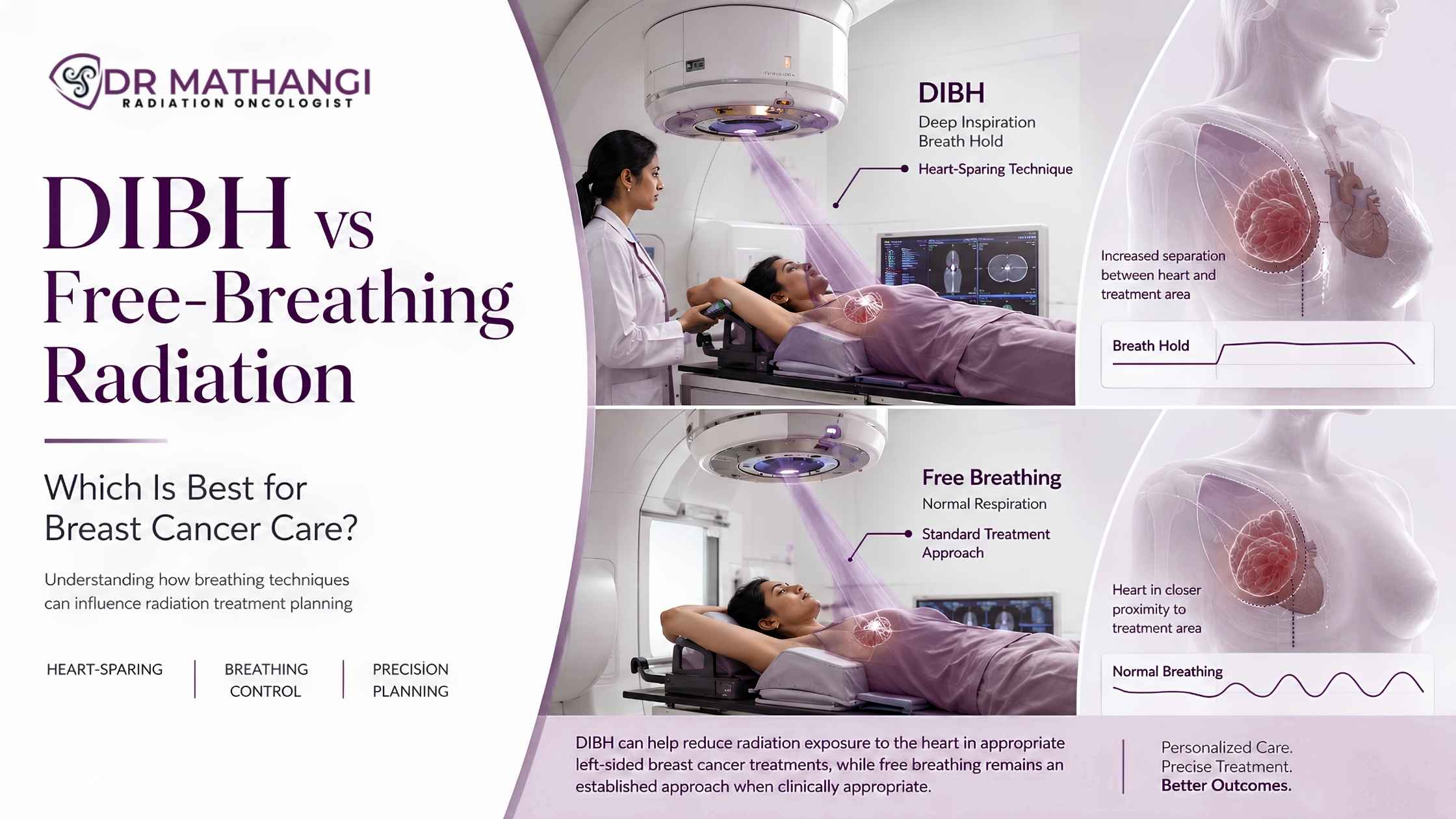 Which is better for breast cancer care: DIBH vs free breathing radiation? In breast cancer radiation, up to 90% of early-stage patients can achieve excellent local control, but the risk to the heart and lungs remains a concern—especially for left-sided cancers. With advanced radiation planning and innovative techniques, Dr Mathangi at Gleneagles Cancer Institute offers solutions tailored to maximize cancer cure while protecting vital organs.
What is the difference between DIBH vs free breathing radiation?
Deep inspiration breath hold (DIBH) and free breathing radiotherapy are two major approaches in breast cancer radiation options. DIBH involves the patient holding a deep breath during radiation delivery, expanding the chest and moving the heart away from the breast. In contrast, free breathing radiotherapy delivers radiation while the patient breathes normally.
The core difference is in how each technique manages the movement of the heart and lungs during treatment. DIBH provides superior respiratory motion management, reducing unintended radiation exposure to the heart. This is particularly crucial for left-sided breast cancers, where the proximity of the heart poses a significant risk.
Why is DIBH important in breast cancer radiation options?
DIBH vs free breathing radiation is a vital decision because DIBH can significantly reduce cardiac dose, thereby lowering long-term heart complications after breast cancer treatment.
- Heart protection: DIBH moves the heart downward and posteriorly, away from the radiation field.
- Improved lung sparing: By expanding the lungs, DIBH reduces the volume of lung receiving radiation.
- Enhanced tumor targeting: With reduced organ motion, radiation can be delivered more accurately to the cancerous tissue.
Several studies show that using DIBH can cut the mean heart dose by 50% or more compared to free breathing radiotherapy. This translates to fewer cardiac events and better long-term survival.
How does free breathing radiotherapy compare?
Free breathing radiotherapy is the traditional technique, suitable for patients who cannot tolerate breath-hold or in cases where the heart is not close to the radiation field.
Its advantages include simplicity, comfort, and faster treatment times, but it lacks the nuanced respiratory motion management of DIBH. This can lead to higher incidental doses to the heart and lungs, especially in left-sided breast cancers or when treating the internal mammary lymph nodes.
- Pros: Easier for patients, requires less training, suitable for right-sided breast cancers or when physical/medical limitations preclude DIBH.
- Cons: Increased risk of late cardiac and pulmonary toxicity for left-sided cases.
Who benefits most from DIBH vs free breathing radiation?
Patients with left-sided breast cancers, those with pre-existing heart conditions, or those requiring radiation to internal mammary nodes benefit the most from DIBH.
At Gleneagles Cancer Institute, Dr Mathangi uses advanced imaging and simulation to decide which technique is best for each patient. Her personalized approach ensures that breast cancer radiation options are tailored for maximum efficacy with minimum side effects.
What does advanced radiation planning involve?
Advanced radiation planning is a cornerstone of high-precision breast cancer care. It integrates 3D imaging, computerized dose calculations, and motion management to customize treatment for each patient.
- CT-based simulation in both free breathing and DIBH positions
- Comparative planning to select the safest and most effective approach
- Use of technologies like Gated RapidArc, image-guided radiotherapy, and intensity-modulated techniques
- Ongoing monitoring and plan adaptation if needed
Dr Mathangi’s expertise in advanced radiation planning ensures that each patient’s anatomy and risk factors are considered, enabling optimal respiratory motion management and dose delivery.
What is respiratory motion management in breast cancer radiotherapy?
Respiratory motion management refers to strategies that control or account for chest and organ movement during radiation. This is critical for accuracy, especially when treating cancers close to the heart or lungs.
Techniques include:
- DIBH (Deep Inspiration Breath Hold) – voluntary breath-hold guided by visual/audio feedback
- Respiratory gating – radiation is only delivered during specific phases of the breathing cycle
- Active breathing control devices – mechanical systems to stabilize breathing
Dr Mathangi utilizes state-of-the-art respiratory motion management tools to ensure the safest, most accurate treatment for her patients.
When should you choose DIBH vs free breathing radiation with Dr Mathangi?
The decision between DIBH vs free breathing radiation is individualized, balancing the benefits of heart and lung protection with comfort, convenience, and patient ability.
| Feature | DIBH | Free Breathing Radiotherapy |
|---|---|---|
| Heart Dose | Significantly reduced (up to 50%) | Higher, especially for left-sided cancers |
| Lung Dose | Reduced | Slightly higher |
| Patient Comfort | Requires cooperation, training | More comfortable, no special training |
| Suitability | Best for left-sided, high-risk patients | Suitable for right-sided or those unable to breath-hold |
| Treatment Time | May be longer | Usually shorter |
Dr Mathangi’s approach begins with a comprehensive evaluation, simulation in both breathing modes, and a clear explanation of the pros and cons—empowering you to make an informed choice.
What makes Dr Mathangi a leader in breast cancer radiation options?
Dr Mathangi is a Senior Consultant & In-charge of Radiation Oncology at Gleneagles Cancer Institute, Bangalore, with over 20 years of experience in treating complex cancers, including breast cancer.
- 12,000+ patients successfully treated
- Expert in advanced techniques: Stereotactic radiotherapy, Gated RapidArc, DIBH gated radiotherapy, and image-guided interstitial brachytherapy
- Asia Pacific’s first TrueBeam STx Machine installed at her center
- Director of Fellowship in Advanced Radiotherapy Techniques (RGUHS)
- Specializes in breast, head and neck, brain, lung, prostate, and women’s cancers
Her training from top international centers in Germany and Denmark ensures the most up-to-date, evidence-based care. At Gleneagles, every patient benefits from a multidisciplinary tumor board review and access to the latest technology.
How to book an appointment with Dr Mathangi?
If you or your loved one is facing a decision regarding breast cancer radiation options, don’t leave your heart and lungs to chance. Experience the advantage of advanced radiation planning and personalized care from South India’s leading oncologist.
- Visit https://drmathangi.com/contact/
- Submit your contact information using the online form
- Dr Mathangi’s expert team will schedule your appointment and notify you promptly
Take the first step towards safer, more effective breast cancer treatment today.
About Dr Mathangi
Dr Mathangi J is a pioneering radiation oncologist based in Bangalore, India, specializing in advanced cancer care at Gleneagles Cancer Institute. With a distinguished record in breast, head and neck, brain, lung, prostate, and women’s cancers, she is recognized for her patient-centric approach and cutting-edge expertise.
For the very best in breast cancer radiation options, trust your care to Dr Mathangi—where compassion meets clinical excellence.
Frequently Asked Questions
What is the main difference between DIBH and free breathing radiation for breast cancer?
DIBH (Deep Inspiration Breath Hold) and free breathing radiation are two respiratory motion management techniques used during breast cancer radiation. DIBH involves patients holding a deep breath during treatment, which increases the distance between the heart and the chest wall, thereby reducing heart and lung exposure to radiation. In contrast, free breathing radiation (or free breathing radiotherapy) delivers radiation while the patient breathes normally. The choice between these depends on individual anatomy, cancer location, and risk factors, all of which Dr. Mathangi considers during advanced radiation planning.
Who is an ideal candidate for DIBH in breast cancer care?
DIBH is especially beneficial for patients with left-sided breast cancer, as it helps to move the heart away from the radiation field, minimizing cardiac risks. However, not all patients can comfortably hold their breath or may not need DIBH if the heart is already well separated from the chest wall. Dr. Mathangi assesses each patient individually to determine if DIBH or free breathing radiotherapy will provide the best protection and treatment outcome.
How does advanced radiation planning impact the choice between DIBH vs free breathing radiation?
Advanced radiation planning involves detailed imaging and simulation to precisely map the tumor and surrounding organs. This allows Dr. Mathangi to compare DIBH vs free breathing radiation for each patient, measuring dose distributions to the heart, lungs, and breast tissue. The technique that best spares healthy organs while ensuring effective cancer control is chosen for optimal patient care.
Are there any risks or downsides with DIBH or free breathing radiotherapy?
Both techniques are safe when properly implemented. DIBH may be challenging for patients who have difficulty holding their breath, and requires training and practice. Free breathing radiotherapy is more convenient but may expose the heart and lungs to higher radiation doses in some patients. Dr. Mathangi's expertise ensures that each patient receives the safest and most effective approach from the available breast cancer radiation options.
What technology does Dr. Mathangi use for respiratory motion management during treatment?
Dr. Mathangi employs state-of-the-art equipment for respiratory motion management, including real-time monitoring systems that track the patient’s breathing cycle and ensure accurate radiation delivery. This technology is essential for both DIBH and free breathing radiotherapy, improving precision and minimizing radiation exposure to healthy tissues.
How does Dr. Mathangi personalize breast cancer radiation options for her patients?
Every patient undergoes a thorough assessment, including advanced imaging, risk evaluation, and simulations. Based on these findings, Dr. Mathangi discusses the merits of DIBH vs free breathing radiation, ensuring that each patient understands their options. The chosen technique is always tailored to maximize effectiveness and minimize side effects, reflecting the latest evidence and best practices.
Can DIBH be combined with other advanced radiation planning techniques?
Yes. DIBH can be integrated with other advanced radiation planning strategies such as IMRT (Intensity-Modulated Radiation Therapy) and VMAT (Volumetric Modulated Arc Therapy) for even greater precision. Dr. Mathangi leverages these technologies to further reduce radiation to healthy organs and improve overall treatment outcomes in breast cancer care.
How can I prepare for a consultation about DIBH vs free breathing radiation with Dr. Mathangi?
Bring your medical history, imaging reports, and any questions you have about breast cancer radiation options. Dr. Mathangi will guide you through the benefits and limitations of each approach, including a demonstration of respiratory motion management techniques, so you can make an informed decision that fits your needs and lifestyle.