EGFR Gene Mutation: Meaning, Testing & Lung Cancer
At the forefront of this transformative approach is Dr. Mathangi J, Senior Radiation Oncologist and In-charge of Gleneagles Cancer Institute, Bangalore. With over 20 years of experience and more than 12,000 patients treated, Dr. Mathangi’s expertise in precision oncology positions her as a trusted authority for patients and families facing lung cancer.
What Is EGFR Gene Mutation?
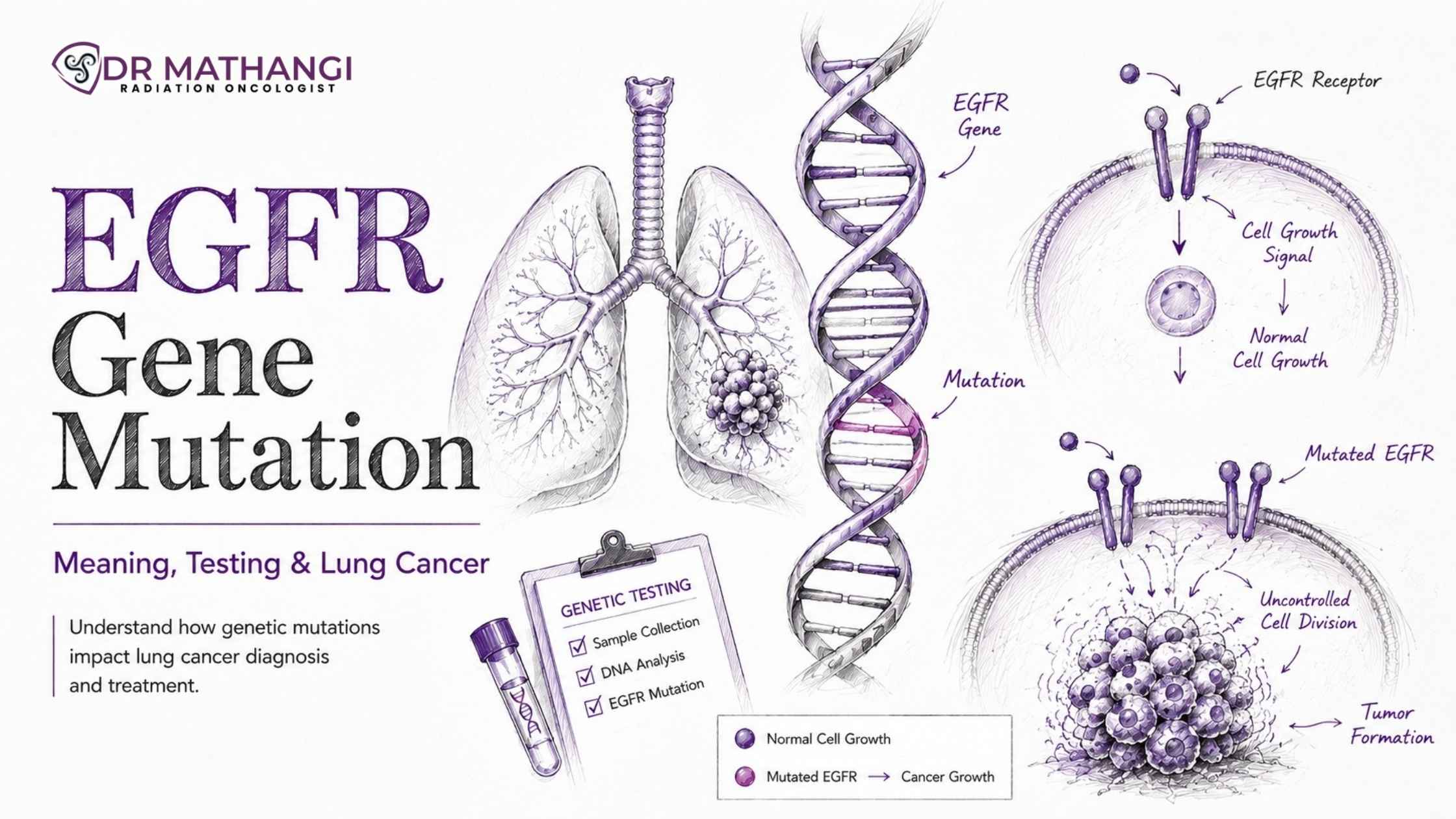
EGFR gene mutation refers to a change or alteration in the EGFR gene (Epidermal Growth Factor Receptor gene), a critical gene that controls cell growth and division. In normal cells, this gene ensures healthy cell function and repair. However, when a genetic mutation occurs in the EGFR gene, it can cause the cells to grow uncontrollably, leading to cancer.
- EGFR mutation meaning: It typically involves small changes (mutations) in the DNA sequence of the EGFR gene, resulting in the production of an abnormal protein that drives cancerous growth.
- Common in NSCLC: These mutations are most often seen in non-small cell lung cancer (NSCLC) and are more prevalent in non-smokers, women, and Asian populations.
Why Is EGFR Gene Mutation Significant in Lung Cancer?
EGFR gene mutations are among the most important NSCLC biomarkers that guide therapy decisions. When present, these mutations predict how a patient will respond to specific targeted treatments called tyrosine kinase inhibitors (TKIs), which directly block EGFR signals and stop cancer cell growth.
In India and across Asia, the frequency of EGFR-positive cancer is notably high, making EGFR testing a crucial step for all newly diagnosed lung cancer patients. This diagnostic step can mean the difference between standard therapy and highly effective, personalized treatment.
How Does EGFR Gene Mutation Occur?
What causes EGFR gene mutation? Mutations in the EGFR gene can be inherited (germline) or acquired over time (somatic). Most EGFR mutations in lung cancer are acquired due to environmental factors, exposure to carcinogens, or simply as random events during cell division. Unlike hereditary cancers, EGFR gene mutation in lung cancers is typically not passed down from parents.
- Common types: Exon 19 deletions and exon 21 (L858R) mutations are the most frequent changes found in the EGFR gene in NSCLC patients.
- Impact: These mutations cause the EGFR protein to be constantly active, sending continuous growth signals that drive tumor development and spread.
How Is Mutation Testing Performed?
How do doctors test for EGFR gene mutations? The process, known as mutation testing, involves analyzing a tumor tissue sample or, in some cases, a blood sample (liquid biopsy) to detect specific changes in the EGFR gene.
- Biopsy collection: A sample is taken from the tumor using minimally invasive techniques, often guided by advanced imaging.
- Laboratory analysis: Specialized genetic testing methods, such as PCR (polymerase chain reaction) or next-generation sequencing (NGS), are used to look for EGFR mutations.
- Reporting: Results typically indicate whether an actionable EGFR mutation is present, guiding the oncologist in choosing the best treatment strategy.
Dr. Mathangi ensures that all eligible lung cancer genetics cases undergo comprehensive mutation testing at Gleneagles Cancer Institute. This critical step ensures that no patient misses the opportunity for tailored, state-of-the-art care.
What Are the Benefits of Knowing Your EGFR Mutation Status?
Why is it important to test for EGFR gene mutation in lung cancer? Identifying an EGFR gene mutation in a lung cancer patient means they may benefit from targeted therapies, which are more effective and less toxic than traditional chemotherapy.
- Improved survival: Patients with actionable EGFR mutations live longer and have a better quality of life with targeted therapies.
- Fewer side effects: Targeted medicines often have fewer and less severe side effects compared to chemotherapy.
- Personalized care: Treatment is tailored to the individual's genetic profile, the cornerstone of precision oncology.
With Dr. Mathangi’s expertise, patients gain access to the most current advances in precision oncology, maximizing the chances of successful outcomes.
Which Cancers Require Radiation Therapy?
Dr. Mathangi’s expertise in radiation oncology extends to a broad range of cancers that benefit from precision radiation therapy, including:
- Head and neck cancers
- Brain tumors
- Spine tumors
- Esophagus and rectal cancers
- Lung cancers
- Liver cancers
- Breast cancers
- Bladder cancers
- Prostate cancers
- Uterine cancers
- Cervical cancer
- Vulval cancers
- Anal canal cancers
- Penile cancers
This comprehensive approach ensures that patients at Gleneagles Cancer Institute receive holistic care tailored to their cancer’s unique biology and needs.
How Does Dr. Mathangi J Approach EGFR-Positive Lung Cancer?
What makes Dr. Mathangi’s approach unique? With decades of experience and international training in advanced radiation techniques, Dr. Mathangi integrates the latest in lung cancer genetics and precision oncology into her daily practice. Her leadership in installing Asia Pacific’s first TrueBeam STx Machine at Gleneagles Cancer Institute signals her commitment to world-class cancer care.
- Comprehensive evaluation: Every patient is assessed for NSCLC biomarkers, ensuring that no actionable mutations are missed.
- Multidisciplinary team: Dr. Mathangi leads a team of pathologists, medical oncologists, and radiologists for seamless coordination of diagnosis and treatment.
- Advanced therapies: Patients with EGFR-positive cancer benefit from access to the latest targeted therapies, stereotactic body radiotherapy (SBRT), and image-guided interventions.
Why Precision Oncology Is the Future of Cancer Care
What is precision oncology and how does it help lung cancer patients? Precision oncology is a personalized approach to cancer treatment. It uses detailed information about a person’s genetic mutations, such as EGFR gene mutation, to select therapies that are most likely to be effective for their specific cancer type.
- Targeted treatment: Focuses on the unique genetic and molecular profile of the tumor, not just its location or size.
- Better outcomes: Increases chances of remission and survival while reducing unnecessary side effects.
- Continuous innovation: Dr. Mathangi stays updated with global advances in cancer genetics and integrates them into patient care.
How To Book An Appointment With Dr Mathangi J?
Take the next step in your cancer care journey: If you or a loved one is facing lung cancer or any cancer that may benefit from advanced radiation therapy and genetic profiling, Dr. Mathangi J offers unmatched expertise, compassion, and personalized care.
- Visit: Submit your contact information here.
- Schedule: Dr. Mathangi’s team will promptly arrange your appointment and notify you with the details.
- Consult: Experience world-class cancer care at Gleneagles Cancer Institute, Bangalore.
Don’t let uncertainty dictate your cancer journey. Precision testing and expert-led care can make all the difference. Book your consultation with Dr. Mathangi today and unlock the best of modern oncology.
About Dr Mathangi J
 Dr. Mathangi J is a Senior Consultant and In-charge of Radiation Oncology at Gleneagles Cancer Institute, Bangalore. With an MBBS, DMRT, and DNB, she brings over two decades of clinical experience and international training in the latest radiation and cancer treatment techniques. Dr. Mathangi has successfully treated more than 12,000 patients and is renowned for her expertise in head and neck cancers, brain tumors, prostate, and especially lung cancers. Her leadership and innovation have made Gleneagles Cancer Institute a destination for advanced, compassionate, and personalized cancer care in South India and beyond.
Gleneagles Cancer Institute is recognized for its state-of-the-art equipment, multidisciplinary teams, and dedication to patient-centric care, making it a leading center for lung cancer genetics and precision medicine in Bangalore.
Frequently Asked Questions
What is an EGFR gene mutation and why does it matter in lung cancer?
An EGFR gene mutation refers to changes in the DNA sequence of the EGFR gene, which provides instructions for making a protein involved in cell growth and division. When this gene is altered, it can cause cells to grow uncontrollably, leading to cancer, especially non-small cell lung cancer (NSCLC). Identifying an egfr gene mutation helps doctors determine the best treatment plan, as some targeted therapies work specifically for patients with these mutations.
How does Dr. Mathangi approach EGFR gene mutation testing?
Dr. Mathangi emphasizes the importance of precise mutation testing for the EGFR gene as part of her personalized care for lung cancer patients. She collaborates with advanced laboratories to perform genetic mutation analysis on biopsy samples, ensuring accurate identification of EGFR-positive cancer. This approach enables her to recommend tailored therapies that are most likely to benefit each individual patient.
What does EGFR mutation meaning imply for my treatment options?
The EGFR mutation meaning is that your lung cancer has a specific alteration in the EGFR gene. This information is crucial because certain targeted therapies, known as EGFR inhibitors, are designed to block the abnormal signals from the mutated gene. If you have an EGFR-positive cancer, these drugs may significantly improve your outcomes compared to standard chemotherapy.
What are NSCLC biomarkers and how are they used?
NSCLC biomarkers are biological indicators, such as gene mutations or protein expressions, found in non-small cell lung cancer. The EGFR gene mutation is one of the most important NSCLC biomarkers because it guides doctors in selecting targeted treatment. Dr. Mathangi uses comprehensive biomarker testing to ensure a complete understanding of your lung cancer genetics, which forms the basis for precision oncology.
Why is mutation testing important for lung cancer patients?
Mutation testing allows doctors to identify specific genetic mutations driving the cancer’s growth. For lung cancer, especially NSCLC, knowing whether the EGFR gene is mutated can determine if targeted therapies are suitable. Dr. Mathangi recommends early and accurate mutation testing for the best possible treatment planning and improved patient outcomes.
How does lung cancer genetics affect my treatment?
Lung cancer genetics refers to the study of genetic changes in cancer cells that influence how the disease behaves and responds to treatment. If your cancer harbors an EGFR gene mutation or other important alterations, Dr. Mathangi can recommend therapies uniquely suited to your tumor’s profile, improving effectiveness and minimizing unnecessary side effects.
What is precision oncology and how does it relate to EGFR mutations?
Precision oncology is an approach to cancer treatment that uses detailed information about the genetic makeup of a patient’s tumor to select the most effective therapies. For patients with an EGFR gene mutation, precision oncology means using targeted drugs that specifically address the altered gene, resulting in more personalized and effective care. Dr. Mathangi specializes in applying this approach for lung cancer patients.
Can EGFR-positive cancer be treated with immunotherapy?
While immunotherapy has shown promise in many cancer types, patients with EGFR-positive cancer often respond better to targeted therapies such as EGFR inhibitors. Dr. Mathangi reviews each case individually, and may recommend immunotherapy in select situations, but targeted therapy remains the mainstay for EGFR-mutated lung cancers.
How does Dr. Mathangi support patients through the EGFR mutation journey?
Dr. Mathangi provides comprehensive care for patients with EGFR gene mutations, from initial diagnosis and mutation testing to personalized treatment planning and ongoing support. She emphasizes clear communication, evidence-based recommendations, and access to cutting-edge therapies, ensuring each patient receives the best possible care based on their unique cancer genetics.