EGFR and PD-L1 Positive Lung Cancer: Treatment Considerations
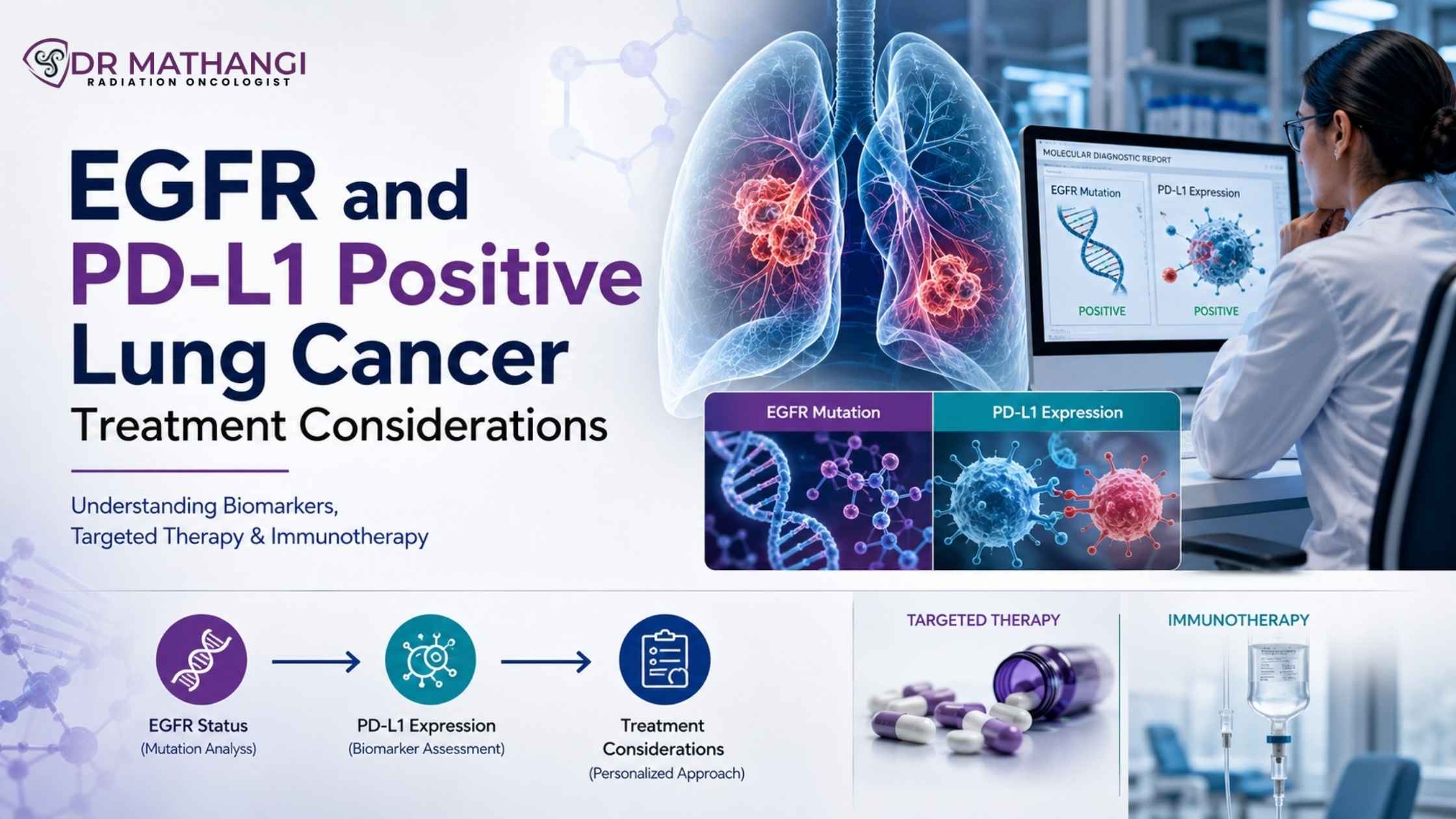
EGFR and PD-L1 positive lung cancer represents a unique intersection of molecular oncology and immunology. Did you know that lung cancer is the leading cause of cancer-related deaths globally, accounting for nearly 1.8 million deaths every year? Among non-small cell lung cancer (NSCLC) patients, about 10-15% in India harbor EGFR mutations, and up to 30% may show high PD-L1 expression, significantly influencing their treatment journey. Understanding the nuances of these biomarkers can make a life-changing difference in survival and quality of life.
What Is EGFR And PD-L1 Positive Lung Cancer?
EGFR and PD-L1 positive lung cancer refers to non-small cell lung cancers (NSCLC) where two specific biomarkers—epidermal growth factor receptor (EGFR) mutations and programmed death-ligand 1 (PD-L1) expression—are present. These markers help guide treatment decisions by identifying which therapies may be most effective.
- EGFR mutations drive cancer cell growth and division.
- PD-L1 expression can allow cancer cells to evade the immune system.
The presence of both EGFR and PD-L1 positivity is relatively rare but demands a highly personalized approach to care. This is where expertise like Dr Mathangi's becomes invaluable.
Identifying EGFR And PD-L1 Biomarkers In Lung Cancer Diagnosis
The process of lung cancer diagnosis has evolved dramatically with advancements in molecular pathology and imaging. EGFR biomarkers and PD-L1 expression are identified through a combination of:
- Histopathology: Examining tissue under a microscope to confirm NSCLC.
- Molecular Testing: Detecting EGFR mutations using PCR, NGS, or other genetic assays.
- Immunohistochemistry (IHC): Assessing PD-L1 protein levels on tumor cells.
Comprehensive lung cancer diagnosis ensures that every patient receives a treatment plan tailored to their cancer’s unique molecular profile—an essential principle of precision oncology.
The Role Of EGFR Biomarkers And PD-L1 In Treatment Planning
EGFR biomarkers and PD-L1 status are central to treatment planning for NSCLC. Their presence influences the sequence, combination, and type of therapies recommended.
| Biomarker | Implication | First-Line Options |
|---|---|---|
| EGFR Mutation (+) | Sensitive to EGFR-targeted therapy | EGFR TKIs (osimertinib, erlotinib, afatinib) |
| PD-L1 High Expression (+) | May respond to immunotherapy | PD-1/PD-L1 inhibitors (pembrolizumab, atezolizumab) |
| Both EGFR (+) and PD-L1 (+) | Complex; targeted therapy often prioritized | EGFR TKIs; immunotherapy considered upon progression |
These NSCLC biomarkers form the cornerstone of evidence-based, individualized treatment planning at leading centers like Gleneagles Cancer Institute under the stewardship of Dr Mathangi.
The Importance Of Precision Oncology In EGFR And PD-L1 Positive Lung Cancer
Precision oncology is the art and science of using genomic and molecular data to select the most appropriate therapy for each individual. In EGFR and PD-L1 positive lung cancer, this approach is crucial because treatment efficacy and side effects can vary dramatically based on these biomarkers.
- Reduces unnecessary toxicity by avoiding ineffective therapies.
- Improves survival and quality of life by targeting cancer’s unique vulnerabilities.
- Enables adaptive treatment strategies as the cancer evolves.
At Gleneagles Cancer Institute, Dr Mathangi employs advanced diagnostic panels to ensure no actionable mutation is missed, embodying the principles of precision oncology and maximizing the chances of a positive outcome.
Immunotherapy In PD-L1 Positive Lung Cancer
Immunotherapy has revolutionized the management of PD-L1 positive lung cancer. These therapies harness the patient’s own immune system to attack cancer cells—especially when PD-L1 expression is high.
- Immune checkpoint inhibitors like pembrolizumab or nivolumab are often used.
- Immunotherapy can be offered as first-line treatment in high PD-L1 expressers with no actionable driver mutations.
- Combination with chemotherapy may be considered for broader response.
However, in those with EGFR mutations, immunotherapy is typically reserved for later lines of therapy due to lower efficacy and increased risk of adverse events when combined with TKIs.
Targeted Therapy For EGFR Mutant NSCLC
Targeted therapy refers to drugs that specifically inhibit molecular pathways essential for cancer cell survival. For EGFR mutant NSCLC, this means using EGFR tyrosine kinase inhibitors (TKIs) like osimertinib, erlotinib, or gefitinib.
- Demonstrated to improve progression-free and overall survival in EGFR-positive patients.
- Less toxic than traditional chemotherapy.
- Allows for oral administration and outpatient management.
Dr Mathangi’s expertise ensures that patients are not only started on the right therapy but are also monitored closely for resistance mutations and side effects, leading to timely adjustments in treatment planning.
Challenges In Treating EGFR And PD-L1 Positive Lung Cancer
Treating patients with both EGFR mutations and high PD-L1 expression is complex. The sequence in which targeted therapy and immunotherapy are given can impact outcomes and toxicity. Current evidence suggests:
- Starting with EGFR TKIs is preferred due to proven efficacy in EGFR-mutant cancers.
- Immunotherapy may be less effective upfront for EGFR mutant tumors and should generally be reserved for after TKI failure.
- Combining TKIs and immunotherapy increases the risk of pneumonitis and other immune side effects.
This is why expert treatment planning—as practiced by Dr Mathangi—is critical for balancing efficacy and safety, especially when considering subsequent lines of therapy.
Care Approach At Gleneagles Cancer Institute
Under Dr Mathangi’s leadership, Gleneagles Cancer Institute Bangalore is at the forefront of personalized lung cancer care. Her approach involves:
- Comprehensive lung cancer diagnosis and molecular profiling including all actionable NSCLC biomarkers.
- Evidence-based treatment planning using tumor boards and multi-disciplinary expertise.
- Access to advanced therapies including SBRT, immunotherapy, and the latest targeted agents.
- Close monitoring for response and side effects to adjust therapy promptly.
- Patient and family education to empower informed decision-making.
Dr Mathangi’s protocols are informed by the latest global guidelines and research, ensuring world-class care right here in Bangalore, serving both South and North Indian patients.
Why Choose Dr Mathangi For Lung Cancer Care?
Dr Mathangi J is not just a senior radiation oncologist—she is a pioneer in precision oncology in India. Her patients benefit from:
- Over 20 years of experience and 12,000+ patients treated.
- Expertise in advanced radiation techniques (SBRT, RapidArc, DIBH, IORT).
- Personalized care with a focus on safety, efficacy, and quality of life.
- Leadership in multidisciplinary tumor boards for optimal treatment planning.
- Access to the latest research, clinical trials, and technologies.
In a field where every decision can impact survival, missing out on Dr Mathangi’s expertise could mean foregoing the most advanced, evidence-based care available in India today.
Book An Appointment With Dr Mathangi Today
Cancers That May Benefit From Radiation Therapy
According to Dr Mathangi, the following cancers may benefit from radiation therapy as part of a comprehensive treatment plan:
- Head and neck cancers
- Brain tumors
- Spine tumors
- Esophagus and rectal cancers
- Lung cancers
- Liver cancers
- Breast cancers
- Bladder cancers
- Prostate cancers
- Uterine cancers
- Cervical cancer
- Vulval cancers
- Anal canal cancers
- Penile cancers
Early referral and multidisciplinary evaluation are key to maximizing benefits from radiation, targeted therapy, and immunotherapy.
About Dr Mathangi J
Dr Mathangi J is a Senior Consultant & In-charge of Radiation Oncology at Gleneagles Cancer Institute, Bangalore. With MBBS, DMRT, and DNB qualifications, she has over 20 years of experience and international training in advanced radiotherapy techniques. Dr Mathangi is recognized for her pioneering work in SBRT, Gated RapidArc, DIBH, and interstitial brachytherapy and has treated over 12,000 patients. She specializes in head and neck, lung, breast, prostate, and gynecological cancers, and leads the region’s foremost program in precision oncology.
Don’t let uncertainty dictate your cancer journey. For the most advanced, personalized care in EGFR and PD-L1 positive lung cancer, trust in Dr Mathangi’s expertise and compassionate approach. Submit your details on the online appointment form and take the first step toward hope and healing.
Frequently Asked Questions
What does it mean to have EGFR and PD-L1 positive lung cancer?
Having both EGFR and PD-L1 positive lung cancer means that your lung cancer cells have mutations in the EGFR gene and also express PD-L1 protein on their surface. These are important NSCLC biomarkers that guide your oncologist, like Dr. Mathangi, in personalizing your treatment planning to achieve better results with tailored therapies.
Why are EGFR biomarkers and PD-L1 expression important in lung cancer diagnosis?
EGFR biomarkers and PD-L1 expression help determine the best therapy options for each patient. EGFR mutations can make tumors responsive to targeted therapy, while PD-L1 positivity may open the door to immunotherapy. Dr. Mathangi uses comprehensive biomarker testing as part of the lung cancer diagnosis process to decide on the most effective, individualized treatment approach.
How does Dr. Mathangi approach treatment planning for EGFR and PD-L1 positive lung cancer?
Dr. Mathangi adopts a precision oncology approach for treatment planning. She considers the presence of EGFR mutations and PD-L1 positivity, the patient’s health status, and other NSCLC biomarkers to design a customized treatment plan. This often involves sequencing or combining therapies for optimal benefit and minimal side effects.
Can immunotherapy be used in EGFR and PD-L1 positive lung cancer patients?
Immunotherapy may be considered for PD-L1 positive lung cancer, but its role in patients with EGFR mutations is complex. Dr. Mathangi stays updated on the latest evidence and will guide patients on whether immunotherapy is suitable as first-line or subsequent treatment, often after targeted therapy has been tried.
What is the role of targeted therapy in EGFR and PD-L1 positive lung cancer?
Targeted therapy is often the first-line treatment for patients whose tumors have EGFR mutations, regardless of PD-L1 status. Dr. Mathangi prescribes advanced EGFR inhibitors as part of her precision oncology practice, aiming for high efficacy and better quality of life.
How does Dr. Mathangi determine which therapy to start with?
Dr. Mathangi uses a combination of clinical guidelines, the patient’s NSCLC biomarkers, and individual health factors to determine whether to start with targeted therapy or immunotherapy. She prioritizes therapies proven to be most effective for the specific biomarker profile, with ongoing monitoring and adjustments as needed.
What are the advantages of precision oncology in treating EGFR and PD-L1 positive lung cancer?
Precision oncology allows Dr. Mathangi to use genetic and molecular information, including EGFR biomarkers and PD-L1 status, to personalize treatment. This increases the likelihood of treatment success, minimizes unnecessary side effects, and can improve overall survival.
How does Dr. Mathangi support patients throughout their treatment journey?
Dr. Mathangi offers holistic care, including close monitoring of treatment response, management of side effects, regular lung cancer diagnosis assessments, and ongoing communication. She ensures that each patient’s treatment planning is flexible and up-to-date with the latest oncology advances.
Are there special considerations for patients with EGFR and PD-L1 positive lung cancer?
Yes, for patients with EGFR and PD-L1 positive lung cancer, treatment decisions are particularly complex. While EGFR-targeted therapies are typically prioritized, PD-L1 positivity may influence future therapy options or clinical trial eligibility. Dr. Mathangi carefully reviews the latest evidence to ensure each patient receives the most effective sequence of treatments for their unique case.
What are the latest research trends in EGFR and PD-L1 positive lung cancer?
Research on EGFR and PD-L1 positive lung cancer is ongoing, with new studies exploring how to best combine targeted therapies and immunotherapies. Clinical trials are investigating whether novel sequencing or combination strategies can improve outcomes for patients who have both biomarkers. Staying informed about these advancements can help patients and doctors make more personalized treatment decisions.
What should I know about EGFR and PD-L1 positive lung cancer if I am newly diagnosed?
If you are newly diagnosed with EGFR and PD-L1 positive lung cancer, it means your tumor has both a genetic mutation (EGFR) and expresses the PD-L1 protein. This combination affects the way your oncologist selects therapies, as the presence of both markers requires a personalized approach to achieve the best possible outcome.
Are there unique treatment strategies for EGFR and PD-L1 positive lung cancer?
Yes, having both EGFR and PD-L1 positive lung cancer often requires a tailored treatment plan. Targeted therapies are usually given first for EGFR mutations, while immunotherapy may be considered later based on PD-L1 expression and how your cancer responds to initial treatments. Your oncologist will guide you on the most appropriate strategy for your specific case.