High Lymphocyte Count (Lymphocytosis): Causes & When to Worry
Authored by Dr Mathangi J (MBBS, DMRT, DNB), Senior Consultant & In-charge, Radiation Oncology, Gleneagles Cancer Institute, Bangalore
What Is High Lymphocyte Count And Why Should You Care?
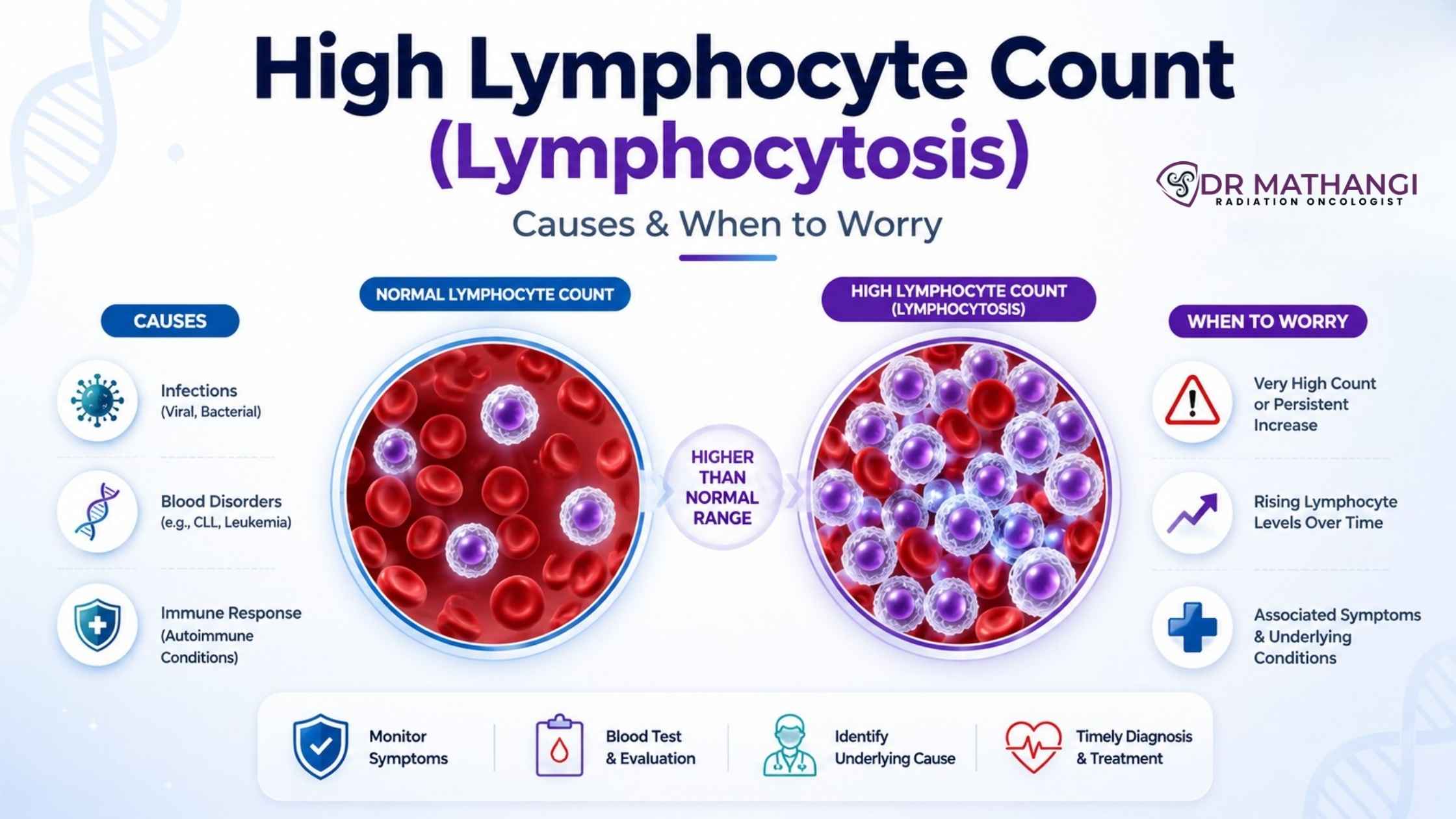
A high lymphocyte count—medically termed as lymphocytosis—occurs when your blood shows a higher than normal level of lymphocytes, a type of white blood cell crucial for your immune defense. According to recent studies, up to 5% of routine blood tests reveal lymphocytosis, making it a relatively common finding. However, while it is often benign, it can sometimes signal serious underlying health issues, including certain cancers. Understanding the causes and red flags can empower you to seek timely expert care.
How Does High Lymphocyte Count Present In A Blood Test?
The most direct way to detect a high lymphocyte count is through a CBC abnormal report (Complete Blood Count). If your CBC shows lymphocyte numbers above the normal reference range—typically more than 4,000 lymphocytes per microliter in adults—it is considered lymphocytosis.
- Normal Adult Range: 1,000–4,000 lymphocytes/μL
- High (Lymphocytosis): >4,000 lymphocytes/μL
Automated blood analyzers often flag this abnormality, prompting further evaluation.
What Are The Main Lymphocytosis Causes?
Lymphocytosis causes can be broadly categorized as follows:
- Infection (Most Common): Both viral and some bacterial infections can cause a spike in lymphocytes.
- Chronic Inflammatory Conditions: Autoimmune diseases, such as rheumatoid arthritis or lupus.
- Blood Cancers: Most notably, certain lymphomas and leukemias.
- Stress Response: Physical and emotional stress can transiently elevate lymphocytes.
- Drug Reactions: Some medications, such as anticonvulsants, may cause lymphocytosis.
- Other Medical Conditions: Endocrine disorders, such as thyrotoxicosis.
To summarize, the majority of high lymphocyte counts are due to infections, but persistent or very high counts should never be ignored, as they may be early leukemia indicators.
How Does Infection Affect Lymphocyte Levels?
Infection is the leading benign cause of high lymphocyte count. When your body confronts viruses such as influenza, hepatitis, or even the common cold, it ramps up lymphocyte production to fight the invading pathogens. Some bacterial infections like tuberculosis or pertussis (whooping cough) can also trigger lymphocytosis.
- Acute Viral Infections: Influenza, Epstein-Barr virus (EBV), cytomegalovirus, mumps, measles.
- Chronic Infections: Tuberculosis, HIV, syphilis.
Typically, lymphocyte counts return to normal once the infection resolves. If counts remain elevated, further investigation is warranted.
What Are Leukemia Indicators In Lymphocytosis?
Persistent, unexplained, or extremely high lymphocyte counts can be early leukemia indicators. Leukemias such as Chronic Lymphocytic Leukemia (CLL) or Acute Lymphoblastic Leukemia (ALL) may present initially with little to no symptoms other than abnormal blood counts.
- Very high lymphocyte counts (>15,000/μL)
- Unexplained fatigue, weight loss, or night sweats
- Frequent infections or unexplained bruising/bleeding
- Swollen lymph nodes or spleen
Early recognition of these leukemia indicators can be life-saving, as prompt diagnosis and treatment drastically improve outcomes.
When Should You Worry About High Lymphocyte Count?
Not all cases of high lymphocyte count are worrisome. However, you should consult a specialist like Dr Mathangi if:
- Lymphocyte count remains elevated for >3 weeks without clear cause
- There are associated symptoms (fever, night sweats, weight loss, fatigue)
- There are abnormalities in other blood cell lines (anemia, low platelets)
- There is a family history of blood cancers or autoimmune disorders
- Your doctor sees atypical cells or blasts on the blood smear
Early evaluation can distinguish between benign and serious causes, offering peace of mind and timely intervention when needed.
How Does Dr Mathangi Approach Lymphocytosis?
With over 20 years of experience and a track record of 12,000+ successful cases, Dr Mathangi is uniquely positioned to evaluate and manage high lymphocyte count in the context of cancer and complex medical issues. At Gleneagles Cancer Institute, Bangalore, her approach includes:
- Detailed history and physical examination
- Review of CBC abnormal report and peripheral smear
- Advanced diagnostic tools, including immunophenotyping, cytogenetics, and imaging, when indicated
- Multidisciplinary tumor board discussions for complex or cancer-related cases
- Personalized treatment plans leveraging the latest radiation oncology techniques for applicable cancers
For patients with confirmed or suspected cancer, Dr Mathangi specializes in delivering cutting-edge therapies—such as Stereotactic ablative body radiotherapy (SBRT) and Gated RapidArc—ensuring world-class care close to home.
What Types Of Cancer Need Radiation Therapy?
If lymphocytosis is linked to a malignancy, radiation therapy may play a pivotal role in treatment. Cancers that need RT (radiation therapy) and are managed expertly by Dr Mathangi include:
- Head and neck cancers
- Brain tumors
- Spine tumors
- Esophagus and rectal cancers
- Lung cancers
- Liver cancers
- Breast cancers
- Bladder cancers
- Prostate cancers
- Uterine cancers
- Cervical cancer
- Vulval cancers
- Anal canal cancers
- Penile cancers
Prompt referral to a radiation oncology expert like Dr Mathangi can make a critical difference in your treatment journey.
How To Book An Appointment With Dr Mathangi?
If you or a loved one has a high lymphocyte count or a CBC abnormal report and wish to consult an expert, you can seamlessly book an appointment with Dr Mathangi. Simply submit your contact details at this form, and her dedicated team will schedule your consultation promptly.
About Dr Mathangi
Dr Mathangi J is a Senior Consultant and In-charge of Radiation Oncology at Gleneagles Cancer Institute, Bangalore. With an MBBS, DMRT, and DNB, she brings over two decades of experience in treating head and neck cancers, brain tumors, lung cancers, prostate cancers, and gynecological malignancies. She is celebrated for her expertise in advanced radiotherapy techniques and her leadership in medical education.
Key Takeaways: When To Seek Expert Help?
- High lymphocyte count is common and often benign, but persistent elevation may indicate serious conditions.
- Infection is the most frequent cause, but blood cancers like leukemia must be ruled out, especially with persistent or very high counts.
- Red flags include prolonged elevation, systemic symptoms, and abnormal findings on a CBC abnormal report.
- Early evaluation by an expert like Dr Mathangi ensures accurate diagnosis and tailored treatment.
Don’t leave your health to chance—book a consultation with Dr Mathangi today and take the first step toward clarity and expert care.
Frequently Asked Questions
What does a high lymphocyte count mean in my CBC abnormal report?
A high lymphocyte count, also called lymphocytosis, means your blood has more lymphocytes than usual. On your CBC abnormal report, this can indicate your immune system is reacting to something, such as an infection or, less commonly, a more serious condition. Dr. Mathangi recommends evaluating your overall health, symptoms, and sometimes repeating the test for confirmation.
What are the most common lymphocytosis causes?
The most common lymphocytosis causes are viral infections (like flu, mononucleosis, or COVID-19), some bacterial infections, and certain inflammatory conditions. Occasionally, medications or stress responses can also lead to a high lymphocyte count. Dr. Mathangi can help pinpoint the cause with a detailed history and targeted investigations.
Should I be worried about leukemia indicators if my lymphocyte count is raised?
While a high lymphocyte count can be one of the leukemia indicators, most cases are due to benign causes like infection. However, if your count is persistently high, or if there are other abnormalities in your CBC abnormal report, Dr. Mathangi recommends a complete evaluation to rule out blood cancers or other serious conditions.
How can infection lead to high lymphocyte count?
During an infection, especially viral, your immune system produces more lymphocytes to fight off the invading germs. This natural response commonly results in a temporary high lymphocyte count. Dr. Mathangi will assess your symptoms and history to determine if your elevated lymphocytes are likely due to infection or another process.
When should I consult a doctor about lymphocytosis?
You should see a doctor if your high lymphocyte count is unexplained, persists over several weeks, or is accompanied by other symptoms like fever, weight loss, night sweats, or enlarged lymph nodes. Dr. Mathangi offers expert consultations to evaluate such cases and guide further testing if needed.
What tests might Dr. Mathangi recommend if I have lymphocytosis?
Depending on your clinical picture, Dr. Mathangi may suggest repeating the CBC, a peripheral blood smear, infection screening, or advanced tests like flow cytometry if leukemia indicators are suspected. These help clarify the underlying cause and tailor treatment.
Can medications cause a high lymphocyte count?
Yes, certain medications, especially those affecting the immune system, can result in lymphocytosis. Dr. Mathangi will review your medication history to see if this might be contributing to your CBC abnormal report.
How does Dr. Mathangi approach diagnosis and reassurance for high lymphocyte count?
Dr. Mathangi uses a patient-centered approach, starting with a thorough history and physical exam, reviewing your CBC abnormal report, and considering common lymphocytosis causes. She explains results in clear terms, suggests only necessary investigations, and provides reassurance or timely referral if serious causes are suspected.
Is it possible for lymphocytosis to resolve on its own?
In many cases, especially if the high lymphocyte count is due to a recent infection, it will return to normal without intervention. Follow-up advice from Dr. Mathangi may include monitoring with repeat blood tests and addressing any persistent symptoms.