Radiation Therapy Planning for Hypopharyngeal Cancer: Preserving Swallowing Function
What Is Radiation Therapy Planning For Hypopharyngeal Cancer?
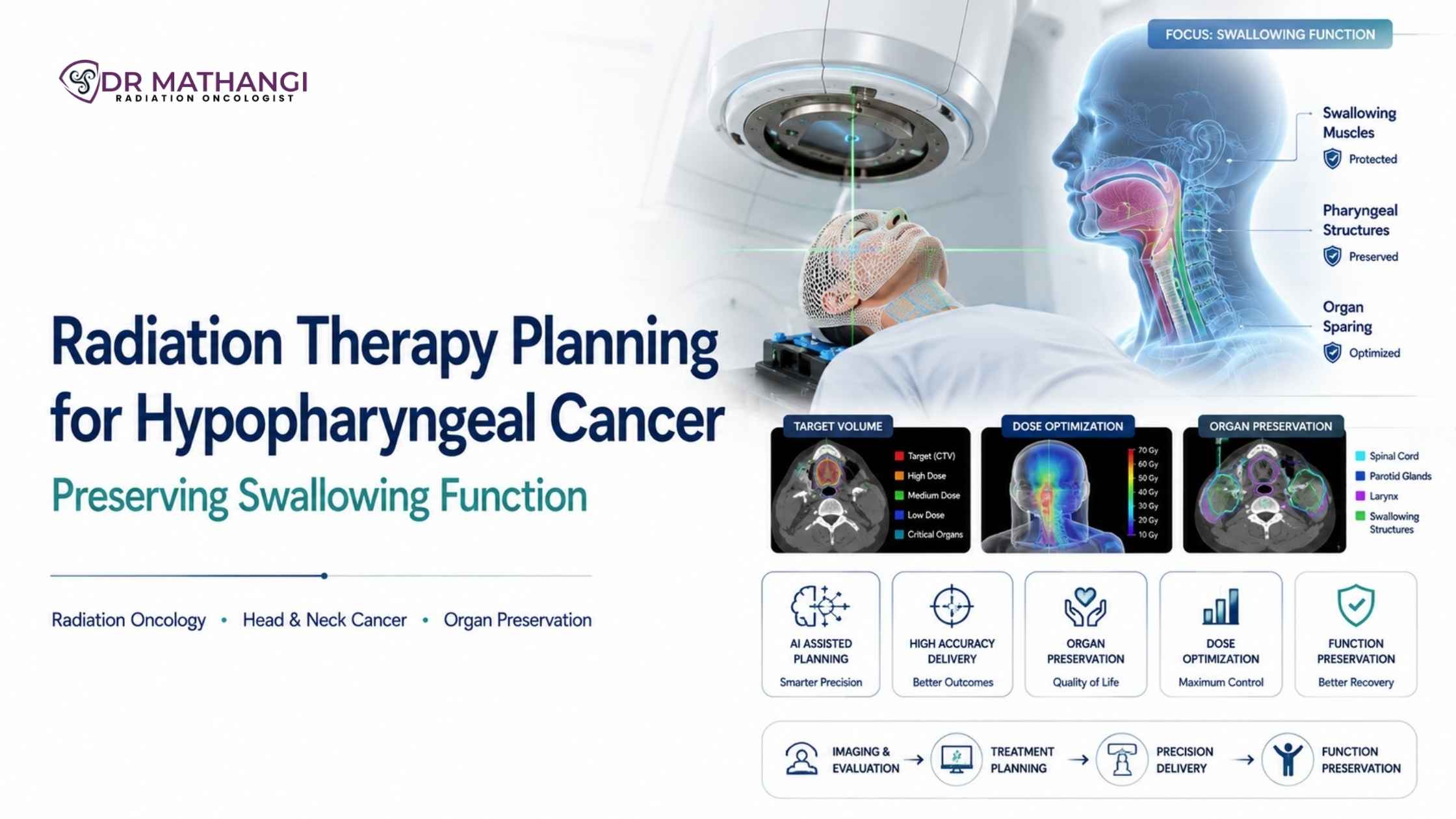
Radiation therapy planning for hypopharyngeal cancer is a sophisticated process that aims to precisely target malignant tissues while minimizing the impact on critical structures involved in swallowing. According to global cancer statistics, hypopharyngeal cancers account for approximately 3-5% of all head and neck cancers, but their management is particularly challenging due to their proximity to the swallowing apparatus and the high risk of functional impairment.
At Gleneagles Cancer Institute in Bangalore, Dr Mathangi J stands at the forefront of radiation therapy for throat cancer with a patient-centered approach that prioritizes both tumor control and quality of life. Patients who undergo expertly planned therapy enjoy better outcomes, including preserved swallowing function and reduced long-term complications.
How Is Hypopharyngeal Carcinoma Radiotherapy Structured To Maximize Benefits?
Hypopharyngeal carcinoma radiotherapy must navigate the delicate balance between eradicating cancer and safeguarding vital anatomical structures. The hypopharynx is surrounded by muscles and nerves essential for swallowing and speech, making precision in therapy delivery crucial.
- Advanced Imaging and Target Delineation: Using state-of-the-art imaging technologies, Dr Mathangi maps out tumor boundaries and critical neighboring structures in 3D, ensuring only the tumor receives the high dose of radiation.
- Customized Dose Distribution: By tailoring the radiation dose, Dr Mathangi minimizes exposure to the swallowing and voice mechanisms, reducing the risk of treatment-related complications.
- Continuous Monitoring: Throughout the course of therapy, regular imaging and clinical assessment ensure that any changes in anatomy or tumor size are quickly addressed.
This meticulous approach is especially valuable for patients seeking functional preservation post-treatment.
What Is Swallowing Apparatus Sparing And Why Does It Matter?
Swallowing apparatus sparing refers to the intentional reduction of radiation dose to muscles and nerves critical for swallowing, such as the pharyngeal constrictor muscles. Preserving these structures is vital for maintaining the ability to eat and drink normally after treatment.
- Reduction in Dysphagia: Sparing the swallowing apparatus significantly decreases the risk of dysphagia prevention, a common complication where patients experience difficulty swallowing.
- Improved Quality of Life: Patients are more likely to retain natural eating and speaking abilities, avoiding the need for feeding tubes or long-term dietary restrictions.
Dr Mathangi is a pioneer in incorporating advanced techniques to achieve optimal swallowing apparatus sparing in every treatment plan.
How Does Dysphagia Prevention Fit Into Radiation Therapy For Throat Cancer?
Dysphagia prevention is one of the cornerstones of modern radiation therapy for throat cancer. Dysphagia, or difficulty swallowing, is not just a side effect but a potential life-altering complication that can lead to malnutrition, aspiration pneumonia, and diminished quality of life.
- Targeted Therapy: By limiting radiation exposure to the pharyngeal constrictor muscles and other swallowing-related structures, Dr Mathangi minimizes the incidence of acute and chronic dysphagia.
- Rehabilitation Integration: Early involvement of speech and swallowing therapists ensures that patients receive timely exercises and interventions, further reducing the risk.
Dr Mathangi’s approach integrates proactive dysphagia prevention into every phase of the treatment journey.
What Role Do Pharyngeal Constrictor Muscles Play In Radiation Therapy Planning?
The pharyngeal constrictor muscles are a group of muscles that form the muscular wall of the pharynx and are essential for initiating the swallowing reflex. Sparing these muscles during radiation is crucial for reducing post-treatment swallowing difficulties.
| Aspect | Without Sparing | With Sparing |
|---|---|---|
| Swallowing Function | Significantly impaired | Typically preserved |
| Risk of Dysphagia | High | Low |
| Quality of Life | Reduced | Maintained |
Dr Mathangi’s precision targeting ensures that these muscles are protected as much as possible, highlighting her commitment to functional preservation.
Why Is Laryngeal Preservation Important In Hypopharyngeal Cancer?
Laryngeal preservation is a key goal in the management of hypopharyngeal cancer. The larynx, or voice box, is not only vital for speech but also for preventing aspiration during swallowing.
- Functional Outcomes: Saving the larynx allows patients to retain their natural voice and avoid permanent tracheostomy.
- Holistic Well-being: Preserving the larynx reduces psychological distress and helps patients reintegrate into society.
Through advanced IMRT planning, Dr Mathangi maximizes tumor control while prioritizing laryngeal preservation, ensuring the best possible balance between cure and quality of life.
How Does IMRT Planning Transform Radiation Therapy For Throat Cancer?
IMRT planning—Intensity-Modulated Radiation Therapy—is a revolutionary technology that allows radiation beams to be shaped and modulated with extraordinary precision. This means the cancer gets the full prescribed dose, while critical structures receive minimal exposure.
- Precision and Personalization: IMRT allows for highly personalized treatment, adjusting beam angles and intensity to the patient’s unique anatomy.
- Reduced Side Effects: By sparing healthy tissues, IMRT reduces the risk of both short- and long-term complications, such as dysphagia and voice changes.
- Proven Outcomes: Clinical studies show that IMRT significantly improves both tumor control and post-treatment quality of life in head and neck cancers.
Dr Mathangi’s expertise in IMRT planning, honed over two decades and 12,000+ patients, places her among the most sought-after specialists for complex head and neck cancers in South India.
Why Choose Dr Mathangi For Radiation Therapy Planning In Hypopharyngeal Cancer?
When it comes to radiation therapy for throat cancer, experience and expertise make all the difference. Dr Mathangi J, Senior Consultant and In-charge of Radiation Oncology at Gleneagles Cancer Institute, Bangalore, is renowned for her pioneering work in advanced radiotherapy techniques.
- Over 20 years of dedicated experience
- 12,000+ patients successfully treated
- Expert in stereotactic techniques, IGRT, RapidArc, and interstitial brachytherapy
- Asia Pacific’s first TrueBeam STx installation under her leadership
- Director of Fellowship in Advanced Radiotherapy Techniques (RGUHS)
Her commitment to swallowing apparatus sparing and dysphagia prevention ensures that patients not only survive but thrive after treatment. If you want the best chance at preserving your swallowing function and voice, entrusting your care to Dr Mathangi is a decision you won’t regret.
What Are The Next Steps For Patients Seeking Expert Care?
If you or a loved one is facing hypopharyngeal cancer or another head and neck malignancy, timely and specialized care is crucial for the best outcomes. Here’s how to get started:
- Submit Your Details: Visit this contact form and submit your contact information.
- Appointment Scheduling: Dr Mathangi’s team will promptly coordinate your appointment and notify you with all the details.
- Comprehensive Evaluation: Undergo a thorough assessment and receive a personalized treatment plan.
- Begin Your Journey: Start your path to recovery with the assurance of world-class care and unwavering support.
Don’t miss the opportunity to safeguard your quality of life—book your appointment with Dr Mathangi today!
About Dr Mathangi
Dr Mathangi J is a Senior Radiation Oncologist and In-charge of Radiation Oncology at Gleneagles Cancer Institute, Bangalore. With prestigious qualifications (MBBS, DMRT, DNB) and international training in advanced radiation techniques from Germany and Denmark, she is recognized as a leader in head and neck cancer treatment. Her expertise spans stereotactic ablative radiotherapy, gated RapidArc, DIBH gated radiotherapy, and image-guided interstitial brachytherapy. She is the Director of the Fellowship in Advanced Radiotherapy Techniques at RGUHS and has been instrumental in bringing cutting-edge technology like the TrueBeam STx to the Asia Pacific region.
Gleneagles Cancer Institute, part of Gleneagles Hospitals, is a center of excellence in cancer care, renowned for its holistic approach and patient-centric philosophy.
Frequently Asked Questions
What is the significance of swallowing apparatus sparing in radiation therapy for throat cancer?
Swallowing apparatus sparing refers to advanced planning techniques that minimize radiation dose to critical swallowing structures such as the pharyngeal constrictor muscles and larynx. This approach is especially important in radiation therapy for throat cancer, as it helps reduce the risk of dysphagia and maintains quality of life. Dr. Mathangi uses precise contouring and modern radiotherapy methods to prioritize these structures during treatment planning.
How does hypopharyngeal carcinoma radiotherapy impact swallowing function?
Hypopharyngeal carcinoma radiotherapy can unintentionally damage the muscles and nerves responsible for swallowing, leading to difficulties such as aspiration and persistent swallowing problems. Dr. Mathangi’s approach involves detailed mapping and targeted treatment to reduce the dose to the swallowing apparatus, thereby helping to preserve normal swallowing function as much as possible.
What steps are taken during IMRT planning to prevent dysphagia?
IMRT planning (Intensity-Modulated Radiation Therapy) allows for highly conformal dose distribution. During planning, Dr. Mathangi identifies and outlines the pharyngeal constrictor muscles and other critical swallowing structures. By applying strict dose constraints to these areas, she minimizes their exposure, actively supporting dysphagia prevention and improving post-treatment swallowing outcomes.
Why are the pharyngeal constrictor muscles important in treatment planning?
The pharyngeal constrictor muscles play a vital role in the act of swallowing. If exposed to high radiation doses, these muscles can become stiff or weak, leading to swallowing difficulties. Dr. Mathangi meticulously contours these muscles during planning and aims to keep their radiation dose as low as safely possible, which is a cornerstone of her patient-centered technique.
How does Dr. Mathangi achieve laryngeal preservation during radiation therapy?
Laryngeal preservation is a major goal in treating hypopharyngeal cancers. Dr. Mathangi leverages advanced imaging and IMRT technology to accurately target the tumor while sparing the larynx from high radiation doses. This approach not only helps maintain voice and breathing functions but also supports better long-term swallowing outcomes.
What is dysphagia prevention and how is it integrated into Dr. Mathangi’s protocols?
Dysphagia prevention is the proactive effort to avoid or minimize swallowing difficulties after radiation therapy. In Dr. Mathangi’s protocols, this means early identification of at-risk structures, detailed IMRT planning, and collaboration with speech and swallowing therapists before, during, and after treatment. This multi-disciplinary strategy leads to better functional outcomes for patients.
Are there specific solutions offered by Dr. Mathangi for patients with pre-existing swallowing issues?
Yes, Dr. Mathangi tailors treatment for patients with pre-existing swallowing difficulties. She collaborates closely with rehabilitation specialists and employs swallowing apparatus sparing approaches. By customizing radiation fields and leveraging advanced planning, she aims to stabilize or even improve swallowing function throughout the treatment journey.
How does swallowing apparatus sparing affect long-term quality of life?
Swallowing apparatus sparing has a profound impact on long-term quality of life. By reducing the radiation dose to the muscles and structures involved in swallowing, Dr. Mathangi’s approach minimizes the risk of chronic swallowing difficulties, feeding tube dependence, and aspiration pneumonia. This enables patients to maintain more normal eating and social interactions after treatment.
What makes Dr. Mathangi’s approach to radiation therapy for throat cancer unique?
Dr. Mathangi combines expertise in hypopharyngeal carcinoma radiotherapy with a passionate focus on functional preservation. Her use of IMRT planning, swallowing apparatus sparing, and multi-disciplinary care allows for effective tumor control while prioritizing swallowing and laryngeal preservation. Patients benefit from both cutting-edge technology and individualized support throughout their treatment.