Lymphoma vs Leukemia: Key Differences Explained
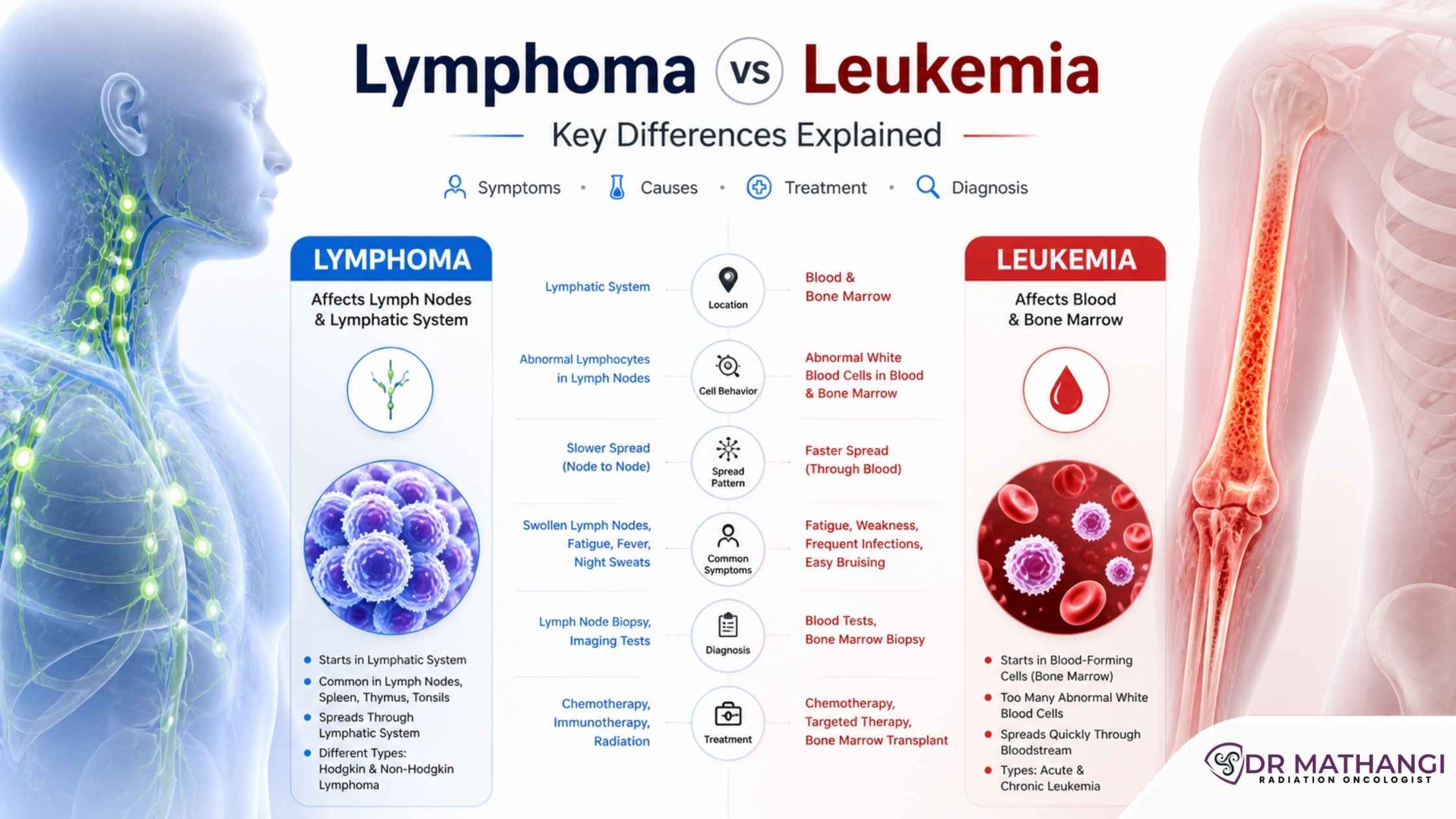
Blood cancers account for nearly 10% of all cancer diagnoses worldwide, making the topic of leukemia vs lymphoma more critical than ever for early detection and effective treatment. Yet, many patients remain confused about how these two major blood cancer types differ—and that confusion can delay life-saving care.
At the forefront of advanced cancer treatment, Dr Mathangi, Senior Consultant and In-charge of Radiation Oncology at Gleneagles Cancer Institute, Bangalore, brings over two decades of expertise and more than 12,000 successfully treated cases. Her approach combines precision, advanced radiotherapy technologies, and deeply personalized care—ensuring that patients receive not just treatment, but the right treatment at the right time.
What is leukemia vs lymphoma?
Leukemia vs lymphoma refers to a cancer comparison between two major categories of hematologic malignancies. Leukemia originates in the bone marrow and affects blood-forming cells, while lymphoma begins in the lymphatic system, impacting immune function and lymph nodes.
Understanding this distinction is crucial because although both fall under blood cancer types, their behavior, symptoms, and treatment approaches differ significantly. Ignoring these differences can lead to delayed diagnosis, incorrect assumptions, and missed opportunities for early intervention.
What are blood cancer types and where do these fit?
Blood cancer types broadly include leukemia, lymphoma, and myeloma. Among these, leukemia and lymphatic cancer (lymphoma) are the most commonly discussed due to their prevalence and overlapping symptoms.
- Leukemia: Affects blood and bone marrow
- Lymphoma: Affects lymph nodes and lymphatic system
- Myeloma: Affects plasma cells
This classification helps clinicians like Dr Mathangi tailor treatment strategies based on disease origin and progression patterns.
How does lymphoma differ from leukemia in origin?
The key difference in leukemia vs lymphoma lies in where the cancer starts. Leukemia begins in the bone marrow, leading to abnormal white blood cell production. In contrast, lymphatic cancer originates in the lymphatic system, affecting lymph nodes, spleen, and immune pathways.
In rare cases, patients may even encounter complex presentations such as llymphoma, highlighting the importance of expert diagnosis and precise classification.
What are the symptoms of leukemia vs lymphoma?
Symptoms often overlap, which is why professional evaluation is essential. However, there are distinguishing signs that can guide early suspicion.
Common leukemia symptoms
- Frequent infections
- Fatigue and weakness
- Easy bruising or bleeding
- Bone pain
Common lymphoma symptoms
- Swollen lymph nodes
- Night sweats
- Unexplained weight loss
- Persistent fever
Because these symptoms can be subtle or mistaken for other conditions, early consultation with a specialist like Dr Mathangi becomes critical.
How is chronic lymphocytic leukemia icd 10 classified?
Chronic lymphocytic leukemia icd 10 falls under a specific medical classification system used globally for diagnosis and treatment planning. It represents a slow-growing leukemia that primarily affects older adults and requires careful monitoring and personalized therapy.
Accurate classification ensures that patients receive the most appropriate care pathway—something that Dr Mathangi emphasizes through advanced diagnostic protocols.
What diagnostic tests differentiate leukemia and lymphoma?
A precise cancer comparison requires a combination of advanced diagnostic tools:
- Blood tests and complete blood count (CBC)
- Bone marrow biopsy
- Lymph node biopsy
- Imaging (CT, PET scans)
- Molecular and genetic testing
At Gleneagles Cancer Institute, these diagnostics are integrated seamlessly to ensure no delay in treatment initiation.
How are hematologic malignancies treated?
Treatment varies depending on whether the diagnosis is leukemia or lymphoma. However, modern oncology has evolved to offer highly targeted and effective solutions.
Dr Mathangi specializes in advanced radiation oncology techniques including:
- Stereotactic ablative body radiotherapy (SBRT)
- Gated RapidArc technology
- DIBH gated Radiotherapy
- Image-guided interstitial brachytherapy
These technologies allow for:
- Higher precision targeting of cancer cells
- Reduced damage to surrounding healthy tissues
- Shorter treatment durations
- Improved patient outcomes
Why early cancer comparison matters for survival?
One of the biggest problems patients face is delaying medical consultation due to confusion around leukemia vs lymphoma. This delay can allow cancer to progress silently.
The reality is:
- Early-stage detection dramatically improves survival rates
- Advanced treatment options are more effective when started early
- Personalized therapy becomes more precise with early diagnosis
This is where choosing the right oncologist becomes a decisive factor.
What cancers can be treated with radiation therapy?
Radiation therapy plays a vital role in treating multiple cancers, including:
- Head and neck cancers
- Brain tumors
- Spine tumors
- Esophagus and rectal cancers
- Lung cancers
- Liver cancers
- Breast cancers
- Bladder cancers
- Prostate cancers
- Uterine cancers
- Cervical cancer
- Vulval cancers
- Anal canal cancers
- Penile cancers
Dr Mathangi’s expertise ensures that radiation therapy is not just administered—but optimized for each individual patient.
Why choose Dr Mathangi for lymphoma and leukemia care?
Dr Mathangi is a Senior Radiation Oncologist based in Bangalore, specializing in advanced cancer care with a focus on precision radiotherapy. With international training from Germany and Denmark, and leadership at Gleneagles Cancer Institute, she offers unmatched expertise in treating complex hematologic malignancies.
Her achievements include installing the Asia Pacific’s first TrueBeam STx Machine—bringing world-class technology closer to patients in India.
Patients who delay choosing the right specialist often miss out on:
- Access to advanced technologies
- Personalized treatment planning
- Better survival outcomes
- Comprehensive care coordination
This is not just treatment—it is an opportunity to take control of your health before the disease progresses further.
How to book an appointment with Dr Mathangi?
Taking the first step toward accurate diagnosis and effective treatment is simple. Patients can submit their details through the official contact form:
https://drmathangi.com/contact/
Once submitted, her team will promptly schedule an appointment and guide you through the next steps.
About Dr Mathangi
Dr Mathangi J is a Senior Consultant and In-charge of Radiation Oncology with over 20 years of experience. She has successfully treated more than 12,000 patients and is recognized for her expertise in cutting-edge radiotherapy techniques.
She completed her MBBS, DMRT, and DNB, with advanced international training in SRS/SBRT, IGRT, RapidArc, and intraoperative radiotherapy. She currently heads the radiation oncology department and serves as Director of Fellowship in Advanced Radiotherapy techniques.
Her specialization includes:
- Head and neck cancers
- Brain tumors
- Lung cancers
- Prostate cancers
- Women cancers (breast, cervix, endometrium)
Her commitment is not just to treat cancer—but to transform outcomes with precision, compassion, and innovation.
Frequently Asked Questions
What is the main difference in leukemia vs lymphoma?
The primary distinction in leukemia vs lymphoma lies in where the cancer originates. Leukemia begins in the bone marrow and affects blood cells, while lymphoma develops in the lymphatic system, particularly lymph nodes. Both are classified under blood cancer types, but their progression, symptoms, and treatment pathways differ significantly.
Is lymphoma considered a type of blood cancer?
Yes, lymphoma is one of the major blood cancer types. It specifically affects the lymphatic system and is often referred to as lymphatic cancer. This condition impacts immune cells called lymphocytes, which play a vital role in fighting infections.
What does chronic lymphocytic leukemia icd 10 mean?
The term chronic lymphocytic leukemia icd 10 refers to the standardized medical classification used for diagnosing and coding this specific type of leukemia. It helps healthcare providers maintain accurate records, streamline insurance processes, and ensure consistent diagnosis across healthcare systems.
How are hematologic malignancies diagnosed?
Hematologic malignancies are diagnosed using a combination of blood tests, bone marrow biopsies, imaging scans, and sometimes lymph node biopsies. Early and accurate diagnosis is crucial for determining whether a patient has leukemia, lymphoma, or another form of cancer.
What symptoms should I watch for in lymphatic cancer?
Common symptoms of lymphatic cancer include swollen lymph nodes, unexplained weight loss, night sweats, fatigue, and persistent fever. Recognizing these early signs can help in timely diagnosis and effective treatment.
How does Dr. Mathangi approach cancer comparison and treatment planning?
Dr. Mathangi uses a comprehensive cancer comparison approach to evaluate each patient’s condition. By carefully distinguishing between leukemia vs lymphoma and other hematologic malignancies, she designs personalized treatment plans that may include chemotherapy, targeted therapy, or immunotherapy based on the patient’s specific diagnosis.
Can lymphoma and leukemia be treated successfully?
Yes, many cases of lymphoma and leukemia can be treated effectively, especially when diagnosed early. Advances in medical science have significantly improved outcomes for patients with various blood cancer types, making long-term remission and even cure possible in some cases.
When should I consult Dr. Mathangi for blood cancer concerns?
If you experience persistent symptoms such as fatigue, abnormal bleeding, or swollen lymph nodes, it is advisable to consult Dr. Mathangi. Early evaluation helps identify conditions like lymphoma or leukemia and ensures timely intervention for better outcomes.