Ovarian & Endometrial Carcinoma: Types, Diagnosis & Staging
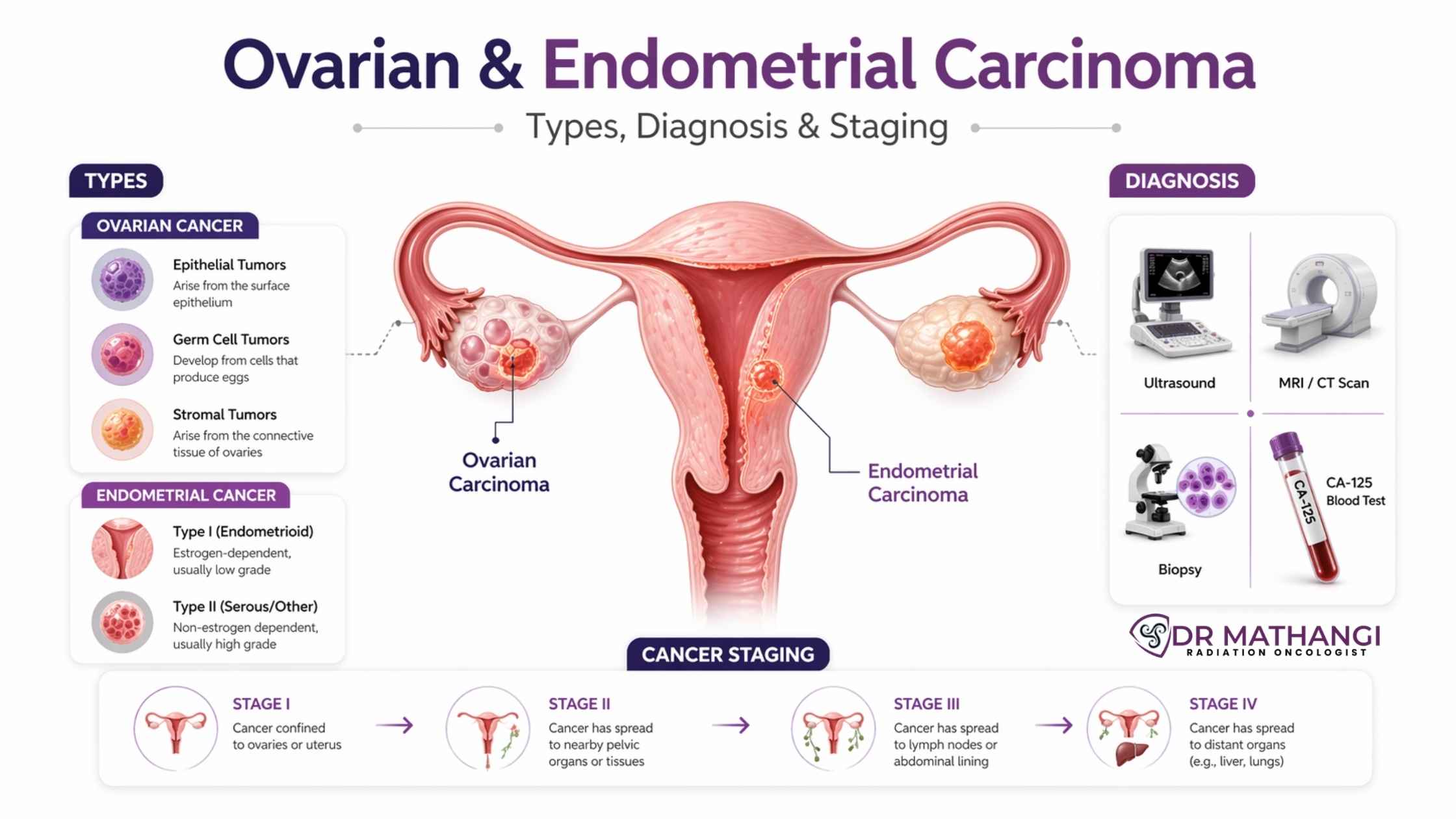
Ovarian and endometrial cancers are among the most significant gynecologic malignancies affecting women worldwide. According to global cancer statistics, ovarian cancer alone accounts for over 300,000 new cases annually, while endometrial carcinoma continues to rise steadily due to lifestyle and hormonal factors. Early detection and expert-led treatment can dramatically improve survival outcomes—yet many patients miss timely care due to lack of awareness.
This is where the expertise of Dr Mathangi J, Senior Consultant & In-charge of Radiation Oncology at Gleneagles Cancer Institute, becomes crucial. With over 20 years of experience and more than 12,000 successfully treated patients, she offers advanced, evidence-based care tailored to each patient’s condition.
What are ovarian and endometrial carcinomas?
Ovarian carcinoma originates in the ovaries, while carcinoma endometrium develops in the inner lining of the uterus. Both cancers may present with subtle or nonspecific symptoms, making early diagnosis challenging but critical.
- Ovarian carcinoma: Often diagnosed at advanced stages due to vague symptoms.
- Carcinoma endometrium: Frequently detected earlier due to abnormal uterine bleeding.
Why early diagnosis of gynecologic cancers is critical?
Delayed diagnosis can significantly reduce treatment success. Many women ignore early warning signs, assuming them to be minor hormonal changes. However, this delay allows the cancer to progress.
Problem: Lack of awareness and delayed medical consultation.
Agitation: Progression to advanced stages requiring aggressive treatment.
Solution: Early screening, accurate diagnosis, and expert intervention by specialists like Dr Mathangi.
What are the main types of ovarian carcinoma?
Ovarian cancers are classified based on histological subtypes. Understanding these types is essential for precise treatment planning.
1. Epithelial ovarian cancers
- high grade serous carcinoma ovary pathology outlines
- mucinous carcinoma ovary pathology outlines
- clear cell carcinoma ovary pathology outlines
High grade serous carcinoma is the most common and aggressive subtype. It often presents at an advanced stage and requires a combination of surgery and advanced radiotherapy.
Mucinous carcinoma tends to grow larger but may remain localized longer.
Clear cell carcinoma is less common but known for resistance to certain treatments, making specialized care essential.
2. Germ cell tumors
These arise from egg-producing cells and are more common in younger women.
3. Stromal tumors
These develop from connective tissue cells and may produce hormones.
What are the types of endometrial carcinoma?
Carcinoma endometrium is broadly classified into:
- Type I (Endometrioid): Estrogen-dependent, better prognosis
- Type II (Non-endometrioid): More aggressive, includes serous and clear cell variants
Accurate classification helps determine the most effective treatment strategy.
How is ovarian tumor imaging performed?
Ovarian tumor imaging plays a vital role in diagnosis and staging. It helps detect tumor size, spread, and involvement of surrounding structures.
- Ultrasound (first-line screening tool)
- CT scans for detailed anatomical assessment
- MRI for soft tissue evaluation
- PET scans for detecting metastasis
Advanced imaging techniques used under expert supervision ensure precise diagnosis, reducing unnecessary interventions.
What are the key diagnostic methods?
Diagnosis involves a combination of clinical evaluation, imaging, and laboratory tests:
- Detailed medical history and physical examination
- Blood tests including tumor markers (CA-125)
- Biopsy for histopathological confirmation
- Ovarian tumor imaging for accurate assessment
Dr Mathangi integrates advanced diagnostic protocols to ensure early and accurate detection.
What is gynecologic cancer staging and why is it important?
Gynecologic cancer staging determines the extent of cancer spread and guides treatment decisions.
| Stage | Description |
|---|---|
| Stage I | Confined to ovaries or uterus |
| Stage II | Spread within pelvis |
| Stage III | Spread to abdominal lining or lymph nodes |
| Stage IV | Distant metastasis |
Accurate gynecologic cancer staging ensures that patients receive the most appropriate treatment—whether surgery, chemotherapy, or radiation therapy.
How does radiation therapy help in treatment?
Radiation therapy plays a crucial role, especially in:
- Post-surgical treatment to eliminate residual cancer cells
- Advanced-stage disease management
- Palliative care to relieve symptoms
Dr Mathangi specializes in advanced techniques such as:
- Stereotactic Ablative Body Radiotherapy (SBRT)
- Image-Guided Radiotherapy (IGRT)
- RapidArc Technology
- Interstitial Brachytherapy
These cutting-edge methods ensure precision targeting while minimizing damage to healthy tissues.
What makes Dr Mathangi the right choice?
Choosing the right oncologist can significantly impact treatment outcomes. Dr Mathangi stands out due to:
- 20+ years of experience in radiation oncology
- Expertise in treating women cancers including carcinoma endometrium
- Training from leading global institutions in Germany and Denmark
- Leadership in advanced radiotherapy techniques
- Over 12,000 successful patient treatments
Her patient-centric approach ensures compassionate care combined with clinical excellence.
How to book an appointment?
Delaying treatment can reduce your chances of recovery. Take action today.
To consult Dr Mathangi, submit your details through the contact form:
https://drmathangi.com/contact/
Her team will promptly schedule your appointment and guide you through the next steps.
About Dr Mathangi
Dr Mathangi J is a Senior Radiation Oncologist and In-charge at Gleneagles Cancer Institute, Bangalore. She holds MBBS, DMRT, and DNB qualifications and has undergone advanced international training in stereotactic and image-guided radiotherapy techniques. She is recognized for installing Asia Pacific’s first TrueBeam STx Machine and leads fellowship programs in advanced radiotherapy.
Her expertise spans multiple cancers including head and neck, lung, prostate, and women cancers such as ovarian and endometrial carcinoma.
Frequently Asked Questions
What are the main types of ovarian carcinoma?
Ovarian carcinoma includes several histological subtypes, each with distinct biological behavior. The most common is high grade serous carcinoma ovary pathology outlines, followed by mucinous carcinoma ovary pathology outlines and clear cell carcinoma ovary pathology outlines. These subtypes differ in their origin, molecular profile, response to treatment, and prognosis, which is why accurate classification by a specialist like Dr. Mathangi is essential for personalized care.
How is carcinoma endometrium diagnosed?
Carcinoma endometrium is typically diagnosed through a combination of clinical evaluation, transvaginal ultrasound, and endometrial biopsy. In some cases, hysteroscopy may be recommended to directly visualize the uterine cavity. Dr. Mathangi ensures a precise and minimally invasive diagnostic approach, allowing for early detection and improved treatment outcomes.
What role does ovarian tumor imaging play in diagnosis?
Ovarian tumor imaging is a critical step in evaluating suspected ovarian masses. Techniques such as ultrasound, CT scans, and MRI help determine the size, structure, and spread of the tumor. Advanced ovarian tumor imaging also aids in distinguishing benign from malignant lesions and guides surgical planning under expert care.
What is gynecologic cancer staging and why is it important?
Gynecologic cancer staging refers to determining how far the cancer has spread within the body. It involves surgical findings, imaging, and pathology reports. Proper gynecologic cancer staging is crucial because it directly influences treatment decisions, including surgery, chemotherapy, or radiation therapy. Dr. Mathangi follows internationally accepted staging protocols to ensure optimal treatment planning.
How are different ovarian cancer subtypes treated?
Treatment depends on the subtype and stage of the cancer. For example, high grade serous carcinoma ovary pathology outlines often requires aggressive surgery and chemotherapy, while mucinous carcinoma ovary pathology outlines may need tailored surgical approaches. Clear cell carcinoma ovary pathology outlines can be more resistant to conventional therapies, requiring specialized management strategies under expert supervision.
What symptoms should prompt evaluation for endometrial cancer?
The most common symptom of carcinoma endometrium is abnormal uterine bleeding, especially after menopause. Other signs may include pelvic pain or unusual discharge. Early evaluation by a specialist like Dr. Mathangi can lead to prompt diagnosis and significantly better outcomes.
How does Dr. Mathangi approach personalized cancer care?
Dr. Mathangi adopts a patient-centric approach that integrates advanced diagnostics, accurate gynecologic cancer staging, and evidence-based treatments. Each patient receives a customized care plan based on tumor type, stage, and overall health, ensuring the best possible outcomes with compassionate support throughout the journey.
Can early detection improve survival in ovarian and endometrial cancers?
Yes, early detection significantly improves survival rates. Timely ovarian tumor imaging and evaluation of symptoms related to carcinoma endometrium allow for diagnosis at earlier stages. With expert intervention from Dr. Mathangi, patients can benefit from less aggressive treatments and better long-term outcomes.