Pencil Beam Scanning Benefits vs Proton Therapy
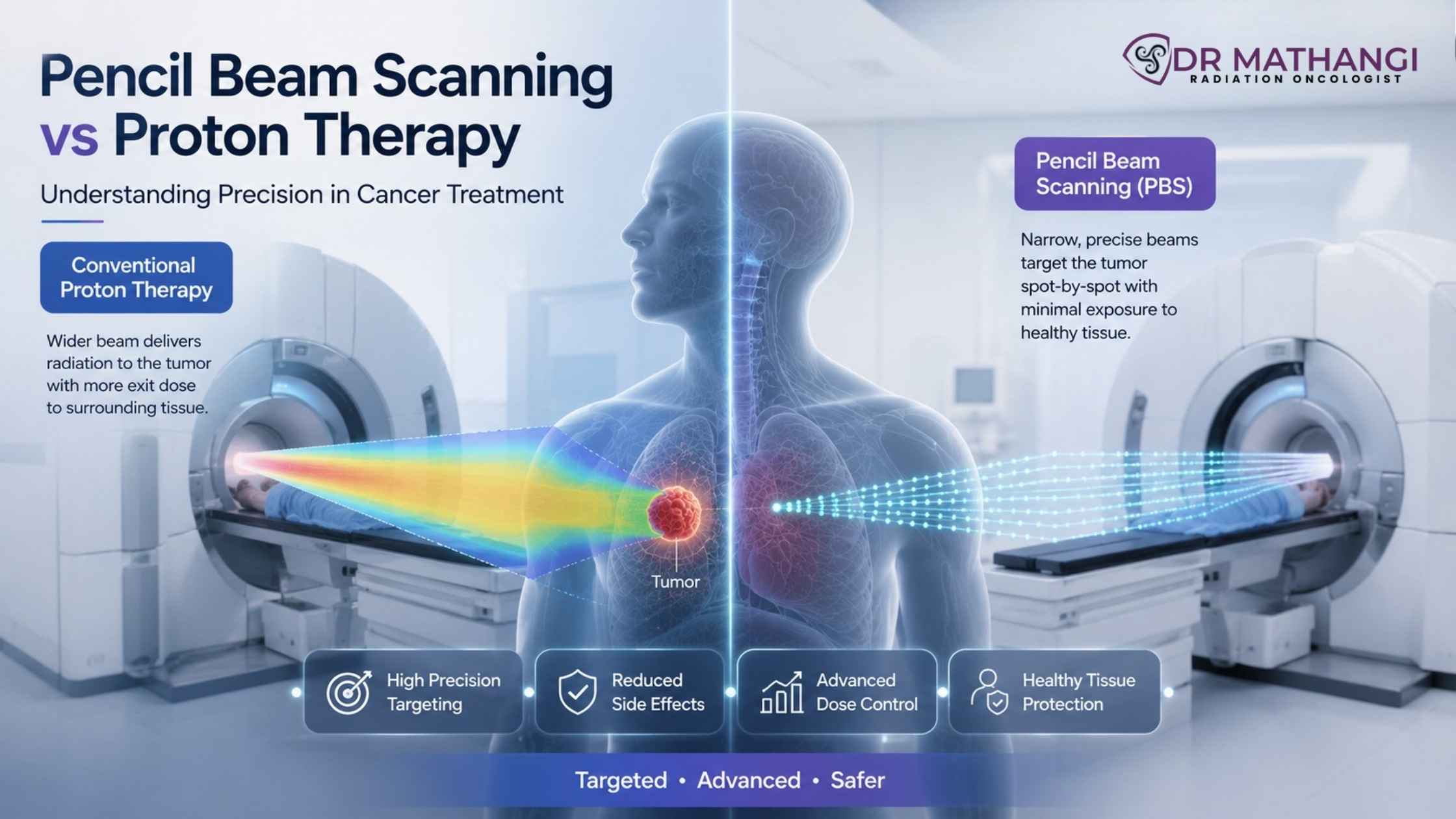
Modern oncology has seen a dramatic evolution, with studies showing that precision-based radiation like Pencil Beam Scanning Benefits can reduce unnecessary radiation exposure to surrounding tissues by up to 60% compared to older techniques. This shift is transforming how cancers are treated—making outcomes safer, faster, and more effective.
If you are evaluating proton therapy vs PBS, understanding the real differences could directly influence treatment success, side effects, and recovery time. Under the expert guidance of Dr Mathangi J, patients receive access to cutting-edge care rooted in decades of experience and globally trained expertise.
What is pencil beam scanning and how does it work?
Pencil Beam Scanning (PBS) is an advanced form of proton therapy that delivers radiation in highly controlled, thin beams. Instead of exposing a broad area, it “paints” the tumor layer by layer with pinpoint accuracy.
- Uses magnetic scanning to guide proton beams
- Targets tumor cells with sub-millimeter precision
- Minimizes exposure to surrounding healthy tissues
- Adapts dynamically to tumor shape and size
This approach is one of the most refined advanced radiotherapy techniques available today, enabling clinicians to treat even complex tumors near critical organs.
What is proton therapy and how is PBS different?
Proton therapy is a type of radiation that uses charged particles (protons) instead of X-rays. While traditional proton therapy already offers improved targeting, PBS takes it a step further.
| Feature | Conventional Proton Therapy | Pencil Beam Scanning |
|---|---|---|
| Delivery Method | Broad beam | Focused beam scanning |
| Precision | High | Ultra-high |
| Healthy Tissue Sparing | Moderate | Maximum |
| Tumor Conformity | Limited | Highly adaptive |
This radiation precision comparison highlights why PBS is rapidly becoming the preferred option in advanced cancer care centers.
Why is precision critical in radiation therapy?
Precision is not just a technical feature—it directly impacts patient outcomes. Inaccurate radiation can damage healthy tissues, leading to complications, prolonged recovery, and reduced quality of life.
With PBS:
- Side effects are significantly reduced
- Higher radiation doses can be safely delivered to tumors
- Critical organs like brain, heart, and lungs are protected
- Recovery time is shorter
This is especially crucial in cancers such as brain tumors, prostate cancer, lung cancer, and head and neck cancers—areas where Dr Mathangi specializes.
Which cancers benefit the most from pencil beam scanning?
PBS is particularly effective for tumors located near sensitive structures. According to clinical practice, it is highly beneficial in:
- Brain tumors
- Head and neck cancers
- Lung cancers
- Prostate cancers
- Breast cancers
- Cervical and uterine cancers
- Liver cancers
- Bladder cancers
These cancers require precise targeting, making Pencil Beam Scanning Benefits clinically significant.
How does proton therapy vs PBS impact side effects?
When comparing proton therapy vs PBS, one of the most important considerations is side effects.
- PBS reduces radiation spillover
- Lower risk of long-term complications
- Reduced fatigue and tissue damage
- Better preservation of organ function
Patients often underestimate how much side effects influence overall treatment experience. Choosing a more precise option like PBS can dramatically improve quality of life during and after treatment.
Why choose advanced radiotherapy techniques under expert care?
Technology alone does not guarantee results. The expertise of the oncologist plays a decisive role in treatment success.
Dr Mathangi J brings over 20 years of experience and has successfully treated more than 12,000 patients. She has received advanced training from global institutions such as:
- Klinikum Frankfurt (Oder), Germany
- Copenhagen University Hospital, Denmark
- Apollo Cancer Specialty Hospital, Chennai
Her leadership at Gleneagles Cancer Institute ensures patients receive world-class care using technologies like TrueBeam STx and image-guided therapies.
What makes PBS superior in radiation precision comparison?
The biggest advantage of PBS lies in its ability to deliver radiation exactly where it is needed—no more, no less.
- Sub-millimeter accuracy
- Layer-by-layer tumor targeting
- Reduced radiation dose to healthy tissues
- Adaptive planning for tumor changes
In any radiation precision comparison, PBS consistently outperforms conventional methods, particularly for complex cases.
What are patients missing by not choosing PBS?
Many patients are unaware that more precise options exist. Choosing conventional radiation without exploring PBS can mean:
- Higher risk of side effects
- Less targeted treatment
- Longer recovery periods
- Potential compromise in outcomes
How to get started with treatment under Dr Mathangi?
Taking the first step is simple. Patients can share their details via the official consultation form:
https://drmathangi.com/contact/
Once submitted, her team will review the case and schedule a personalized consultation.
About Dr Mathangi
Dr Mathangi J is a Senior Consultant and In-charge of Radiation Oncology with over two decades of experience. She specializes in cutting-edge advanced radiotherapy techniques, including SBRT, IGRT, RapidArc, and brachytherapy.
Her expertise spans:
- Head and neck cancers
- Brain tumors
- Lung cancers
- Prostate cancers
- Women cancers (breast, cervix, endometrium)
She is also known for installing the Asia Pacific’s first TrueBeam STx system, reinforcing her commitment to innovation and patient-centric care.
Frequently Asked Questions
What are Pencil Beam Scanning Benefits in modern cancer treatment?
Pencil Beam Scanning Benefits include highly targeted radiation delivery that minimizes exposure to surrounding healthy tissues. This technique allows radiation oncologists like Dr. Mathangi to sculpt the dose precisely to match tumor shape, which is especially useful for complex or sensitive tumor locations. It also reduces side effects and supports faster recovery for patients.
How does proton therapy vs PBS differ in clinical outcomes?
When comparing proton therapy vs PBS, it’s important to understand that Pencil Beam Scanning is an advanced form of proton therapy. While traditional proton therapy delivers radiation in broader beams, PBS uses a narrow beam to "paint" the tumor layer by layer. Dr. Mathangi uses this distinction to customize treatment plans based on tumor type, location, and patient needs for better precision and outcomes.
Why is radiation precision comparison important for cancer patients?
A radiation precision comparison helps determine how accurately a treatment targets cancer cells while sparing healthy tissue. Techniques like PBS outperform conventional methods in this aspect. Dr. Mathangi emphasizes precision because it directly impacts treatment effectiveness, side effects, and long-term patient quality of life.
What makes advanced radiotherapy techniques better than traditional radiation?
Advanced radiotherapy techniques such as Pencil Beam Scanning provide superior targeting, adaptability, and reduced toxicity compared to older radiation methods. These innovations allow doctors like Dr. Mathangi to deliver higher doses to tumors while minimizing damage to nearby organs, making treatment safer and more effective.
Is Pencil Beam Scanning suitable for all types of cancer?
While Pencil Beam Scanning Benefits are significant, it may not be suitable for every cancer type. It is particularly effective for tumors near critical organs, pediatric cancers, and recurrent tumors. Dr. Mathangi evaluates each patient individually to determine whether PBS or another approach offers the best results.
How does Dr. Mathangi personalize treatment using PBS?
Dr. Mathangi uses detailed imaging, tumor mapping, and patient-specific data to design personalized treatment plans using advanced radiotherapy techniques like PBS. This ensures that each patient receives the optimal dose distribution tailored to their condition, improving outcomes and reducing unnecessary radiation exposure.
Are there fewer side effects with PBS compared to traditional methods?
Yes, one of the key advantages highlighted in radiation precision comparison studies is the reduced side effect profile of PBS. By targeting only the tumor and avoiding surrounding tissues, patients often experience less fatigue, fewer complications, and better overall tolerance during treatment under Dr. Mathangi’s care.
What should patients consider when choosing between proton therapy vs PBS?
Patients should consider tumor location, treatment goals, potential side effects, and available technology when evaluating proton therapy vs PBS. Consulting an experienced specialist like Dr. Mathangi ensures that the most suitable approach is selected based on clinical evidence and individual health factors.