Post-Mastectomy Radiation Therapy After Breast Reconstruction: Planning and Safety Considerations
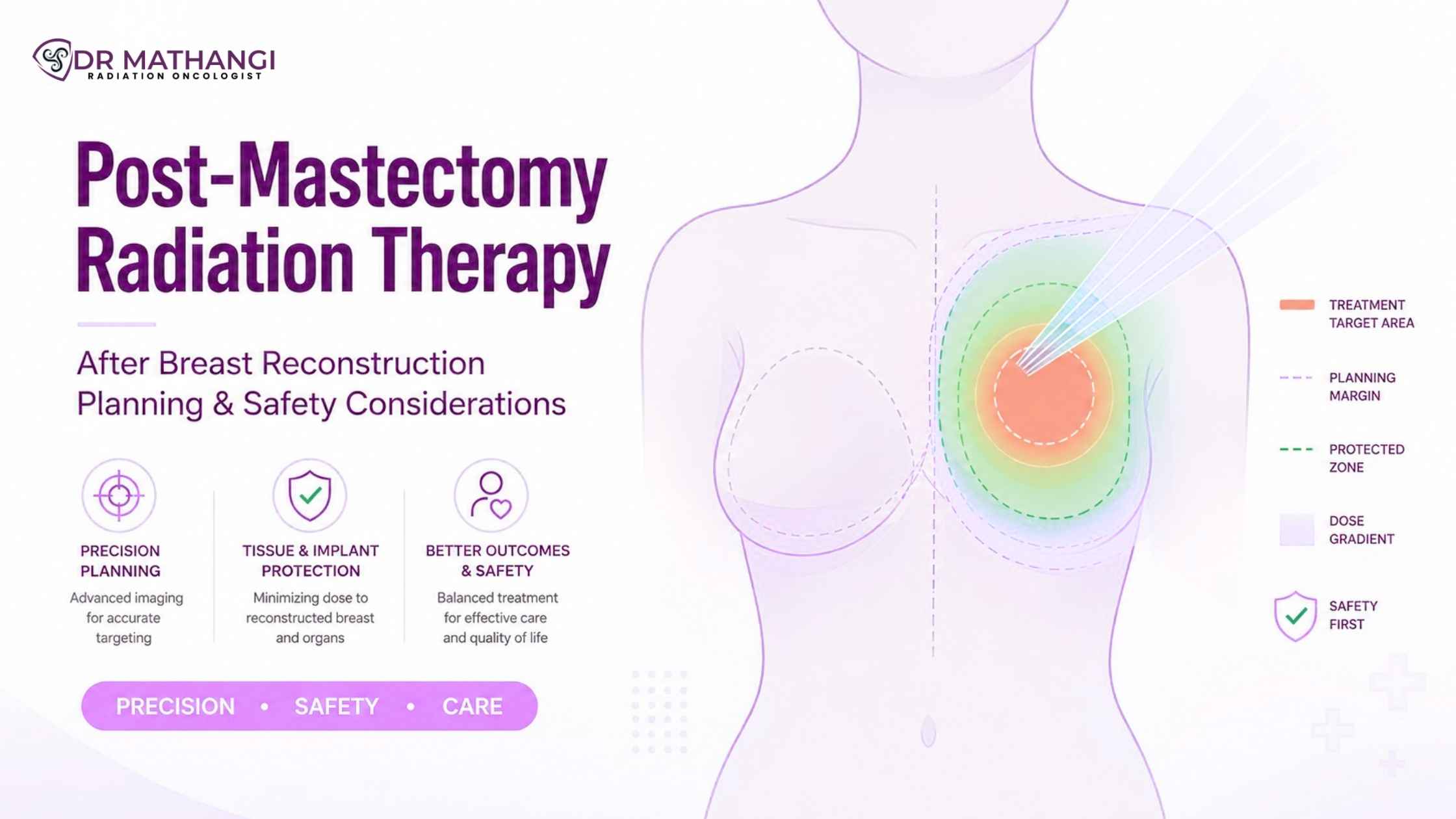

Post mastectomy radiation therapy (PMRT) is a vital step for many breast cancer survivors, significantly improving survival and reducing recurrence. According to recent data, PMRT can reduce the risk of cancer recurrence by up to 50% in high-risk patients. Yet, when combined with breast reconstruction, it introduces unique challenges that demand specialized expertise and meticulous planning—areas where Dr Mathangi, Senior Consultant and In-charge of Radiation Oncology at Gleneagles Cancer Institute, Bangalore, stands out with over 20 years of advanced clinical experience.
Secure your treatment with South India's leading radiation oncologist. Book an appointment with Dr Mathangi today for personalized planning and world-class care.
What Is Post Mastectomy Radiation Therapy And Why Is It Needed?
Post mastectomy radiation therapy refers to the use of targeted radiation after surgical removal of the breast (mastectomy) to destroy microscopic cancer cells that may remain in the chest wall or surrounding areas. This approach is especially recommended for patients with large tumors, positive lymph nodes, or aggressive cancer subtypes.
- Reduces recurrence risk: PMRT is proven to lower the chances of cancer returning locally.
- Improves survival: Studies show significant survival benefits, especially in patients with node-positive breast cancer.
- Essential for high-risk cancers: Dr Mathangi emphasizes PMRT for aggressive breast cancers, as well as other cancers that need radiation therapy—such as head and neck cancers, lung cancers, and more.
How Is PMRT After Breast Reconstruction Planned?
PMRT after breast reconstruction requires a multidisciplinary approach involving oncologists, surgeons, and radiologists. The goal is to maximize cancer control while preserving the cosmetic and functional outcomes of reconstruction. Dr Mathangi’s expertise in advanced radiation techniques ensures optimal results, even in the most complex cases.
- Comprehensive assessment: Dr Mathangi reviews surgical details, reconstruction type (implant-based or autologous), and patient risk factors.
- Precision imaging: Advanced imaging (CT, MRI, PET-CT) is used to map the chest wall, reconstructed breast, and regional lymph nodes.
- Customized radiation planning: Each plan is tailored to the individual, balancing cancer control and minimizing harm to reconstructed tissues.
- Cutting-edge technology: Techniques like DIBH (Deep Inspiration Breath Hold), Gated RapidArc, and Image-Guided Radiotherapy (IGRT) are routinely employed by Dr Mathangi to optimize safety and efficacy.
What Are The Safety Considerations In Breast Implant Radiation Therapy?
Breast implant radiation therapy brings unique safety considerations. Radiation can impact both the implant and surrounding tissues. Dr Mathangi’s vast experience with over 12,000 patients ensures the highest standards of safety and outcomes.
- Capsular contracture risk: Radiation may increase capsular contracture risk, where scar tissue hardens around the implant, affecting shape and comfort. Modern techniques and precise dosing by experts like Dr Mathangi help minimize this complication.
- Implant integrity: Careful planning is vital to prevent damage or rupture of the implant.
- Cosmetic outcomes: Dr Mathangi’s approach focuses on preserving symmetry, softness, and natural contours post-treatment.
How Does Chest Wall Contouring Impact PMRT Outcomes?
Chest wall contouring is a critical aspect of planning PMRT after breast reconstruction. It involves mapping the reconstructed chest wall and implant or flap to ensure the radiation targets cancer-prone areas while protecting healthy tissues.
- Tailored fields: Dr Mathangi utilizes advanced imaging to define precise radiation fields that follow the new chest wall contour.
- Minimizing side effects: Accurate contouring reduces the risk of fibrosis, skin changes, and other long-term effects.
- Enhanced recovery: Optimized contouring supports better healing and aesthetic results.
Why Is Internal Mammary Lymph Node Radiation Important?
Internal mammary lymph node radiation targets lymph nodes located alongside the breastbone, a common site for hidden cancer spread in high-risk cases. Dr Mathangi’s skill in this area ensures comprehensive treatment while protecting nearby organs such as the heart and lungs.
- Improved survival: Carefully delivered internal mammary node radiation can further reduce recurrence and improve long-term outcomes.
- Advanced protection: Use of DIBH and Gated RapidArc techniques, as practiced by Dr Mathangi, minimizes radiation exposure to the heart and lungs.
- Individualized approach: Not all patients require this step—Dr Mathangi determines the need based on tumor biology and patient-specific risk factors.
What Are The Key Challenges In PMRT After Breast Reconstruction?
PMRT after breast reconstruction presents unique challenges. Radiation can interact with reconstructive materials, affecting both appearance and function. Dr Mathangi’s expertise and advanced technology address these complexities, ensuring the best possible outcomes.
| Challenge | Dr Mathangi’s Solution |
|---|---|
| Risk of capsular contracture | Precision dosing, advanced planning, patient-tailored follow-up |
| Cosmetic changes | Meticulous chest wall contouring, use of advanced radiation techniques |
| Implant safety | Implant-sparing angles, regular imaging, collaborative care |
| Coverage of complex areas (e.g., internal mammary nodes) | Use of IGRT, DIBH to protect heart and lungs while ensuring adequate coverage |
How Does Dr Mathangi Ensure The Best Outcomes For Patients?
Dr Mathangi is renowned for her commitment to evidence-based medicine and patient-centered care. Her leadership at Gleneagles Cancer Institute has set new benchmarks for advanced radiation therapy in India.
- State-of-the-art technology: Access to TrueBeam STx, IGRT, SBRT, and other cutting-edge modalities.
- Personalized planning: Every patient receives a customized protocol based on their cancer, reconstruction type, and personal goals.
- Collaborative care: Multidisciplinary teamwork ensures seamless integration of surgery, reconstruction, and radiation.
- Continuous innovation: Dr Mathangi is a pioneer in introducing advanced techniques to the region, directly benefiting her patients.
What Are The Latest Advances In Breast Implant Radiation Therapy?
Breast implant radiation therapy has evolved significantly, with new technologies minimizing side effects and improving quality of life for survivors. Dr Mathangi stays at the forefront of these innovations, delivering world-class care in Bangalore.
- DIBH (Deep Inspiration Breath Hold): Protects the heart and lungs by moving them away from the radiation field during treatment.
- Gated RapidArc: Delivers precise, conformal radiation that spares healthy tissue and reduces treatment time.
- IGRT (Image-Guided Radiotherapy): Ensures pinpoint accuracy in every session.
- Advanced brachytherapy: For select cases, internal radiation offers improved targeting of the chest wall.
How To Book An Appointment With Dr Mathangi?
If you or a loved one are considering PMRT after breast reconstruction or require expertise in breast implant radiation therapy, chest wall contouring, or internal mammary lymph node radiation, don’t leave your outcome to chance.
Book a consult with Dr Mathangi:
- Visit the contact form and submit your details.
- Her team will reach out to schedule your appointment and guide you through the next steps.
Take the first step towards optimal recovery, safety, and peace of mind under the guidance of one of India’s most acclaimed radiation oncologists.
About Dr Mathangi
Dr Mathangi J is a Senior Consultant & In-charge of Radiation Oncology at Gleneagles Cancer Institute, Bangalore. With over two decades of experience and more than 12,000 patients treated, she is a trailblazer in advanced radiotherapy techniques, including Stereotactic Ablative Radiotherapy (SBRT), Gated RapidArc, DIBH, and interstitial brachytherapy. Her expertise spans across head and neck, prostate, brain, lung, and women’s cancers, making her the preferred choice for complex cancer care in South India and beyond. Dr Mathangi stands out for her leadership, precision, and compassionate patient care.
For more information, visit her official website: drmathangi.com
Frequently Asked Questions
What is post mastectomy radiation therapy and why is it recommended after breast reconstruction?
Post mastectomy radiation therapy is a treatment that uses targeted radiation to destroy any remaining cancer cells after a mastectomy. When patients undergo breast reconstruction, radiation may still be necessary to reduce the risk of recurrence, especially if the cancer was aggressive or lymph nodes were involved. Dr. Mathangi works closely with each patient to develop a tailored plan that integrates reconstruction and radiation for the best possible cosmetic and cancer outcomes.
How does PMRT after breast reconstruction affect implant-based and autologous reconstructions?
PMRT after breast reconstruction can affect both implant-based and autologous (flap) reconstructions. Implants may be more prone to hardening (capsular contracture), while autologous flaps could experience volume loss or fat necrosis. Dr. Mathangi uses advanced planning and coordination with plastic surgeons to minimize these effects, ensuring that both cancer control and cosmetic results are prioritized.
What are the main safety considerations for breast implant radiation therapy?
Breast implant radiation therapy requires precise planning to minimize risks such as implant rupture, infection, and capsular contracture risk. Dr. Mathangi employs modern radiation techniques like intensity-modulated radiation therapy (IMRT) for accurate dose delivery, and she closely monitors patients for any side effects, working in tandem with the surgical team to ensure optimal implant safety throughout treatment.
How is chest wall contouring achieved during radiation planning after reconstruction?
Chest wall contouring in radiation planning involves using specialized imaging and computer modeling to map the reconstructed chest wall. This allows Dr. Mathangi to deliver radiation precisely to areas at risk while sparing underlying organs and healthy tissue, thus preserving both safety and the cosmetic appearance of the reconstructed breast.
What is internal mammary lymph node radiation and when is it needed?
Internal mammary lymph node radiation targets lymph nodes located near the breastbone that may harbor microscopic cancer cells. This is considered in cases with higher risk of cancer spread. Dr. Mathangi uses advanced imaging and careful dose planning to treat these nodes effectively while minimizing exposure to the heart and lungs, especially important after reconstruction.
How does Dr. Mathangi address capsular contracture risk after radiation?
Capsular contracture risk increases when radiation is given after implant reconstruction. Dr. Mathangi collaborates with plastic surgeons to select the best reconstruction approach, utilizes gentle radiation techniques, and provides ongoing monitoring and supportive care to reduce the chances of this complication, maintaining both safety and appearance.
Are there steps taken to protect the heart and lungs during PMRT after breast reconstruction?
Yes, protecting the heart and lungs is a top priority. Dr. Mathangi uses advanced imaging, deep inspiration breath hold (DIBH) techniques, and computer-assisted radiation planning to minimize radiation dose to these organs. This ensures the treatment is both effective and as safe as possible for long-term health.
What support does Dr. Mathangi provide for patients navigating PMRT after breast reconstruction?
Dr. Mathangi provides comprehensive support, including detailed education on treatment options, close coordination with the surgical and plastic surgery teams, and proactive management of side effects. Her multidisciplinary approach ensures that each patient receives personalized care throughout the post mastectomy radiation therapy process.