Post-Op Spine SBRT: Faster Recovery & Precision Care
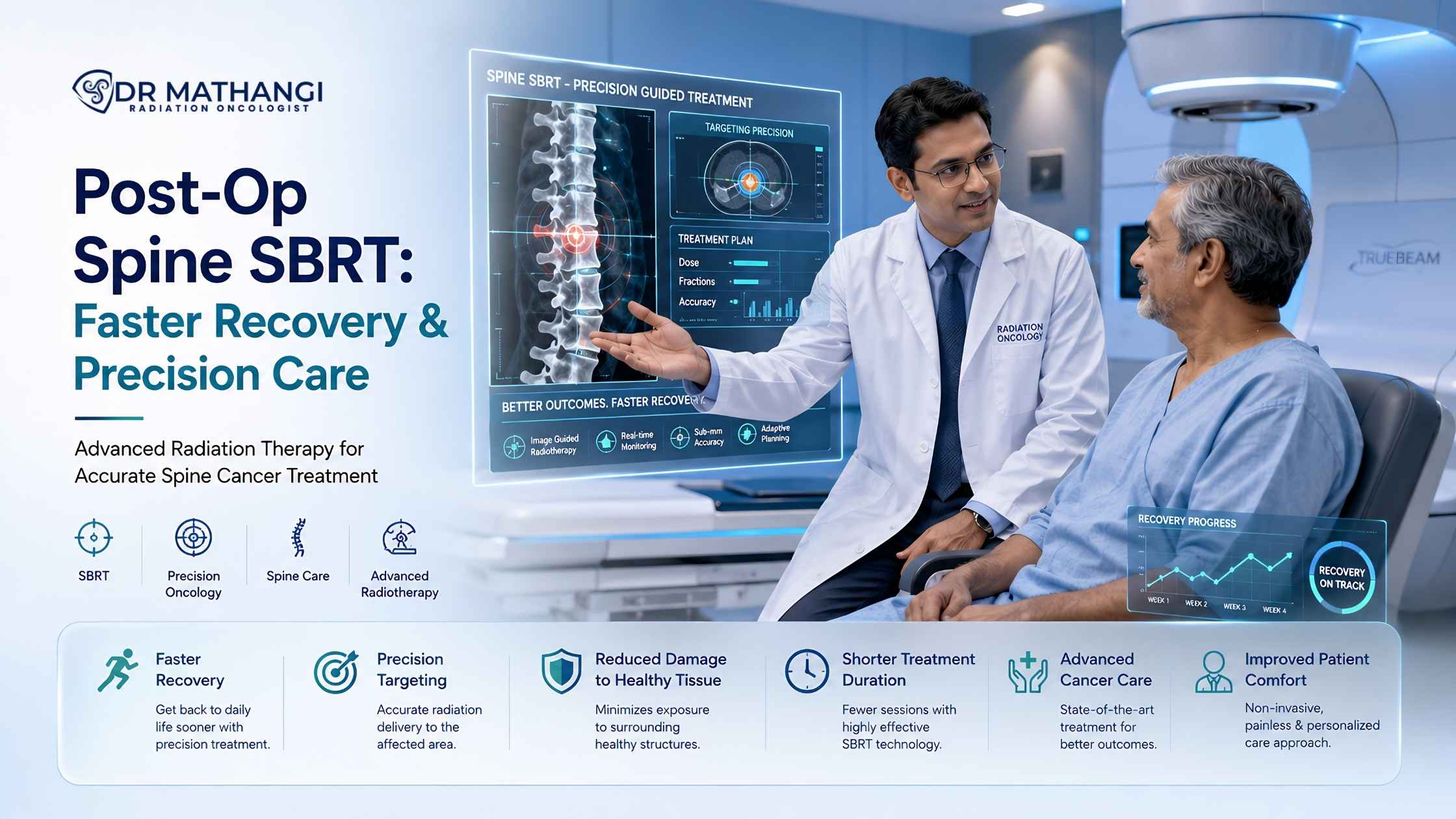
Post-Op Spine SBRT is an advanced radiation therapy technique designed to deliver high-dose, precision-targeted radiation to spinal tumors after surgery, significantly improving local tumor control rates—often exceeding 85–90% in many clinical settings. This means patients experience faster recovery, reduced recurrence risk, and improved quality of life compared to conventional radiation methods.
For patients recovering from spine tumor surgery, the journey does not end in the operating room. Residual cancer cells, microscopic disease, and recurrence risks remain critical concerns. This is where Post-Op Spine SBRT emerges as a transformative solution—offering unmatched precision, minimized side effects, and accelerated healing.
Under the expert care of Dr Mathangi J, Senior Consultant & In-charge - Radiation Oncology at Gleneagles Cancer Institute, patients gain access to globally advanced radiation techniques backed by over two decades of experience and more than 12,000 successfully treated cases.
What is Post-Op Spine SBRT and how does it work?
Post-Op Spine SBRT is a highly advanced form of radiation therapy that delivers concentrated radiation doses to the spine with sub-millimeter accuracy after surgical tumor removal.
Unlike traditional spine tumor radiotherapy, which exposes larger areas of healthy tissue, SBRT uses sophisticated imaging and motion-tracking systems to:
- Target only the tumor bed or residual disease
- Protect the spinal cord and nearby organs
- Deliver higher doses in fewer sessions
- Reduce treatment duration significantly
This precision makes it a cornerstone of modern targeted spine therapy, especially in complex or previously treated cases.
Why is Post-Op Spine SBRT essential after spine surgery?
Even after successful tumor removal, microscopic cancer cells may remain. Without proper follow-up treatment, these can lead to recurrence, pain, or neurological complications.
Post surgery radiation spine treatments like SBRT address this critical gap by:
- Eliminating residual cancer cells
- Preventing tumor regrowth
- Maintaining spinal stability and function
- Reducing long-term complications
This makes it not just an option—but often a necessity in comprehensive cancer care.
What are the key SBRT benefits for spine tumor patients?
The advantages of SBRT go beyond convenience—they directly impact survival, recovery, and quality of life.
Major SBRT benefits include:
- High precision: Minimizes damage to healthy tissues
- Fewer sessions: Typically completed in 1–5 treatments
- Faster recovery: Patients resume normal life sooner
- Improved tumor control: Higher success rates than conventional therapy
- Reduced side effects: Less fatigue, skin damage, and complications
These SBRT benefits make it particularly valuable for patients who have already undergone surgery and need effective yet gentle follow-up care.
How does targeted spine therapy improve patient outcomes?
Targeted spine therapy represents a shift from generalized radiation approaches to highly individualized treatment plans.
With advanced technologies like TrueBeam STx—introduced in the Asia Pacific region under the leadership of Dr Mathangi—patients benefit from:
- Real-time imaging for precise tumor tracking
- Adaptive radiation planning tailored to each patient
- Reduced radiation exposure to critical structures
- Enhanced safety in complex spinal cases
This approach ensures that every patient receives care that is not only effective but also optimized for their unique condition.
Who is the ideal candidate for Post-Op Spine SBRT?
Patients who may benefit from Post-Op Spine SBRT include:
- Individuals with residual tumor after spine surgery
- Patients with metastatic spine tumors
- Cases where conventional radiation is not suitable
- Patients requiring re-irradiation of the spine
- Those seeking faster recovery and fewer hospital visits
Dr Mathangi carefully evaluates each case to determine the most effective treatment plan, ensuring optimal outcomes.
What makes Dr Mathangi a trusted expert in spine tumor radiotherapy?
Dr Mathangi J is a highly respected radiation oncologist with extensive international training and clinical excellence.
Her credentials include:
- Over 20 years of experience in radiation oncology
- Advanced training in SRS/SBRT from Germany
- Expertise in IGRT and RapidArc from Denmark
- Leadership in installing advanced radiation systems
- Director of Fellowship in Advanced Radiotherapy techniques
Her approach combines cutting-edge technology with compassionate care—ensuring patients feel confident and supported throughout their treatment journey.
What cancers can benefit from radiation therapy?
Radiation therapy, including SBRT, is widely used for various cancers such as:
- Head and neck cancers
- Brain tumors
- Spine tumors
- Lung cancers
- Liver cancers
- Breast cancers
- Bladder cancers
- Prostate cancers
- Uterine cancers
- Cervical cancer
- Vulval cancers
- Anal canal cancers
- Penile cancers
This versatility underscores the importance of advanced techniques like spine tumor radiotherapy in comprehensive oncology care.
How does treatment planning work for Post surgery radiation spine?
The process of post surgery radiation spine using SBRT involves meticulous planning to ensure precision and safety.
Step-by-step process:
- Imaging: High-resolution MRI and CT scans are performed
- Target delineation: Tumor bed and risk areas are identified
- Treatment planning: Customized radiation plan is created
- Simulation: Patient positioning is optimized
- Delivery: Radiation is administered with real-time monitoring
This structured approach ensures maximum effectiveness with minimal risk.
Why delaying advanced radiation therapy could cost more than you think
Delaying or opting for less precise treatments can lead to:
- Tumor recurrence
- Increased pain and disability
- Need for additional surgeries
- Higher long-term healthcare costs
Choosing Post-Op Spine SBRT early ensures better outcomes, faster recovery, and peace of mind.
About Dr Mathangi
Dr Mathangi J is a leading radiation oncologist based in Bangalore, specializing in advanced cancer treatments including SBRT, SRS, and image-guided radiotherapy. As the head of radiation oncology at Gleneagles Cancer Institute, she is known for delivering precision-driven, patient-centric care using globally recognized technologies.
Her commitment to innovation, combined with her extensive clinical expertise, has positioned her as one of the most trusted names in targeted spine therapy and modern oncology.
Take the next step toward precision care
If you or a loved one is recovering from spine tumor surgery, now is the time to explore the benefits of Post-Op Spine SBRT. Early intervention can make a significant difference in recovery, comfort, and long-term outcomes.
To book an appointment, submit your details at:
https://drmathangi.com/contact/
Dr Mathangi’s team will connect with you to schedule a consultation and guide you through your treatment journey.
Frequently Asked Questions
What is Post-Op Spine SBRT and when is it recommended?
Post-Op Spine SBRT is an advanced form of spine tumor radiotherapy used after surgery to precisely target any remaining tumor cells. It is typically recommended when complete surgical removal is not possible or when there is a risk of recurrence. Dr. Mathangi uses this approach to ensure high precision while protecting nearby spinal cord structures.
How does spine tumor radiotherapy differ from conventional radiation?
Spine tumor radiotherapy using SBRT delivers highly focused radiation in fewer sessions compared to traditional methods. This allows for better tumor control, minimal exposure to healthy tissues, and improved patient comfort. It is particularly effective in complex spinal cases managed by specialists like Dr. Mathangi.
What are the key SBRT benefits for spine tumor patients?
SBRT benefits include shorter treatment duration, reduced damage to surrounding tissues, faster recovery, and high precision targeting. Patients often experience fewer side effects and better quality of life, making it a preferred choice for post-operative spine care.
Is post surgery radiation spine treatment safe?
Yes, post surgery radiation spine treatment using SBRT is designed to be extremely safe. Advanced imaging and planning technologies ensure that radiation is delivered only to the intended area, minimizing risks to the spinal cord and nearby organs.
How does targeted spine therapy improve recovery time?
Targeted spine therapy focuses radiation precisely on tumor areas, reducing unnecessary exposure to healthy tissue. This leads to quicker healing, fewer complications, and a smoother recovery process after surgery.
How many sessions are required for Post-Op Spine SBRT?
Most Post-Op Spine SBRT treatments are completed in 1 to 5 sessions, depending on the size and location of the tumor. This is significantly fewer than conventional radiation therapy schedules.
Who is an ideal candidate for this treatment?
Patients who have undergone spinal tumor surgery but may still have residual disease, or those at high risk of recurrence, are ideal candidates. A detailed evaluation by Dr. Mathangi helps determine suitability.
What makes Dr. Mathangi’s approach unique?
Dr. Mathangi combines clinical expertise with advanced technology to deliver personalized care. Her focus on precision, safety, and patient-centered planning ensures optimal outcomes in spine tumor radiotherapy and post-operative care.