Proton Therapy Precision: Bragg Peak Explained
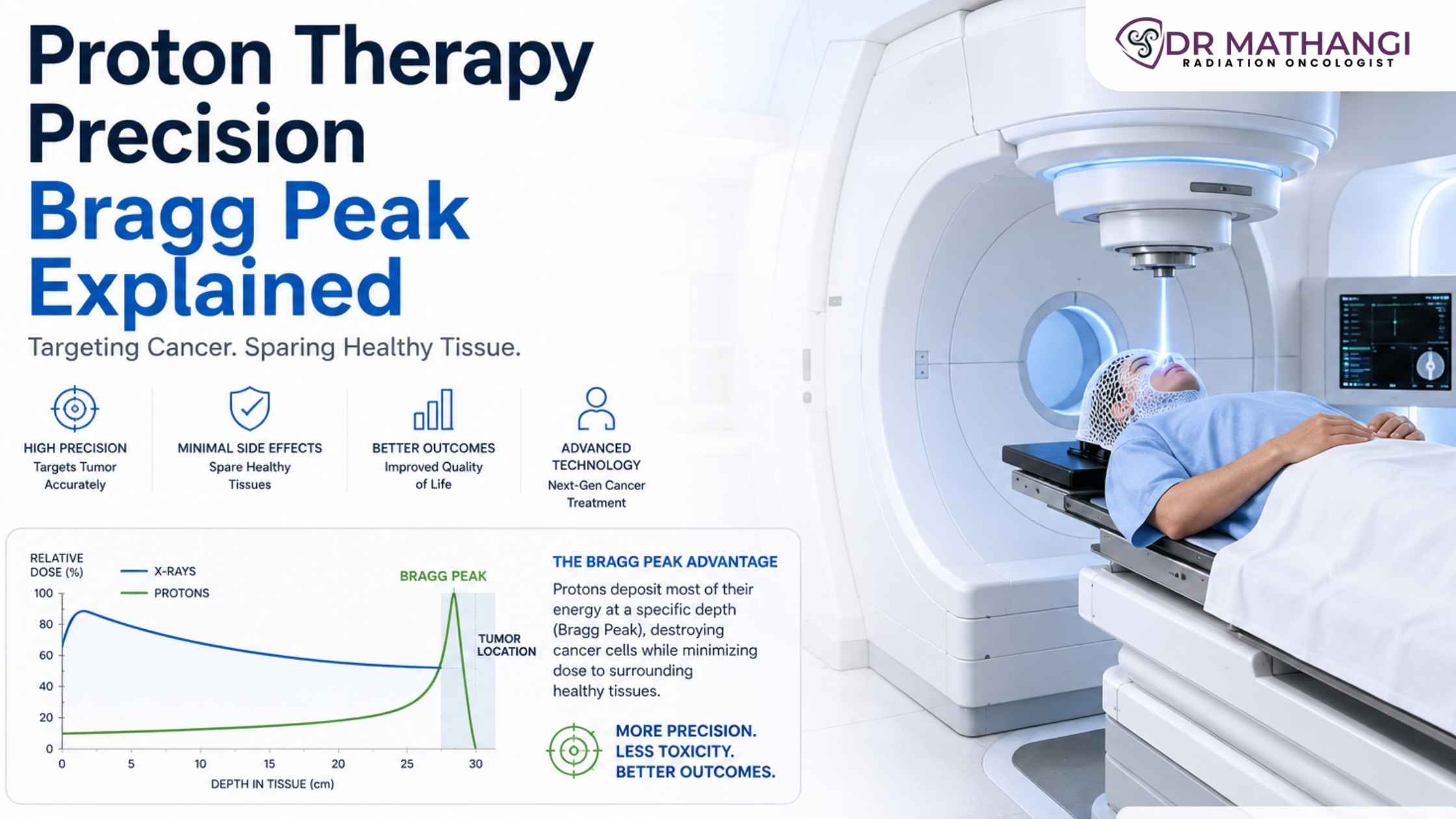
Proton Therapy Precision represents one of the most advanced breakthroughs in modern oncology, with studies showing that proton therapy can reduce radiation exposure to surrounding healthy tissues by up to 60% compared to conventional radiation techniques. This remarkable advancement is largely due to the unique phenomenon known as bragg peak radiation, which allows clinicians like Dr Mathangi to deliver highly controlled and effective cancer treatment.
For patients navigating the uncertainty of a cancer diagnosis, the difference between conventional radiation and targeted cancer therapy can significantly impact both outcomes and quality of life. Under the leadership of Dr Mathangi, a Senior Radiation Oncologist with over two decades of experience, patients gain access to cutting-edge precision treatments that prioritize both effectiveness and safety.
What is proton therapy precision and why does it matter?
Proton Therapy Precision refers to the ability of proton beams to deliver radiation directly to a tumor with minimal damage to surrounding healthy tissues. Unlike traditional radiation, which passes through the body, proton beams stop precisely at the tumor site.
This level of proton beam accuracy is critical because it:
- Reduces side effects significantly
- Protects vital organs and tissues
- Allows higher radiation doses to tumors safely
- Improves long-term outcomes for patients
Patients who overlook advanced therapies like this may unknowingly expose themselves to unnecessary complications. With Dr Mathangi’s expertise, patients receive personalized care that leverages the full potential of modern radiation science.
What is bragg peak radiation and how does it work?
Bragg peak radiation is a physical phenomenon where protons release the majority of their energy at a specific depth in tissue, corresponding exactly to the tumor location. After this peak, the radiation dose sharply drops to nearly zero.
This means:
- The tumor receives the maximum dose
- Healthy tissues beyond the tumor remain unaffected
- Side effects are minimized compared to traditional radiation
This precision is what defines true targeted cancer therapy. It is not just about treating cancer—it is about doing so intelligently, minimizing harm while maximizing results.
How proton beam accuracy transforms cancer treatment outcomes
Proton beam accuracy allows oncologists to sculpt radiation doses around complex tumor shapes. This is particularly important for cancers located near critical organs.
Dr Mathangi applies this advanced accuracy in treating:
- Head and neck cancers
- Brain tumors
- Spine tumors
- Lung cancers
- Prostate cancers
- Breast cancers
- Cervical and uterine cancers
- Bladder cancers
- Liver cancers
- Anal canal cancers
- Penile cancers
Without such precision, patients risk unnecessary exposure to radiation, leading to complications that could otherwise be avoided. This is where choosing the right specialist becomes crucial.
Why targeted cancer therapy is the future of oncology
Targeted cancer therapy focuses on attacking cancer cells while sparing healthy tissues. Proton therapy, powered by Proton Therapy Precision, is one of the most effective examples of this approach.
Key advantages include:
- Lower risk of secondary cancers
- Reduced fatigue and recovery time
- Better preservation of organ function
- Improved quality of life during and after treatment
Patients who delay adopting advanced treatments often face more aggressive interventions later. Acting early with precision-based therapy can make a significant difference.
How dr mathangi delivers advanced proton therapy precision
Dr Mathangi is a highly experienced radiation oncologist with over 20 years of clinical expertise and more than 12,000 successfully treated patients. She serves as the Senior Consultant and In-charge of Radiation Oncology at Gleneagles Cancer Institute, Bangalore.
Her advanced training includes:
- Stereotactic techniques (SRS/SBRT) from Germany
- IGRT and RapidArc from Denmark
- Intraoperative radiotherapy (IORT)
She is also recognized for installing the Asia Pacific’s first TrueBeam STx Machine, reflecting her commitment to innovation and excellence in cancer care.
Her approach integrates:
- Advanced imaging for precise tumor mapping
- Customized radiation planning
- State-of-the-art delivery systems
- Continuous patient monitoring
This ensures that every patient benefits from the highest level of proton beam accuracy and treatment effectiveness.
What happens if you delay advanced radiation therapy?
Delaying access to precision-based treatments like Proton Therapy Precision can lead to:
- Tumor progression and increased complexity
- Greater damage to surrounding tissues
- Reduced treatment success rates
- Higher likelihood of complications
This is not just a medical concern—it is a life-impacting decision. Patients who act early with expert guidance often experience better outcomes and fewer long-term challenges.
How to get started with dr mathangi’s treatment approach
Taking the first step toward advanced cancer care is simple. Patients can begin their journey toward recovery by connecting with Dr Mathangi’s team.
To book an appointment:
- Visit the contact page on her official website
- Submit your details through the form
- Her team will schedule your consultation and notify you
Every moment matters in cancer treatment. Choosing the right specialist and the right technology can redefine your treatment experience.
About dr mathangi
Dr Mathangi J is a leading radiation oncologist based in Bangalore, specializing in advanced cancer treatments. With extensive international training and leadership in cutting-edge radiotherapy techniques, she is recognized for delivering highly precise and effective care.
Her expertise spans multiple cancer types, and her commitment to innovation ensures patients receive world-class treatment aligned with global standards.
Frequently Asked Questions
What is Proton Therapy Precision and why is it important?
Proton Therapy Precision refers to the ability to deliver radiation therapy with exceptional control over where the energy is deposited inside the body. Unlike traditional radiation, proton therapy allows oncologists to focus treatment directly on tumors while minimizing exposure to surrounding healthy tissues. This level of precision is especially important for treating tumors located near critical organs.
Dr. Mathangi emphasizes this approach to ensure patients receive effective treatment with fewer side effects and improved quality of life during and after therapy.
How does bragg peak radiation work in cancer treatment?
bragg peak radiation is a unique physical property of proton beams where the majority of energy is released at a specific depth inside the body. This allows doctors to target tumors precisely without delivering unnecessary radiation beyond the tumor site.
Dr. Mathangi uses this principle to customize treatment plans, ensuring that cancer cells receive the maximum dose while protecting surrounding healthy tissues from damage.
What makes proton beam accuracy superior to conventional radiation?
proton beam accuracy allows radiation to be delivered with millimeter-level precision. Unlike X-rays, which pass through the body and affect tissues before and after the tumor, proton beams stop exactly at the tumor location.
Under the guidance of Dr. Mathangi, this accuracy helps reduce complications, especially in sensitive areas such as the brain, spine, or pediatric cases where long-term safety is critical.
Who can benefit from targeted cancer therapy using proton treatment?
targeted cancer therapy using proton treatment is beneficial for patients with tumors located near vital organs, children with developing tissues, and cases where minimizing radiation exposure is crucial.
Dr. Mathangi carefully evaluates each case to determine whether this advanced therapy offers the best outcomes based on tumor type, location, and patient health.
Is proton therapy safer compared to traditional radiation therapy?
Proton therapy is generally considered safer because it reduces unnecessary radiation exposure to healthy tissues. This results in fewer side effects, lower risk of complications, and better long-term outcomes.
Dr. Mathangi integrates advanced planning technologies to further enhance safety and ensure each treatment session is precisely delivered.
How does Dr. Mathangi personalize proton therapy treatment plans?
Dr. Mathangi uses advanced imaging, tumor mapping, and patient-specific data to design highly individualized treatment plans. This ensures that the radiation dose is tailored to match the exact shape, size, and depth of the tumor.
The approach combines scientific precision with clinical expertise to maximize treatment effectiveness while minimizing side effects.
What types of cancers are commonly treated with proton therapy?
Proton therapy is commonly used for brain tumors, head and neck cancers, pediatric cancers, spinal tumors, and certain lung or prostate cancers. It is particularly useful when tumors are located near sensitive structures.
Dr. Mathangi evaluates each diagnosis carefully to determine whether proton therapy offers a clear advantage over other treatment methods.
What should patients expect during proton therapy sessions?
Proton therapy sessions are non-invasive and typically painless. Patients lie on a treatment table while the machine delivers precise radiation beams to the targeted area. Each session usually lasts a short duration, and most patients can resume normal activities afterward.
With Dr. Mathangi’s patient-focused care, individuals receive guidance and support throughout the treatment journey to ensure comfort and confidence.