Radiation Therapy for Bone Metastases: Pain Relief and Palliative Care Options
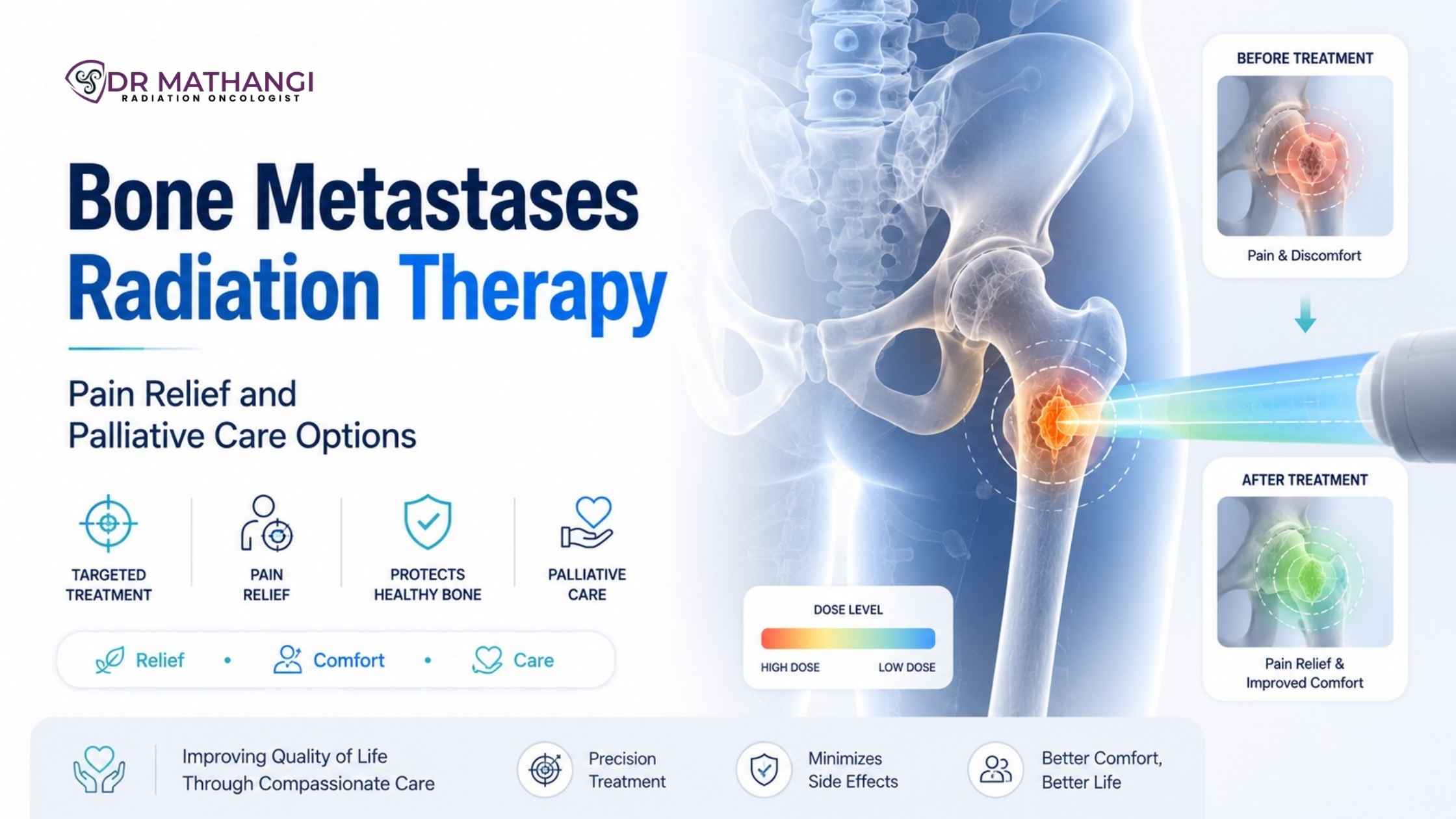
Did you know? Over 70% of patients with advanced cancers develop bone metastases, with pain being the most distressing symptom. Radiation therapy for bone metastases is a proven solution, offering rapid and lasting pain relief for those battling metastatic cancer. At Gleneagles Cancer Institute in Bangalore, Dr Mathangi J—a senior consultant and In-charge of Radiation Oncology with over 20 years of experience—offers state-of-the-art, patient-centered care for those in need of effective metastatic bone pain management.
What Is Radiation Therapy For Bone Metastases?
Radiation therapy for bone metastases involves the use of high-energy rays or particles to target and destroy cancer cells that have spread to bones. This treatment is primarily used for palliative purposes—to relieve pain, improve mobility, and enhance quality of life—especially when surgical or medical management alone is insufficient.
- Targets pain-causing bone lesions
- Reduces tumor burden within bones
- Minimizes the need for strong pain medications
- Often leads to rapid symptom relief—sometimes within days
How Does Bone Pain Radiation Work?
Bone pain radiation works by damaging the DNA of cancer cells within the bone, halting their growth and reducing the inflammatory response that leads to pain. This targeted approach preserves surrounding healthy tissues and provides focused symptom relief.
The process typically involves:
- Identifying the exact location of bone metastases using advanced imaging (CT, MRI, or PET scans)
- Customizing the radiation plan to match the patient’s needs and the characteristics of the tumor
- Delivering radiation (either as a single dose or multiple fractions) to the affected area
- Monitoring for response and side effects
What Is Single Fraction Radiation Therapy?
Single fraction radiation therapy refers to delivering the entire prescribed dose of radiation in just one session, as opposed to multiple smaller doses (fractions) over several days. This approach is highly convenient for patients and has been shown in clinical trials to be just as effective as multi-fraction regimens for pain relief in uncomplicated bone metastases.
- Offers rapid pain control—relief often begins within 1-2 weeks
- Reduces the number of hospital visits
- Particularly beneficial for patients with limited life expectancy or mobility issues
Dr Mathangi is adept at selecting the optimal approach—single fraction or multi-fraction—based on each patient’s unique clinical scenario.
How Does Spine SBRT Enhance Pain Relief?
Spine SBRT (Stereotactic Body Radiotherapy) is a cutting-edge technique where highly focused, high-dose radiation is delivered to spinal metastases with sub-millimeter precision. This technology, available at Gleneagles Cancer Institute under Dr Mathangi’s expert care, is especially valuable for:
- Treating tumors near the spinal cord while protecting healthy nerves
- Providing durable pain relief and local tumor control
- Reducing the risk of paralysis or neurological complications
Spine SBRT is ideal for select patients with limited metastatic disease or those with radioresistant tumors (e.g., renal cell carcinoma, sarcoma). Dr Mathangi’s rigorous training in stereotactic techniques ensures maximum efficacy and safety.
What Is The Vertebral Compression Fracture Risk With Radiation?
One concern with spinal radiation is the potential for vertebral compression fracture risk. High-dose radiation, especially when delivered via SBRT, can sometimes weaken the treated bone, increasing the chance of a compression fracture.
- Risk is higher in cases with extensive tumor destruction of the vertebral body
- Spine stability is carefully assessed with imaging before treatment
- Dr Mathangi’s expertise ensures selection of the safest radiation technique, sometimes recommending orthopedic consultation or prophylactic stabilization if fracture risk is significant
With meticulous planning and advanced image guidance, the risk of vertebral fractures can be minimized, allowing patients to benefit from pain relief without compromising spinal integrity.
Why Is Palliative Radiation Important In Bone Metastases?
Palliative radiation is central to improving the lives of patients with advanced cancer. It is not intended to cure, but rather to:
- Alleviate severe, persistent bone pain
- Prevent or treat complications (fractures, spinal cord compression)
- Restore function and independence
- Reduce reliance on opioids and associated side effects
Dr Mathangi’s approach to palliative radiation is holistic—focusing on symptom control, patient dignity, and optimizing every aspect of care.
What Are The Options For Metastatic Bone Pain Management?
Metastatic bone pain management requires a multidisciplinary approach. At Gleneagles Cancer Institute, Dr Mathangi collaborates with medical oncologists, pain specialists, and orthopedic surgeons to provide comprehensive care, including:
- Radiation therapy for bone metastases—for rapid, targeted pain relief
- Single fraction radiation therapy—for convenience and efficacy
- Spine SBRT—for precise control of spinal lesions
- Pain medications—ranging from simple analgesics to opioids, tailored to patient needs
- Bisphosphonates and denosumab—to reduce bone breakdown and pain
- Orthopedic interventions—surgical stabilization for fractures or impending fractures
- Physical therapy and rehabilitation—to restore mobility and function
By integrating these options, Dr Mathangi ensures that patients experience not only pain relief but also a return to daily activities and improved emotional well-being.
Who Should Consider Radiation Therapy For Bone Metastases?
Patients with any of the following may benefit greatly from this specialized care:
- Severe, persistent bone pain despite medications
- Evidence of bone metastases on imaging
- Risk of pathological fracture or spinal cord compression
- Cancers known to spread to bone (breast, prostate, lung, head and neck, brain, liver, bladder, cervix, endometrium, esophagus, rectum, vulva, anal canal, penis)
- Desire for improved quality of life and reduced dependence on painkillers
Early intervention with radiation can prevent complications and prolong independent living.
Why Choose Dr Mathangi J For Radiation Therapy For Bone Metastases?
Dr Mathangi J stands at the forefront of advanced cancer care in India, with a legacy of over 12,000 successfully treated patients and expertise in the latest radiation techniques. Here’s why patients choose her:
- Unmatched expertise: Trained in India and Europe, Dr Mathangi brings world-class skills to every case.
- Cutting-edge technology: Access to Asia Pacific’s first TrueBeam STx Machine, Stereotactic techniques (SRS/SBRT), IGRT/RapidArc, and DIBH gated radiotherapy.
- Personalized care: Every treatment plan is tailored to your cancer, pain patterns, and life goals.
- Comprehensive support: Her team ensures seamless communication and rapid appointment scheduling via this contact form.
- Academic leadership: Director of Fellowship in Advanced Radiotherapy Techniques, shaping the next generation of oncologists.
- Patient-centric philosophy: Your comfort, dignity, and quality of life are always the priority.
Don’t let bone pain rob you or your loved one of precious moments. Experience the difference of expert, compassionate, and innovative care with Dr Mathangi J.
How To Book An Appointment With Dr Mathangi J?
Relief from bone metastasis pain is just a step away. To access world-class radiation therapy for bone metastases and personalized care, simply submit your contact information here. Dr Mathangi’s team will promptly schedule your consultation and guide you through every step of your treatment journey.
About Dr Mathangi J
Dr Mathangi J is the Senior Consultant and In-charge of Radiation Oncology at Gleneagles Cancer Institute, Bangalore—one of South India’s premier cancer care centers. With over two decades of experience and specialized training from leading institutions across India and Europe, she is recognized for her expertise in advanced radiotherapy, including SBRT, IGRT, RapidArc, and image-guided brachytherapy. Her clinical interests include head and neck cancers, brain tumors, spine tumors, prostate, lung, and women’s cancers. Dr Mathangi is celebrated for her compassionate approach, academic leadership, and unwavering commitment to patient well-being.
For the best in metastatic bone pain management, choose Dr Mathangi J—a name trusted by thousands of patients.
Frequently Asked Questions
What is radiation therapy for bone metastases and how does it help with pain relief?
Radiation therapy for bone metastases is a proven treatment used to relieve pain and control symptoms in patients whose cancer has spread to the bones. By directing targeted radiation to affected areas, it helps reduce tumor size, decrease inflammation, and alleviate bone pain. Dr. Mathangi customizes treatment plans to maximize pain relief while minimizing side effects, ensuring patients experience improved quality of life.
What is single fraction radiation therapy and when is it used?
Single fraction radiation therapy involves delivering the entire radiation dose in just one session, as opposed to multiple sessions. This approach is especially beneficial for patients with limited life expectancy or when rapid pain control is desired. Dr. Mathangi assesses each case individually to determine if this efficient method is suitable, ensuring optimal palliative care and convenience for patients.
How effective is bone pain radiation for managing discomfort from metastases?
Bone pain radiation is highly effective, with most patients experiencing significant pain relief within 1-2 weeks after treatment. It can also reduce the need for pain medications and improve mobility. Dr. Mathangi uses advanced techniques to tailor radiation doses and schedules, maximizing relief and minimizing disruption to daily activities.
What is spine SBRT and when might it be recommended?
Spine SBRT (stereotactic body radiation therapy) is a precise, high-dose radiation technique used for spinal metastases. It enables targeting of tumors with millimeter accuracy while sparing healthy tissue. Dr. Mathangi may recommend spine SBRT for patients with limited metastases, recurrent disease, or when conventional radiation is not suitable. This advanced option can provide durable pain relief and local tumor control.
What are the risks of vertebral compression fracture after radiation therapy?
While radiation is generally safe, there is a potential vertebral compression fracture risk, especially after high-dose treatments like spine SBRT. Dr. Mathangi carefully evaluates spinal stability before treatment and may recommend additional interventions (such as bracing or vertebroplasty) to reduce fracture risk. Regular follow-up imaging is part of her protocol to catch any issues early.
How does palliative radiation fit into overall metastatic bone pain management?
Palliative radiation is a cornerstone of metastatic bone pain management. It works in conjunction with medications, supportive care, and sometimes surgical interventions to provide comprehensive pain relief. Dr. Mathangi’s approach focuses on improving comfort, preserving function, and supporting emotional well-being for patients facing advanced cancer.
What are the common side effects of radiation therapy for bone metastases?
Most side effects are mild and temporary, such as fatigue, mild skin changes, or localized soreness. Rarely, there can be swelling or increased pain for a few days after treatment (a "pain flare"), which is usually managed with medications. Dr. Mathangi provides detailed counseling and support to help patients manage any side effects that arise.
How quickly can patients expect pain relief after starting radiation therapy?
Many patients begin to notice pain improvement within a week, with maximal benefit typically seen in 2-4 weeks. Dr. Mathangi monitors every patient’s response and adjusts care as needed to ensure optimal pain control and quality of life.
What makes Dr. Mathangi’s approach unique in treating bone metastases?
Dr. Mathangi offers individualized, evidence-based care with a focus on both advanced technology and compassionate support. She provides a range of options—including single fraction radiation therapy, spine SBRT, and comprehensive palliative radiation strategies—to address each patient’s unique needs. Her multidisciplinary approach ensures optimal pain relief, safety, and overall well-being for patients with bone metastases.