RapidArc VMAT vs IMRT for Head and Neck Cancer Treatment
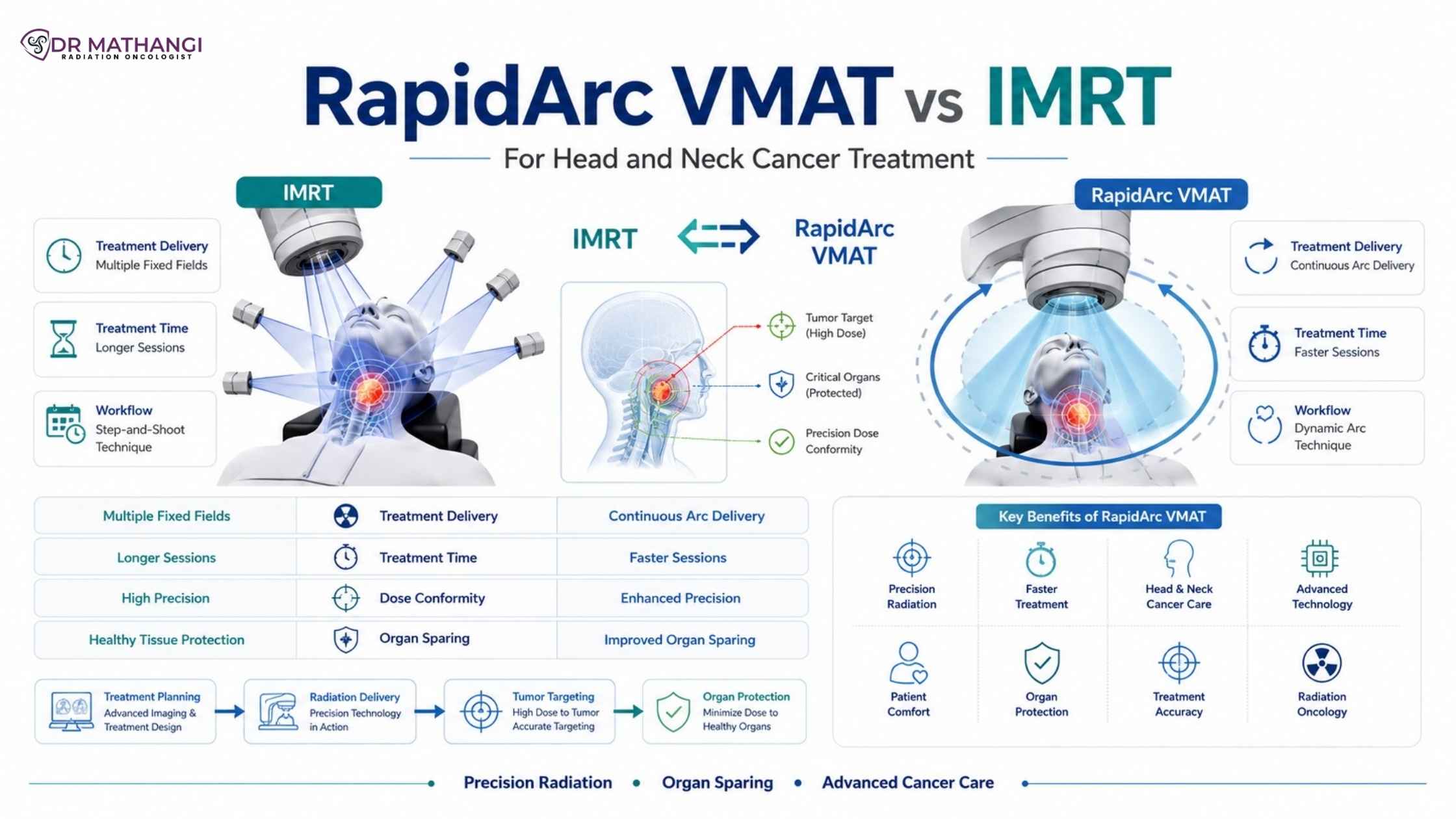
What is the difference between RapidArc VMAT and IMRT for head and neck cancer radiation? RapidArc radiation therapy (a form of volumetric modulated arc therapy or VMAT) and intensity-modulated radiation therapy (IMRT) are both advanced techniques for treating head and neck cancers. However, RapidArc VMAT delivers highly conformal doses in less time, improving patient comfort and potentially reducing side effects.
According to the World Health Organization, head and neck cancers account for over 550,000 cases and 380,000 deaths annually worldwide, making them a major global health concern. Radiation therapy is a critical component of curative management, with nearly 80-90% of patients requiring it as part of their treatment regimen. Choosing the right radiation technique can greatly impact treatment outcomes and quality of life.
Why is advanced head and neck cancer radiation important?
Head and neck cancer radiation requires extreme precision due to the proximity of vital structures like the spinal cord, salivary glands, and optic nerves. The main challenge is to eradicate cancer cells while minimizing damage to healthy tissues, thereby reducing complications like xerostomia (dry mouth), swallowing difficulties, and long-term toxicity.
- Preserves speech and swallowing functions
- Minimizes treatment-related disfigurement
- Improves long-term quality of life after cancer cure
What is RapidArc radiation therapy?
RapidArc radiation therapy is a state-of-the-art treatment method that uses volumetric modulated arc therapy (VMAT) to deliver radiation quickly and precisely. Unlike conventional IMRT, which delivers radiation from fixed angles, RapidArc VMAT rotates around the patient, adjusting the dose rate and beam shape in real time. This results in highly conformal dose delivery in a much shorter time.
- Shorter treatment times (typically 2-4 minutes per session)
- Greater patient comfort and reduced movement
- Enhanced dose conformity and sparing of healthy tissues
How does VMAT vs IMRT compare for head and neck cancers?
The debate of VMAT vs IMRT centers on which technique offers superior outcomes in terms of tumor control, toxicity, and patient experience. Here’s a concise comparison:
| Parameter | IMRT | RapidArc VMAT |
|---|---|---|
| Dose conformity | High | Very high |
| Treatment time | 10-20 minutes | 2-4 minutes |
| Parotid gland sparing | Good | Excellent |
| Xerostomia prevention | Effective | More effective |
| Salivary gland toxicity | Moderate | Low |
| Patient comfort | Moderate | High |
In summary, RapidArc VMAT offers superior dose conformity, faster treatments, and better sparing of critical structures, which is especially important for head and neck cancer radiation.
What are the benefits of parotid gland sparing and xerostomia prevention?
Parotid gland sparing is a key objective in head and neck cancer radiation, as these glands are responsible for producing saliva. Radiation-induced damage can result in xerostomia, a debilitating side effect that affects speech, taste, swallowing, and oral health.
- Xerostomia prevention: Reduces risk of dental decay, oral infections, and nutritional deficiencies.
- Parotid gland sparing: Preserves natural saliva production, improving long-term quality of life.
- Lower salivary gland toxicity: Minimizes irreversible gland damage and associated complications.
RapidArc radiation therapy, through advanced volumetric modulated arc therapy planning, achieves remarkable parotid gland sparing, translating to better xerostomia prevention compared to traditional IMRT.
How does dose conformity impact treatment outcomes?
Dose conformity refers to how closely the radiation dose matches the tumor’s shape while avoiding healthy tissues. High dose conformity is crucial in head and neck cancer radiation to:
- Maximize tumor control and local cure rates
- Minimize radiation exposure to normal tissues
- Reduce acute and long-term side effects, such as salivary gland toxicity and swallowing difficulties
RapidArc VMAT’s unique delivery allows for exceptional dose conformity, ensuring that even complex-shaped tumors receive optimal coverage with the least collateral damage.
Why choose Dr Mathangi for RapidArc radiation therapy?
Dr Mathangi J, Senior Consultant & In-charge of Radiation Oncology at Gleneagles Cancer Institute, Bangalore, is a pioneer in advanced radiation techniques. With over 20 years of experience and more than 12,000 patients successfully treated, she brings unmatched expertise in head and neck cancer radiation, including RapidArc radiation therapy and volumetric modulated arc therapy.
- Asia Pacific’s first installation of the TrueBeam STx Machine
- International training in IGRT/RapidArc (Denmark) and Stereotactic techniques (Germany)
- Director of Fellowship in Advanced Radiotherapy Techniques (RGUHS-affiliated)
- Leader in Gated RapidArc, SBRT, DIBH gated radiotherapy, and image-guided interstitial brachytherapy
Her leadership at Gleneagles Cancer Institute ensures that patients receive the latest and most effective treatments, emphasizing patient safety, comfort, and outcomes.
How do I book an appointment for advanced head and neck cancer radiation?
To access cutting-edge therapies like RapidArc radiation therapy and volumetric modulated arc therapy for head and neck cancer, schedule a consultation with Dr Mathangi. Simply submit your contact information via the appointment request form on her official website. Dr Mathangi’s team will promptly reach out to confirm your appointment and guide you through the next steps.
What cancers need radiation therapy?
Dr Mathangi specializes in treating a broad range of cancers that benefit from advanced radiation therapy, including:
- Head and neck cancers
- Brain tumors
- Spine tumors
- Esophagus and rectal cancers
- Lung cancers
- Liver cancers
- Breast cancers
- Bladder cancers
- Prostate cancers
- Uterine cancers
- Cervical cancer
- Vulval cancers
- Anal canal cancers
- Penile cancers
With a patient-centric approach, individualized plans, and the latest in radiotherapy technology, Dr Mathangi delivers unparalleled cancer care in South India.
About Dr Mathangi
Dr Mathangi J is a renowned Senior Radiation Oncologist and In-charge at Gleneagles Cancer Institute, Bangalore. She holds an MBBS, DMRT, and DNB, with advanced international training in stereotactic and image-guided radiation techniques. Dr Mathangi is recognized for her contributions to radiation oncology, leadership in cancer care innovation, and her commitment to patient outcomes.
Gleneagles Cancer Institute, part of Gleneagles Hospitals, is a premier institution equipped with world-class technology and multidisciplinary expertise, offering comprehensive cancer care in Bangalore and the broader South and North India regions.
Take the next step towards advanced cancer care
If you or your loved one is seeking the most effective, comfortable, and advanced head and neck cancer radiation, do not miss the opportunity to consult with Dr Mathangi. Experience the advantage of RapidArc radiation therapy and volumetric modulated arc therapy under the guidance of a leader in the field.
Book your appointment today at drmathangi.com/contact/ and give yourself the best chance at a cure with optimal quality of life.
Frequently Asked Questions
What is the difference between RapidArc radiation therapy (VMAT) and IMRT for head and neck cancer?
RapidArc radiation therapy is a specific implementation of volumetric modulated arc therapy (VMAT), which delivers radiation in a continuous arc around the patient. In contrast, Intensity-Modulated Radiation Therapy (IMRT) delivers radiation from several fixed angles. The main advantage of VMAT vs IMRT is that VMAT often results in faster treatment times and can offer better dose conformity—shaping the radiation more precisely to the tumor—while sparing surrounding healthy tissues. Dr. Mathangi utilizes both techniques, tailoring the choice to maximize tumor control and minimize side effects such as salivary gland toxicity.
How does VMAT help with parotid gland sparing during head and neck cancer radiation?
VMAT, including RapidArc radiation therapy, allows for highly precise targeting of the tumor while shaping the radiation dose to avoid critical structures like the parotid glands. This parotid gland sparing approach reduces the risk of damage to these glands, which are responsible for producing saliva. Dr. Mathangi prioritizes these advanced planning techniques to protect salivary gland function and improve patients' quality of life during and after treatment.
Can VMAT or RapidArc reduce the long-term risk of xerostomia in head and neck cancer patients?
Yes, both VMAT and RapidArc radiation therapy are designed to minimize the dose delivered to salivary glands, which is crucial for xerostomia prevention. By sparing these glands, the risk of chronic dry mouth (xerostomia) is significantly reduced. Dr. Mathangi's treatment planning emphasizes this benefit, helping patients maintain better oral health and comfort post-treatment.
How does dose conformity differ between VMAT (RapidArc) and IMRT?
Dose conformity refers to how closely the radiation dose matches the shape of the tumor. VMAT, including RapidArc radiation therapy, often achieves higher dose conformity compared to traditional IMRT, especially for complex targets in the head and neck. This means the tumor receives the prescribed dose more precisely, while healthy tissues and organs at risk receive less exposure. Dr. Mathangi leverages these advantages to optimize outcomes for her patients.
What are the benefits of VMAT vs IMRT in terms of treatment time and patient comfort?
One of the major benefits of VMAT vs IMRT is reduced treatment time. VMAT delivers radiation in a continuous arc, often completing a session in just a few minutes, compared to the longer sessions required by IMRT. This not only improves patient comfort but also reduces the likelihood of movement during treatment, ensuring greater precision. Dr. Mathangi's clinic offers both options, selecting the best fit for each individual's needs.
How does Dr. Mathangi approach salivary gland toxicity during head and neck cancer radiation?
Dr. Mathangi uses advanced techniques like volumetric modulated arc therapy to minimize radiation exposure to the salivary glands, thereby reducing the risk of salivary gland toxicity. Her personalized planning ensures the best possible tumor control while protecting quality of life, with a strong focus on parotid gland sparing and xerostomia prevention throughout the treatment course.
Is RapidArc radiation therapy suitable for all head and neck cancer patients?
While RapidArc radiation therapy is highly effective for many patients with head and neck cancer, the suitability depends on individual tumor characteristics, location, and patient health. Dr. Mathangi evaluates each case carefully to determine whether RapidArc (VMAT), IMRT, or another approach will provide the best outcome with the least side effects.
What makes Dr. Mathangi’s approach to head and neck cancer radiation unique?
Dr. Mathangi combines the latest technology in volumetric modulated arc therapy and IMRT with a patient-centric approach. Her meticulous planning emphasizes dose conformity, parotid gland sparing, and xerostomia prevention. She actively monitors for salivary gland toxicity and adapts treatments as needed, ensuring optimal tumor control and a better quality of life for her patients.