Re-Irradiation for Recurrent Brain Tumors: When Is It Possible?
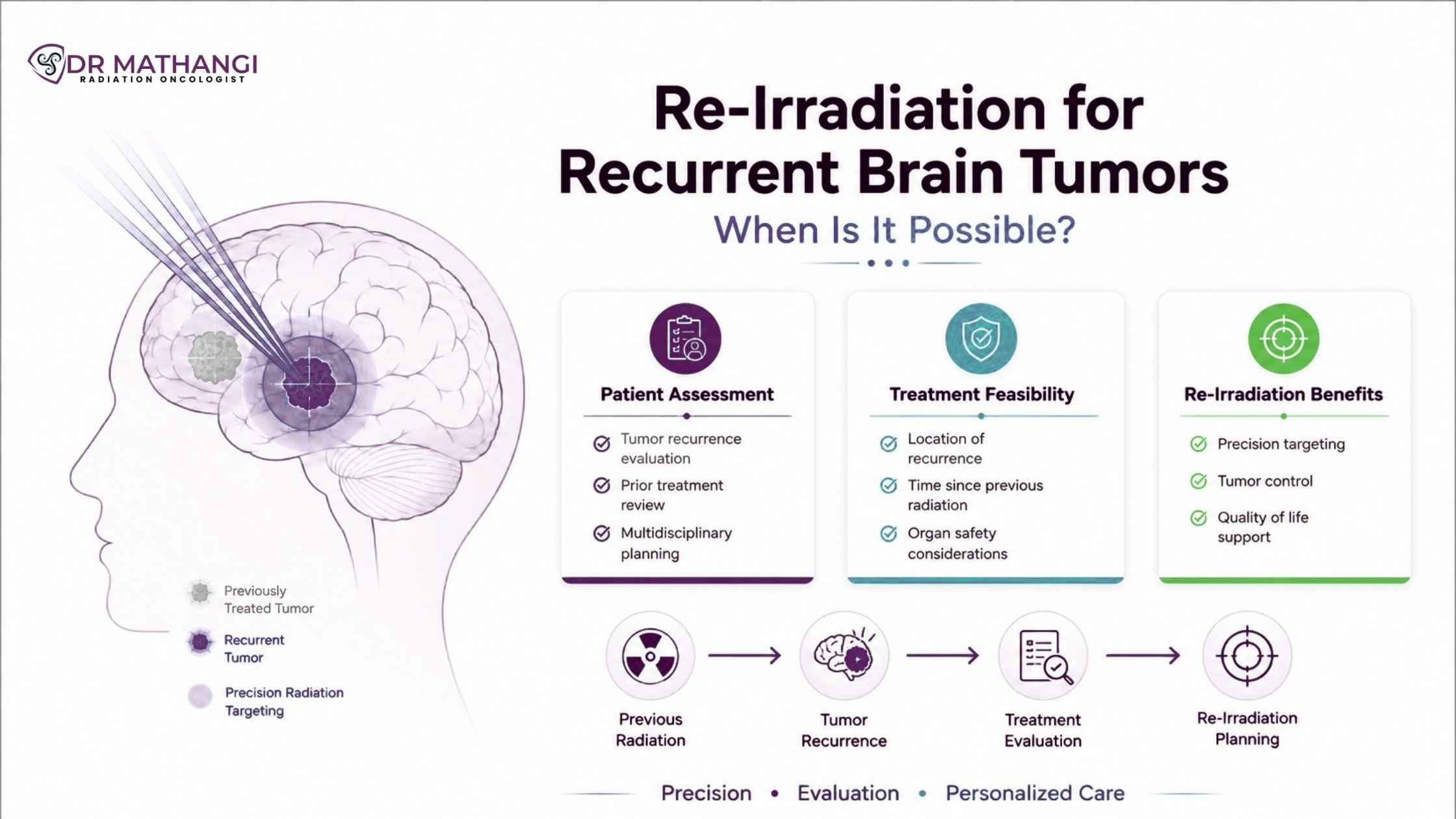
Quick answer: Re-irradiation for recurrent brain tumors is possible in select patients when careful assessment of prior treatment, tumor characteristics, and advanced imaging confirm eligibility. At Gleneagles Cancer Institute, Dr Mathangi J delivers tailored, advanced re-irradiation options for challenging brain tumor recurrences.
Did you know? Over 30% of patients with brain tumors experience recurrence after initial treatment[1], often facing limited therapeutic options. However, re irradiation recurrent brain tumor strategies have evolved, offering new hope for these patients under expert care. At the forefront of this transformation in South India and beyond is Dr Mathangi J, Senior Consultant & In-charge of Radiation Oncology at Gleneagles Cancer Institute, Bangalore. With over two decades of experience and more than 12,000 patients treated, Dr Mathangi is redefining outcomes for patients with recurrent brain tumors using world-class technology and personalized care.
What Is Re-Irradiation For Recurrent Brain Tumors?
Re-irradiation refers to the precise delivery of a second (or subsequent) course of radiation therapy to a brain tumor that has recurred after initial radiation. Thanks to technological advances, re irradiation recurrent brain tumor is now feasible for selected cases, potentially controlling tumor growth, extending survival, and improving quality of life.
- Re-irradiation is not a “one size fits all” approach.
- It requires careful patient selection, advanced imaging, and expert multidisciplinary input.
- Modern techniques like stereotactic radiosurgery and image-guided radiotherapy maximize tumor targeting and minimize risks.
When Is Re-Irradiation Possible? Key Factors
The decision to offer re irradiation recurrent brain tumor is complex. Dr Mathangi J and her team follow an evidence-based, highly individualized approach, considering these factors:
- Previous Radiation Details: The type, dose, and area previously treated. This determines the cumulative radiation dose the brain can safely receive.
- Time Since Last Radiation: A longer interval (usually >6-12 months) between treatments lowers toxicity risks and increases re-irradiation eligibility.
- Location and Size of Recurrence: Tumors that are small, well-defined, and not near critical brain structures are better candidates.
- Patient’s General Health: Functional status, age, and comorbidities influence the safety and benefits of re-irradiation.
- Tumor Biology: Slow-growing tumors (like low-grade gliomas or meningiomas) are more amenable to repeated radiation than aggressive, rapidly recurrent cancers.
At Gleneagles Cancer Institute, Dr Mathangi uses state-of-the-art planning and multidisciplinary tumor boards to ensure only the most suitable patients are offered this advanced treatment, maximizing benefit while minimizing harm.
How Does Recurrent Brain Tumor Radiation Differ From Initial Treatment?
Recurrent brain tumor radiation is fundamentally different from the first course of radiotherapy. The brain’s tolerance is limited — too much radiation can cause irreversible damage. Therefore, re-irradiation relies on advanced techniques:
- Stereotactic Radiosurgery (SRS): Delivers high-dose, pinpointed radiation in 1-5 sessions, ideal for small, well-defined recurrences.
- Fractionated Stereotactic Radiotherapy (FSRT): Uses multiple smaller doses to reduce risk to healthy brain.
- Image-Guided Radiotherapy (IGRT): Maximizes accuracy by using real-time imaging during each session.
- RapidArc and Intensity Modulated Radiotherapy (IMRT): Shape radiation beams to the tumor’s contours, sparing healthy tissue.
These techniques are available at Gleneagles Cancer Institute, where Dr Mathangi’s expertise ensures each plan is individualized for safety and effectiveness.
How Are Patients Selected For Re-Irradiation?
The selection process is rigorous, designed to maximize benefits and minimize risks. Here’s how Dr Mathangi’s team approaches it:
- History Review: Detailed analysis of previous treatments, including cumulative radiation dose and tumor response.
- Current Imaging: Advanced scans, especially tumor progression imaging and perfusion MRI, are critical in differentiating between true tumor recurrence and treatment-related changes (like radiation necrosis).
- Multidisciplinary Board: Radiation oncologists, neurosurgeons, neuroradiologists, and medical oncologists collaborate to assess all aspects of the patient's case.
- Patient Goals: Candid discussion about expected outcomes, potential risks, and patient preferences.
Only after this comprehensive assessment is a patient considered for re irradiation recurrent brain tumor therapy at Dr Mathangi’s center.
What Are The Risks Of Re-Irradiation?
While re-irradiation offers hope, it is not risk-free. The main concerns include:
- Radiation Necrosis: Damage to healthy brain tissue, presenting as swelling, neurological deficits, or seizures. Advanced planning and imaging, such as perfusion MRI, help predict and minimize this risk.
- Cognitive Effects: Memory, attention, or processing speed may be affected, especially with larger fields or repeated high doses.
- Acute Side Effects: Fatigue, headache, nausea, or skin reactions, which are usually manageable.
- Vascular Injury: Rare but serious damage to blood vessels, especially with high cumulative radiation dose.
At Gleneagles, Dr Mathangi uses the latest evidence, careful planning, and patient monitoring to minimize complications. Her advanced training in stereotactic and IGRT techniques further reduces the risk of radiation necrosis and other side effects.
How Is Tumor Progression Or Recurrence Diagnosed?
Distinguishing true recurrence from treatment effects is crucial. Tumor progression imaging plays a pivotal role. Here’s what Dr Mathangi’s protocol includes:
- Conventional MRI: Essential for anatomical detail but sometimes limited in differentiating recurrence from post-treatment changes.
- Perfusion MRI: Measures blood flow to the lesion. Higher perfusion suggests active tumor, while lower perfusion points to necrosis or scarring.
- PET-CT: May be used for metabolic imaging in ambiguous cases.
These tools, combined with clinical assessment, ensure only genuine recurrences are targeted for stereotactic radiosurgery recurrence or other re-irradiation strategies.
What Is Stereotactic Radiosurgery For Recurrence?
Stereotactic radiosurgery recurrence refers to the use of high-precision, single-session (or hypofractionated) radiation for treating brain tumors that have returned after initial therapy.
- It is particularly effective for small, well-defined tumors or metastases.
- Reduces exposure of healthy brain tissue, minimizing risks.
- Often used when surgery is not feasible or as an adjunct to other therapies.
Dr Mathangi’s expertise in SRS and SBRT, honed at leading international centers, ensures patients at Gleneagles Cancer Institute receive the safest and most effective care for recurrent brain tumor radiation.
What Are The Outcomes And Benefits Of Re-Irradiation?
When performed in experienced hands, re irradiation recurrent brain tumor offers:
- Improved Tumor Control: Especially for slowly progressive or oligometastatic disease.
- Extended Survival: Select patients may experience meaningful life extension.
- Better Quality Of Life: Relief of neurological symptoms, reduced need for steroids, and preserved independence.
- Minimal Downtime: Outpatient, non-invasive, and often completed in just a few sessions.
Published studies and real-world experience at Gleneagles Cancer Institute confirm the value of expert-led re-irradiation, with many patients reporting significant symptom relief and prolonged stability.
Why Choose Dr Mathangi J For Re-Irradiation?
Your choice of specialist is critical for the success and safety of re irradiation recurrent brain tumor therapy. Here’s why Dr Mathangi stands out:
- Global-Standard Training: Advanced expertise from leading European centers in SRS, SBRT, IGRT, and intraoperative radiotherapy.
- Track Record: Over 20 years of experience and 12,000+ patients successfully treated, including numerous complex re-irradiation cases.
- Technology Leadership: Asia Pacific’s first TrueBeam STx Machine, Gated RapidArc, and DIBH gated radiotherapy.
- Personalized Care: Each case is reviewed by a multidisciplinary team, with tailored plans for maximum benefit and safety.
- Academic Leadership: Director of Fellowship in Advanced Radiotherapy Techniques, ensuring adoption of the latest protocols and ongoing innovation.
Patients and referring doctors across South and North India trust Dr Mathangi and her team for their blend of compassion, expertise, and results.
How To Book A Consultation With Dr Mathangi?
If you or a loved one is facing a re irradiation recurrent brain tumor situation, expert guidance can make all the difference. To schedule a personalized consultation with Dr Mathangi at Gleneagles Cancer Institute, simply use the form at https://drmathangi.com/contact/. Submit your contact information, and her team will promptly arrange your appointment and notify you with details.
About Dr Mathangi J
Dr Mathangi J is a highly respected Senior Consultant & In-charge of Radiation Oncology at Gleneagles Cancer Institute, Bangalore, part of Gleneagles Hospitals. She brings over 20 years of expertise, specializing in brain tumors, head and neck cancers, prostate, lung, and women’s cancers. With advanced international training and a pioneering spirit, Dr Mathangi has transformed cancer care in India. She leads with a commitment to innovation, safety, and patient-centered excellence, making her the preferred choice for re irradiation recurrent brain tumor and complex radiation oncology cases.
References
- Stupp R, et al. “Recurrent malignant glioma: From molecular biology to clinical management.” The Lancet Oncology. 2001;2(8):494-503.
Frequently Asked Questions
What is re-irradiation for recurrent brain tumors and when is it considered?
Re-irradiation for recurrent brain tumors refers to delivering another course of radiation therapy to a brain area previously treated with radiation. This approach is considered when a tumor recurs after initial treatment, and options like surgery or systemic therapy are limited or not feasible. Dr. Mathangi carefully evaluates each patient’s history, including prior radiation details and the potential risks, before recommending re irradiation recurrent brain tumor as a treatment.
How does Dr. Mathangi determine if re-irradiation is possible for my case?
Dr. Mathangi assesses several factors: the type and location of the recurrent brain tumor, the interval since initial radiation, previous cumulative radiation dose, the patient’s clinical status, and imaging findings. Advanced imaging techniques, such as perfusion MRI, help distinguish between tumor progression and radiation necrosis, guiding the decision-making process.
What advanced techniques are used for recurrent brain tumor radiation?
For recurrent brain tumor radiation, Dr. Mathangi often recommends highly precise methods like stereotactic radiosurgery (SRS) or fractionated stereotactic radiotherapy (FSRT). These techniques allow for focused delivery of radiation to the tumor while minimizing exposure to healthy brain tissue—crucial for patients who have already received radiation previously.
How does stereotactic radiosurgery help in cases of recurrence?
Stereotactic radiosurgery recurrence management involves delivering a high dose of radiation in a single or few sessions with pinpoint accuracy. This approach is especially useful for small, well-defined recurrent tumors and can offer a chance for tumor control with reduced risk of harming surrounding brain structures.
What are the risks of re-irradiation, and how are they managed?
The main risks of re-irradiation include radiation necrosis (damage to normal brain tissue) and other neurological side effects. Dr. Mathangi uses advanced planning software, careful calculation of cumulative radiation dose, and regular monitoring with imaging to minimize these risks. Early detection and management strategies are implemented if any complications arise.
How is tumor progression differentiated from radiation necrosis on imaging?
Distinguishing between tumor progression and radiation necrosis can be challenging. Dr. Mathangi utilizes advanced tumor progression imaging, including perfusion MRI and other modalities, to assess blood flow and metabolic activity in the suspicious area. This helps tailor the treatment plan more accurately and avoid unnecessary interventions.
What is the importance of cumulative radiation dose in re-irradiation?
The cumulative radiation dose is the total amount of radiation the brain tissue has received from all treatments. Dr. Mathangi carefully calculates this to ensure that the new dose does not exceed safe limits, thus reducing the risk of severe side effects and optimizing the chances of successful re irradiation recurrent brain tumor treatment.
What new imaging techniques are used to plan re-irradiation for recurrent tumors?
In addition to standard MRI, Dr. Mathangi employs advanced imaging such as perfusion MRI, MR spectroscopy, and PET scans. These modalities provide detailed information about the tumor’s blood supply, metabolic activity, and biological behavior, helping to accurately identify areas suitable for recurrent brain tumor radiation and to spare healthy tissue.
What follow-up care is required after re-irradiation for a recurrent brain tumor?
After re-irradiation, Dr. Mathangi provides close follow-up with regular clinical assessments and repeat imaging to monitor for tumor response, radiation necrosis, or late effects. Long-term care plans are tailored for each patient to address any new symptoms promptly and maintain quality of life.