Small Cell Lung Cancer: Symptoms & Treatment
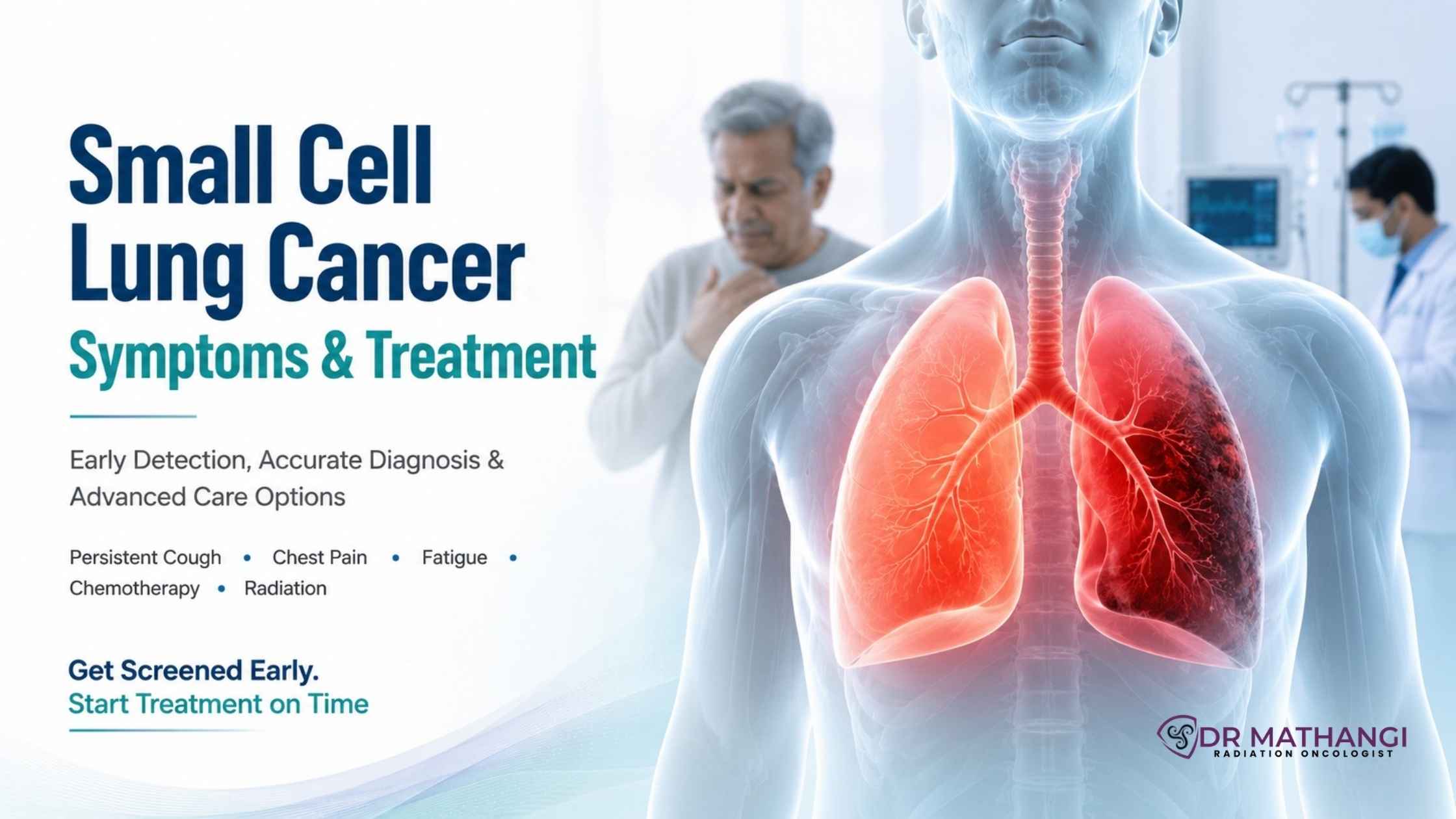
Small cell lung cancer (SCLC) is a highly aggressive form of thoracic cancer, accounting for about 15% of all lung cancer cases worldwide. According to the American Cancer Society, nearly 30,000 new cases of small cell lung cancer are diagnosed each year in India alone. Early identification and expert intervention are vital, as SCLC tends to spread rapidly and can be challenging to treat in later stages.
In this comprehensive guide, you’ll discover what is small cell lung cancer, its symptoms, diagnosis, and the latest treatment options. Learn why entrusting your care to an expert like Dr Mathangi at Gleneagles Cancer Institute, Bangalore, can make a life-changing difference—especially if you or your loved ones are seeking the most advanced, compassionate, and evidence-based cancer treatment in South or North India.
What Is Small Cell Lung Cancer?
Small cell lung cancer (SCLC) is a fast-growing malignancy that originates in the lung’s neuroendocrine cells. Unlike other types of lung cancer, such as non-small cell lung cancer (NSCLC), SCLC is characterized by its rapid progression and early tendency to metastasize (spread) to other organs, including the brain, liver, and bones.
- SCLC often presents with minimal symptoms in the early stages.
- It is most commonly linked to cigarette smoking, but can also occur in non-smokers.
- SCLC is sometimes referred to as small lung cancer in patient discussions.
What Are The Symptoms Of Small Cell Lung Cancer?
Recognizing the early symptoms of SCLC can lead to earlier diagnosis and improved outcomes. Here is a summary of the most common warning signs:
- Persistent cough, often worsening over time
- Hemoptysis (coughing up blood)
- Shortness of breath
- Chest pain or discomfort
- Unexplained weight loss
- Fatigue and general weakness
- Hoarseness of voice
- Swelling in the face or neck (due to superior vena cava syndrome)
- Frequent lung infections such as bronchitis or pneumonia
In some cases, SCLC may cause paraneoplastic syndromes—disorders triggered by the immune response to cancer, leading to hormonal or neurological symptoms. If you experience any of these symptoms, it’s crucial to consult a lung oncology expert like Dr Mathangi promptly for accurate diagnosis and timely intervention.
How Is Small Cell Lung Cancer Diagnosed?
Early and accurate diagnosis of small cell lung cancer is essential for planning the best course of cancer treatment. The diagnostic process typically includes:
- Clinical evaluation: Detailed medical history and physical examination.
- Imaging studies: Chest X-ray, CT scan, PET-CT scan, and MRI to identify tumor location and spread.
- Biopsy: Collecting tissue samples from the lung or lymph nodes for microscopic examination.
- Molecular testing: Identifying specific biomarkers that may influence therapy choices.
- Staging: Determining the extent of disease (limited vs. extensive stage).
At Gleneagles Cancer Institute, Dr Mathangi employs state-of-the-art diagnostic techniques and a multidisciplinary approach to ensure an accurate diagnosis and optimal treatment planning.
What Are The Stages Of Small Cell Lung Cancer?
SCLC is generally classified into two main stages:
- Limited Stage: Cancer is confined to one side of the chest and can be treated within a single radiation field.
- Extensive Stage: Cancer has spread beyond the lung to other parts of the body.
The stage at diagnosis significantly impacts treatment options and prognosis. Advanced small cell lung cancer (extensive stage) requires a more aggressive, multimodal approach, emphasizing the importance of seeing a specialist like Dr Mathangi early in your cancer journey.
What Are The Latest Treatments For Small Cell Lung Cancer?
Cancer treatment for SCLC is constantly evolving, with new therapies improving survival and quality of life. The primary treatment modalities include:
- Chemotherapy: The cornerstone of SCLC management. Chemotherapy agents like cisplatin and etoposide are highly effective in shrinking tumors and controlling disease, especially in both limited and extensive stages.
- Radiation therapy for small cell lung cancer: Often combined with chemotherapy, radiation targets tumors in the chest and can also be used preventively to reduce the risk of brain metastases (prophylactic cranial irradiation).
- Immunotherapy: Recent advances include immune checkpoint inhibitors, which help the body’s immune system attack cancer cells more effectively.
- Surgery: Rarely used due to early spread, but may be an option in select limited-stage cases.
- Palliative care: Focuses on symptom management and improving quality of life, especially in advanced disease.
Dr Mathangi is renowned for her expertise in advanced small cell lung cancer care, integrating the latest international protocols and personalized treatment plans to give every patient the best possible outcome.
Why Is Radiation Therapy For Small Cell Lung Cancer Important?
Radiation therapy for small cell lung cancer is a critical component, particularly for limited-stage disease and in cases where the tumor is localized. It can:
- Enhance the effect of chemotherapy, leading to better tumor control
- Reduce the risk of local recurrence
- Control symptoms such as pain, bleeding, or airway obstruction
- Prevent spread to the brain with prophylactic cranial irradiation
Dr Mathangi utilizes advanced radiation techniques such as Stereotactic Ablative Body Radiotherapy (SBRT), Gated RapidArc, and IGRT, ensuring maximum precision and minimal side effects. Her department features the Asia Pacific’s first TrueBeam STx Machine, enabling world-class lung oncology care right here in Bangalore.
How Does Chemotherapy Work For SCLC?
Chemotherapy remains the backbone of SCLC management. It is used to:
- Shrink tumors for improved breathing and comfort
- Eradicate cancer cells throughout the body
- Enhance survival in both limited and extensive stages
- Work synergistically when combined with radiation
Treatment regimens are carefully tailored by Dr Mathangi, considering factors like stage, overall health, and individual patient needs, ensuring optimal results and minimized toxicity.
Why Choose Dr Mathangi For Lung Oncology And SCLC Care?
Dr Mathangi J is a Senior Radiation Oncologist and Head of the Radiation Oncology Department at Gleneagles Cancer Institute, Bangalore. With over two decades of experience and more than 12,000 patients successfully treated, she stands out as a leader in lung oncology and thoracic cancer care.
- Expertise in complex and advanced small cell lung cancer cases
- Pioneering use of cutting-edge radiotherapy technology
- Personalized, evidence-based care tailored to each individual
- Internationally trained in the latest cancer treatment protocols
- Highly compassionate approach; treats patients like family
Submit your contact information here and our team will schedule your appointment promptly.
What Makes Cancer Treatment At Gleneagles Cancer Institute Unique?
At Gleneagles Cancer Institute in Bangalore, patients benefit from a multidisciplinary team approach, internationally benchmarked protocols, and a nurturing environment. Here’s why patients across South and North India trust Dr Mathangi:
- Comprehensive services: Diagnosis, staging, treatment, and follow-up under one roof
- Access to the latest clinical trials and innovative therapies
- Holistic support: Nutrition, rehabilitation, psychological counseling, and palliative care
- Focus on patient education and empowerment
- Convenient location and seamless care coordination
If you or a loved one are facing a diagnosis of small lung cancer or wish to seek a second opinion, Dr Mathangi and her team are ready to guide you every step of the way.
Summary Table: Why Choose Dr Mathangi For SCLC?
| Key Advantage | Benefit To Patient |
|---|---|
| Over 20 years of experience | Expert management of even the most complex cancer cases |
| Advanced radiation and chemotherapy techniques | Better outcomes, fewer side effects |
| Personalized care plans | Higher chances of remission and improved quality of life |
| International training and credentials | Access to globally benchmarked cancer treatment |
About Dr Mathangi
Dr Mathangi J is a Senior Consultant and In-charge of Radiation Oncology at Gleneagles Cancer Institute, Bangalore. With MBBS, DMRT, and DNB qualifications, she is recognized across India for her expertise in head and neck, brain, spine, lung, esophagus, rectal, liver, breast, bladder, prostate, uterine, cervical, vulval, anal canal, and penile cancers. Her pioneering work in advanced radiation techniques and patient-centered care has made her a trusted authority in the field of oncology. Patients from both South and North India seek her out for her dedication, skill, and consistently excellent outcomes.
Frequently Asked Questions
What is small cell lung cancer and how does it differ from other lung cancers?
Small cell lung cancer (SCLC) is a fast-growing type of lung cancer that usually starts in the breathing tubes (bronchi) and quickly spreads to other parts of the body. Unlike non-small cell lung cancers, SCLC is more aggressive, often diagnosed at an advanced stage, and requires prompt and specialized cancer treatment. Dr. Mathangi, with her expertise in lung oncology, provides comprehensive diagnostic and therapeutic approaches tailored to SCLC.
What are the early symptoms of small lung cancer?
Early symptoms of small lung cancer can be subtle and may include persistent coughing, shortness of breath, chest pain, hoarseness, unexplained weight loss, and fatigue. Some patients may also experience recurrent infections or coughing up blood. Dr. Mathangi emphasizes the importance of early detection and encourages individuals at risk to seek evaluation if they notice these symptoms.
How is advanced small cell lung cancer diagnosed?
Advanced small cell lung cancer is diagnosed through a combination of imaging (CT, PET, or MRI scans), biopsy, and laboratory tests. Staging helps determine how far the cancer has spread. Dr. Mathangi uses state-of-the-art diagnostic tools and a multidisciplinary team approach to ensure accurate diagnosis and staging for optimal treatment planning.
What are the main treatment options for SCLC?
The primary treatment options for SCLC include chemotherapy, radiation therapy for small cell lung cancer, and in some cases, immunotherapy. Surgery is rarely used because SCLC often spreads early. Dr. Mathangi customizes treatment plans based on the cancer stage and patient health, ensuring a personalized and evidence-based approach.
How does chemotherapy work in the treatment of small cell lung cancer?
Chemotherapy is a cornerstone of SCLC management and works by targeting rapidly dividing cancer cells throughout the body. It is often given in cycles and may be combined with radiation. Dr. Mathangi closely monitors patients during chemotherapy to manage side effects and maximize effectiveness, supporting patients through every stage of treatment.
What is involved in radiation therapy for small cell lung cancer?
Radiation therapy for small cell lung cancer uses high-energy rays to target and destroy cancer cells, often in combination with chemotherapy. It may be used for the main tumor, to treat metastases, or to prevent cancer spread to the brain. Dr. Mathangi utilizes advanced techniques to deliver precise radiation while minimizing side effects.
What is the prognosis for patients with advanced small cell lung cancer?
Advanced small cell lung cancer has a challenging prognosis due to its rapid progression and tendency to spread. However, with early intervention and a multidisciplinary approach, including the latest cancer treatment modalities offered by Dr. Mathangi, patients may achieve symptom control and improved quality of life. Continuous follow-up and supportive care are essential parts of her practice.
How does Dr. Mathangi approach thoracic cancer and lung oncology care?
Dr. Mathangi specializes in thoracic cancer and lung oncology, offering a patient-centered approach that combines evidence-based medicine, advanced technology, and compassionate care. Her multidisciplinary team ensures comprehensive evaluation, individualized treatment planning, and ongoing support for all stages of lung cancer, including SCLC.
What supportive services does Dr. Mathangi offer for SCLC patients?
Dr. Mathangi provides a wide range of supportive services for SCLC patients, including pain management, nutritional counseling, psychological support, and palliative care as needed. She ensures that every patient receives holistic attention throughout their cancer journey, improving both outcomes and overall well-being.