SRS vs Surgery for Brain Metastases: Choosing the Right Treatment
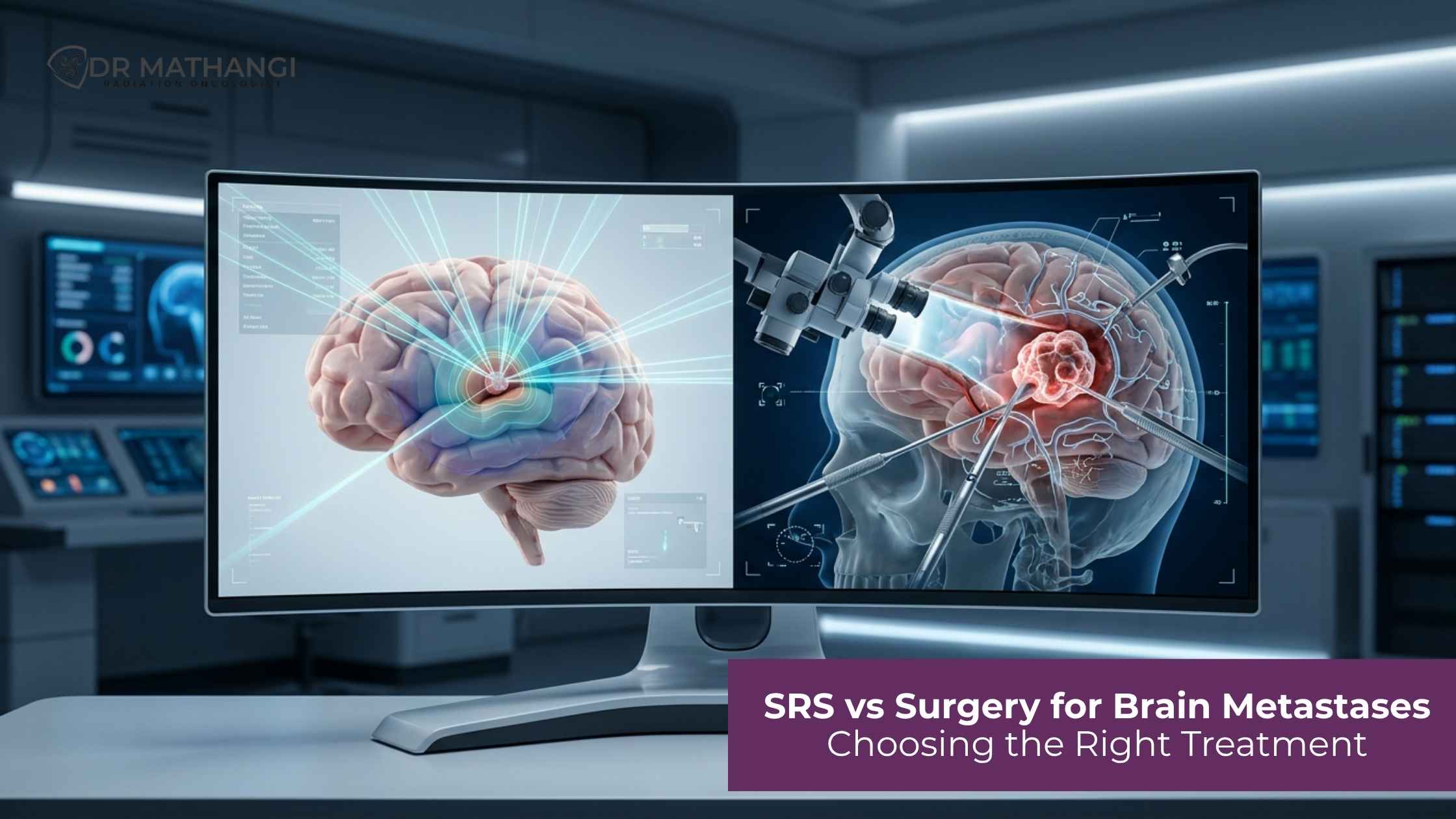
Quick Answer: When considering SRS for brain metastases versus traditional surgery, the choice depends on tumor size, location, patient health, and desired outcomes like neurocognitive preservation. Stereotactic radiosurgery (SRS) offers a non-invasive approach with high intracranial control rates, while surgical resection for brain metastasis may be preferred for larger or symptomatic tumors. Consult with an expert, such as Dr Mathangi J at Gleneagles Cancer Institute, for personalized guidance.
What Is SRS For Brain Metastases And How Does It Work?
SRS for brain metastases, or stereotactic radiosurgery, is a highly precise, non-invasive radiation therapy technique used to treat cancerous tumors that have spread to the brain. With up to 30% of adults with cancer developing brain metastases during their illness, according to leading oncology research, timely and accurate treatment is vital for survival and quality of life.
- Precision: SRS delivers focused, high-dose radiation beams to the tumor, sparing surrounding healthy tissue.
- Non-invasive: No incisions; the procedure is often completed in a single outpatient session.
- Rapid Recovery: Minimal downtime, with most patients resuming normal activities within a day or two.
Dr Mathangi J, Senior Consultant & In-charge of Radiation Oncology at Gleneagles Cancer Institute, Bangalore, specializes in advanced SRS techniques, ensuring optimal outcomes for patients with brain metastases.
How Does Stereotactic Radiosurgery Compare With Surgical Resection For Brain Metastasis?
In brief: Stereotactic radiosurgery is best for small to medium-sized tumors and patients seeking non-invasive treatment, while surgical resection for brain metastasis is often preferred for larger, accessible tumors causing significant symptoms or requiring rapid relief of intracranial pressure.
| Factor | SRS (Stereotactic Radiosurgery) | Surgery (Surgical Resection) |
|---|---|---|
| Invasiveness | Non-invasive | Invasive (requires craniotomy) |
| Ideal Tumor Size | <3-4 cm | >3-4 cm or symptomatic |
| Hospital Stay | Outpatient/Same day | 2–7 days |
| Neurocognitive Preservation | Excellent | Variable (depends on tumor location) |
| Immediate Symptom Relief | No | Yes |
| Intracranial Control Rates | High for small/medium tumors | High for single, large tumors |
By leveraging her advanced training from renowned institutions in Germany and Denmark, Dr Mathangi ensures each patient receives a tailored approach, maximizing the benefits of both options as appropriate.
What Are Gamma Knife Alternatives For Treating Brain Metastases?
Gamma knife alternatives like TrueBeam STx, CyberKnife, and other linear accelerator-based SRS platforms are revolutionizing treatment. These systems match or surpass gamma knife in accuracy, while offering greater flexibility in treating multiple or irregularly shaped tumors.
- TrueBeam STx: First in Asia Pacific installed by Dr Mathangi's team, enables dynamic beam shaping and rapid treatment delivery.
- CyberKnife: Robotic arm delivers radiation from hundreds of angles, ideal for challenging locations.
- LINAC-based SRS: Versatile, widely available, and often cost-effective.
Dr Mathangi’s expertise in these gamma knife alternatives ensures that patients at Gleneagles Cancer Institute receive world-class care with access to the best technology available today.
Why Is Neurocognitive Preservation Important In Brain Metastases Treatment?
Neurocognitive preservation refers to protecting patients’ memory, attention, and executive function during cancer treatment. SRS for brain metastases, as practiced by Dr Mathangi, is designed to minimize radiation exposure to healthy brain tissue, significantly reducing the risk of long-term cognitive decline.
- Selective targeting: SRS focuses only on tumor tissue, sparing vital brain regions involved in cognition.
- Contrast with whole brain radiotherapy: Traditional whole brain radiotherapy (WBRT) exposes the entire brain to radiation, increasing neurocognitive side effects.
- Quality of life: Preserved cognition translates to better independence and emotional well-being.
Neurocognitive preservation is now a cornerstone of modern cancer care, and Dr Mathangi’s advanced protocols set new standards in the region.
How Do Intracranial Control Rates Differ Between SRS And Surgery?
Intracranial control rates refer to the effectiveness of a treatment in preventing tumor recurrence or growth within the brain. For patients with a limited number of metastases (typically 1–4), SRS for brain metastases offers control rates comparable to surgical resection for brain metastasis, especially for tumors less than 3 cm.
- SRS: Up to 85-90% local control at 1 year for small lesions.
- Surgery: Excellent local control for larger, solitary tumors, especially when followed by SRS to the surgical cavity.
- Combined Approach: Surgery plus adjuvant SRS yields the best results for select patients, particularly when immediate symptom relief is needed.
With Dr Mathangi’s multidisciplinary team, patients get individualized plans to achieve the highest possible intracranial control rates.
What Are Whole Brain Radiotherapy Alternatives And When Are They Preferred?
Whole brain radiotherapy alternatives such as SRS, fractionated stereotactic radiotherapy (FSRT), and hippocampal-sparing techniques are now preferred for most patients with a limited number of brain metastases.
- SRS: Standard of care for up to 10 metastases, avoids cognitive side effects of WBRT.
- FSRT: Used for larger tumors or those close to critical structures.
- Hippocampal-sparing WBRT: When WBRT is necessary, sparing the hippocampus can help preserve memory.
Dr Mathangi’s center is a pioneer in offering these whole brain radiotherapy alternatives, supporting better long-term outcomes and quality of life.
How To Choose The Right Treatment For Brain Metastases?
Choosing the right treatment for brain metastases involves evaluating:
- Number, size, and location of metastases
- Patient’s overall health and neurological status
- Primary cancer type and systemic disease control
- Previous treatments and patient preferences
- Desire for neurocognitive preservation
Dr Mathangi employs advanced imaging, multidisciplinary evaluation, and evidence-based protocols to tailor the best approach for each patient—whether SRS for brain metastases, surgical resection for brain metastasis, or a combination strategy.
Why Choose Dr Mathangi For SRS Or Surgery For Brain Metastases In Bangalore?
- Experience: Over 20 years, 12,000+ patients successfully treated
- Expertise: Advanced training in stereotactic radiosurgery, IGRT, RapidArc, and more
- Technology: Asia Pacific’s first TrueBeam STx, latest in gamma knife alternatives
- Comprehensive Care: Dedicated neuro-oncology team, holistic patient support
- Personalized Plans: Every case is reviewed in detail to optimize outcomes and neurocognitive preservation
Dr Mathangi J leads Gleneagles Cancer Institute’s Radiation Oncology Department in Bangalore, recognized as a leading center for cancer care in South India and beyond.
About Dr Mathangi
Dr. Mathangi J is a Senior Consultant and In-charge of Radiation Oncology at Gleneagles Cancer Institute, Bangalore. With credentials from Madras Medical College, Apollo Cancer Specialty Hospital, and advanced international fellowships, she is an expert in SRS for brain metastases, gamma knife alternatives, and neuro-oncology. Her focus on evidence-based, patient-centered care has earned her a reputation as one of the most trusted cancer specialists in India.
To book an appointment, submit your contact details here. Dr Mathangi’s team will schedule your consultation and notify you promptly.
Frequently Asked Questions
What are the main differences between SRS for brain metastases and surgical resection?
SRS for brain metastases (Stereotactic Radiosurgery) is a non-invasive treatment that uses focused radiation to target tumors with high precision, while surgical resection for brain metastasis involves physically removing the tumor through an operation. SRS is often preferred for smaller, well-defined lesions or when surgery poses higher risks, while surgery may be chosen for large or symptomatic tumors causing mass effect. Dr. Mathangi offers both options and will recommend the most appropriate approach based on individual patient factors.
When is stereotactic radiosurgery preferred over surgery for brain metastases?
Stereotactic radiosurgery is typically preferred for patients with a limited number of small brain metastases, especially when the tumors are in locations that are difficult or risky to access surgically. It is also suitable for patients who may not tolerate surgery due to other medical conditions. Dr. Mathangi carefully assesses each patient’s situation to recommend SRS as an effective and minimally invasive option when appropriate.
What are the gamma knife alternatives available for treating brain metastases?
Gamma Knife is a popular form of SRS, but there are several gamma knife alternatives, including CyberKnife and advanced linear accelerator-based systems. These technologies also deliver high-dose, targeted radiation and can be used for a variety of brain metastases. Dr. Mathangi’s practice offers access to the latest stereotactic radiosurgery platforms, allowing for personalized treatment plans tailored to patient needs and tumor characteristics.
How do SRS and surgery compare in terms of neurocognitive preservation?
Neurocognitive preservation is an important consideration when choosing a treatment. SRS for brain metastases is generally associated with a lower risk of cognitive decline compared to whole brain radiotherapy and may also reduce risks compared to surgery for tumors located near critical brain regions. Surgical resection may be more impactful for larger or symptomatic tumors but can carry higher risks of affecting cognitive function depending on tumor location. Dr. Mathangi prioritizes treatments that maximize tumor control while minimizing neurocognitive impact.
What determines the intracranial control rates for these treatments?
Intracranial control rates are influenced by factors such as the number, size, and location of metastases, as well as the type of primary cancer. Both SRS and surgery offer high local control rates for appropriately selected patients. Combining surgery with adjuvant SRS to the surgical cavity can further improve control. Dr. Mathangi uses evidence-based protocols to optimize intracranial control rates and patient outcomes.
Are there whole brain radiotherapy alternatives for patients concerned about cognitive side effects?
Yes, there are whole brain radiotherapy alternatives such as SRS for brain metastases or focused treatments like hippocampal-sparing techniques. These approaches aim to control tumor growth while minimizing exposure to healthy brain tissue and thereby preserve cognitive function. Dr. Mathangi specializes in offering these advanced alternatives to ensure the best possible quality of life for her patients.
How does Dr. Mathangi help patients choose between surgery and SRS for brain metastases?
Dr. Mathangi conducts a thorough evaluation, including imaging, neurological assessment, and a review of overall health and treatment goals. She discusses the risks, benefits, and expected outcomes of both surgical resection for brain metastasis and stereotactic radiosurgery, guiding patients and their families to make informed decisions that align with their preferences and clinical needs.
Can multiple brain metastases be treated with SRS?
Yes, recent advances in technology allow SRS for brain metastases to be used for patients with multiple lesions, not just single or limited metastases. Dr. Mathangi uses state-of-the-art systems capable of treating several tumors in a single session, offering patients an effective, non-invasive alternative to whole brain radiotherapy.
What is the recovery like after SRS or surgical resection for brain metastasis?
Recovery after SRS is typically quick, with most patients resuming normal activities within a day or two. There may be mild headaches or fatigue, but serious side effects are rare. Surgical resection for brain metastasis involves a hospital stay and a longer recovery period, depending on the complexity of the surgery and overall health. Dr. Mathangi provides comprehensive support and follow-up care for both treatment options.