Total Body Irradiation (TBI): Protocols for Bone Marrow Transplant Conditioning
By Dr Mathangi J, Sr Consultant & In-charge – Radiation Oncology, Gleneagles Cancer Institute, Bangalore
What Is Total Body Irradiation And Why Is It Crucial For Bone Marrow Transplant Conditioning?
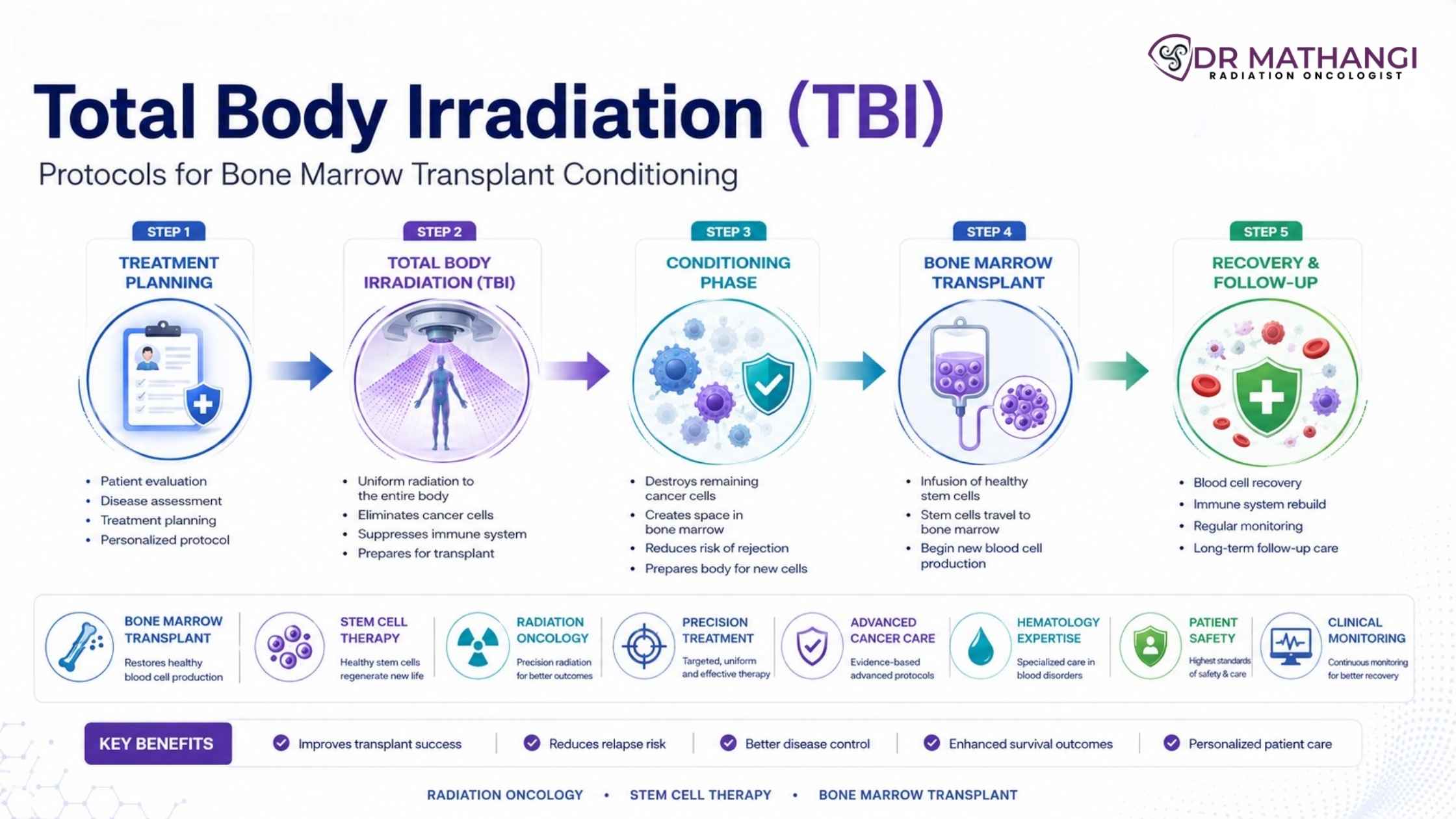
Total Body Irradiation is a specialized form of radiotherapy that delivers a uniform dose of radiation to the entire body. It is a cornerstone in preparing patients for bone marrow or stem cell transplantation, particularly in the treatment of hematologic malignancies such as leukemia and lymphoma. According to recent studies, over 20,000 bone marrow transplants are performed annually worldwide, with TBI used in a significant proportion of these cases for optimal conditioning and disease eradication.
How Does Total Body Irradiation Work In Stem Cell Transplant Conditioning?
TBI works by eradicating malignant cells and suppressing the recipient’s immune system to prevent graft rejection. In stem cell transplant conditioning, this dual action is critical: it not only destroys any remaining cancer cells but also creates space within the bone marrow to facilitate engraftment of the donor stem cells. The process involves careful calculation of the total body irradiation dose to maximize efficacy while minimizing toxicity.
- Immune Suppression: Reduces risk of transplant rejection.
- Malignant Cell Eradication: Targets residual cancer cells resistant to chemotherapy.
- Marrow Space Creation: Facilitates donor cell engraftment.
What Protocols Are Used For Myeloablative Conditioning With TBI?
Myeloablative conditioning refers to high-intensity regimens that completely ablate the patient’s bone marrow. TBI is frequently combined with high-dose chemotherapy in these protocols, designed for younger and fit patients with aggressive hematologic malignancies. Dr Mathangi and her team at Gleneagles Cancer Institute meticulously tailor protocols based on individual diagnosis, age, comorbidities, and disease status.
- Patient Assessment: Comprehensive evaluation including organ function and disease burden.
- Individualized Planning: Advanced imaging and simulation to map radiation delivery.
- Fractionated Dosing: TBI often delivered in multiple smaller doses (fractions) to reduce toxicity.
- Combination Therapy: Administered alongside chemotherapeutic agents for maximum impact.
How Is The Total Body Irradiation Dose Determined And Delivered?
Determining the appropriate total body irradiation dose is critical for balancing disease control with organ preservation. Typical regimens range from 10-14 Gy, split into 6-8 fractions over 2-4 days. Dr Mathangi’s expertise ensures state-of-the-art immobilization, real-time monitoring, and sophisticated dosimetric calculations to achieve homogenous exposure while sparing vital organs.
| TBI Protocol Type | Dose (Gy) | Number of Fractions | Indication |
|---|---|---|---|
| Myeloablative | 12-14 | 6-8 | Acute Leukemias, Lymphomas |
| Reduced Intensity | 2-8 | 2-4 | Elderly, Comorbid Patients |
Why Is Pulmonary Toxicity Sparing Important In TBI?
A notable challenge with TBI is the risk of damaging sensitive organs, especially the lungs. Pulmonary toxicity sparing is a set of advanced techniques employed by Dr Mathangi to shield the lungs from excessive radiation, thus significantly reducing the risk of potentially life-threatening complications such as interstitial pneumonitis and fibrosis.
- Use of customized lung blocks
- Modern techniques like intensity-modulated radiation therapy (IMRT)
- Real-time imaging and respiratory gating
- Strict monitoring of lung dose constraints
These advancements have led to improved transplant outcomes and better quality of life for survivors.
What Are The Main Indications For Total Body Irradiation In Hematologic Malignancies?
TBI is primarily used in the treatment of hematologic malignancies where bone marrow transplant is indicated. Diseases commonly treated include:
- Acute myeloid leukemia (AML)
- Acute lymphoblastic leukemia (ALL)
- Chronic myeloid leukemia (CML)
- Non-Hodgkin and Hodgkin lymphomas
- Myelodysplastic syndromes
For patients with relapsed or refractory disease, leukemia radiotherapy with TBI offers a chance at durable remission and long-term survival when combined with transplantation.
How Are TBI Side Effects Managed And What Can Patients Expect?
TBI side effects may include nausea, vomiting, mucositis, diarrhea, skin reactions, and temporary hair loss. Delayed effects can involve growth disturbances (in children), cataracts, infertility, or secondary cancers. Dr Mathangi’s approach emphasizes proactive side effect management, with a multidisciplinary team providing supportive care throughout the transplant journey.
- Anti-nausea medications and hydration protocols
- Skin care regimens and oral hygiene support
- Monitoring for infections and early intervention
- Long-term survivorship clinics for ongoing assessment
What Makes Dr Mathangi’s TBI Protocols Unique At Gleneagles Cancer Institute?
As a leader in radiation oncology with over 20 years of experience and more than 12,000 treated patients, Dr Mathangi stands at the forefront of innovation in TBI protocols. Her training in advanced radiation techniques from reputed European centers and installation of Asia Pacific’s first TrueBeam STx machine reflect her commitment to excellence.
- Personalized, evidence-based protocols for each patient
- Integration of the latest technology for precise, safe delivery
- Collaboration with expert hematologists and transplant specialists
- Comprehensive pre- and post-transplant care
- Focus on minimizing complications and optimizing outcomes
Who Benefits Most From TBI And When Should You Consult Dr Mathangi?
Patients diagnosed with high-risk hematologic malignancies, including acute leukemias and lymphomas, stand to benefit most from expertly administered TBI as part of their stem cell transplant conditioning. Early consultation with a multidisciplinary team led by Dr Mathangi ensures timely evaluation, optimal protocol selection, and improved survival chances.
To book an appointment with Dr Mathangi and her expert team at Gleneagles Cancer Institute, Bangalore, please submit your contact information at https://drmathangi.com/contact/. Her team will promptly schedule your appointment and notify you of the details.
About Dr Mathangi
Dr Mathangi J is a Senior Consultant and In-charge of Radiation Oncology at Gleneagles Cancer Institute, Bangalore. With an MBBS, DMRT, and DNB, and over two decades of experience, she is acclaimed for her expertise in advanced techniques such as Stereotactic Ablative Body Radiotherapy, Gated RapidArc, and image-guided Interstitial Brachytherapy. She heads the radiation oncology department at her center and serves as the Director of Fellowship in Advanced Radiotherapy techniques affiliated with RGUHS. Dr Mathangi is widely recognized for her clinical excellence, leadership, and dedication to patient-centered cancer care.
Gleneagles Cancer Institute is a leading cancer care center in Bangalore, offering comprehensive and advanced treatment options for various cancers, including head and neck cancers, brain tumors, spine tumors, esophagus and rectal cancers, lung cancers, liver cancers, breast, bladder, prostate, uterine, cervical, vulval, anal canal, and penile cancers.
Key Takeaways: Why Choose Dr Mathangi For Total Body Irradiation Protocols?
- Unmatched experience and proven expertise in TBI protocols for hematologic malignancies
- Cutting-edge technology and individualized patient care
- Commitment to minimizing TBI side effects and maximizing transplant success
- Access to a multidisciplinary team for holistic cancer care
- Patient-first approach, ensuring comfort, safety, and optimal outcomes
Don’t miss the opportunity to benefit from one of India’s most trusted experts in Total Body Irradiation. Early intervention can make all the difference in your journey towards remission and recovery.
Frequently Asked Questions
What is Total Body Irradiation and why is it used in bone marrow transplant conditioning?
Total Body Irradiation (TBI) is a specialized form of external beam radiotherapy that delivers a uniform dose of radiation to the entire body. It is primarily used as part of the preparative regimen before a stem cell or bone marrow transplant. TBI helps destroy malignant cells, suppresses the immune system to reduce graft rejection, and creates space in the bone marrow for new, healthy stem cells to engraft. Dr. Mathangi employs advanced TBI protocols tailored for optimal efficacy and patient safety.
How does myeloablative conditioning differ from reduced intensity conditioning?
Myeloablative conditioning uses high-dose chemotherapy and/or radiation, such as Total Body Irradiation, to completely destroy bone marrow cells, both healthy and malignant. This approach is often necessary for acute hematologic malignancies like leukemia, ensuring maximal disease control before transplant. Reduced intensity conditioning uses lower doses and is selected for older patients or those with comorbidities. Dr. Mathangi evaluates each patient’s profile to determine the most appropriate conditioning strategy.
How is the total body irradiation dose determined for transplant patients?
The total body irradiation dose is precisely calculated based on the patient’s age, diagnosis, overall health, and the type of stem cell transplant conditioning planned. Standard regimens typically deliver 12 Gy in divided fractions, but dosing can vary. Dr. Mathangi uses advanced planning systems and evidence-based protocols to ensure optimal dosing while minimizing the risk of side effects.
What types of hematologic malignancies are commonly treated with TBI in transplant settings?
TBI as part of transplant conditioning is most frequently used for hematologic malignancies such as acute lymphoblastic leukemia (ALL), acute myeloid leukemia (AML), certain lymphomas, and myelodysplastic syndromes. Its role is well established in improving outcomes for high-risk or relapsed disease. Dr. Mathangi customizes protocols to address specific disease characteristics and patient needs.
How does TBI compare to chemotherapy-only regimens for leukemia radiotherapy?
TBI offers several advantages over chemotherapy-only regimens, especially for leukemia radiotherapy. It provides uniform eradication of malignant cells throughout the body, including sanctuary sites that might be less accessible to chemotherapy. Studies show that, in select populations, TBI-containing regimens may lead to improved disease control. Dr. Mathangi carefully evaluates the potential benefits and risks to design the best individualized approach.
What are the common TBI side effects and how are they managed?
TBI side effects can include fatigue, nausea, hair loss, mouth sores, skin reactions, and a lowered blood count. Long-term risks may involve cataracts, infertility, growth delay (in children), and organ toxicity. Dr. Mathangi incorporates preventive strategies, supportive care, and modern techniques to minimize these effects, ensuring close monitoring and prompt management throughout the treatment process.
What measures are used for pulmonary toxicity sparing during TBI?
Pulmonary toxicity sparing is a critical aspect of TBI planning. Techniques such as lung shielding, advanced dose modulation, and careful patient positioning are employed to reduce the risk of radiation-induced lung injury. Dr. Mathangi utilizes sophisticated imaging and planning tools to optimize lung protection, while still ensuring effective conditioning for the transplant.
How does Dr. Mathangi’s approach enhance safety and outcomes in stem cell transplant conditioning?
Dr. Mathangi’s approach combines evidence-based protocols, state-of-the-art technology, and personalized care to optimize outcomes in stem cell transplant conditioning. Her meticulous planning includes dose customization, organ protection strategies, and close interdisciplinary collaboration, all aimed at maximizing transplant success while minimizing risks for each patient.
Can patients undergoing TBI return to normal life after transplant?
Many patients are able to return to normal activities following recovery from TBI and bone marrow transplantation, though this process may take several months. Dr. Mathangi’s team provides comprehensive follow-up care to monitor recovery, manage late effects, and support reintegration into daily life, ensuring the best possible long-term outcomes.