TrueBeam STx vs Traditional Linac: Why Precision Radiation Planning Matters
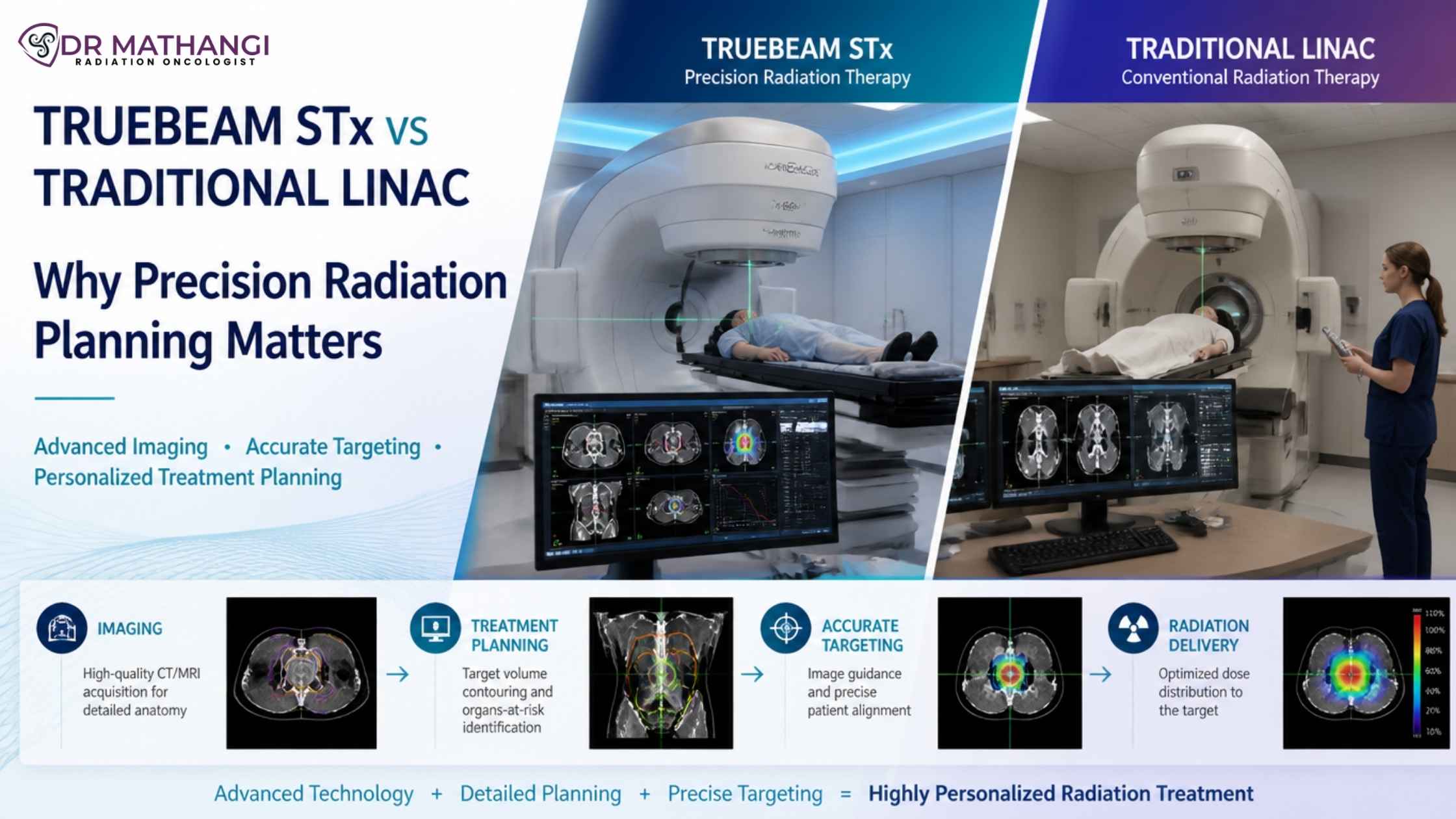 What Is TrueBeam STx Radiation And How Does It Compare To Traditional Linear Accelerator?
TrueBeam STx radiation represents a significant leap in precision cancer treatment, offering accuracy within less than a millimeter, compared to traditional linear accelerators. According to recent studies, patients treated with next-generation technologies like TrueBeam STx achieve higher tumor control rates and experience fewer side effects, making the choice of equipment a pivotal factor in cancer care outcomes.
When it comes to fighting cancer, the tools and expertise you choose can make all the difference. Traditional linear accelerator vs TrueBeam is not just a matter of new vs old—it's about the leap from standard care to world-class precision. This distinction is especially critical for tumors in sensitive areas such as the brain, lungs, head and neck, and pelvic region, where tissue preservation and targeting accuracy are paramount.
Why Is Precision Radiation Therapy Critical For Cancer Outcomes?
Precision radiation therapy ensures that the highest possible dose is delivered directly to the tumor while sparing healthy tissues and vital organs. This approach is especially vital for cancers that need RT (Radiation Therapy)—including head and neck cancers, brain tumors, spine tumors, esophagus, rectal, lung, liver, breast, bladder, prostate, uterine, cervical, vulval, anal canal, and penile cancers.
- Improved tumor control: More accurate targeting translates to higher chances of eradicating cancerous cells.
- Reduced side effects: By minimizing radiation to healthy tissue, patients experience fewer complications and faster recovery.
- Better quality of life: Lower toxicity means patients can maintain daily activities throughout treatment.
Dr Mathangi J, Senior Consultant and In-charge of Radiation Oncology at Gleneagles Cancer Institute, Bangalore, is at the forefront of delivering these outcomes with her expertise and advanced technology.
How Does Advanced Cancer Technology Like TrueBeam STx Transform Patient Experience?
Advanced cancer technology such as the TrueBeam STx system revolutionizes how radiation is delivered. Unlike conventional machines, TrueBeam STx offers:
- Ultra-fast treatment delivery (often in minutes, not hours)
- Sub-millimeter targeting accuracy, even for moving tumors (like those in the lungs or liver)
- Integrated imaging for real-time position verification
- Support for advanced techniques (SRS, SBRT, RapidArc, DIBH, gated radiotherapy)
The TrueBeam STx radiation platform is not just about speed; it is about precision, adaptability, and safety. Dr. Mathangi was instrumental in installing Asia Pacific's first TrueBeam STx Machine, ensuring that patients in Bangalore and South India have access to global standards of care.
What Are The Key Differences: Traditional Linear Accelerator Vs TrueBeam?
Understanding the traditional linear accelerator vs TrueBeam debate is essential for informed decision-making. Here's a concise comparison:
| Feature | Traditional Linear Accelerator | TrueBeam STx Radiation |
|---|---|---|
| Tumor Targeting Accuracy | 3-5 mm | Sub-millimeter (<1 mm) |
| Imaging Capability | Basic, limited integration | Fully integrated, real-time imaging |
| Advanced Techniques | IMRT, 3D-CRT | SRS, SBRT, RapidArc, Gated/DIBH |
| Treatment Time | 30-45 minutes/session | 5-15 minutes/session |
| Patient Comfort | Standard | Enhanced (shorter, more precise sessions) |
| Side Effect Profile | Higher risk to healthy tissue | Lower risk, better preservation of function |
These differences are more than technical—they translate directly into improved patient experiences and outcomes.
How Does Image Guided Radiotherapy Improve Cancer Treatment?
Image guided radiotherapy (IGRT) is a game-changer in ensuring treatments are delivered with pinpoint accuracy. By capturing high-quality images before and during each session, the radiation beam can be adapted to even the smallest changes in tumor position due to breathing, digestion, or patient movement.
- Reduces the risk of missing the tumor target
- Enables dose escalation for harder-to-treat cancers
- Improves safety by minimizing exposure to nearby healthy organs
Dr. Mathangi's advanced training from world-renowned centers in Germany and Denmark uniquely equips her to harness IGRT and related technologies for the best possible patient outcomes.
Why Choose Dr Mathangi For TrueBeam STx Radiation And Precision Cancer Care?
Choosing the right oncologist and center is as crucial as choosing the best technology. Dr Mathangi J is a recognized authority in precision radiation therapy, having treated over 12,000 patients using the most advanced techniques.
- Over 20 years of expertise in radiation oncology
- Hands-on experience with Stereotactic techniques (SRS/SBRT), Gated RapidArc, DIBH, and interstitial brachytherapy
- Director of Fellowship in Advanced Radiotherapy techniques (RGUHS), ensuring ongoing excellence in training and care
- Personalized treatment planning, with a focus on patient safety and quality of life
At Gleneagles Cancer Institute, Bangalore, Dr. Mathangi and her team leverage advanced cancer technology including the region’s first TrueBeam STx system, bringing global standards of care to patients across South India and North India.
Who Benefits Most From TrueBeam STx Radiation?
Patients with complex or hard-to-reach tumors stand to benefit the most. These include:
- Head and neck cancers
- Brain tumors
- Spine tumors
- Esophagus and rectal cancers
- Lung and liver cancers
- Breast, bladder, prostate, uterine, cervical, vulval, anal canal, and penile cancers
For each of these cancers, precision radiation therapy can make the difference between cure and recurrence, and between side effects and a return to normal life.
How To Book A Consultation With Dr Mathangi?
Taking the first step towards world-class cancer care is simple. To book an appointment with Dr Mathangi, submit your contact information on the official contact form. Her care team will promptly schedule your consultation and provide all necessary details.
Don’t compromise on your cancer treatment. Experience the difference that TrueBeam STx radiation and Dr Mathangi’s expertise can make in your journey to recovery.
About Dr Mathangi
Dr. Mathangi J is a Senior Consultant & In-charge of Radiation Oncology at Gleneagles Cancer Institute, Bangalore. With qualifications including MBBS, DMRT, and DNB, and international training in Stereotactic radiotherapy, IGRT/RapidArc, and IORT, she brings unmatched expertise to every case. Dr. Mathangi specializes in treating cancers of the head and neck, prostate, brain, lung, breast, cervix, and endometrium. Her pioneering work with the TrueBeam STx platform has elevated cancer care standards across South and North India.
Frequently Asked Questions
What is the main difference between TrueBeam STx radiation and a traditional linear accelerator?
The primary difference lies in the level of precision and technology. TrueBeam STx radiation delivers highly accurate doses using advanced imaging and rapid beam delivery, allowing for tighter targeting of tumors while sparing healthy tissue. In contrast, a traditional linear accelerator delivers radiation effectively but may lack some of the real-time imaging and motion management capabilities found in the TrueBeam STx, making it less precise for certain complex cases.
Why is precision radiation therapy important in cancer treatment?
Precision radiation therapy ensures that high doses of radiation are delivered directly to the tumor with minimal exposure to surrounding healthy tissues. This approach reduces side effects, improves outcomes, and is especially critical for tumors located near vital organs. Dr. Mathangi emphasizes precision in planning and delivery to maximize effectiveness and patient safety.
How does image guided radiotherapy improve treatment accuracy?
Image guided radiotherapy uses advanced imaging before and during each treatment session to verify the tumor's exact position. This technology allows for adjustments in real time, compensating for patient movement and anatomical changes, thus improving the accuracy of radiation delivery. Dr. Mathangi utilizes this approach to ensure optimal results for her patients.
What advantages does the TrueBeam STx offer over traditional linear accelerators for cancer care?
The TrueBeam STx offers several advantages including faster treatment times, enhanced imaging guidance, the ability to treat complex and hard-to-reach tumors, and superior motion management. When comparing a traditional linear accelerator vs TrueBeam, the latter provides more precise and adaptable treatments, which can be especially beneficial for challenging cancer cases.
How does Dr. Mathangi customize radiation planning for each patient?
Dr. Mathangi uses advanced cancer technology and a multidisciplinary approach to tailor every aspect of radiation planning. Each patient undergoes thorough imaging, motion assessment, and personalized dose calculations to ensure the most effective and safest treatment possible, whether using TrueBeam STx or other modalities.
Are there specific cancers that benefit more from TrueBeam STx radiation?
Yes, TrueBeam STx radiation is especially beneficial for tumors close to critical structures, those that move with breathing (like lung tumors), or small lesions requiring high precision. It is also preferred in cases where previous radiation limits the use of traditional techniques, providing an option for safe and effective re-treatment.
What role does advanced cancer technology play in improving patient outcomes?
Advanced cancer technology, such as the TrueBeam STx, enhances the precision, speed, and adaptability of radiation therapy. These innovations allow for better targeting of tumors, reduced treatment times, and improved management of complex cases, ultimately leading to higher cure rates and fewer complications.
How does Dr. Mathangi ensure safety during precision radiation planning?
Safety is paramount in Dr. Mathangi’s practice. She employs rigorous imaging protocols, motion management strategies, and continuous quality checks throughout the treatment process. By leveraging both technology and a patient-centric approach, she minimizes risk while maximizing the therapeutic benefit of precision radiation therapy.