Types of Lymphocytes: B Cells, T Cells & Their Role
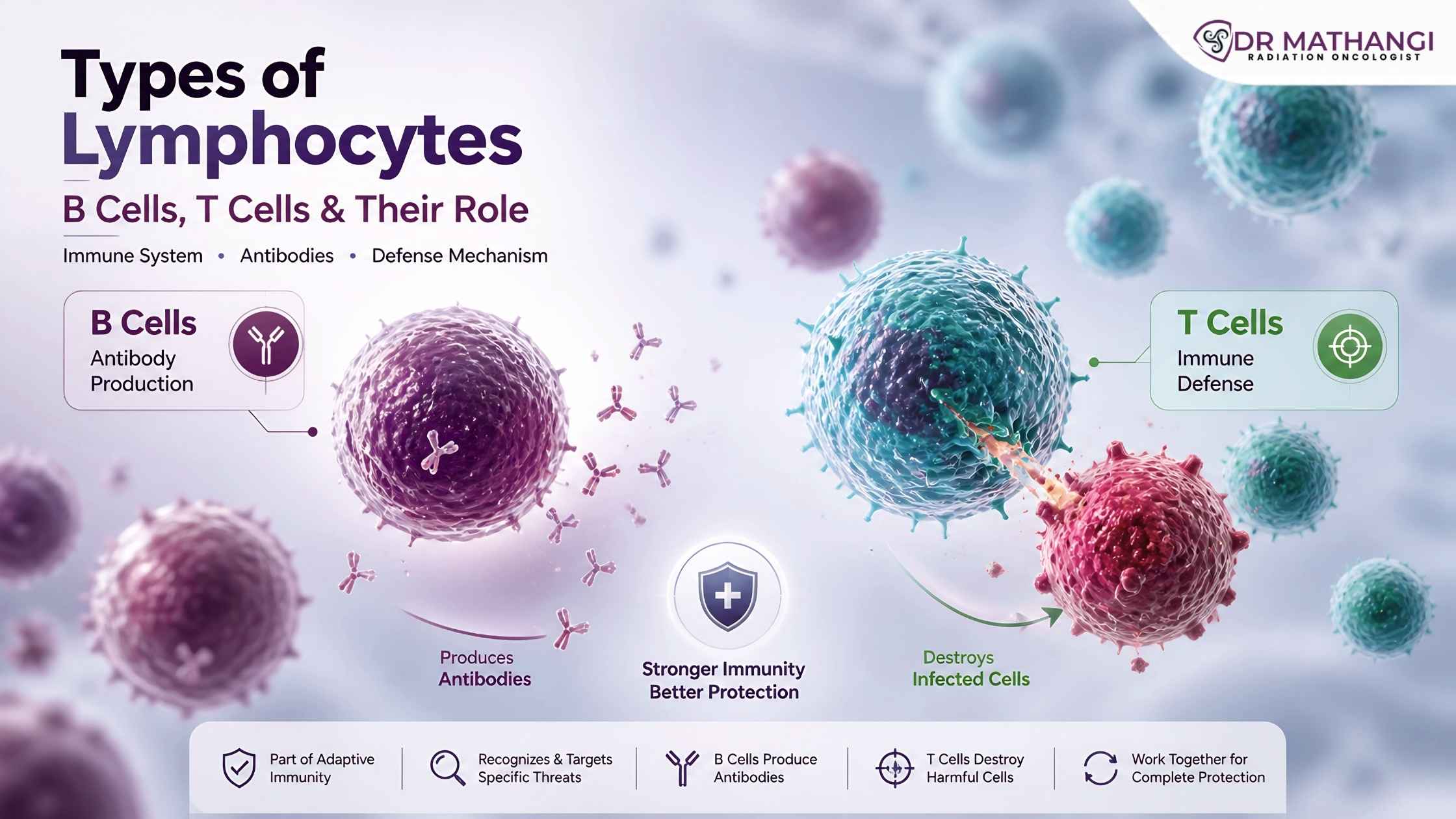
The human immune system relies on specialized cells to defend against infections and cancer, and among them, types of lymphocytes play a central role. Studies show that lymphocytes make up nearly 20–40% of white blood cells, highlighting their critical importance in maintaining immune health. Understanding how immune cell types function is not just academic—it can directly influence early diagnosis, treatment decisions, and long-term health outcomes.
At Gleneagles Cancer Institute, Bangalore, Dr Mathangi J, a Senior Consultant & In-charge of Radiation Oncology with over 20 years of experience and more than 12,000 successfully treated patients, integrates deep immunological understanding into advanced cancer care. Her expertise ensures that patients receive treatments aligned with how the body’s adaptive immunity cells respond to disease.
What are lymphocytes and why are they important?
Lymphocytes are a category of white blood cells essential for identifying and eliminating pathogens, abnormal cells, and cancerous growths. They are the backbone of the body’s adaptive immune response, meaning they can “remember” past infections and respond more efficiently over time.
- They detect foreign antigens
- They produce targeted immune responses
- They create immunological memory
- They regulate immune balance to prevent overreaction
Without proper lymphocyte classification, the immune system would fail to distinguish between harmful and harmless agents, leading to infections or autoimmune disorders.
What are the main types of lymphocytes?
The major immune cell types within lymphocytes are broadly divided into three categories:
| Type | Primary Function | Key Role |
|---|---|---|
| B cells | Antibody production | Humoral immunity |
| T cells | Cell-mediated response | Destroy infected or cancerous cells |
| Natural Killer (NK) cells | Immediate immune defense | Target abnormal cells |
Among these, b lymphocytes and T cells form the core of adaptive immunity cells.
What are b lymphocytes and how do they function?
b lymphocytes are responsible for producing antibodies that specifically target pathogens such as bacteria and viruses. Once activated, they differentiate into plasma cells that release antibodies into the bloodstream.
Key roles of b lymphocytes
- Produce antigen-specific antibodies
- Form memory B cells for long-term immunity
- Neutralize toxins and pathogens
- Assist in immune signaling
In cancer care, understanding B cell responses can help in immunotherapy strategies, which are increasingly integrated into advanced oncology practices under experts like Dr Mathangi.
What is t lymphocytes function in the immune system?
The t lymphocytes function revolves around identifying and destroying infected or abnormal cells. Unlike B cells, T cells do not produce antibodies but instead directly attack or regulate immune responses.
Types of T cells and their roles
- Helper T cells (CD4+): Coordinate immune response
- Cytotoxic T cells (CD8+): Kill infected or cancer cells
- Regulatory T cells: Maintain immune tolerance
- Memory T cells: Provide long-term protection
This layered functionality makes T cells indispensable in both infection control and cancer therapy.
What are naive cd8 cells and why are they important?
naive cd8 cells are immature cytotoxic T cells that have not yet encountered an antigen. Once activated, they transform into powerful cells capable of targeting infected or malignant cells.
The importance of naive CD8 cells includes:
- Serving as a reserve for immune response
- Enabling adaptability against new infections
- Playing a key role in cancer immunosurveillance
In oncology, therapies often aim to activate these cells to recognize and destroy tumor cells more effectively.
What role do regulatory t cells play in immunity?
regulatory t cells are essential for maintaining immune balance. While other immune cells attack threats, regulatory T cells ensure that the immune system does not overreact and damage healthy tissues.
Functions of regulatory t cells
- Suppress excessive immune responses
- Prevent autoimmune diseases
- Maintain tolerance to self-antigens
- Regulate inflammation
However, in cancer, these cells can sometimes suppress beneficial immune responses, making tumors harder to fight. This is where expert-guided treatment strategies become critical.
How does lymphocyte classification help in cancer treatment?
Accurate lymphocyte classification is vital in modern oncology. It allows clinicians to understand how the immune system is interacting with cancer cells and tailor treatments accordingly.
Benefits include:
- Personalized immunotherapy approaches
- Better prediction of treatment outcomes
- Monitoring immune response during therapy
- Identifying immune suppression mechanisms
Dr Mathangi leverages advanced diagnostic and radiation techniques such as SBRT, IGRT, and RapidArc to complement the body’s immune response, ensuring optimal patient outcomes.
Why are adaptive immunity cells crucial in fighting cancer?
adaptive immunity cells, including B and T lymphocytes, provide targeted and long-lasting immune responses. Unlike innate immunity, adaptive immunity learns and evolves, making it highly effective against recurring threats.
In cancer treatment:
- They identify tumor-specific antigens
- They create long-term immune memory
- They enhance the effectiveness of radiation therapy
Combining immunological insights with advanced radiation oncology, as practiced by Dr Mathangi, offers a comprehensive approach to cancer care.
Conditions where lymphocytes play a key role
Lymphocytes are involved in a wide range of conditions, including:
- Infections (viral, bacterial)
- Autoimmune diseases
- Immunodeficiency disorders
- Cancers such as:
- Head and neck cancers
- Brain tumors
- Spine tumors
- Esophagus and rectal cancers
- Lung cancers
- Liver cancers
- Breast cancers
- Bladder cancers
- Prostate cancers
- Uterine cancers
- Cervical cancer
- Vulval cancers
- Anal canal cancers
- Penile cancers
Understanding how immune cell types behave in these diseases can significantly improve treatment precision and outcomes.
Why choosing the right expert matters
Many patients underestimate the importance of immune system understanding in cancer care. This can lead to delayed diagnosis, ineffective treatments, or missed opportunities for advanced therapies.
With over two decades of expertise, global training, and leadership in advanced radiotherapy, Dr Mathangi ensures:
- Precision-driven treatment plans
- Integration of immunological insights
- Access to cutting-edge technology
- Compassionate, patient-centered care
Delaying expert consultation could mean missing out on life-saving, advanced treatment options.
How to book an appointment with Dr Mathangi
Taking the first step toward expert cancer care is simple. Patients can submit their details through the official contact form:
https://drmathangi.com/contact/
Once submitted, Dr Mathangi’s team will schedule the appointment and notify you promptly.
About Dr Mathangi
Dr Mathangi J is a Senior Radiation Oncologist and In-charge at Gleneagles Cancer Institute, Bangalore. With qualifications including MBBS, DMRT, and DNB, she has received international training in advanced techniques such as SRS, SBRT, IGRT, RapidArc, and IORT.
She is recognized for installing Asia Pacific’s first TrueBeam STx Machine and currently leads advanced radiotherapy programs affiliated with RGUHS. Her specialties include head and neck cancers, brain tumors, lung cancers, prostate cancers, and women cancers.
Frequently Asked Questions
What are the main immune cell types involved in lymphocyte activity?
The primary immune cell types involved in adaptive immune responses include b lymphocytes and T cells. These cells play specialized roles such as producing antibodies, killing infected cells, and regulating immune reactions. Understanding these immune cell types is essential for diagnosing immune disorders and planning personalized treatments offered by Dr. Mathangi.
What is the difference between b lymphocytes and T cells?
b lymphocytes primarily produce antibodies that target pathogens, while T cells are involved in directly attacking infected cells and coordinating immune responses. This distinction forms a key part of lymphocyte classification and helps guide targeted therapies that Dr. Mathangi may recommend for immune-related conditions.
What is t lymphocytes function in the human body?
The t lymphocytes function includes identifying infected or abnormal cells, activating other immune cells, and maintaining immune balance. These cells are central to adaptive immunity cells, ensuring that the body responds efficiently to infections and remembers pathogens for future protection.
What role do naive cd8 cells play in immunity?
naive cd8 cells are immature cytotoxic T cells that have not yet encountered an antigen. Once activated, they differentiate into powerful cells that destroy virus-infected or cancerous cells. Monitoring these cells can help Dr. Mathangi assess immune readiness and disease progression in patients.
How do regulatory t cells help maintain immune balance?
regulatory t cells prevent excessive immune responses that could damage healthy tissues. They are crucial for avoiding autoimmune diseases and maintaining tolerance. Dr. Mathangi often evaluates the function of regulatory t cells when addressing chronic inflammation or immune dysregulation.
What is lymphocyte classification and why is it important?
lymphocyte classification refers to categorizing lymphocytes into types such as B cells, helper T cells, cytotoxic T cells, and regulatory subsets. This classification helps clinicians like Dr. Mathangi identify abnormalities and tailor treatments based on specific immune deficiencies or overactive responses.
How do adaptive immunity cells protect the body?
adaptive immunity cells, including B and T lymphocytes, provide targeted and long-lasting protection against pathogens. They remember previous infections and respond more efficiently upon re-exposure. This mechanism is crucial in vaccination strategies and immune therapies recommended by Dr. Mathangi.
When should I consult Dr. Mathangi for lymphocyte-related concerns?
You should consult Dr. Mathangi if you experience recurrent infections, autoimmune symptoms, or unexplained inflammation. Detailed evaluation of immune cell types, including b lymphocytes and T cell subsets, can help diagnose underlying issues and guide effective treatment plans.