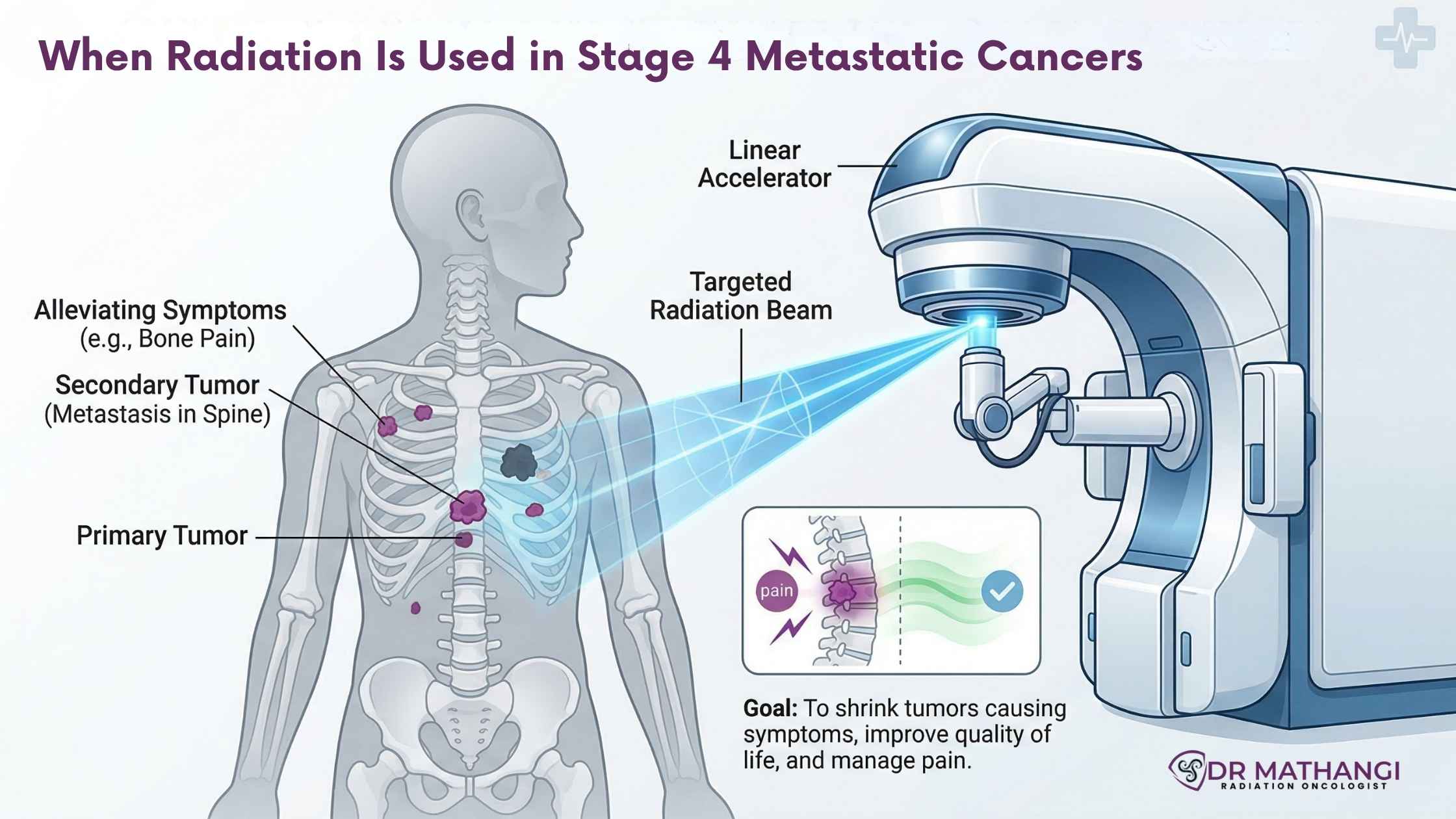
Stage 4 cancer accounts for a significant proportion of cancer-related deaths globally, with metastatic disease responsible for nearly 90% of cancer mortality. Understanding When Radiation Is Used in Stage 4 Metastatic Cancers can dramatically influence both survival and quality of life. Radiation therapy is not merely palliative—it is often strategic, precision-driven, and potentially life-prolonging when delivered by an experienced radiation oncologist like Dr Mathangi.
Stage 4 cancer refers to disease that has spread from its original site to distant organs. This process, known as metastatic spread, results in what doctors describe as a distant metastasis stage, where cancer cells travel through blood or lymphatic systems to form secondary tumors.
Common examples include:
While systemic therapy such as chemotherapy, immunotherapy, or targeted therapy treats the whole body, radiation therapy plays a crucial and often decisive role in localized control.
Radiation therapy in Stage 4 disease is used to control symptoms, prevent complications, reduce tumor burden, and in selected cases, improve survival. The approach depends on the number of metastatic sites, tumor biology, and overall patient health.
Bone metastases can cause severe pain, fractures, and nerve compression. Precision radiation can:
Brain involvement can lead to seizures, weakness, and cognitive changes. Advanced Stereotactic Radiosurgery (SRS) allows high-dose radiation to be delivered precisely to tumor sites while sparing healthy brain tissue.
In cases where only a few metastatic lesions exist (oligometastatic disease), high-precision Stereotactic Ablative Body Radiotherapy (SBRT) may offer durable control and even long-term remission in selected patients.
Radiation can shrink tumors causing:
Radiation integrates with chemotherapy, targeted therapy, and immunotherapy in a multidisciplinary plan for effective metastatic carcinoma treatment.
Dr Mathangi specializes in radiation therapy for:
Her expertise ensures that even complex metastatic adenocarcinoma lung cancer cases are approached with cutting-edge precision.
Not all radiation therapy is equal. The difference between conventional therapy and advanced precision techniques can define outcomes in Stage 4 disease.
Dr Mathangi installed the Asia Pacific’s first TrueBeam STx Machine, enabling:
Image-Guided Radiation Therapy (IGRT) and RapidArc allow real-time tumor tracking, particularly crucial in metastatic carcinoma lung cancer where respiratory motion can impact targeting.
Deep Inspiration Breath Hold (DIBH) techniques reduce cardiac exposure in breast cancer patients with metastatic spread to thoracic structures.
Highly effective for gynecological cancers with distant metastasis stage involvement requiring local pelvic control.
Stage 4 cancer decisions are complex. Inexperienced planning may result in overtreatment or missed opportunities for aggressive local control. With over 12,000 successfully treated patients and more than 20 years of experience, Dr Mathangi combines global training—from Germany and Denmark—with individualized patient-centered care in Bangalore.
She is a Senior Consultant & In-charge – Radiation Oncology and Director of Fellowship in Advanced Radiotherapy techniques affiliated with RGUHS, ensuring academic rigor and clinical excellence.
Radiation works by damaging the DNA of cancer cells. In a distant metastasis stage, the goal may include:
| Clinical Goal | How Radiation Helps |
|---|---|
| Pain control | Shrinks bone lesions reducing nerve irritation |
| Neurological preservation | Targets brain/spine metastases precisely |
| Organ function preservation | Reduces tumor compression in lung or liver |
| Survival extension | Controls oligometastatic lesions aggressively |
Radiation is considered after detailed imaging, biopsy confirmation, and multidisciplinary discussion. Factors include:
In carefully selected cases, radiation can transform metastatic adenocarcinoma lung cancer from rapidly progressive disease into a controlled chronic condition.
Dr Mathangi J is a Senior Consultant & In-charge – Radiation Oncology at Gleneagles Cancer Institute, Bangalore. With MBBS, DMRT, and DNB qualifications, she has trained internationally in SRS, SBRT, IGRT, RapidArc, and IORT. She specializes in Head and Neck Cancers, Brain Tumors, Lung Cancers, Prostate Cancers, and Women Cancers (Breast, Cervix, and Endometrium).
Her center is recognized for comprehensive and advanced cancer care. Patients from across South India and North India travel to consult her for complex metastatic carcinoma treatment because of her expertise in precision-based radiation oncology.
In Stage 4 disease, time matters. Delays can allow metastatic spread to compromise vital organs irreversibly. Precision radiation, when delivered at the right time, can:
Choosing an experienced radiation oncologist is not optional—it is critical.
To consult Dr Mathangi for advanced radiation planning in Stage 4 metastatic cancers, submit your contact details through the official form at:
https://drmathangi.com/contact/
Her team will schedule your appointment and notify you promptly.
In the journey of metastatic cancer, precision, expertise, and timing define outcomes. When radiation is used strategically in Stage 4 metastatic cancers, it becomes not just treatment—but opportunity. And with Dr Mathangi’s advanced training, experience, and technology leadership, that opportunity is maximized.