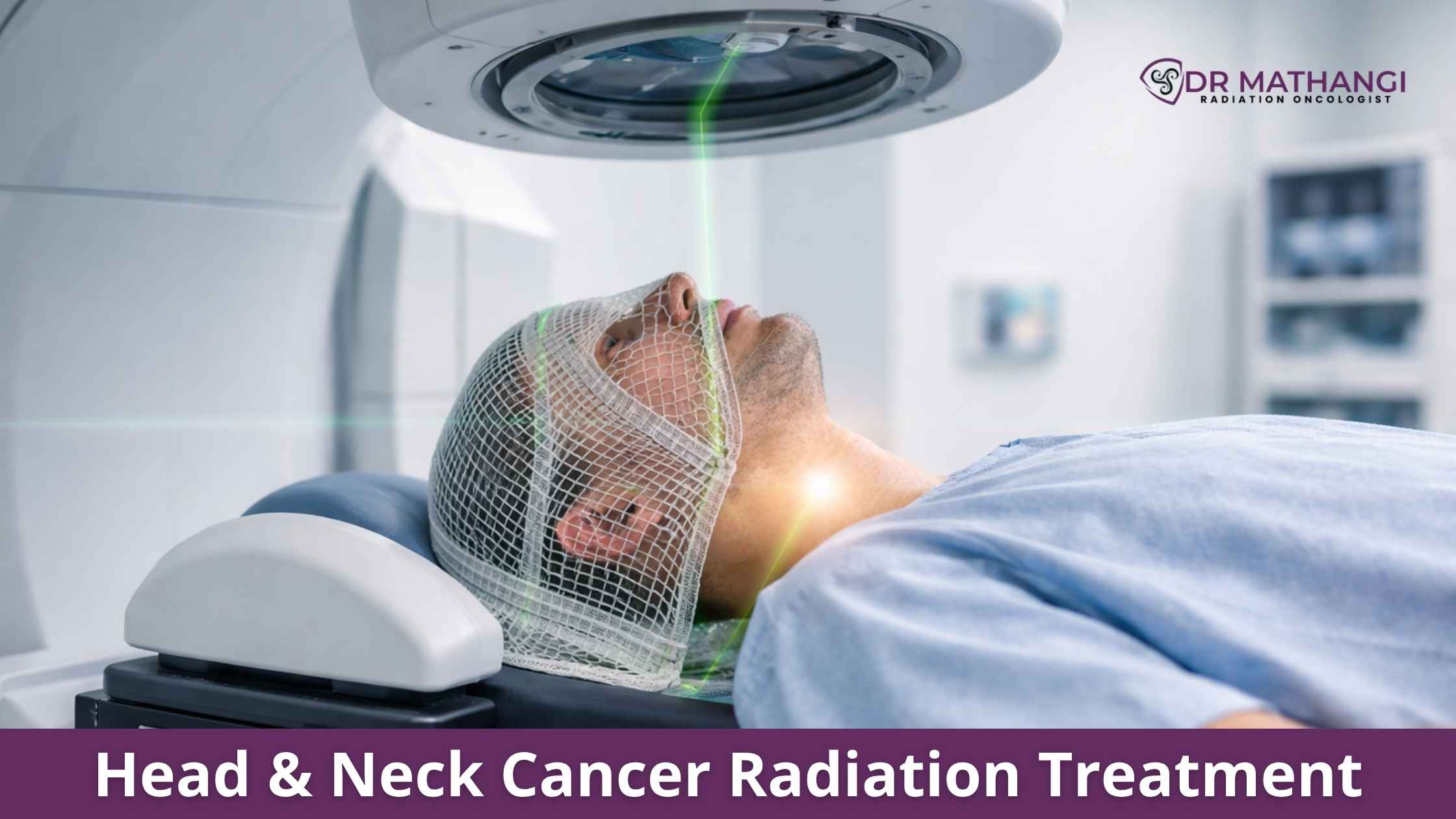
Head & Neck Cancer Radiation 

Home   >   Cancer Types  >Head & Neck Cancer Radiation

Head neck cancer

One of the leading specialists delivering this advanced care is Dr Mathangi J, Senior Consultant and In-charge of Radiation Oncology at the Gleneagles Cancer Institute, Bangalore. With more than 20 years of experience and over 12,000 patients treated successfully, Dr Mathangi combines global expertise, state-of-the-art equipment, and patient-centered care to deliver transformative outcomes in cancer treatment.

Her expertise in precision radiation therapy, adaptive radiotherapy, and image guided radiation therapy enables highly effective cancer control while minimizing harm to healthy tissues. This approach ensures high accuracy cancer treatment and significantly reduced radiation side effects, which is critical in delicate regions like the head and neck.


What is head and neck cancer radiation treatment?

Head and neck cancer radiation treatment is a medical procedure that uses high-energy radiation beams to destroy cancer cells in areas such as the throat, mouth, tongue, voice box, and nasal passages. Radiation damages the DNA of cancer cells so they cannot grow or divide, eventually causing them to die.

Radiation therapy is often recommended:

  • As the primary treatment for early-stage head and neck cancers
  • After surgery to eliminate remaining cancer cells
  • Alongside chemotherapy for advanced cancers
  • To relieve symptoms in advanced disease stages

The complexity of the head and neck region — which contains vital structures responsible for speech, swallowing, breathing, and taste — demands a treatment strategy that prioritizes both effectiveness and safety. This is where modern techniques like precision radiation therapy become essential.


Why radiation therapy is critical for head and neck cancers

Head and neck cancers often occur in anatomically complex areas with critical nerves, blood vessels, and organs nearby. Surgery alone may not always remove every microscopic cancer cell. Radiation therapy plays a crucial role in:

  • Destroying cancer cells left after surgery
  • Preserving organs such as the voice box
  • Preventing recurrence of the disease
  • Maintaining speech and swallowing function

Dr Mathangi’s treatment philosophy emphasizes high accuracy cancer treatment so that the tumor receives the full therapeutic radiation dose while surrounding tissues remain protected.


How precision radiation therapy improves treatment outcomes

Precision radiation therapy represents a major advancement in oncology. Instead of exposing large areas of the body to radiation, advanced planning systems map the exact location and shape of the tumor.

This allows radiation oncologists like Dr Mathangi to:

  • Deliver radiation directly to the tumor
  • Protect nearby organs such as the salivary glands and spinal cord
  • Improve tumor control rates
  • Lower long-term complications

At advanced centers like the Gleneagles Cancer Institute, modern machines such as the TrueBeam STx — introduced in the Asia Pacific region under Dr Mathangi’s leadership — enable extremely precise radiation delivery.


What is image guided radiation therapy and why is it important?

Image guided radiation therapy (IGRT) uses real-time imaging such as CT scans and advanced imaging systems during treatment sessions. These images verify the tumor’s exact position before each radiation dose is delivered.

This technology is especially important in head and neck cancer radiation because even small movements caused by breathing or swallowing can affect targeting accuracy.

Benefits of image guided radiation therapy include:

  • Precise tumor localization before each treatment session
  • Improved accuracy in radiation delivery
  • Better protection of healthy tissue
  • Higher confidence in treatment effectiveness

By integrating imaging directly into the treatment process, Dr Mathangi ensures every radiation session remains aligned with the planned treatment pathway.


How adaptive radiotherapy personalizes cancer treatment

Adaptive radiotherapy is an innovative approach where radiation plans are adjusted throughout the treatment course based on changes in the patient’s anatomy or tumor size.

During treatment for head and neck cancers, patients may experience changes such as:

  • Tumor shrinkage
  • Weight loss
  • Changes in tissue positioning

Instead of continuing with the original treatment plan, adaptive radiotherapy allows oncologists to re-optimize radiation delivery so the tumor continues to receive the most effective dose.

This approach enhances high accuracy cancer treatment while maintaining safety and effectiveness throughout the treatment journey.


Reducing complications through advanced radiation techniques

One of the biggest concerns for patients undergoing head and neck cancer radiation is the possibility of side effects affecting speech, taste, swallowing, or saliva production.

Modern treatment planning and advanced delivery techniques significantly improve patient comfort and outcomes by achieving reduced radiation side effects.

These improvements are achieved through:

  • Highly targeted radiation beams
  • Advanced planning algorithms
  • Real-time imaging verification
  • Personalized treatment adjustments

By combining precision radiation therapy with image guided radiation therapy and adaptive radiotherapy, the treatment approach ensures cancer is treated aggressively while healthy tissues remain protected.


Step-by-step process of head and neck cancer radiation treatment

  1. Initial consultation: A comprehensive evaluation with Dr Mathangi including medical history, imaging studies, and cancer staging.
  2. Treatment planning: Advanced imaging scans are used to design the radiation plan.
  3. Simulation session: Customized positioning devices ensure the patient remains stable during treatment.
  4. Radiation delivery: Daily sessions deliver targeted radiation over several weeks.
  5. Monitoring and adjustments: Techniques such as adaptive radiotherapy refine treatment as the tumor responds.

This systematic process ensures consistent and high accuracy cancer treatment at every stage.


Why choose Dr Mathangi for head and neck cancer radiation

Choosing the right radiation oncologist can dramatically influence treatment outcomes. Dr Mathangi’s extensive experience and leadership in radiation oncology make her one of the most trusted specialists for head and neck cancer radiation.

Her credentials include:

  • More than 20 years of experience in radiation oncology
  • Over 12,000 patients successfully treated
  • Advanced training in Germany and Denmark
  • Expertise in stereotactic radiotherapy techniques
  • Leadership in installing the Asia Pacific’s first TrueBeam STx system

Her clinical approach integrates precision radiation therapy, image guided radiation therapy, and adaptive radiotherapy to deliver the best possible outcomes.

Patients under her care benefit from modern technology, evidence-based protocols, and compassionate guidance throughout the treatment journey.


Other cancers that can be treated with radiation therapy

Radiation therapy is widely used in the treatment of several cancers. In addition to head and neck cancer radiation, radiation oncology plays a key role in treating:

  • Brain tumors
  • Spine tumors
  • Lung cancers
  • Liver cancers
  • Breast cancers
  • Bladder cancers
  • Prostate cancers
  • Uterine cancers
  • Cervical cancer
  • Anal canal cancers
  • Penile cancers
  • Esophagus and rectal cancers
  • Vulval cancers

Through advanced technologies and clinical expertise, radiation therapy continues to transform cancer outcomes worldwide.


How to book a consultation with Dr Mathangi

If you or a loved one has been diagnosed with head and neck cancer, timely treatment can make a life-saving difference. With modern radiation technologies and the expertise of Dr Mathangi, patients have access to some of the most advanced cancer care available today.

To schedule a consultation, simply submit your contact details through the appointment form on the website:

https://drmathangi.com/contact/

Once the form is submitted, Dr Mathangi’s medical team will review the request, schedule the appointment, and notify you with the confirmed details.

Taking this step early can provide access to world-class treatment using precision radiation therapy, image guided radiation therapy, and adaptive radiotherapy — all designed to deliver high accuracy cancer treatment with reduced radiation side effects.


About Dr Mathangi

Dr Mathangi J is a Senior Consultant and In-charge of Radiation Oncology with over two decades of experience in cancer treatment. She heads the radiation oncology department at the Gleneagles Cancer Institute in Bangalore and serves as Director of Fellowship in Advanced Radiotherapy Techniques affiliated with RGUHS.

Her clinical expertise spans cancers of the head and neck, prostate, lung, brain, and women’s cancers including breast, cervix, and endometrium. With international training and pioneering work in advanced radiation technology, she continues to lead innovations in cancer treatment across India.


Frequently Asked Questions

head and neck cancer radiation is a treatment that uses carefully controlled high-energy beams to destroy cancer cells located in areas such as the throat, mouth, larynx, nasal passages, and salivary glands. The radiation damages the DNA of cancer cells, preventing them from growing or spreading.

Under the care of Dr. Mathangi, treatment is designed with great attention to the patient’s diagnosis, tumor location, and stage of disease. Modern technologies ensure that radiation is focused precisely on the tumor while minimizing exposure to healthy tissues, making treatment safer and more effective.

precision radiation therapy is an advanced approach that allows radiation oncologists to target tumors with extremely accurate beam shaping and dose planning. This means the radiation conforms closely to the shape of the tumor while protecting nearby structures such as the salivary glands, spinal cord, and swallowing muscles.

Dr. Mathangi uses advanced planning software and modern radiation delivery systems to ensure that each patient receives individualized treatment. This approach not only improves tumor control but also helps maintain better quality of life during and after treatment.

adaptive radiotherapy is a treatment technique that allows doctors to adjust radiation plans during the course of therapy. As treatment progresses, tumors may shrink or patient anatomy may change slightly due to weight loss or healing tissues.

With adaptive radiotherapy, Dr. Mathangi can review updated imaging and modify the radiation plan accordingly. This ensures that the radiation continues to target the tumor accurately while protecting surrounding healthy tissues, making treatment more responsive and personalized.

image guided radiation therapy uses advanced imaging technology such as CT scans or X-ray verification before or during each treatment session. This imaging confirms the exact location of the tumor at the time of treatment.

By using image guided radiation therapy, Dr. Mathangi can make small adjustments in patient positioning or beam alignment before delivering radiation. This extra level of verification significantly improves treatment precision and ensures that radiation is delivered exactly where it is needed.

High accuracy cancer treatment is essential for head and neck cancers because these tumors are often located close to critical organs responsible for breathing, speaking, and swallowing. Even small deviations in radiation delivery could affect healthy tissues.

Dr. Mathangi emphasizes high accuracy cancer treatment through detailed planning, modern imaging guidance, and precision delivery systems. This careful approach helps maximize tumor control while protecting important structures around the tumor.

One of the major goals of modern cancer therapy is achieving reduced radiation side effects while maintaining strong treatment effectiveness. With advanced planning and targeting technologies, radiation doses can be directed more precisely toward cancer cells.

By combining methods such as precision radiation therapy, image guided radiation therapy, and adaptive radiotherapy, Dr. Mathangi aims to minimize damage to surrounding tissues. This can help reduce issues like severe dryness of the mouth, swallowing difficulty, or irritation of nearby organs.

A typical treatment course for head and neck cancer radiation usually involves daily sessions over several weeks. Each session typically lasts only a few minutes, although planning and positioning may take a bit longer to ensure accuracy.

During treatment with Dr. Mathangi, patients undergo careful planning scans, customized immobilization masks to maintain stable positioning, and regular monitoring throughout the therapy period. This structured process ensures that treatment remains safe, comfortable, and effective.

Choosing an experienced radiation oncologist can make a significant difference in cancer care. Dr. Mathangi focuses on patient-centered treatment planning using modern radiation technologies designed to provide accurate tumor targeting while protecting healthy tissues.

Her approach integrates advanced radiation techniques, continuous monitoring, and supportive care so that patients undergoing head and neck cancer radiation receive both effective therapy and compassionate guidance throughout their treatment journey.

By using this website - You confirm to have read and agree to the Disclaimer statement, Privacy Policy and the Terms & Conditions of this website.
Chat
linkedin facebook pinterest youtube rss twitter instagram facebook-blank rss-blank linkedin-blank pinterest youtube twitter instagram