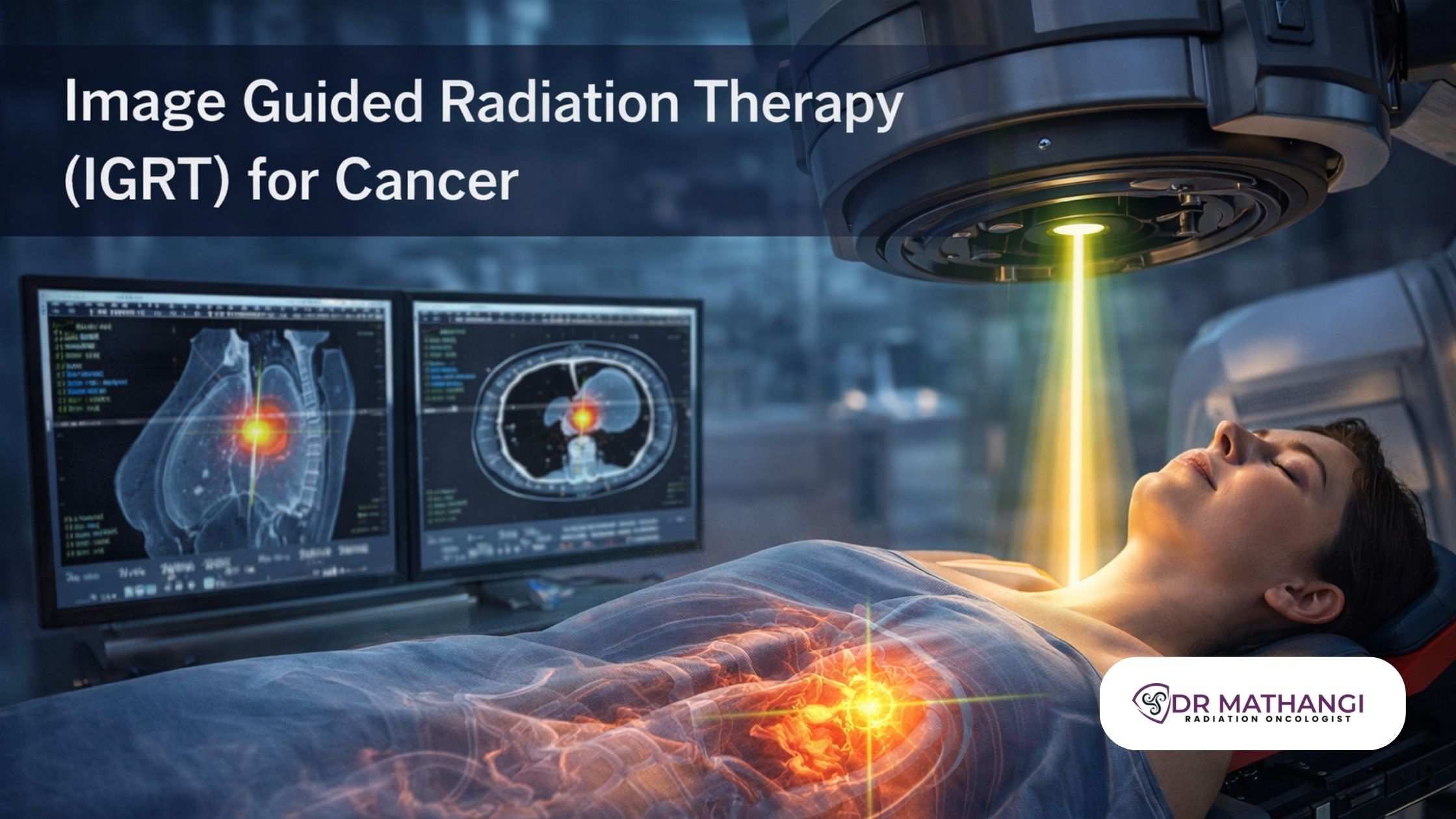
Image guided radiation therapy has been shown to improve targeting accuracy by up to 30–40% compared to conventional radiation techniques, significantly reducing exposure to surrounding healthy tissues. In modern oncology, precision is survival. When every millimeter matters, IGRT ensures that radiation reaches exactly where it should — and nowhere else.
If you or a loved one has been diagnosed with cancer, you may be asking: Is there a safer, more precise radiation option available? The answer increasingly lies in IGRT cancer treatment, especially when delivered by an expert with decades of experience and global training like Dr Mathangi J, Senior Consultant & In-charge – Radiation Oncology at Gleneagles Cancer Institute, Bangalore.
Image guided radiation therapy is an advanced radiation technique that uses imaging scans before and during each treatment session to ensure highly accurate tumor targeting. By verifying tumor position in real time, IGRT minimizes radiation exposure to surrounding healthy tissues and improves treatment outcomes.
Unlike traditional radiation therapy that relies on initial planning scans alone, IGRT incorporates:
This level of accuracy is particularly crucial in cancers that require tight margins and delicate structures nearby, such as:
IGRT cancer treatment improves outcomes by ensuring radiation is delivered precisely to the tumor every single day, compensating for anatomical changes, breathing motion, and setup variations. This reduces side effects and increases tumor control rates.
With real time tumor tracking, tumor position is continuously monitored during treatment. This is especially critical in lung and liver cancers where breathing can shift tumor location by several millimeters.
Motion management in radiotherapy allows treatment to adapt to internal organ movement. Techniques such as gated RapidArc and DIBH (Deep Inspiration Breath Hold) ensure radiation is delivered only when the tumor is in the optimal position.
Cancer shrinks during treatment. Weight changes. Organs shift. Adaptive radiotherapy modifies the radiation plan during the treatment course based on updated imaging. This dynamic approach increases effectiveness while minimizing toxicity.
MRI guided radiation therapy offers superior soft tissue visualization, particularly valuable in prostate, gynecological, and abdominal cancers. It enhances target delineation and further reduces radiation to nearby organs.
AI in radiation therapy enhances contouring accuracy, predicts dose distribution, and supports workflow optimization. AI-driven tools help reduce human error while accelerating treatment planning.
Every patient’s cancer behaves differently. Personalized cancer radiation planning ensures dose, fractionation, and targeting are customized based on tumor biology, location, and patient anatomy.
The problem with conventional radiation therapy was never its intent — it was its limitation in precision. Radiation could unintentionally affect surrounding healthy tissues, leading to:
These complications can alter quality of life long after cancer treatment ends. IGRT solves this by narrowing treatment margins and correcting daily variations.
Not choosing advanced radiation when it is available could mean accepting avoidable side effects. In a city like Bangalore, where cutting-edge cancer care exists, settling for less precise options can mean missing out on safer recovery.
Dr Mathangi is not only a Senior Radiation Oncologist but also a global trainee in advanced radiotherapy techniques. With over 12,000 successfully treated patients, her expertise in stereotactic techniques (SRS/SBRT), Gated RapidArc, DIBH gated Radiotherapy, and image-guided Interstitial Brachytherapy ensures world-class precision.
Her international training includes:
She led the installation of the Asia Pacific's first TrueBeam STx Machine — a milestone reflecting technological leadership.
Image guided radiation therapy is especially beneficial for cancers located near critical organs or those that move with breathing.
| Cancer Type | Why IGRT is Beneficial |
|---|---|
| Head and Neck Cancers | Protects salivary glands and spinal cord |
| Prostate Cancers | Accounts for bladder and rectal filling changes |
| Lung Cancers | Manages breathing motion |
| Breast Cancers | Reduces heart exposure using DIBH |
| Brain Tumors | Enhances millimetric precision |
| Gynecological Cancers | Improves soft tissue targeting |
An IGRT session typically involves:
The process is painless, non-invasive, and usually completed within minutes.
Gleneagles Cancer Institute in Bangalore is a leading center offering advanced radiation technologies under the leadership of Dr Mathangi. Patients from Karnataka, Tamil Nadu, Kerala, Andhra Pradesh, Telangana, Maharashtra, and even North Indian states travel for her expertise.
Her combination of:
creates a level of confidence that is difficult to match.
Dr Mathangi J is a Senior Consultant & In-charge – Radiation Oncology at Gleneagles Cancer Institute, Bangalore. She completed her DMRT at Madras Medical College, Chennai, and her DNB residency at Apollo Cancer Specialty Hospital, Chennai. With more than 20 years of experience, she specializes in Head and Neck Cancers, Prostate Cancers, Brain Tumors, Lung Cancers, and Women Cancers including Breast, Cervix, and Endometrium.
Her approach integrates adaptive radiotherapy, MRI guided radiation therapy, and AI in radiation therapy into everyday clinical practice, ensuring that every patient benefits from precision-driven oncology.
To consult Dr Mathangi for advanced IGRT cancer treatment, patients can submit their details via the contact form at:
https://drmathangi.com/contact/
Her team will review your request, schedule the appointment, and notify you promptly.
When precision can change outcomes, delaying advanced care may not be the safest choice. Image guided radiation therapy is not just technology — it is the difference between approximate and exact. Under Dr Mathangi’s leadership, that precision becomes personal.