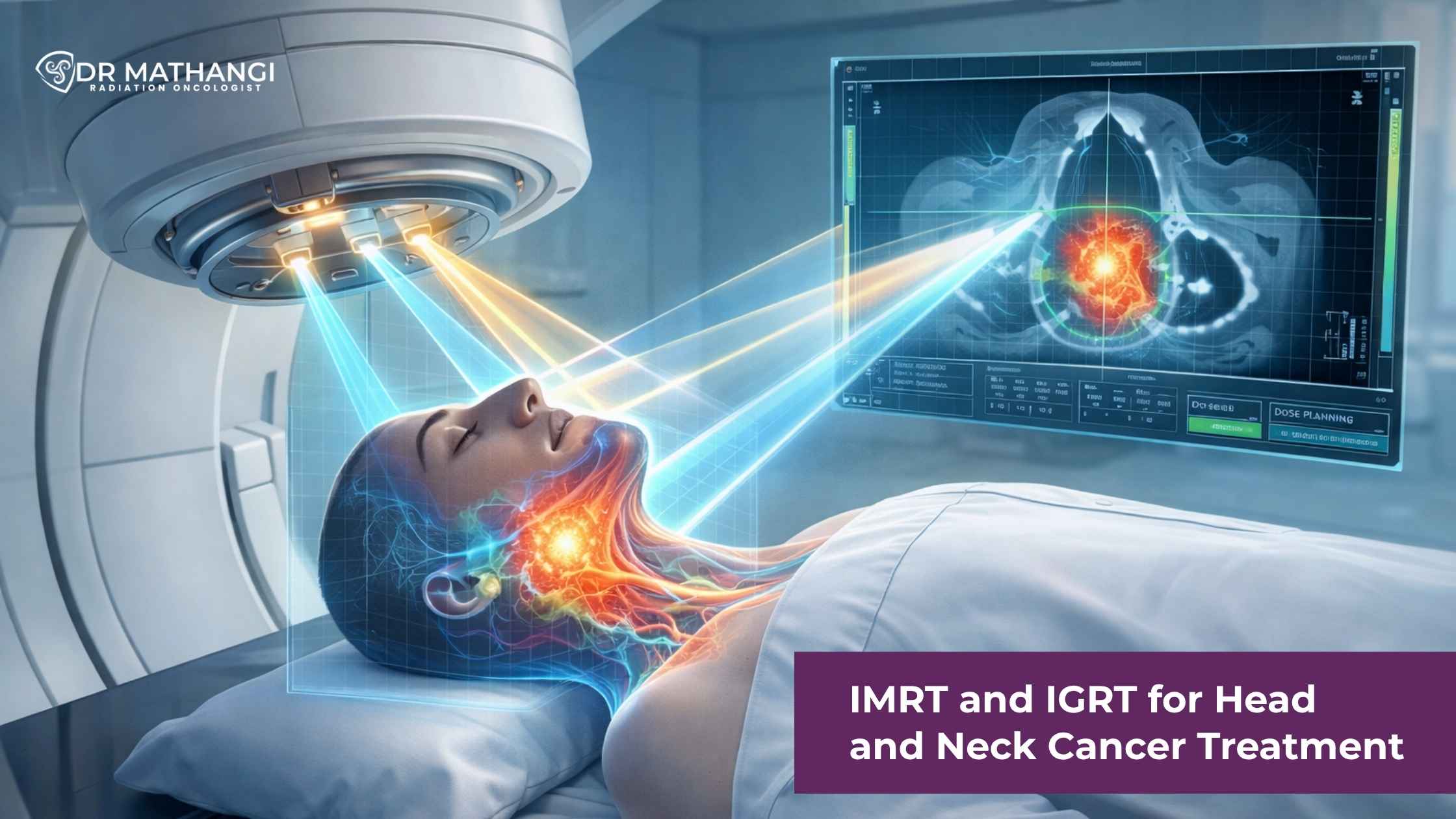
IMRT and IGRT for Head and Neck Cancer Treatment

IMRT and IGRT

Over 60% of patients with head and neck cancers require radiation therapy as a critical part of their treatment journey, and advancements like IMRT IGRT head and neck cancer treatment have dramatically improved survival and quality of life outcomes. These modern techniques are redefining how cancer care is delivered—offering unmatched precision, reduced side effects, and better tumor control.

Yet, many patients still undergo outdated radiation approaches, unknowingly compromising their outcomes. This gap highlights the importance of choosing the right specialist. Under the expertise of Dr Mathangi J, a senior radiation oncologist with over 20 years of experience, patients gain access to cutting-edge care that combines science, technology, and compassion.

What is IMRT and IGRT for head and neck cancer treatment?

IMRT IGRT head and neck cancer treatment refers to advanced radiation therapy techniques that precisely target cancerous tissues while minimizing exposure to surrounding healthy structures such as salivary glands, spinal cord, and oral tissues.

  • IMRT (Intensity-Modulated Radiation Therapy) shapes radiation beams to match tumor contours
  • IGRT (Image-Guided Radiation Therapy) uses real-time imaging to ensure accurate delivery

Together, they represent a significant leap in precision radiotherapy head neck cancer, enabling oncologists like Dr Mathangi to treat complex tumors with remarkable accuracy.

Why precision matters in head and neck cancer treatment?

The head and neck region contains critical organs responsible for speech, swallowing, and breathing. Traditional radiation methods often damage these areas, leading to long-term complications.

With precision radiotherapy head neck cancer, the focus is clear: eliminate cancer while preserving function. This is where patients often face a crucial decision—settling for conventional treatment or opting for advanced care that prioritizes both survival and quality of life.

Key benefits of precision radiotherapy

  • Reduced damage to healthy tissues
  • Lower risk of side effects like dry mouth and difficulty swallowing
  • Improved tumor targeting
  • Better overall treatment outcomes

What are the intensity modulated radiation therapy benefits?

The intensity modulated radiation therapy benefits go beyond basic tumor control. IMRT allows oncologists to adjust radiation intensity across different parts of the tumor, ensuring optimal dosing.

  • Customized radiation dose distribution
  • Protection of critical organs like the spinal cord
  • Reduced long-term complications
  • Enhanced patient comfort during treatment

At Gleneagles Cancer Institute, Dr Mathangi leverages IMRT as part of her advanced radiation therapy techniques, ensuring each treatment plan is tailored to the patient’s unique anatomy and tumor profile.

What are the image guided radiotherapy advantages?

The image guided radiotherapy advantages lie in its ability to track tumor position in real time. Since tumors can shift due to breathing, swallowing, or weight changes, IGRT ensures that radiation is delivered precisely where it is needed.

  • Daily imaging for accurate targeting
  • Reduced margin of error
  • Adaptation to anatomical changes
  • Improved treatment safety

This level of radiation therapy accuracy cancer is critical for head and neck cancers, where even slight deviations can affect vital structures.

How do advanced radiation therapy techniques improve outcomes?

Advanced radiation therapy techniques such as IMRT, IGRT, RapidArc, and stereotactic methods have transformed cancer care from a generalized approach to a highly personalized one.

Dr Mathangi, trained internationally in IGRT and RapidArc, integrates these innovations into her practice to deliver:

  • Higher tumor control rates
  • Reduced treatment duration in select cases
  • Enhanced patient safety
  • Better post-treatment recovery

Patients who delay or overlook these advancements risk undergoing treatments that may not offer the same level of effectiveness or comfort.

What role does modern radiotherapy technology play?

Modern radiotherapy technology is the backbone of successful cancer treatment today. Machines like TrueBeam STx, installed under Dr Mathangi’s leadership, represent the pinnacle of innovation in radiation oncology.

These systems enable:

  • High-speed radiation delivery
  • Sub-millimeter precision
  • Real-time imaging integration
  • Adaptive treatment planning

This advancement ensures superior radiation therapy accuracy cancer, giving patients confidence that their treatment is both effective and safe.

Why choose Dr Mathangi for head and neck cancer treatment?

Dr Mathangi J is a Senior Consultant and In-charge of Radiation Oncology at Gleneagles Cancer Institute, Bangalore. With over 12,000 successfully treated patients, she is recognized as a leader in advanced radiation therapy techniques.

Her credentials include:

  • MBBS, DMRT, DNB
  • Training from Germany and Denmark in IGRT and stereotactic techniques
  • Expertise in IMRT, IGRT, SBRT, and image-guided brachytherapy
  • Installation of Asia Pacific’s first TrueBeam STx Machine

Patients under her care benefit from a combination of global expertise and personalized attention—something that is often missing in standard treatment settings.

Which cancers benefit from radiation therapy?

Radiation therapy plays a vital role in treating a wide range of cancers, including:

  • Head and neck cancers
  • Brain tumors
  • Spine tumors
  • Esophagus and rectal cancers
  • Lung cancers
  • Liver cancers
  • Breast cancers
  • Bladder cancers
  • Prostate cancers
  • Uterine cancers
  • Cervical cancer
  • Vulval cancers
  • Anal canal cancers
  • Penile cancers

Among these, head and neck cancers particularly benefit from precision radiotherapy head neck cancer approaches like IMRT and IGRT.

What happens if you delay advanced treatment?

Delaying access to modern radiotherapy technology can lead to:

  • Increased tumor progression
  • Higher risk of complications
  • Reduced treatment effectiveness
  • Greater impact on quality of life

This is why early consultation with an experienced specialist like Dr Mathangi can make a life-changing difference.

How to start your treatment journey?

Taking the first step toward advanced cancer care is simple. Patients can book an appointment with Dr Mathangi by submitting their details at:

https://drmathangi.com/contact/

Once submitted, her team will schedule the consultation and guide you through the next steps.

About Dr Mathangi

Dr Mathangi J is a leading radiation oncologist based in Bangalore, specializing in head and neck cancers and other complex malignancies. As the Director of Fellowship in Advanced Radiotherapy techniques affiliated with RGUHS, she is actively shaping the future of cancer care while delivering world-class treatment to her patients.


Frequently Asked Questions: IMRT and IGRT for Head and Neck Cancer Treatment

IMRT IGRT head and neck cancer treatment refers to a highly specialized approach where intensity-modulated radiation therapy is combined with image-guided radiotherapy to deliver radiation with exceptional precision. This method allows oncologists like Dr. Mathangi to tailor radiation beams according to the tumor shape while using imaging before each session to ensure accurate targeting.

precision radiotherapy head neck cancer focuses on delivering radiation directly to cancer cells while sparing nearby healthy tissues such as salivary glands and nerves. This leads to fewer side effects, better functional preservation, and improved quality of life during and after treatment under the care of specialists like Dr. Mathangi.

intensity modulated radiation therapy benefits include the ability to vary radiation intensity across different areas of the tumor, improved tumor control, reduced damage to surrounding tissues, and fewer long-term complications. Dr. Mathangi uses this approach to personalize treatment plans for each patient.

image guided radiotherapy advantages lie in its ability to use real-time imaging before each treatment session. This ensures that even slight movements or anatomical changes are accounted for, resulting in highly accurate radiation delivery and minimizing exposure to healthy tissues.

Yes, advanced radiation therapy techniques such as IMRT and IGRT are significantly safer than older radiation methods. They reduce side effects like dry mouth, difficulty swallowing, and tissue damage by precisely shaping and guiding radiation beams, which is a core part of Dr. Mathangi’s treatment approach.

radiation therapy accuracy cancer treatment plays a crucial role in faster recovery and fewer complications. By targeting only the cancerous tissue with high precision, patients often experience less fatigue, reduced toxicity, and better overall outcomes during their treatment journey.

modern radiotherapy technology enables clinicians to deliver highly customized treatment plans using advanced imaging, planning software, and delivery systems. This ensures that each patient receives optimal care tailored to their specific cancer type and stage.

Dr. Mathangi combines clinical expertise with cutting-edge technologies like IMRT and IGRT to provide comprehensive cancer care. Her patient-centered approach focuses on effective tumor control while maintaining quality of life, making her a trusted choice for head and neck cancer treatment.

By using this website - You confirm to have read and agree to the Disclaimer statement, Privacy Policy and the Terms & Conditions of this website.
Chat
linkedin facebook pinterest youtube rss twitter instagram facebook-blank rss-blank linkedin-blank pinterest youtube twitter instagram