AI-Powered Adaptive Radiotherapy 2026: Real-Time Cancer Treatment
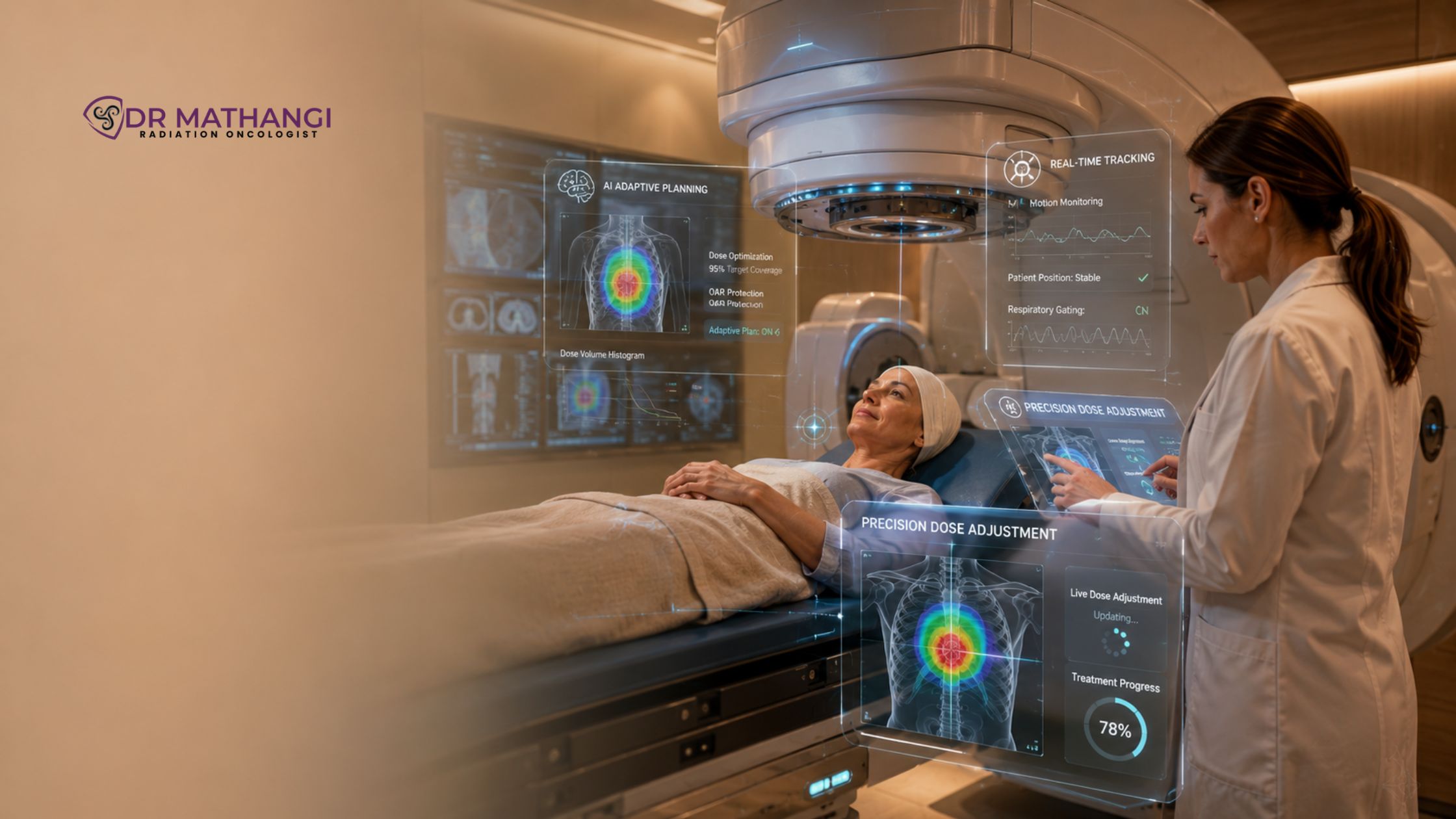
According to global oncology research, nearly 50% of all cancer patients require radiation therapy during the course of treatment, and advanced AI-guided technologies are rapidly changing survival outcomes through higher precision and lower toxicity. In 2026, the emergence of Adaptive Radiotherapy AI 2026 is redefining how radiation oncology responds to tumors in real time, enabling clinicians to adapt treatment based on daily anatomical changes, tumor shrinkage, breathing motion, and organ movement.
For patients and families facing cancer, this evolution is more than technological progress. It represents hope for safer treatment, improved quality of life, faster recovery, and higher precision in targeting cancer cells while protecting healthy tissues. At the forefront of this transformation is Dr Mathangi J, Senior Consultant and In-charge of Radiation Oncology at Gleneagles Cancer Institute Bangalore, who has successfully treated more than 12,000 patients using some of the world’s most advanced radiation oncology systems and protocols.
From head and neck cancers to prostate cancers, lung cancers, brain tumors, cervical cancer, uterine cancers, breast cancers, bladder cancers, anal canal cancers, liver cancers, vulval cancers, penile cancers, spine tumors, and esophageal cancers, the future of radiation treatment is increasingly dependent on intelligent precision systems powered by real-time analytics and AI-guided decision-making.
What is AI-powered adaptive radiotherapy?
AI-powered adaptive radiotherapy is an advanced form of radiation treatment where artificial intelligence continuously analyzes imaging data and modifies radiation delivery in response to changes in tumor position, patient anatomy, and organ motion during the treatment course.
Traditional radiation therapy plans are usually created before treatment begins and may not fully account for daily biological variations. However, modern real-time radiotherapy systems can dynamically adapt treatment plans to ensure that radiation is delivered with exceptional precision each day.
This innovation combines:
- Artificial intelligence algorithms
- Advanced imaging systems
- Machine learning analytics
- Daily adaptive planning
- Precision dose optimization
- Motion management systems
- tumor tracking AI
The result is a smarter and safer treatment ecosystem that minimizes radiation exposure to healthy tissues while maximizing cancer control.
Why is Adaptive Radiotherapy AI 2026 considered a breakthrough?
Adaptive Radiotherapy AI 2026 is considered revolutionary because it enables radiation oncologists to personalize treatment in near real time instead of relying on static plans created weeks earlier.
Cancer tumors do not remain unchanged during therapy. Tumors can shrink, shift, or respond differently based on the patient’s biological behavior. Weight loss, breathing movement, swelling reduction, bladder filling, and bowel motion can all affect radiation accuracy. Without adaptive correction, even minor shifts can influence treatment precision.
This is where Dr Mathangi’s expertise becomes critically important. With advanced international training in IGRT, RapidArc, SBRT, gated radiotherapy, and image-guided therapies from Germany and Denmark, she combines clinical judgment with intelligent oncology systems to ensure treatment remains accurate throughout the patient journey.
Patients who delay access to advanced adaptive radiation technologies may unknowingly lose opportunities for:
- Reduced radiation side effects
- Improved tumor targeting
- Better organ preservation
- Shorter treatment durations
- Enhanced treatment personalization
- Higher precision dose delivery
How does real-time radiotherapy improve cancer treatment?
real-time radiotherapy improves treatment outcomes by continuously monitoring tumor position and adapting radiation delivery instantly during therapy sessions.
This is especially valuable in cancers affected by motion, including:
- Lung cancers
- Liver cancers
- Breast cancers
- Prostate cancers
- Spine tumors
- Head and neck cancers
For example, lung tumors move while a patient breathes. In conventional systems, physicians often increase treatment margins to ensure tumor coverage, but this can expose nearby healthy tissues to unnecessary radiation. Using gated therapy and adaptive systems, Dr Mathangi can synchronize radiation delivery with breathing cycles for significantly greater precision.
This intelligent synchronization forms the backbone of smart cancer therapy, where technology responds to patient-specific anatomy instead of forcing patients into rigid treatment templates.
How does AI treatment planning help patients?
AI treatment planning helps create optimized radiation plans faster, more accurately, and with greater consistency compared to manual-only planning approaches.
Modern oncology centers generate enormous amounts of imaging and treatment data. Artificial intelligence systems can analyze:
- Tumor contours
- Organ-at-risk boundaries
- Dose distributions
- Previous treatment responses
- Historical outcome patterns
- Motion characteristics
These insights assist radiation oncologists in building highly refined plans that reduce unnecessary radiation exposure to surrounding tissues such as:
- Heart
- Lungs
- Spinal cord
- Salivary glands
- Bladder
- Bowel structures
However, technology alone is not enough. The experience of the treating oncologist remains the defining factor. Dr Mathangi’s leadership in installing Asia Pacific’s first TrueBeam STx Machine reflects her commitment to combining advanced systems with evidence-based patient care.
What is adaptive IGRT and why is it important?
adaptive IGRT refers to adaptive image-guided radiation therapy where imaging is used before and during treatment to verify tumor location and modify therapy when required.
The ability to visualize the tumor daily provides a major advantage in cancers where anatomy changes frequently during treatment. Instead of continuing with outdated treatment assumptions, adaptive systems allow oncologists to recalibrate radiation delivery with precision.
Benefits of adaptive IGRT include:
| Clinical Advantage | Patient Benefit |
|---|---|
| Improved targeting precision | Better tumor control |
| Reduced healthy tissue exposure | Fewer side effects |
| Daily anatomical adaptation | Personalized treatment |
| Motion tracking integration | Safer radiation delivery |
| AI-assisted optimization | Faster treatment workflows |
For cancers located close to critical organs, adaptive technologies may significantly influence treatment safety and quality of life outcomes.
How does tumor tracking AI work during radiation therapy?
tumor tracking AI uses imaging and predictive algorithms to monitor tumor motion continuously and guide radiation beams with high accuracy.
This is especially useful for tumors affected by:
- Breathing motion
- Digestive movement
- Bladder filling changes
- Body position shifts
Instead of irradiating large treatment areas “just to be safe,” AI-guided tracking allows the radiation beam to remain aligned with the tumor itself. This can dramatically improve precision in:
- Lung cancer radiotherapy
- Liver tumor treatment
- Prostate cancer management
- Spine radiosurgery
- Brain tumor stereotactic therapy
Dr Mathangi’s expertise in stereotactic ablative body radiotherapy (SBRT) and gated RapidArc treatment protocols enables patients to benefit from highly focused radiation strategies that reduce collateral tissue damage.
Why are patients increasingly choosing smart cancer therapy?
Patients are increasingly choosing smart cancer therapy because they want treatments that are personalized, accurate, minimally invasive, and technologically advanced.
Today’s cancer patients are informed. They actively search for:
- Precision oncology
- Reduced side effects
- Shorter treatment schedules
- Advanced imaging guidance
- Personalized treatment pathways
- Evidence-backed specialists
The emotional burden of cancer is already overwhelming. The fear of treatment-related complications often intensifies anxiety for patients and families. Advanced adaptive systems help address these concerns by improving treatment confidence and reducing unnecessary radiation exposure.
Patients who continue relying solely on outdated radiation approaches may miss access to modern oncology advancements that can influence treatment accuracy and quality of life.
Which cancers benefit the most from adaptive radiotherapy?
Many complex cancers can benefit from AI-driven adaptive radiation techniques, particularly tumors located near critical organs or those affected by body movement.
Dr Mathangi commonly treats cancers requiring advanced radiation precision, including:
- Head and neck cancers
- Brain tumors
- Spine tumors
- Esophagus cancers
- Rectal cancers
- Lung cancers
- Liver cancers
- Breast cancers
- Bladder cancers
- Prostate cancers
- Uterine cancers
- Cervical cancer
- Vulval cancers
- Anal canal cancers
- Penile cancers
Each cancer behaves differently, which is why individualized planning is essential. Adaptive systems allow treatment refinement throughout therapy rather than locking patients into a fixed radiation path.
Why does expertise matter even more in AI-guided oncology?
Even the most advanced oncology machine depends on the expertise of the physician interpreting data, validating decisions, and guiding patient care.
Dr Mathangi’s experience spans more than two decades in radiation oncology with advanced international training in:
- SRS and SBRT techniques
- RapidArc and IGRT systems
- Gated radiotherapy
- Image-guided brachytherapy
- Intraoperative radiotherapy
Her role as Director of Fellowship in Advanced Radiotherapy Techniques further reflects her commitment to clinical excellence, innovation, and continuous education in evolving oncology technologies.
Patients are not simply choosing a machine. They are choosing:
- Clinical judgment
- Experience-driven planning
- Precision execution
- Advanced oncology leadership
- Compassionate multidisciplinary care
About Dr Mathangi
Dr Mathangi J is a Senior Consultant and In-charge of Radiation Oncology at Gleneagles Cancer Institute Bangalore. She holds qualifications including MBBS, DMRT, and DNB, and has more than 20 years of experience in advanced cancer care.
Recognized for treating over 12,000 patients successfully, Dr Mathangi specializes in:
- Head and neck cancers
- Prostate cancers
- Brain tumors
- Lung cancers
- Women cancers including breast, cervix, and endometrium
Her pioneering achievements include installing the Asia Pacific’s first TrueBeam STx Machine and leading advanced radiation oncology initiatives focused on precision, personalization, and patient-centered outcomes.
How to book an appointment with Dr Mathangi
Patients seeking advanced AI-driven radiation oncology care can submit their contact information through the appointment form available on Dr Mathangi’s official website.
Appointment booking link:
https://drmathangi.com/contact/
Once the form is submitted, Dr Mathangi’s team will schedule the consultation and notify the patient regarding the appointment details.
Final thoughts on the future of AI-powered radiation oncology
The future of oncology is rapidly moving toward intelligent, personalized, and dynamically adaptive cancer care. Adaptive Radiotherapy AI 2026 represents a major leap in how radiation therapy is planned, delivered, monitored, and optimized.
As precision oncology evolves, patients increasingly need specialists who combine technological expertise with deep clinical experience. Dr Mathangi’s leadership in advanced radiation oncology positions patients to access some of the most sophisticated cancer treatment strategies available today.
In cancer care, timing matters. Precision matters. Expertise matters. Choosing advanced adaptive radiation therapy early can significantly influence treatment accuracy, side-effect reduction, and overall patient confidence during one of life’s most challenging journeys.
Frequently Asked Questions
What is Adaptive Radiotherapy AI 2026 and how does it improve cancer treatment?
Adaptive Radiotherapy AI 2026 refers to the next generation of radiation oncology systems that use artificial intelligence to continuously adjust treatment delivery based on changes in a patient’s anatomy, tumor size, breathing pattern, and daily imaging results. Unlike conventional treatment methods that rely on a fixed radiation plan created at the beginning of therapy, adaptive systems can modify the treatment approach in near real time.
Under the guidance of Dr. Mathangi, these advanced protocols help create more personalized and precise treatment strategies. AI-driven analysis allows clinicians to reduce unnecessary radiation exposure to healthy tissues while maintaining strong tumor targeting accuracy. This improves treatment efficiency, supports safer dose escalation where appropriate, and can potentially reduce side effects for eligible patients.
How does real-time radiotherapy work during a treatment session?
real-time radiotherapy uses continuous imaging and AI-supported monitoring to track anatomical changes while radiation is being delivered. Tumors can shift slightly during treatment because of breathing, digestion, or natural body movement. Traditional systems may not always respond dynamically to these changes, but modern adaptive platforms are designed to respond instantly.
Dr. Mathangi’s approach focuses on integrating imaging data with intelligent treatment delivery systems so radiation beams remain aligned with the intended target. This allows greater precision in cancers affecting the lung, abdomen, pelvis, and other areas where movement can influence treatment accuracy.
What role does AI treatment planning play in personalized oncology care?
AI treatment planning helps radiation oncologists evaluate complex patient data more efficiently and accurately. Artificial intelligence algorithms can assess tumor contours, nearby organs, previous imaging scans, and dose distribution patterns to support highly customized treatment plans.
In Dr. Mathangi’s cancer care workflow, AI-assisted planning helps streamline decision-making while maintaining physician oversight at every stage. This technology can reduce planning time, improve consistency, and enhance dose optimization for patients requiring advanced radiation therapy techniques.
What is adaptive IGRT and why is it important in modern radiotherapy?
adaptive IGRT stands for adaptive image-guided radiation therapy. It combines daily imaging with adaptive treatment adjustments so clinicians can respond to changes that occur throughout the course of therapy. These changes may include tumor shrinkage, patient weight changes, or shifts in organ position.
By using adaptive imaging workflows, Dr. Mathangi can evaluate whether treatment modifications are needed to maintain precision throughout the patient’s therapy schedule. This is particularly valuable in long treatment courses where anatomy may evolve significantly between the first and final sessions.
Can smart cancer therapy reduce side effects during radiation treatment?
smart cancer therapy aims to improve treatment precision while minimizing radiation exposure to surrounding healthy tissues. By combining AI analytics, adaptive imaging, and automated treatment verification, clinicians can make more informed decisions throughout the treatment process.
Dr. Mathangi’s treatment philosophy emphasizes balancing effectiveness with patient comfort and long-term quality of life. Smart technologies can support this goal by reducing unnecessary radiation spillover, helping preserve nearby organs, and improving confidence in treatment accuracy for selected patients.
How does tumor tracking AI improve radiation accuracy?
tumor tracking AI uses imaging, predictive modeling, and motion analysis to monitor tumor position continuously during treatment delivery. This is especially useful for cancers affected by breathing motion, such as lung and liver tumors.
Instead of delivering radiation to a broad treatment area, tumor tracking systems help focus the beam more precisely on the intended target. Dr. Mathangi uses advanced planning and imaging protocols to improve treatment confidence and support accurate dose delivery even when tumors move naturally during a session.
Which cancer patients may benefit from AI-powered adaptive radiotherapy?
AI-powered adaptive radiotherapy may benefit patients with cancers that are difficult to target precisely or tumors located near critical organs. It is commonly explored in lung, prostate, head and neck, gastrointestinal, gynecologic, and liver cancers where anatomy can shift during treatment.
Dr. Mathangi evaluates each patient individually to determine whether adaptive workflows, advanced imaging, or AI-supported planning techniques are suitable. Treatment recommendations are based on tumor type, disease stage, imaging findings, and overall patient health.
Why are patients increasingly choosing Dr. Mathangi for advanced radiation oncology care?
Patients seeking advanced radiation oncology care often look for a combination of clinical expertise, modern technology integration, and personalized attention. Dr. Mathangi focuses on evidence-based cancer care supported by advanced imaging systems, precision radiation strategies, and patient-centered treatment planning.
Her approach combines technological innovation with compassionate care, helping patients better understand their treatment journey while benefiting from modern developments in adaptive and AI-supported radiotherapy. The goal is not only effective cancer treatment, but also improved confidence, comfort, and continuity throughout the entire treatment process.