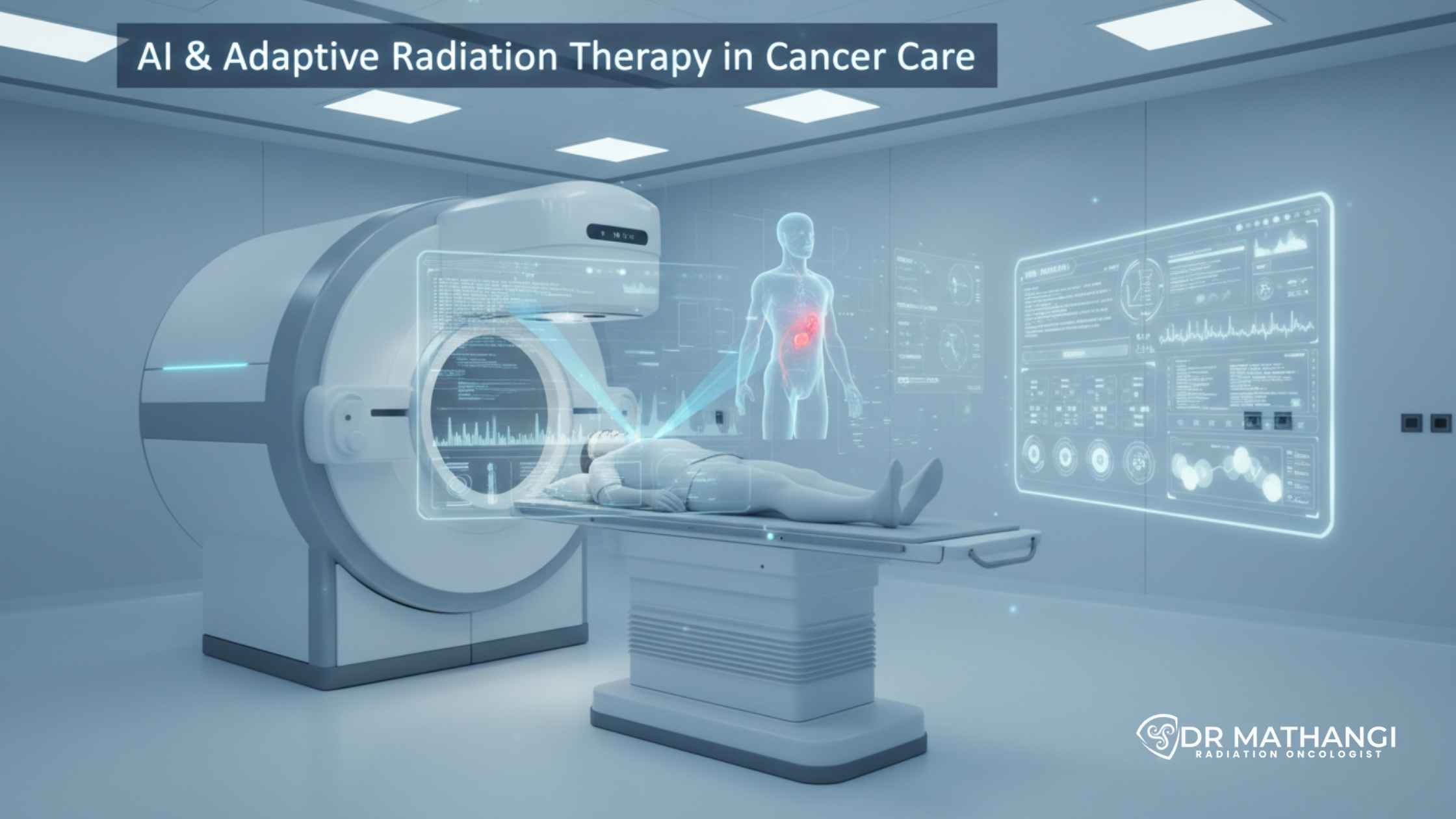
Cancer remains one of the leading causes of mortality worldwide, and radiation therapy plays a crucial role in nearly 50–60% of all cancer treatments. As oncology evolves, AI in radiation therapy and adaptive radiation therapy are transforming how doctors target tumors with extraordinary accuracy. These advanced technologies allow radiation oncologists to personalize treatment, adjust therapy in real time, and minimize damage to healthy tissues.
At the forefront of these innovations is Dr Mathangi J, Senior Consultant and In-charge of Radiation Oncology at Gleneagles Cancer Institute, Bangalore. With over two decades of clinical experience and more than 12,000 successfully treated patients, Dr Mathangi integrates advanced technologies such as artificial intelligence in radiotherapy, real time tumor tracking, precision radiation therapy, and radiomics in cancer treatment to deliver personalized cancer care for patients across India.
For patients facing cancer, choosing the right oncologist and technology can dramatically influence outcomes. The evolution of intelligent radiation therapy systems means that treatment is no longer generic—it is tailored, responsive, and adaptive to each patient’s tumor biology.
AI in radiation therapy refers to the use of advanced computational algorithms and machine learning models to assist oncologists in planning, delivering, and optimizing radiation treatment. These technologies analyze medical images, tumor behavior, and treatment data to help clinicians deliver highly targeted therapy.
Traditional radiation therapy planning relied heavily on manual contouring and fixed treatment plans. However, artificial intelligence in radiotherapy can now analyze imaging datasets within minutes, enabling clinicians to identify tumor boundaries more accurately and design treatment plans that maximize tumor destruction while protecting healthy tissue.
Under the leadership of Dr Mathangi, these technologies are integrated into clinical workflows to ensure that patients benefit from the most advanced radiation oncology innovations available today.
Adaptive radiation therapy is an advanced approach where radiation treatment plans are continuously adjusted during the course of therapy based on changes in tumor size, patient anatomy, or organ movement. Unlike conventional radiation therapy plans that remain static throughout treatment, adaptive techniques evolve with the patient’s response.
Tumors can shrink, shift, or respond differently over time. If treatment plans remain unchanged, radiation may miss portions of the tumor or unnecessarily affect surrounding organs. Adaptive radiation therapy addresses this challenge by enabling clinicians to recalibrate treatment plans using updated imaging and data analysis.
Dr Mathangi employs adaptive techniques particularly for cancers where anatomical changes are common during treatment, including:
By adapting treatment plans dynamically, the radiation dose remains focused precisely where it is needed most.
The integration of artificial intelligence in radiotherapy allows radiation oncologists to analyze complex datasets that would otherwise require hours or days of manual interpretation. AI algorithms can process CT scans, MRI images, and PET scans simultaneously to identify tumor margins with remarkable precision.
This advanced technology helps clinicians identify patterns that might not be visible to the human eye. AI-driven planning tools evaluate millions of possible radiation beam configurations and select the one that delivers the optimal therapeutic dose while sparing surrounding organs.
For patients, this translates into:
Dr Mathangi’s extensive international training—including stereotactic techniques from Germany and advanced IGRT technologies from Denmark—enables her to apply these sophisticated AI-driven methods with clinical expertise and precision.
Radiomics in cancer treatment represents one of the most exciting developments in modern oncology. Radiomics converts medical imaging data into high-dimensional quantitative information that can reveal patterns about tumor biology, aggressiveness, and treatment response.
Using radiomics, oncologists can extract hundreds or even thousands of imaging features from CT or MRI scans. These features help identify subtle tumor characteristics that guide personalized treatment strategies.
Benefits of radiomics in cancer treatment include:
In combination with AI in radiation therapy, radiomics allows clinicians like Dr Mathangi to move beyond standardized treatment models and toward precision oncology tailored to each patient.
Tumors do not remain perfectly still during treatment. Natural body movements such as breathing, digestion, and organ motion can cause tumors to shift position. Without proper monitoring, radiation may miss the intended target.
This is where real time tumor tracking becomes critical. Advanced radiation systems continuously monitor tumor movement and adjust the radiation beam accordingly during treatment.
The advantages of real time tumor tracking include:
Dr Mathangi’s expertise in advanced technologies such as Gated RapidArc and DIBH gated radiotherapy allows tumors that move during breathing—such as lung tumors or breast tumors—to be treated with exceptional accuracy.
Precision radiation therapy refers to the delivery of radiation beams that conform precisely to the shape and location of a tumor. This technology ensures that the maximum therapeutic dose is directed at cancer cells while minimizing exposure to surrounding healthy tissues.
Modern precision-based techniques used under Dr Mathangi’s guidance include:
The result is treatment that is not only more effective but also significantly safer for patients.
Dr Mathangi is one of India’s most experienced radiation oncologists, with more than 20 years dedicated to treating complex cancers. She currently serves as Senior Consultant and In-charge of Radiation Oncology at Gleneagles Cancer Institute, Bangalore.
Her professional achievements include:
Her clinical expertise spans multiple cancers including head and neck cancers, prostate cancers, lung cancers, brain tumors, and women’s cancers such as breast and cervical cancer.
This combination of deep clinical experience and access to advanced technology ensures patients receive the highest level of radiation oncology care available today.
Cancer treatment decisions can influence survival, quality of life, and recovery outcomes. When advanced technologies like adaptive radiation therapy, AI in radiation therapy, and precision radiation therapy are used by an experienced radiation oncologist, patients gain access to safer, more effective treatment options.
Choosing the right oncologist means choosing experience, technology, and a personalized approach to care. For many patients, access to advanced radiation therapy technologies can make a life-changing difference.
Patients seeking expert cancer care can consult Dr Mathangi through her official website. To book an appointment, patients can submit their contact information through the appointment form available at:
https://drmathangi.com/contact/
Once the form is submitted, her medical team will review the request, schedule the consultation, and notify patients of the appointment details.
Early diagnosis and timely treatment remain the most powerful tools in the fight against cancer. With the integration of artificial intelligence in radiotherapy, radiomics in cancer treatment, and real time tumor tracking, cancer therapy today is more precise and personalized than ever before.
Under the care of Dr Mathangi, patients gain access to these transformative technologies combined with compassionate, experience-driven oncology care.
Dr Mathangi J is a Senior Consultant and In-charge of Radiation Oncology at Gleneagles Cancer Institute in Bangalore. With more than two decades of experience in radiation oncology, she specializes in advanced radiotherapy techniques including stereotactic radiotherapy, IGRT, SBRT, and image-guided brachytherapy.
Her clinical work focuses on delivering cutting-edge cancer care using technologies such as AI in radiation therapy, adaptive radiation therapy, and precision radiation therapy to improve patient outcomes and treatment safety.