Alveolar Rhabdomyosarcoma: Symptoms & Treatment
Alveolar rhabdomyosarcoma is a rare yet aggressive form of soft tissue cancer, representing about 20-25% of all rhabdomyosarcoma cases globally. This cancer often affects adolescents and young adults, making early recognition and expert-guided management crucial. In this comprehensive guide, Dr Mathangi, Senior Consultant & In-charge of Radiation Oncology at Gleneagles Cancer Institute, Bangalore, provides a detailed understanding of alveolar rhabdomyosarcoma symptoms, diagnosis, treatment options, and prognosis, empowering you with the knowledge to make informed decisions about your care.
What is alveolar rhabdomyosarcoma?
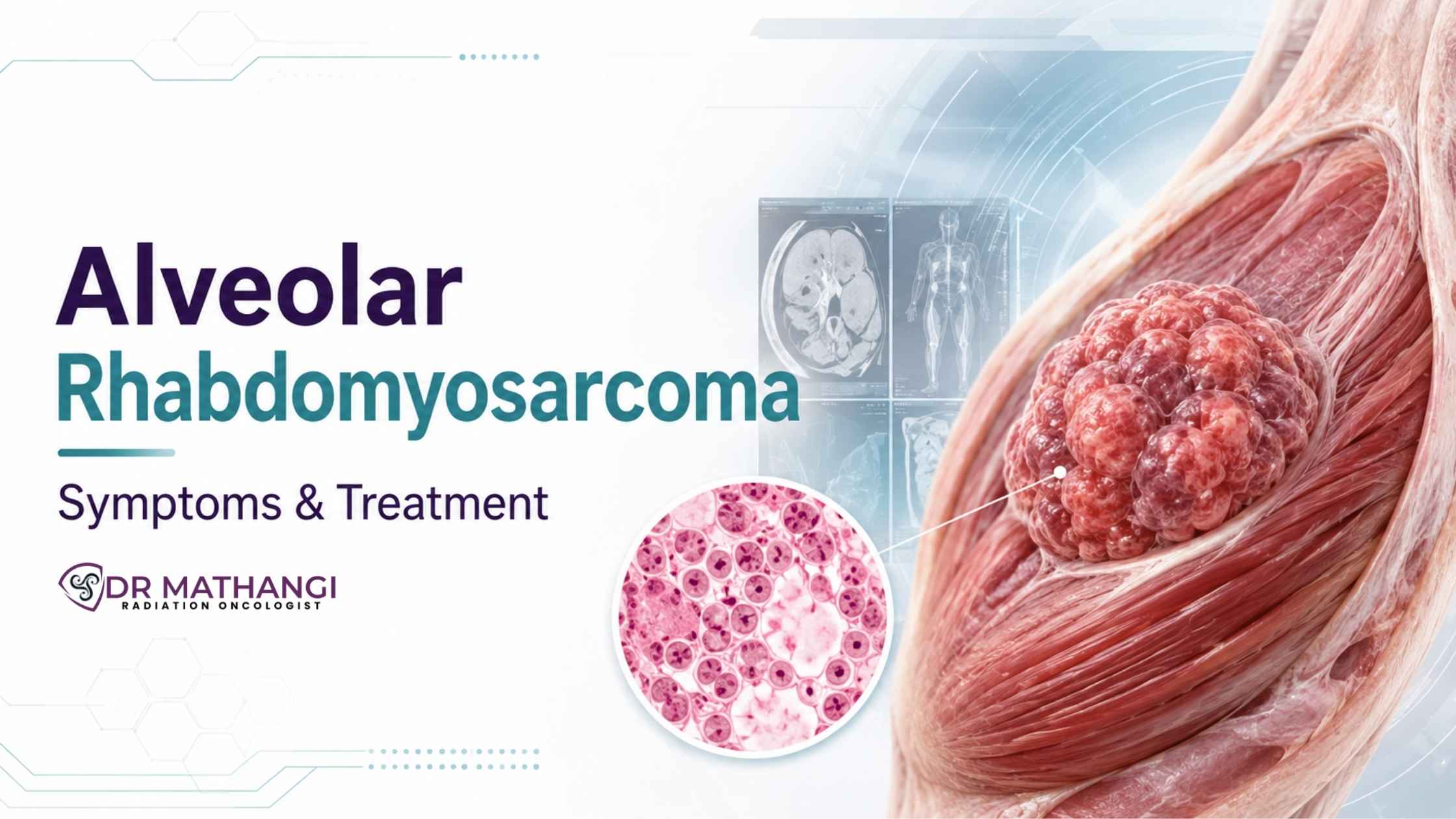
Alveolar rhabdomyosarcoma is a malignant tumor arising from skeletal muscle progenitor cells. While it can occur anywhere in the body, it is most commonly found in the extremities, trunk, and perineal regions. The tumor is called “alveolar” because, under the microscope, the cancer cells are arranged in patterns resembling the air sacs (alveoli) of the lungs.
- Common in teenagers and young adults, but can occur at any age.
- Rapidly growing and often aggressive.
- Requires multi-modal treatment for optimal outcomes.
How does alveolar rhabdo differ from other rhabdomyosarcomas?
Alveolar rhabdo is distinct from the embryonal subtype, which is more common in children and generally has a better prognosis. Alveolar RMS (rhabdomyosarcoma) is characterized by specific genetic mutations, often involving the PAX3 or PAX7 genes fused with FOXO1, making it more aggressive and challenging to treat.
- Alveolar RMS has a higher risk of spreading (metastasis) to distant organs compared to other subtypes.
- Genetic testing is essential for accurate diagnosis and risk stratification.
What are the symptoms of alveolar rhabdomyosarcoma?
The most common and earliest symptom of alveolar rhabdomyosarcoma is a painless, rapidly growing mass in the affected area. Recognizing the signs early can lead to better outcomes:
- Painless swelling or lump in the arm, leg, chest, or groin
- Restricted movement if the tumor is near a joint
- Unexplained weight loss and fatigue
- Localized pain or tenderness if nerves or organs are compressed
- Symptoms related to the location, such as difficulty swallowing (if in the throat) or urinary symptoms (if in the bladder/pelvis)
Since alveolar rhabdomyosarcoma can be mistaken for sports injuries or benign swellings, persistent or unexplained lumps should always be evaluated by a cancer specialist.
How is alveolar rhabdomyosarcoma diagnosed?
Accurate diagnosis of alveolar rhabdomyosarcoma involves a combination of clinical evaluation, imaging, and biopsy:
- Physical Examination: Assessing the mass and associated symptoms.
- Imaging: MRI and CT scans determine the tumor’s size, location, and spread.
- Biopsy: Core needle or surgical biopsy confirms histology.
- Genetic Testing: Identifies PAX3/7-FOXO1 gene fusions specific to alveolar RMS.
Staging workup may include PET scans and bone marrow biopsies to check for metastasis.
What are the treatment options for alveolar rhabdomyosarcoma?
Alveolar rhabdomyosarcoma treatment is highly specialized and multidisciplinary. The mainstays include:
- Surgery: Removal of the tumor whenever feasible.
- Radiation Therapy: Essential for local control, especially when surgery is not possible or margins are positive. Advanced techniques such as Stereotactic Ablative Body Radiotherapy (SBRT), Gated RapidArc, and DIBH Gated Radiotherapy are available at Gleneagles Cancer Institute under the care of Dr Mathangi.
- Chemotherapy: Systemic treatment targeting microscopic cancer spread, often using agents like vincristine, actinomycin D, and cyclophosphamide.
- Targeted Therapy: In select cases, molecular-targeted drugs may be considered if specific mutations are identified.
How does radiation therapy benefit alveolar rhabdomyosarcoma patients?
Radiation therapy plays a pivotal role in alveolar rhabdomyosarcoma treatment by:
- Destroying residual cancer cells after surgery
- Improving local control and minimizing recurrence
- Offering a non-invasive option for tumors that cannot be surgically removed
- Reducing symptoms when tumors are near critical organs
Dr Mathangi’s expertise in advanced radiation techniques ensures precise targeting, sparing healthy tissues and reducing side effects.
If you or a loved one suspects or has been diagnosed with alveolar rhabdomyosarcoma, don’t delay. Book an appointment with Dr Mathangi and her expert oncology team at Gleneagles Cancer Institute, Bangalore, for comprehensive evaluation and world-class treatment.
What is the prognosis of alveolar rhabdomyosarcoma?
Alveolar rhabdomyosarcoma prognosis depends on several factors, including the size and location of the tumor, spread to lymph nodes or distant organs, and the patient’s age and overall health.
- Younger patients and those with localized disease have better outcomes.
- Patients with metastatic alveolar RMS or with unfavorable genetic markers have lower survival rates.
- 5-year survival rates for alveolar RMS range from 50% (localized disease) to less than 30% (advanced/metastatic disease).
Early diagnosis, prompt initiation of multimodality therapy, and expert care significantly improve outcomes.
Why choose Dr Mathangi for alveolar rhabdomyosarcoma care?
Dr Mathangi is a Senior Radiation Oncologist and In-charge of Gleneagles Cancer Institute, Bangalore. With over 20 years of experience and more than 12,000 cancer patients treated, she brings unmatched expertise in advanced radiation oncology:
- Pioneering the use of TrueBeam STx Machine—Asia Pacific’s first installation
- Mastery in cutting-edge radiation techniques like SBRT, RapidArc, and IGRT
- Comprehensive multidisciplinary approach in collaboration with surgeons, medical oncologists, and pathologists
- Personalized care and holistic patient support
Her center leverages international collaborations and state-of-the-art technology, ensuring every patient receives evidence-based and compassionate care.
What are the steps to book an appointment with Dr Mathangi?
Booking an appointment is straightforward:
- Visit https://drmathangi.com/contact/
- Submit your contact information in the online form.
- Dr Mathangi’s team will reach out to schedule your consultation and notify you of the appointment details.
Which cancers may require radiation therapy?
According to Dr Mathangi, the following cancers commonly benefit from radiation therapy:
- Head and neck cancers
- Brain and spine tumors
- Esophagus and rectal cancers
- Lung, liver, breast, bladder, prostate, uterine, cervical, vulval, anal canal, and penile cancers
Each case is unique, and Dr Mathangi’s expertise ensures that radiation therapy is tailored for maximum effectiveness and safety.
How does early diagnosis impact outcomes in alveolar RMS?
Early detection of alveolar RMS is critical as it allows for timely, targeted intervention. Delayed diagnosis often results in more advanced disease, requiring more aggressive treatments and reducing the chances of complete cure. Therefore, any persistent lump or unexplained swelling should prompt immediate medical evaluation.
Alveolar rhabdomyosarcoma at a glance: Key facts table
| Aspect | Details |
|---|---|
| Prevalence | 20-25% of all rhabdomyosarcomas |
| Common Age Group | Children, adolescents, young adults |
| Typical Symptoms | Painless swelling, restricted movement, pain, local symptoms |
| Diagnosis | Clinical exam, imaging (MRI/CT), biopsy, genetic testing |
| Treatment Modalities | Surgery, radiation therapy, chemotherapy, targeted therapy |
| Prognosis Factors | Stage, age, tumor genetics, treatment response |
| 5-Year Survival Rate | 50% (localized), <30% (advanced/metastatic) |
About Dr Mathangi
 Dr Mathangi J is a Senior Consultant and In-charge of Radiation Oncology at Gleneagles Cancer Institute, Bangalore. With MBBS, DMRT, and DNB degrees and international training in advanced radiation oncology from Germany and Denmark, she has treated over 12,000 patients. Her pioneering work in Stereotactic techniques, image-guided brachytherapy, and installation of Asia Pacific’s first TrueBeam STx Machine sets her apart as a leader in the field. She specializes in head and neck, prostate, brain, lung, and women’s cancers, offering personalized and innovative care.
Gleneagles Cancer Institute is recognized as a top-tier center for comprehensive cancer care in Bangalore and South India, providing access to multidisciplinary teams and advanced technologies.
For expert evaluation and tailored alveolar rhabdomyosarcoma treatment, contact Dr Mathangi today.
Frequently Asked Questions
What is alveolar rhabdomyosarcoma and how is it different from other types?
Alveolar rhabdomyosarcoma is a rare and aggressive form of soft tissue cancer that most often affects children and young adults. Unlike other types of rhabdomyosarcoma, such as embryonal, alveolar RMS typically grows faster and is more likely to spread to other parts of the body. The term "alveolar" comes from the tumor's pattern that resembles small air sacs (alveoli) when viewed under a microscope.
What are the common symptoms of alveolar rhabdo?
Symptoms of alveolar rhabdo can vary depending on the tumor's location, but may include a noticeable lump or swelling, pain or tenderness in the affected area, and sometimes limited movement if the tumor is near a joint. Other symptoms can develop if the cancer spreads, such as fatigue, weight loss, or difficulty breathing. Early diagnosis is important, so consult a specialist like Dr. Mathangi if you notice persistent or unusual symptoms.
How is alveolar rhabdomyosarcoma diagnosed?
Diagnosis of alveolar rhabdomyosarcoma usually starts with a physical examination and medical history review. Imaging tests such as MRI, CT, or PET scans help identify the tumor's size and spread. A biopsy is essential to confirm the diagnosis, where a small tissue sample is examined under a microscope. Dr. Mathangi uses advanced diagnostic techniques and a multidisciplinary approach to ensure accurate and prompt diagnosis.
What does alveolar rhabdomyosarcoma treatment involve?
Alveolar rhabdomyosarcoma treatment typically combines multiple approaches: chemotherapy, radiation therapy, and sometimes surgery to remove the tumor. Dr. Mathangi customizes each treatment plan based on the patient's age, tumor stage, and overall health, aiming for the best possible outcome while minimizing side effects. Advanced therapies and clinical trials may also be available depending on individual cases.
What is the prognosis for alveolar rhabdomyosarcoma?
Alveolar rhabdomyosarcoma prognosis can vary based on factors such as the tumor's size, location, spread at diagnosis, and the patient's response to treatment. Generally, alveolar RMS has a more challenging prognosis compared to other types, but early and aggressive treatment can improve outcomes. Dr. Mathangi provides comprehensive care and ongoing support, focusing on both survival and quality of life for patients and their families.
Are there side effects of alveolar rhabdomyosarcoma treatment?
Yes, treatments for alveolar rhabdomyosarcoma, such as chemotherapy and radiation, can cause side effects like fatigue, nausea, hair loss, lowered immunity, and skin changes. Dr. Mathangi and her care team work closely with patients to manage these side effects through supportive care and personalized interventions, ensuring that each patient receives the best possible quality of life during and after treatment.
How does Dr. Mathangi support families and patients dealing with alveolar RMS?
Dr. Mathangi is committed to holistic care for both patients and their families. This includes emotional support, clear communication, access to support groups, and guidance on nutrition and rehabilitation. Her multidisciplinary team ensures that every aspect of the patient’s journey—from diagnosis through recovery—is addressed, empowering families with the resources and knowledge they need.
Is genetic counseling recommended for families of children with alveolar rhabdomyosarcoma?
While most cases of alveolar rhabdomyosarcoma are not linked to inherited syndromes, Dr. Mathangi may recommend genetic counseling in certain situations, especially if there is a family history of cancers. Genetic counseling can offer valuable information about risks and guide surveillance for other family members.
What follow-up care is necessary after alveolar rhabdomyosarcoma treatment?
Follow-up care is crucial to monitor for any signs of recurrence and to manage long-term side effects from treatment. Dr. Mathangi schedules regular check-ups, imaging, and lab tests as part of a personalized survivorship plan. She also provides ongoing support for rehabilitation, emotional health, and reintegration into daily life.