Alveolar Rhabdomyosarcoma of the Arm: Symptoms & Treatment
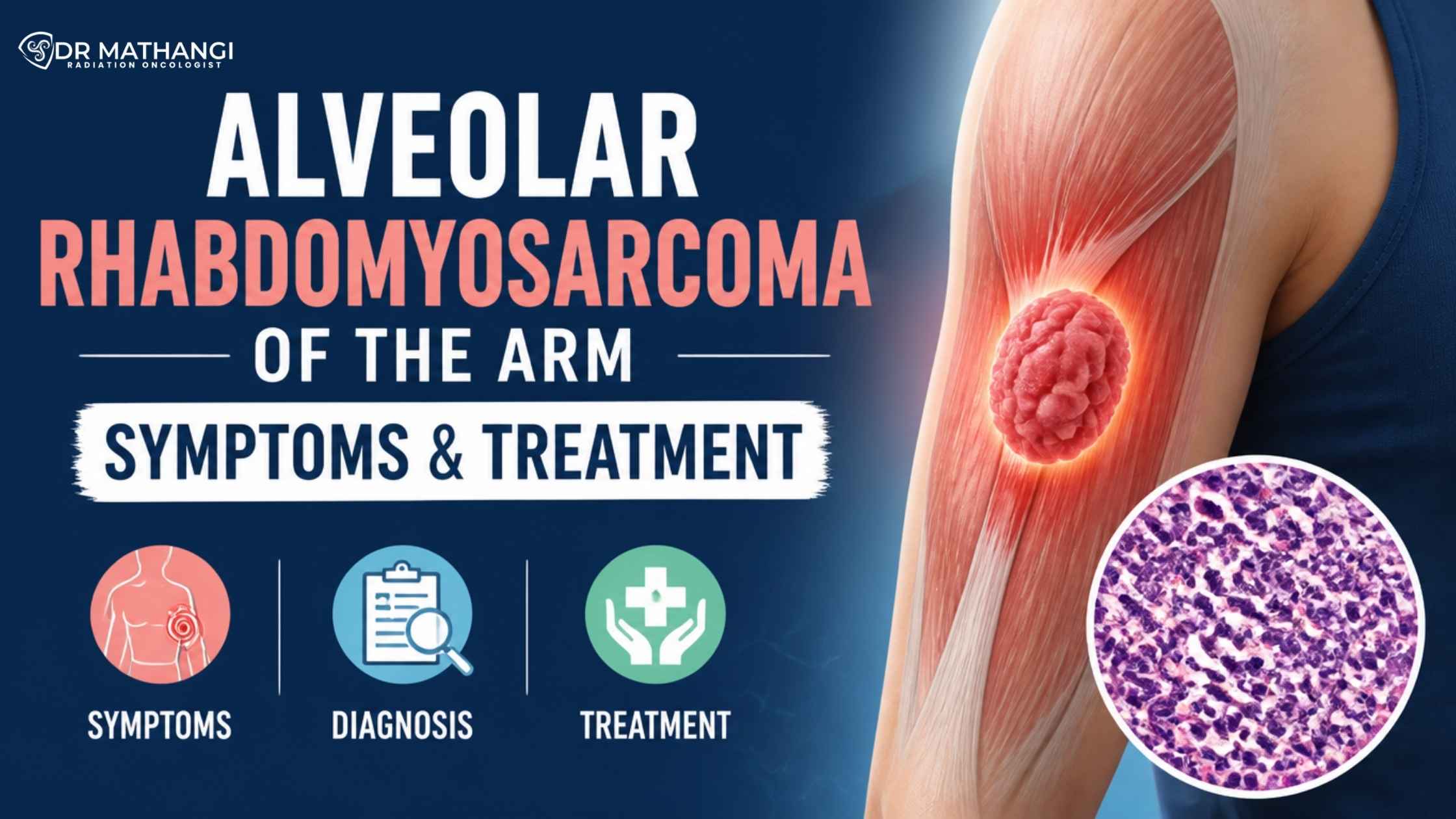
Alveolar rhabdomyosarcoma arms is a rare but aggressive type of cancer affecting the muscles of the arm. While rhabdomyosarcoma makes up only about 3% of all childhood cancers, its occurrence in adults and in the arm region is even rarer, yet requires urgent, specialized care. Early recognition of symptoms and advanced, targeted treatment are essential for better outcomes. Dr Mathangi J, Senior Radiation Oncologist at Gleneagles Cancer Institute, Bangalore, is renowned for her expertise in handling such challenging cases with cutting-edge technologies and a patient-first approach.
What is alveolar rhabdomyosarcoma of the arm?
Alveolar rhabdomyosarcoma (ARMS) is a subtype of rhabdomyosarcoma, a cancer that arises from arm soft tissue sarcoma—the tissues that connect, support, or surround other structures and organs in the body. ARMS is named for its characteristic appearance under the microscope, where tumor cells form clusters resembling the small air sacs (alveoli) of the lungs. When this malignancy occurs in the arm, it is termed alveolar rhabdomyosarcoma arm, accounting for a small but significant fraction of all soft tissue sarcomas in this region.
Key facts:
- ARMS is more aggressive than the embryonal subtype of rhabdomyosarcoma.
- It has a higher likelihood of spreading (metastasizing) to other parts of the body, especially lymph nodes and lungs.
- Prompt diagnosis and comprehensive treatment are vital for improving prognosis.
How does alveolar rhabdomyosarcoma present in the arm?
Symptoms of alveolar rhabdomyosarcoma arm can often mimic benign conditions, making early diagnosis challenging. Typically, symptoms include:
- Noticeable swelling or a lump in the arm that may or may not be painful.
- Rapid increase in the size of the swelling over weeks to months.
- Persistent pain or discomfort in the affected area.
- Reduced range of motion or weakness of the arm.
- Occasionally, tingling or numbness if the tumor compresses nerves.
- Rarely, visible skin changes or ulceration over the mass.
If you or a loved one experience any of these symptoms, especially if the lump grows quickly or is associated with pain, it is critical to seek medical evaluation without delay. As Dr Mathangi emphasizes, “Timely intervention can be the difference between a curable and an advanced, hard-to-treat cancer.”
What are the diagnostic steps for rhabdomyosarcoma arm?
Diagnosis of a suspected rhabdomyosarcoma arm involves a combination of clinical, imaging, and pathological assessments. Dr Mathangi follows a structured, evidence-based protocol:
- Clinical examination: A thorough physical exam to assess the size, location, and mobility of the lump.
- Imaging: MRI is preferred for detailed mapping of soft tissue involvement. CT scans and PET scans help determine spread to lymph nodes or distant organs.
- Biopsy: Core needle biopsy or incisional biopsy provides tissue for definitive diagnosis. Special stains and genetic studies confirm the alveolar subtype.
- Staging: Additional tests (chest CT, bone scan) are performed to detect metastasis.
This meticulous approach ensures accurate diagnosis and optimal planning for alveolar RMS treatment.
What is the recommended treatment for alveolar rhabdomyosarcoma arms?
Alveolar RMS treatment requires a multimodal approach, integrating surgery, chemotherapy, and advanced radiotherapy. As per international guidelines, and as practiced by Dr Mathangi at Gleneagles Cancer Institute, the mainstays of treatment include:
- Surgery: The primary goal is to remove the tumor entirely with clear margins while preserving arm function as much as possible. For tumors in critical locations, limb-sparing techniques are favored over amputation.
- Chemotherapy: Multi-drug regimens (usually vincristine, actinomycin D, and cyclophosphamide) help shrink tumors before surgery and target microscopic disease after surgery.
- Radiation therapy: Essential for cases where surgery cannot achieve clear margins, or where the tumor is inoperable. Dr Mathangi employs:
- Stereotactic Ablative Body Radiotherapy (SBRT): Delivers high doses with sub-millimeter precision, sparing healthy tissue.
- Gated RapidArc and DIBH gated Radiotherapy: Advanced techniques for targeting tumors that move with breathing or are close to vital structures.
- Image-guided Interstitial Brachytherapy: For select, localized lesions.
The sequence and combination of these modalities are individualized based on tumor stage, size, location, and patient factors—underscoring the importance of experienced, multidisciplinary care.
Why is expert care essential for arm soft tissue sarcoma?
Arm soft tissue sarcoma encompasses a wide range of tumors, with rhabdomyosarcoma being among the most aggressive. The complexity of the arm’s anatomy—packed with muscles, nerves, and blood vessels—demands expertise in both tumor removal and functional preservation. Inadequate treatment can result in recurrence, loss of limb function, or avoidable complications.
- Precision matters: Advanced radiotherapy like SBRT minimizes collateral damage.
- Experience counts: Dr Mathangi’s 20+ years and 12,000+ treated cases ensure best practices.
- Team approach: Oncologists, surgeons, pathologists, and rehabilitation specialists collaborate for holistic care.
As a leader in arm soft tissue sarcoma therapy, Dr Mathangi’s team at Gleneagles Cancer Institute delivers world-class outcomes—right here in Bangalore, South India.
What factors influence the prognosis of alveolar rhabdomyosarcoma arm?
Several factors affect the outcome of alveolar rhabdomyosarcoma arm:
- Stage at diagnosis: Localized tumors have a better prognosis than those with metastases.
- Size and location: Smaller tumors away from critical nerves and vessels allow for more complete resection.
- Response to therapy: Tumors that shrink well with chemotherapy and radiotherapy are linked to improved survival.
- Patient age and overall health: Younger, fitter patients generally tolerate aggressive therapy better.
With personalized, evidence-based care, many patients can achieve long-term remission and preserve arm function.
How does Dr Mathangi deliver advanced alveolar RMS treatment?
Dr Mathangi J stands at the forefront of cancer care in India, harnessing the latest technologies and global best practices for alveolar RMS treatment. She is celebrated for:
- Installing Asia Pacific's first TrueBeam STx Machine for unparalleled radiotherapy precision.
- Mastery in Stereotactic, Gated, and Image-Guided Radiotherapy, minimizing side effects and maximizing tumor control.
- Leadership in multidisciplinary tumor boards, ensuring every patient benefits from collective expertise.
- Commitment to continuous learning, research, and teaching, keeping her at the vanguard of oncology.
Her patient-centric philosophy means compassionate communication, comprehensive follow-up, and individualized support—making her the preferred choice for patients seeking the best possible outcomes in South and North India.
Book an expert consultation with Dr Mathangi
Don’t let uncertainty or delay compromise your future. If you or a loved one is facing symptoms of alveolar rhabdomyosarcoma arms or any kind of arm soft tissue sarcoma, expert intervention is crucial.
Book your appointment easily by submitting your contact details at this form on Dr Mathangi’s website. Her team will promptly schedule your visit and provide all necessary guidance.
About Dr Mathangi J
Dr Mathangi J is the Senior Consultant & In-charge of Radiation Oncology at Gleneagles Cancer Institute, Bangalore. With an MBBS, DMRT, and DNB, she brings over two decades of experience and has treated more than 12,000 patients using state-of-the-art radiotherapy. Her unparalleled expertise covers cancers requiring radiation therapy, including head and neck, brain, spine, esophagus, rectal, lung, liver, breast, bladder, prostate, uterine, cervix, vulval, anal canal, and penile cancers.
As a pioneer in advanced techniques such as Stereotactic Ablative Body Radiotherapy (SBRT), Gated RapidArc, DIBH gated Radiotherapy, and Interstitial Brachytherapy, Dr Mathangi is lauded for her clinical excellence, leadership, and commitment to patient well-being. She also serves as Director of Fellowship in Advanced Radiotherapy Techniques, shaping the next generation of oncologists.
Gleneagles Cancer Institute, part of Gleneagles Hospitals, is a renowned center for comprehensive, multidisciplinary cancer care in Bangalore, and serves patients across South and North India.
Conclusion: Why choose Dr Mathangi for alveolar rhabdomyosarcoma arms?
When dealing with rare and aggressive cancers like alveolar rhabdomyosarcoma arms, experience, technology, and compassion make all the difference. Dr Mathangi’s proven track record, global training, and patient-first ethos offer you the best chance at recovery, limb preservation, and a better quality of life. Don’t settle for anything less—trust your care to a recognized leader in Indian oncology.
Take action today for expert, evidence-based care—your arm, your health, your life deserve nothing less.
Frequently Asked Questions
What are the common symptoms of alveolar rhabdomyosarcoma in the arm?
Alveolar rhabdomyosarcoma in the arm most often presents as a painless, firm swelling or lump. Over time, the mass may grow, and some patients experience discomfort, limited movement, or even weakness in the affected arm. Occasionally, redness, warmth, or changes in skin appearance may occur if the tumor is near the surface. If you notice a persistent lump or unusual changes in your arm, it is important to seek medical advice promptly.
How is alveolar rhabdomyosarcoma of the arm diagnosed?
Diagnosis typically begins with a thorough clinical examination and medical history. Imaging tests such as MRI, CT scans, or ultrasound help visualize the tumor's size and location in the arm. A biopsy is essential for confirming alveolar rhabdomyosarcoma by analyzing a tissue sample under a microscope. Dr. Mathangi uses advanced diagnostic protocols to ensure an accurate and timely diagnosis of arm soft tissue sarcoma.
What treatment options are available for alveolar rhabdomyosarcoma of the arm?
Treatment for alveolar rhabdomyosarcoma arm involves a multidisciplinary approach. The mainstays include surgery to remove the tumor, chemotherapy to target cancer cells throughout the body, and radiation therapy to destroy any remaining cancer in the arm. Dr. Mathangi customizes each treatment plan based on the tumor stage, location, and patient needs to achieve the best possible outcome.
How does Dr. Mathangi approach alveolar RMS treatment for tumors in the arm?
Dr. Mathangi specializes in comprehensive alveolar RMS treatment, offering a patient-centric approach. She coordinates a team of oncologists, surgeons, and rehabilitation specialists to ensure every aspect of care is addressed. From initial diagnosis to advanced therapy and rehabilitation, her focus is on maximizing limb function and quality of life while achieving the highest rates of tumor control.
Is surgery always necessary for rhabdomyosarcoma in the arm?
Surgery is a key component of rhabdomyosarcoma arm management, but the approach may vary. In some cases, chemotherapy or radiation may be administered first to shrink the tumor and increase the chances of a successful surgery. Dr. Mathangi evaluates each case individually, prioritizing limb preservation and function whenever possible.
What is the outlook for patients with alveolar rhabdomyosarcoma in the arms?
The prognosis for alveolar rhabdomyosarcoma arms depends on factors such as tumor size, location, stage at diagnosis, and response to treatment. Early detection and a comprehensive treatment plan can significantly improve outcomes. Dr. Mathangi’s expertise in arm soft tissue sarcoma management ensures that patients receive the most advanced care and regular follow-up for the best possible prognosis.
Can children and adults both develop alveolar rhabdomyosarcoma of the arm?
Yes, both children and adults can develop alveolar rhabdomyosarcoma arm, although it is more common in children and adolescents. The symptoms, diagnosis, and treatment pathways are similar, but Dr. Mathangi tailors her approach to meet the unique needs of each age group, ensuring age-appropriate care and support.
What follow-up care is needed after treatment for arm soft tissue sarcoma?
Regular follow-up is vital after treatment for arm soft tissue sarcoma to monitor for recurrence and manage any long-term side effects. Follow-up appointments with Dr. Mathangi typically include physical exams, imaging studies, and rehabilitation support to help restore strength and mobility in the affected arm.