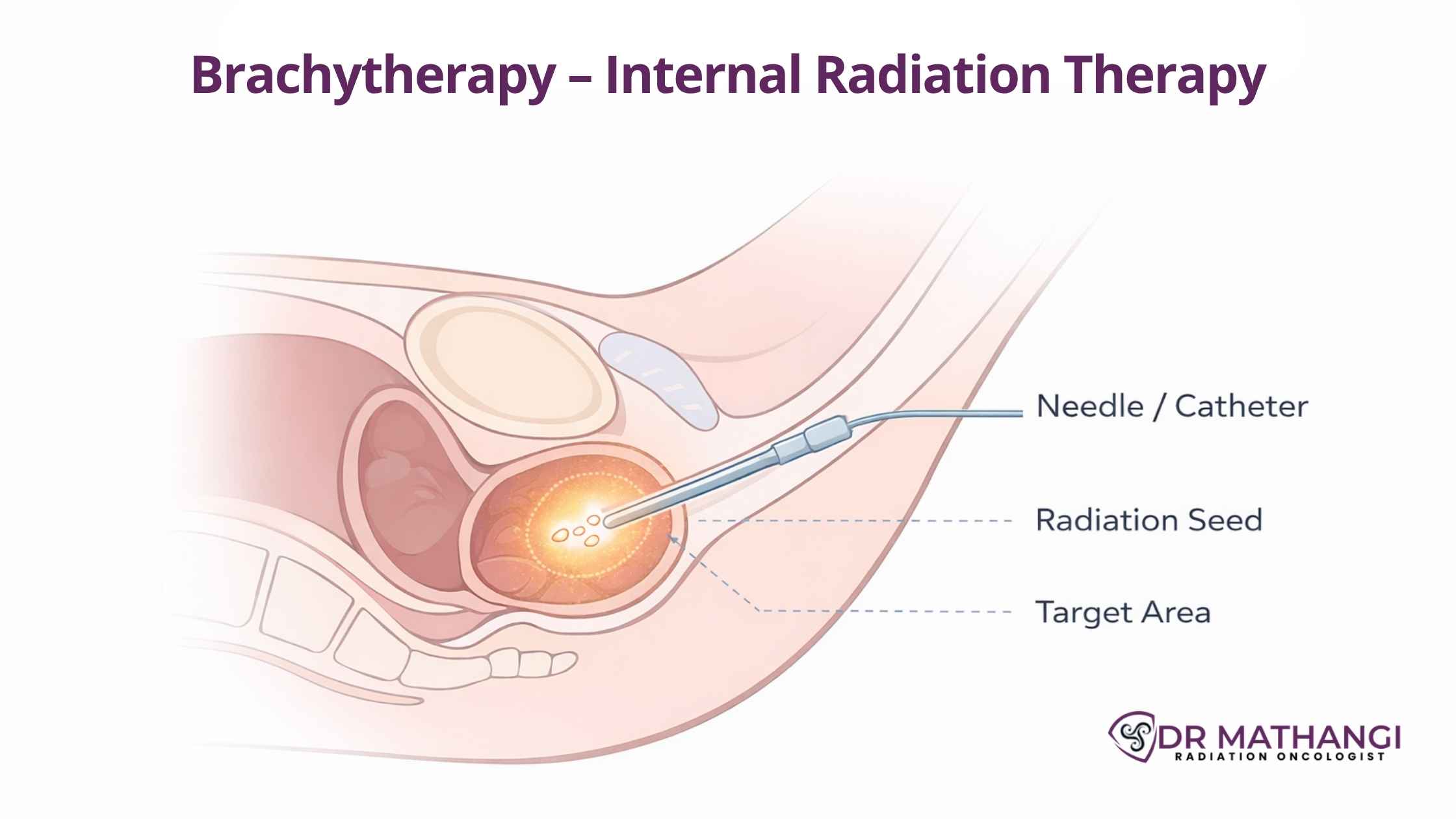
Brachytherapy is a highly focused form of radiation treatment in which radioactive sources are placed directly inside or next to the tumor. According to global oncology data, nearly 50% of cancer patients require radiation therapy at some point during their treatment journey, and for many gynecological and prostate cancers, brachytherapy significantly improves local control and survival outcomes. This makes internal radiation therapy one of the most powerful tools in modern oncology.
At the forefront of this advanced treatment in Bangalore is Dr Mathangi J, Senior Consultant & In-charge – Radiation Oncology at Gleneagles Cancer Institute. With more than 20 years of experience and over 12,000 successfully treated patients, Dr Mathangi has transformed how patients experience radiation therapy—making it safer, more precise, and more effective than ever before.
Brachytherapy is a form of internal radiation therapy where a radiation source is placed directly within or near the tumor, delivering high doses to cancer cells while minimizing exposure to surrounding healthy tissues.
Unlike conventional external radiation, brachytherapy works from the inside out. Small radioactive seeds, wires, or applicators are strategically positioned under image guidance. Because the radiation travels only a short distance, it allows:
This precision-driven approach is especially valuable in prostate, cervical, uterine, and bladder cancers, where critical organs are located very close to the tumor site.
Internal radiation therapy is considered high precision radiotherapy because it delivers radiation directly at the tumor site with millimeter accuracy, reducing collateral damage to nearby healthy tissues.
Under the leadership of Dr Mathangi, advanced imaging techniques such as image-guided Interstitial Brachytherapy ensure:
This level of precision is particularly crucial in treating head and neck cancers, prostate cancers, brain tumors, lung cancers, breast cancers, uterine cancers, cervical cancer, vulval cancers, anal canal cancers, penile cancers, bladder cancers, esophageal cancers, rectal cancers, and spine tumors.
In prostate cancer radiation therapy, brachytherapy involves placing radioactive seeds directly into the prostate gland to deliver a concentrated dose of radiation.
This approach offers several benefits:
Dr Mathangi’s expertise in genitourinary cancer radiation ensures individualized treatment planning. Patients who delay advanced care often miss the opportunity for organ-preserving, minimally invasive treatment options that could significantly improve long-term outcomes.
Cervical cancer radiation therapy is incomplete without brachytherapy in most locally advanced cases. It allows high-dose radiation to be delivered directly to the cervix while sparing bladder and rectum.
Dr Mathangi utilizes image-guided techniques to optimize dose distribution, ensuring:
For women diagnosed with cervical cancer, timely and expertly delivered internal radiation therapy can be life-saving. Choosing a specialist with international training in advanced radiation techniques significantly influences results.
Yes, in selected cases, brachytherapy can be an effective component of bladder cancer radiation treatment, especially in organ-preserving strategies.
Bladder tumors require careful dose modulation to avoid damage to surrounding tissues. Through advanced planning and precision delivery, Dr Mathangi ensures that patients receive targeted genitourinary cancer radiation tailored to their anatomy and disease stage.
Brachytherapy is suitable for patients with localized or locally advanced cancers where targeted internal radiation therapy provides better outcomes than external therapy alone.
Common indications include:
A detailed consultation, imaging assessment, and multidisciplinary review determine eligibility. Under Dr Mathangi’s guidance, every case undergoes thorough evaluation before recommending treatment.
Dr Mathangi J is a Senior Radiation Oncologist with MBBS, DMRT, and DNB qualifications and over two decades of experience in advanced radiation oncology techniques.
Her credentials include:
Her expertise in high precision radiotherapy ensures that patients receive cutting-edge cancer care aligned with international standards.
Cancer progression does not wait. Delaying advanced treatment options like brachytherapy can reduce effectiveness and increase complication risks.
The reality many patients face:
With over 12,000 patients successfully treated, Dr Mathangi combines compassion with precision. Patients who act early often benefit from shorter treatment duration, fewer complications, and better survival outcomes.
If you or your loved one has been advised radiation therapy for prostate cancer radiation therapy, cervical cancer radiation therapy, bladder cancer radiation treatment, or any genitourinary cancer radiation, the next step is expert evaluation.
To schedule a consultation, submit your details through the contact form at: https://drmathangi.com/contact/
Her team will review your request, schedule the appointment, and guide you through the next steps.
Dr Mathangi J is a Senior Consultant & In-charge – Radiation Oncology at Gleneagles Cancer Institute in Bangalore, part of Gleneagles Hospitals. She specializes in head and neck cancers, prostate cancers, brain tumors, lung cancers, breast cancers, cervical cancer, uterine cancers, bladder cancers, and complex gynecological malignancies.
Recognized for clinical excellence and academic leadership, she heads the radiation oncology department and mentors future specialists in advanced radiotherapy techniques. Her commitment to precision, safety, and patient-centered care has positioned her as one of India’s leading experts in brachytherapy and internal radiation therapy.