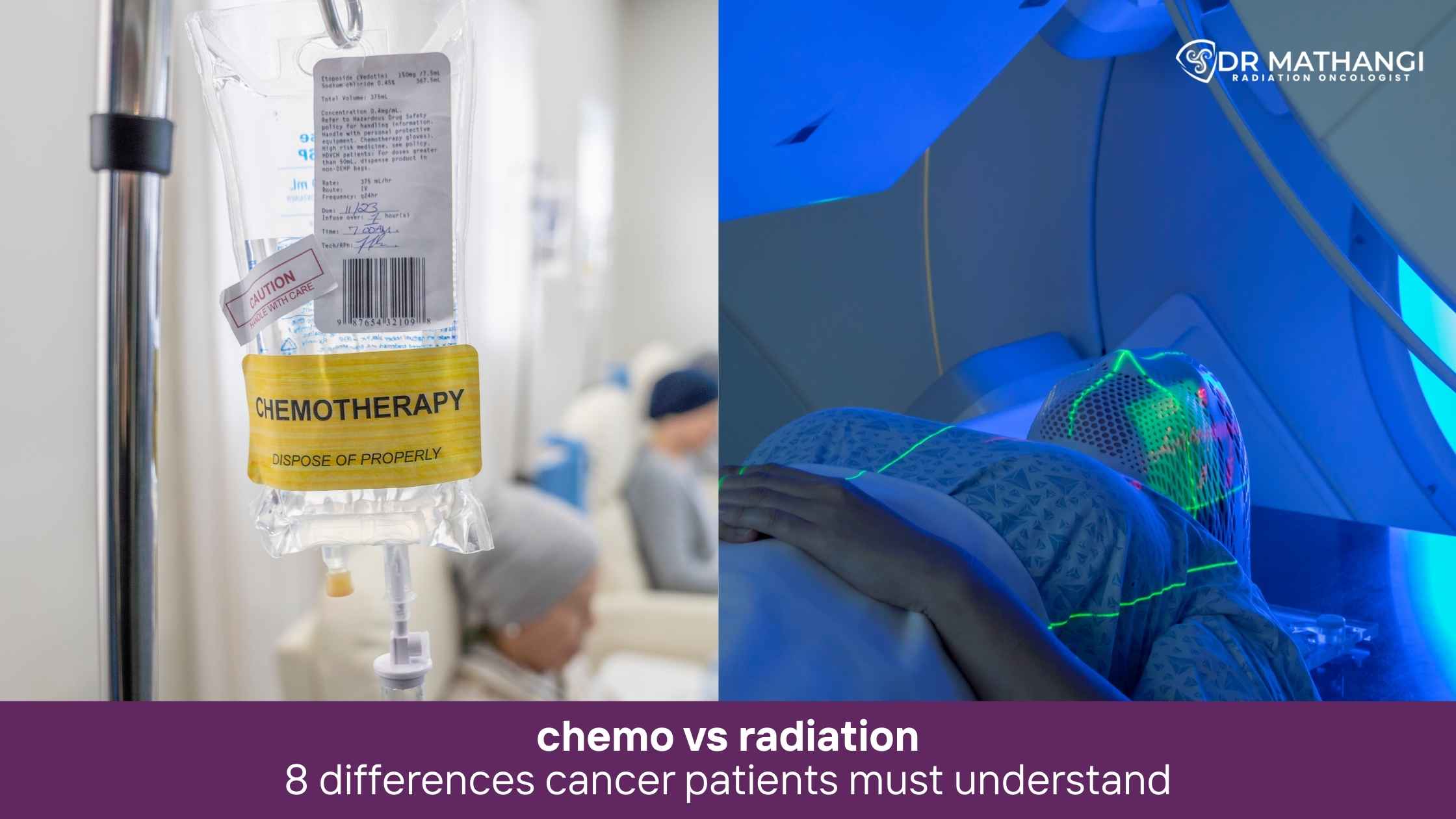
More than half of all cancer patients worldwide will require radiation at some stage of their treatment journey, while chemotherapy remains one of the most commonly prescribed systemic therapies across cancer types. This single statistic alone highlights why understanding chemo vs radiation is not optional—it is essential. When patients and families search for clarity on cancer treatment, they are often asking one core question: What is truly right for me? This article answers that question comprehensively, with insights grounded in real-world clinical expertise from Dr Mathangi J, Senior Consultant & In-charge of Radiation Oncology, with over 20 years of experience and more than 12,000 successfully treated patients.
If you or a loved one has recently received a cancer diagnosis, confusion, fear, and urgency often collide. Choosing between chemo or radiation can feel overwhelming, especially when online information is fragmented or contradictory. This is precisely where expert-guided clarity makes all the difference—and why patients across India place their trust in Dr Mathangi’s evidence-based, patient-centric approach.
No, are chemo and radiation the same is a common but critical misconception. Chemotherapy and radiation therapy are fundamentally different in how they work, how they affect the body, and how they are planned. While both aim to destroy cancer cells, the pathways, precision, and patient experience vary significantly. Understanding these differences empowers patients to make informed decisions rather than reactive ones.
The difference between chemo and radiation begins with how each treatment targets cancer. Chemotherapy uses drugs that circulate throughout the bloodstream, affecting cancer cells wherever they may be. Radiation therapy, on the other hand, uses high-energy beams precisely targeted at the tumor, minimizing exposure to healthy tissues. This distinction alone shapes side effects, recovery, and long-term outcomes.
Below is an in-depth, patient-friendly breakdown of the eight most important distinctions between chemo vs radiation therapy. Each point is drawn from clinical realities seen daily in advanced oncology practice.
Chemotherapy works systemically, meaning it travels through the bloodstream and can affect cancer cells throughout the body. Radiation works locally, targeting a specific tumor or region with pinpoint accuracy. This is why radiation vs chemo decisions often depend on whether cancer is localized or widespread.
Modern radiation oncology, especially under experts like Dr Mathangi, uses advanced technologies such as stereotactic radiotherapy, IGRT, RapidArc, and gated techniques. These allow millimeter-level precision, sparing healthy organs. Chemotherapy, despite advances, cannot selectively target only cancer cells.
Chemotherapy commonly causes systemic side effects such as hair loss, nausea, fatigue, and lowered immunity. Radiation side effects are usually localized, depending on the area treated—for example, skin reactions or swallowing difficulty in head and neck cancers. Understanding the difference between chemo and radiation helps patients mentally and physically prepare.
Chemotherapy is often given in cycles over weeks or months, allowing the body time to recover between sessions. Radiation therapy is typically delivered in daily fractions over a defined period. With modern protocols, radiation schedules can now be shorter without compromising effectiveness.
Many patients receiving radiation can continue normal routines with minimal disruption, especially with advanced techniques. Chemotherapy may require more downtime due to systemic fatigue. This practical consideration is crucial when weighing chemo or radiation.
In many cancers, the most effective approach is not choosing between treatments, but integrating both. Chemotherapy may sensitize cancer cells, making radiation more effective. Dr Mathangi designs personalized, multidisciplinary plans that align with global best practices.
Radiation therapy has evolved dramatically, with techniques like SBRT and image-guided brachytherapy offering excellent tumor control with fewer long-term side effects. Patients treated under expert guidance often experience better quality of life outcomes compared to older methods.
Perhaps the most overlooked difference in chemo vs radiation is not the treatment itself, but who delivers it. Outcomes improve significantly when care is led by specialists with deep experience, access to advanced technology, and a patient-first philosophy—hallmarks of Dr Mathangi’s practice.
Radiation therapy is a cornerstone treatment for cancers of the head and neck, brain, spine, lung, liver, breast, bladder, prostate, uterus, cervix, vulva, anal canal, and penis. With over two decades of experience, Dr Mathangi has been at the forefront of delivering radiation safely, precisely, and compassionately for these cancers.
Her leadership includes installing one of Asia Pacific’s earliest advanced linear accelerator systems and training future oncologists through fellowship programs. This depth of expertise ensures that patients are not just receiving treatment, but receiving the right treatment.
Cancer outcomes are time-sensitive. Delays, misinformation, or generalized treatment plans can reduce effectiveness. Patients who consult Dr Mathangi early gain access to advanced techniques, personalized planning, and a care team that prioritizes both survival and quality of life. The real loss is not choosing the wrong treatment—it is choosing too late.
Dr Mathangi J is a Senior Consultant & In-charge of Radiation Oncology with over 20 years of clinical excellence. She has trained internationally in advanced radiation techniques and has treated more than 12,000 patients using cutting-edge, evidence-based protocols. Based in Bangalore, she leads comprehensive cancer care with a strong emphasis on precision, safety, and compassionate outcomes.
If you are deciding between chemo vs radiation, or need clarity on whether radiation is right for your cancer, expert guidance can change everything. To book an appointment, submit your contact information at https://drmathangi.com/contact/. Dr Mathangi’s team will schedule your consultation and guide you through the next steps with clarity and care.