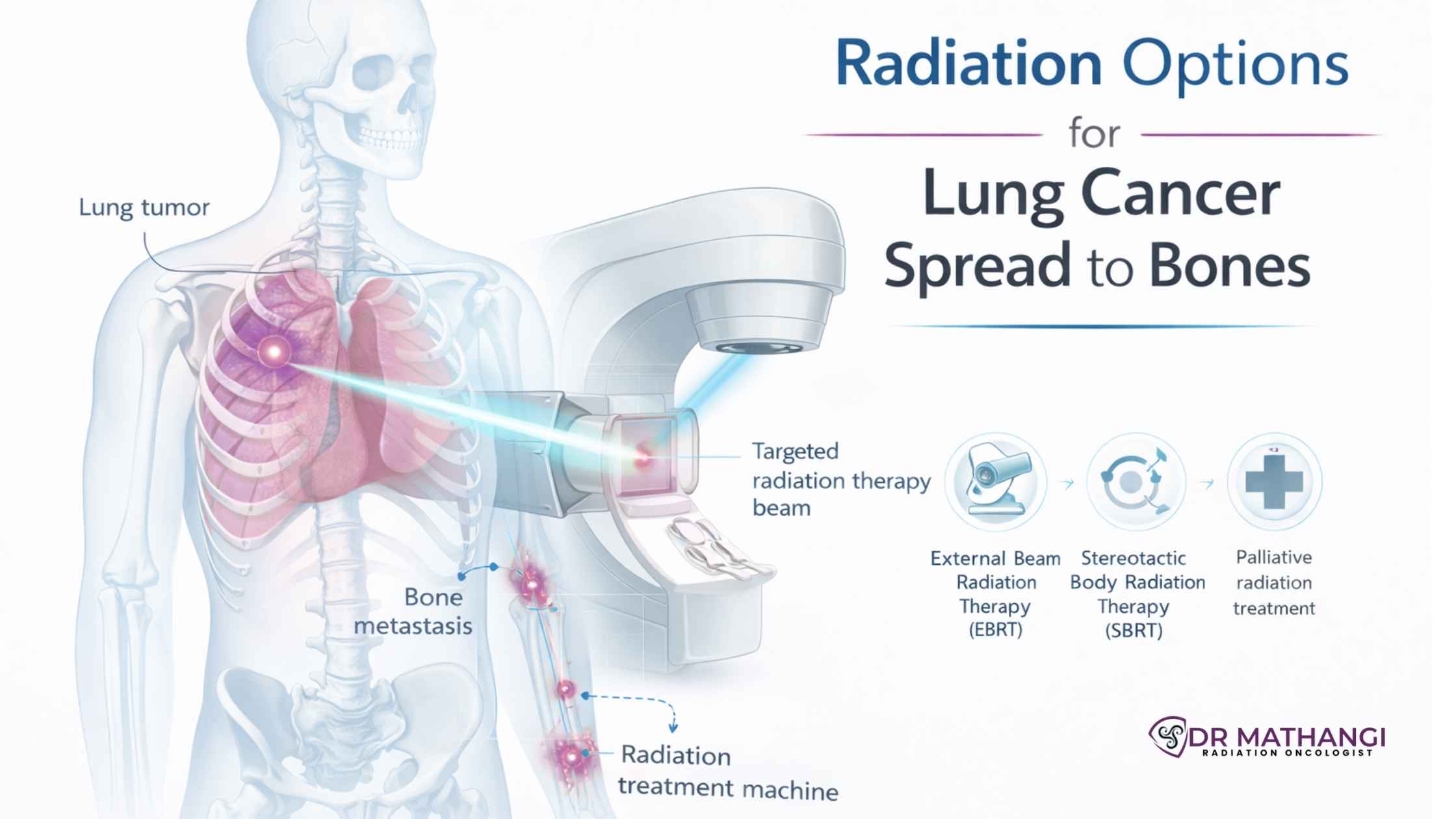
Lung cancer remains one of the leading causes of cancer-related mortality worldwide, and studies show that nearly 30–40% of advanced lung cancer patients develop bone metastases during the course of their disease. When cancer spreads from the lungs to the bones, timely and precise radiation therapy can significantly reduce pain, prevent fractures, and improve quality of life. Understanding the right lung cancer metastasis to bone treatment can make a measurable difference in survival and comfort.
At Gleneagles Cancer Institute, Bangalore, Dr Mathangi J, Sr Consultant & In-charge – Radiation Oncology, brings over 20 years of expertise and more than 12,000 successfully treated patients to the forefront of advanced radiation care. For patients in South India and across North India seeking world-class expertise without delay, this could be the turning point in their cancer journey.
When lung cancer cells travel through the bloodstream and lodge in bones, they disrupt normal bone remodeling. This leads to pain, structural weakness, fractures, and elevated calcium levels. The spine, ribs, pelvis, and long bones are commonly affected.
Common lung cancer bone metastasis symptoms include:
Early detection and prompt radiation intervention can prevent catastrophic complications such as spinal cord compression.
Radiation therapy directly targets metastatic deposits in bone, shrinking tumors, relieving pain, and stabilizing weakened areas. It is one of the most effective osseous metastases treatment options available today.
Without timely radiation:
With advanced technology and expert planning, radiation can be delivered with remarkable precision, sparing healthy tissues.
SBRT delivers very high doses of radiation in a few sessions with sub-millimeter precision. This is particularly beneficial for spine and isolated bone metastases. Dr Mathangi’s advanced training in SRS/SBRT from Germany and Denmark allows her to personalize dose distribution for maximum tumor control.
IGRT ensures real-time imaging before and during treatment, improving accuracy and reducing side effects. This is especially important for spine lesions.
These technologies deliver radiation in a continuous arc, reducing treatment time and improving dose conformity.
For widespread disease, shorter treatment schedules (1–10 sessions) effectively relieve pain.
Rib metastasis treatment often involves focused external beam radiation therapy. Pain from rib lesions can impair breathing and sleep. Precisely targeted radiation reduces inflammation, controls tumor growth, and restores comfort.
In selected cases, SBRT may be used when the lesion is isolated and well-defined.
The survival rate of lung cancer metastasis to bone varies depending on stage, molecular profile, systemic therapy response, and performance status. While bone metastasis indicates advanced disease, modern multidisciplinary care—including targeted therapy, immunotherapy, and precision radiation—has significantly improved outcomes compared to historical statistics.
Radiation does not merely relieve pain; in selected oligometastatic cases, aggressive local therapy can prolong survival and delay progression.
Radiation is recommended when:
Dr Mathangi carefully evaluates imaging, PET-CT findings, and overall clinical condition before designing a treatment strategy.
Dr Mathangi J is a Senior Radiation Oncologist in Bangalore and In-charge of Radiation Oncology at Gleneagles Cancer Institute. She has:
Her precision-driven approach ensures that every lung cancer metastasis to bone treatment plan is customized, technologically advanced, and clinically evidence-based.
Effective radiation for osseous metastases treatment provides:
Patients frequently report significant improvement in functional independence.
This structured pathway ensures safety, accuracy, and measurable results.
Bone metastasis complications can escalate quickly. Spinal cord compression is an oncologic emergency. Delay may result in permanent neurological deficits. Early referral to an experienced radiation oncologist dramatically improves functional outcomes.
Patients across Bangalore, Tamil Nadu, Kerala, Andhra Pradesh, Telangana, Maharashtra, Delhi, and other regions are increasingly seeking specialized care. Choosing advanced radiation under experienced hands could mean the difference between progressive disability and preserved independence.
Dr Mathangi J is a Senior Radiation Oncologist and Director of Fellowship in Advanced Radiotherapy techniques affiliated with RGUHS. Based in Bangalore at Gleneagles Cancer Institute, she is known for integrating cutting-edge technology with compassionate, individualized care. Her global training and extensive clinical experience make her one of the most trusted names in advanced radiation oncology.
If you or a loved one is facing lung cancer bone metastasis symptoms or has been advised radiation for lung cancer metastasis to bone treatment, timely action is essential.
To book an appointment, submit your contact information through the form at https://drmathangi.com/contact/. Her team will schedule and notify you promptly.